

CEO, Founder @NewzDash, NESS & GDdash | Former Global VP, Audience Development at Condé Nast
New York, NY
Joined May 2010
- Tweets5.6K
- Following523
- Followers6.9K
- Likes2.3K





𝗨𝗻𝘀𝗼𝗹𝗶𝗰𝗶𝘁𝗲𝗱 𝗗𝗶𝘀𝗰𝗼𝘃𝗲𝗿 𝘁𝗶𝗽: 𝗱𝗼𝗻'𝘁 𝗽𝘂𝘁 𝗝𝗣𝗘𝗚 𝗫𝗟 𝗶𝗻 𝘆𝗼𝘂𝗿 𝗼𝗴:𝗶𝗺𝗮𝗴𝗲.
Chrome 155 and Firefox 158 now display JPEG XL. Your dev team will want to use it.
Google Images and Discover previews don't support it yet.
@JohnMu, on Bluesky: "if you're hoping to get images shown in Google Images & as previews in Discover, etc – JPEG-XL is currently not supported"
Google's supported formats for img src: BMP, GIF, JPEG, PNG, WebP, SVG and AVIF.
The safe setup if you want .jxl for readers:
→ Serve it as a <source> inside <picture>.
→ Keep a JPEG, WebP or AVIF in the <img src>. Mueller says that works for any search engine.
→ Keep og:image and schema images in a supported format too. Discover uses those for the preview.
Copy this pattern:
<picture>
<source srcset="storm.jxl" type="image/jxl">
<img src="storm.jpg" alt="Flooded street in downtown Boston">
</picture>
And before anyone flips a CDN setting to auto-convert images, check what your og:image URLs actually return.
For context, AVIF landed in Chrome in 2020 and in Google Search in 2024. Don't plan around a date nobody has given.
Discover is visual. Don't lose the image over a file format.
searchenginejournal.com/goog…
developers.google.com/search…
developers.google.com/search…

The most-cited page in AI Overviews was the About page.
Lily Ray found it in one enterprise site's Search Console Gen AI report: 5x the homepage's AI impressions.
Written for humans, not LLMs.
Publishers: check your About, masthead and author pages first.
🤖 Made with AI

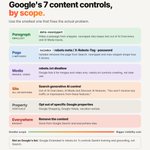
𝟳 𝘄𝗮𝘆𝘀 𝘁𝗼 𝗯𝗹𝗼𝗰𝗸 𝘆𝗼𝘂𝗿 𝗰𝗼𝗻𝘁𝗲𝗻𝘁 𝗶𝗻 𝗚𝗼𝗼𝗴𝗹𝗲 𝗦𝗲𝗮𝗿𝗰𝗵
Google updated its "Control what you share with Google Search" doc on Oct 21.
For publishers, think in scope, not method:
→ Paragraph: data-nosnippet hides a passage. nosnippet also keeps text out of AI Overviews and AI Mode inputs.
→ Page: noindex removes it from Search. nosnippet and max-snippet shape how it shows.
→ Site: the Search generative AI control. All or nothing for AI Overviews, AI Mode and Discover's AI features.
Site control caution, in Google's words:
→ "You won't receive any traffic or impressions from these features."
→ "Content from other sites will still be available in those features, and it may appear similar to yours."
You leave. Your competitors stay.
3 things news publishers should know:
→ 1. The AI control isn't a ranking signal for the rest of Search and doesn't affect AI training. Gemini training is Google-Extended.
→ 2. Top Stories now shows inside AI Overviews (NewzDash data: nearly 1 in 6 U.S. trending news results). My read: the site-wide opt-out likely removes you from that carousel too. Google hasn't said.
→ 3. Page-level AI controls aren't due until March 2027 under the UK CMA's timeline.
My take: use the smallest tool that fixes the problem. Every step up costs visibility, and Google is still where your readers come from.

𝐃𝐨𝐧𝐭 𝐥𝐞𝐭 𝐚 𝐆𝐄𝐎 𝐩𝐢𝐭𝐜𝐡 𝐝𝐞𝐜𝐤 𝐫𝐞𝐨𝐫𝐠𝐚𝐧𝐢𝐳𝐞 𝐲𝐨𝐮𝐫 𝐒𝐄𝐎 𝐭𝐞𝐚𝐦.
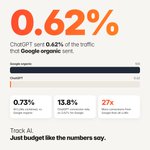
ChatGPT sent 0.62% of the traffic that Google organic did.
Not 6%. Not 20%. Less than 1%.
That's from @Marie_Haynes, who pulled 12 months of GA4 data across 100 sites and 145M+ sessions. Add every other LLM and it only moves to 0.73%.
The conversion numbers are the interesting part:
→ ChatGPT visitors converted at 13.8%
→ Google organic visitors converted at 3.02%
→ Google still drove 27x more conversions than all LLMs combined
Higher conversion rate, tiny volume. Both are true.
And in her data, ChatGPT visits have been going down since GPT-5 launched in August 2025.
For news publishers the gap is even bigger. Google traffic is still 400X what any AI platform sends.
Check your own GA4 before you borrow anyone's ratio.
How I'd split the effort:
1. Google first. Search, Discover, Google News, Top Stories. That's where the readers are.
2. Track AI visibility, but measure it properly. Repeat prompts, count citations, and match ChatGPT clicks on utm_source=chatgpt.com.
3. Don't let a GEO pitch deck reorganize your SEO team.
Track AI. Just budget like the numbers say.
Marie Haynes, GEO is a distraction: mariehaynes.com/geo-is-a-dis…

Google Discover doesn't demote stale stories. It removes them.
And it happens before ranking even starts.
That's from a Google paper on the system behind it, called SDF. Two filters:
1. Supersession
A newer article on the same topic makes yours outdated. Google's example: "Ohtani is weighing offers" goes stale the moment he signs.
2. Decay
A model predicts what share of a story's 30-day traffic it has already earned. Past 90%, it's out.
Google's reported result: user-filed staleness reports down 54.9% (supersession down 64.0%, decay down 34.4%).
What this means for publishers:
being first gets you in. Publishing the next development keeps you there. Your earlier version is what gets superseded, so ship the follow-up fast.
Table below. Paper and coverage in the first comment.
[You could add GDdash data on how fast stories drop out of Discover here]
First comment:
Google paper on arXiv (CIKM '26): arxiv.org/abs/2608.15780
Search Engine Journal, Oct 21: searchenginejournal.com/deta…

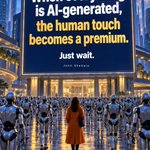
Dear publishers, when everything is generated by AI, the human factor will become a premium add-on. Just wait.
🤖 Made with AI

fully agree - Human Factor will become a premium add-on!
The more the internet looks like it was made by AI, the more valuable I think it will become to show evidence of human involvement.

Probably a hot take:
While it’s impressive how quickly LLMs can spin up websites, I think AI is accelerating a trend that’s been happening for years: the internet is starting to look increasingly self-similar.
AI tools often generate websites using the same design patterns, layouts, fonts, and aesthetics. So many new vibe-coded apps, company websites, and landing pages are starting to look identical (not to mention the content).
I’m not saying AI-generated websites look bad - they often look great. But when everything looks the same, differentiation becomes more valuable.
I have a feeling that as AI-generated websites become the norm, websites and online experiences with a unique aesthetic, an authentic voice, and evidence of real people behind the company will become a competitive advantage.
Not just because they look different, but because they may offer better user experiences and inspire more trust.
As the internet becomes flooded with AI-generated content and design, I suspect people will increasingly seek out experiences that feel genuinely human.
(For as long as humans continue browsing websites themselves, at least 😅)
We’re already seeing signs of this on social platforms and forums, where people are becoming increasingly skeptical of content that feels AI-generated and platforms are cracking down on AI content.
I’ve also seen many recent examples of Google deindexing entirely AI-generated sites. While that doesn’t necessarily mean the AI-generated design itself is the problem, it does make me wonder how search engines will evolve their ability to distinguish between generic, mass-produced experiences and genuinely original, useful ones that happen to use AI.
And I wouldn’t be surprised if search engines and LLMs increasingly favor the signals that their users are looking for - particularly originality, usefulness, and trust. (Google recently updated its documentation to emphasize human effort, originality, and skill as important considerations in evaluating content quality.)
The more the internet looks like it was made by AI, the more valuable I think it will become to show evidence of human involvement. 🤔🤔🤔

Expect a big announcement from Yahoo regarding technology of AI accessing news, and maybe payments! Can't wait.


#NESS2026 is about to start! can't wait

Less than 24 hours until NESS 2026: 20+ speakers, 3 days, virtual!🚀
newsseo.io/
How do news publishers grow when search, AI, and audience habits keep changing?
That’s what we’re tackling over three days with 20+ speakers:
→ October 13: News SEO
→ October 14: SEO & AI
→ October 15: Alternative Growth Channels
From Google Discover and AI Overviews to YouTube, Reddit, newsletters, and podcasts, we’ll explore practical ways to strengthen visibility and reach new audiences.
If you work in news SEO, audience development, or publishing, join us.
📅 October 13–15, 2026
💻 Fully virtual, with session recordings and presentations included.
See the agenda and get your ticket:
Hope to see you there!
#NESS2026

Laid off. Not left out.
One of the core values Barry Adams and I built NESS around is giving back to the News SEO community we care so much about.
And this isn’t something new.
For the past 5 years, we’ve run the NESS Giveback Program, providing free tickets to SEO professionals who have been laid off and discounted tickets to students who want to learn and grow in this space.
This year, we’re continuing that commitment: newsseo.io/giveback/
→ 20 FREE NESS tickets for SEO professionals who were recently laid off and are still looking for their next full-time role
→ 20 tickets at 50% OFF for journalism students interested in News SEO and audience growth
A conference ticket won’t solve everything.
But sometimes one new skill, one conversation, one introduction, or one connection can help open the next door.
That’s what this program is about.
If you know an SEO who was recently laid off, or a journalism student who would benefit from NESS, please send this to them.
And please repost/share this so we can get these tickets in front of the people who need them most.
Apply here: newsseo.io/giveback/
#NewsSEO #SEO #NESS2026 #Journalism #AudienceGrowth
🤖 Made with AI

Most of the best News SEOs don't have "News SEO" in their title.
newzdash.com/guide/top-news-…
They lead audience development at major publishers.
They sit inside newsrooms helping editors understand what audiences are searching for.
But they have never really been brought together in one place. So we built one.
Today we're publishing the 2026 News SEO & Audience Growth Experts directory, featuring 69 people helping shape how publishers grow audiences through search, Discover, AI and emerging platforms.
And one thing is important: This is not a ranking. There is no #1.
The directory is also broader than people who explicitly call themselves “News SEOs.”
That is intentional.
For now, here are the people included in the 2026 directory:
Barry Adams, Nicola Agius, Damien Andell, Vahe Arabian, Loren Baker, Justin Bank, Alli Berry, Shelby Blackley, Matthew Brown, Claudio E. Cabrera, Marlon Câmara, Marc Choquette, Harry Clarkson-Bennett, Virginie Clève, Mike Cook, Jens Fauldrath, Will Flannigan, Louisa Frahm, Glenn Gabe, Alessandro Giagnoli, Valérie Glutz, Calle Godani, Vivienne Goizet, Megan Harney, Jon Henshaw, Rachel Heseltine, Edward Hyatt, Gabriella Iannetta, Greg Jarboe, Ryan Kellett, Gerard Kijlstra, Topher Kohan, Oleg Korneitchouk, Sabine Langmann, Christine Liang, Sarah Marshall, Mateusz Mikoś, Richard Nazarewicz, Brendan O'Connell, Laura Oelker, Binti Pawa, Valentin Pletzer, Brian Provost, Lily Ray, Ryan Restivo, Aimie Rigas, Leonie Roderick, Gabriel Sands, Anna Sbuttoni, Jes Scholz, Barry Schwartz, Olaf Seydel, John Shehata, Carolyn Shelby, Maddie Shepherd, Adam Sherk, Marshall Simmonds, Rafael Simões, Dan Smullen, Clara Soteras, Kjeld Stein, Carly Steven, Kyle Sutton, Kenichi Suzuki, Simme Volkers, Tobias Willmann, Jessie Willms, Steven Wilson-Beales, Philippe Yonnet.

John Shehata retweeted

Google tests paying publishers for using its content in AI Overviews, AI Mode and Gemini through Search Console AI contribution pilot (something we actually spotted last April) seroundtable.com/google-al-c…


𝗠𝗮𝗷𝗼𝗿 𝗨𝗞 𝗻𝗲𝘄𝘀 𝘀𝗶𝘁𝗲 𝗺𝗶𝗴𝗿𝗮𝘁𝗲𝗱 𝗳𝗿𝗼𝗺 .𝗰𝗼.𝘂𝗸 𝘁𝗼 .𝗰𝗼𝗺 𝗮𝗻𝗱 𝗹𝗼𝘀𝘁 𝟵𝟴% 𝗼𝗳 𝗶𝘁𝘀 𝗚𝗼𝗼𝗴𝗹𝗲 𝘃𝗶𝘀𝗶𝗯𝗶𝗹𝗶𝘁𝘆 𝗶𝗻 𝟮 𝘄𝗲𝗲𝗸𝘀 👇
A major UK publisher recently moved its entire site from .co.uk to .com. Overnight. One global domain, one brand. The rationale was sound: a group with global newsrooms wanted to stop being classified by ad systems as a UK site. That logic holds for direct and branded traffic.
𝗜𝘁 𝗱𝗼𝗲𝘀 𝗻𝗼𝘁 𝗵𝗼𝗹𝗱 𝗳𝗼𝗿 𝗻𝗲𝘄𝘀 𝘀𝗲𝗮𝗿𝗰𝗵. Every publisher considering a consolidation needs to sit with this. @NewzDash UK tracking since the migration, across Top Stories and organic results for trending news queries:
▪ 𝗧𝗵𝗲 𝗯𝗮𝘀𝗲𝗹𝗶𝗻𝗲: For 14 months, the .co.uk domain held a steady 1% to 2% visibility across all news results (sites of this size usually sit at 3-6%).
▪ 𝗧𝗵𝗲 𝗱𝗿𝗼𝗽: In the week of the migration, visibility fell off a cliff. Two weeks later it sat at 0.02%. A 98% loss.
▪ 𝗧𝗵𝗲 𝗺𝗶𝘀𝘀𝗶𝗻𝗴 𝗵𝗮𝗻𝗱𝗼𝗳𝗳: The .com domain did not pick up the slack. Months later, it shows only a handful of isolated appearances.
▪ 𝗧𝗵𝗲 𝗰𝗼𝗻𝘁𝗲𝘅𝘁: The site had already lost visibility in several core updates. The migration took what was left, and four months on there is no sign of recovery.
▪ 𝗧𝗵𝗲 𝗻𝗲𝘄𝘀 𝗴𝗮𝗽: Traditional SEO tools, which track a fixed set of mostly evergreen keywords, put the drop at 60-70%. NewzDash measures visibility on what is trending now, and that is where the damage was deepest: 98%.
(Note: internal technical issues likely contributed to the decline as well.)
𝗧𝗵𝗲 𝘃𝗶𝘀𝗶𝗯𝗶𝗹𝗶𝘁𝘆 𝗱𝗶𝗱 𝗻𝗼𝘁 𝘁𝗿𝗮𝗻𝘀𝗳𝗲𝗿. 𝗜𝘁 𝘃𝗮𝗻𝗶𝘀𝗵𝗲𝗱. When a site changes drastically (new CMS, full redesign, new domain), Google reevaluates it from scratch.
I call it the Google Reset.
Google's news surfaces (Top Stories, the News tab, Discover) weigh signals tied to the hostname: publication history, topical authority, freshness patterns, and editorial trust built over years.
𝗔 𝟯𝟬𝟭 𝗿𝗲𝗱𝗶𝗿𝗲𝗰𝘁 𝗰𝗮𝗿𝗿𝗶𝗲𝘀 𝗹𝗶𝗻𝗸 𝗲𝗾𝘂𝗶𝘁𝘆. 𝗜𝘁 𝗺𝗮𝘆 𝗻𝗼𝘁 𝗰𝗮𝗿𝗿𝘆 𝘁𝗵𝗮𝘁 𝗵𝗶𝘀𝘁𝗼𝗿𝘆. The new domain is a stranger to breaking-news ranking systems, and strangers do not get ranked.
If you are planning a media consolidation, three things to do differently:
1️⃣ 𝗠𝗶𝗴𝗿𝗮𝘁𝗲 𝗼𝗻𝗲 𝘀𝗲𝗰𝘁𝗶𝗼𝗻 𝗮𝘁 𝗮 𝘁𝗶𝗺𝗲. Start with medium-traffic sections, then analyze. If one cracks, core traffic stays intact while you diagnose.
2️⃣ 𝗠𝗼𝗱𝗲𝗹 𝗻𝗲𝘄𝘀 𝘀𝗲𝗮𝗿𝗰𝗵 𝘀𝗲𝗽𝗮𝗿𝗮𝘁𝗲𝗹𝘆 from organic and branded, before the board signs off. Branded and direct traffic survive a domain change. Trending-query visibility runs on a different system with a different memory.
3️⃣ 𝗕𝘂𝗶𝗹𝗱 𝗮𝘂𝘁𝗵𝗼𝗿𝗶𝘁𝘆 𝗼𝗻 𝘁𝗵𝗲 𝗻𝗲𝘄 𝗱𝗼𝗺𝗮𝗶𝗻 𝗯𝗲𝗳𝗼𝗿𝗲 𝗰𝘂𝘁𝘁𝗶𝗻𝗴 𝗼𝘃𝗲𝗿. Get it crawled, indexed, and showing in Google News surfaces first. Only then route breaking traffic to it.
#SEO #PublisherSEO #GoogleNews #SiteMigration

John Shehata retweeted

We’re rolling out new features to help you tailor Search, Discover, and Google News to your interests. You’ll be able to:
📰 Quickly add a site as a Preferred Source, so you can find it more easily in Top Stories, AI Overviews, and AI Mode.
🔎 Customize your Discover feed in the Google app in your own words, so you see more of the topics you care about.
🎧 Curate your daily audio briefings in the Google News app on Android to your favorite topics.
Unsolicited SEO Tip for News Publishers: Blocking Google AI is not one decision. The control you choose can preserve your visibility or remove it.
Since we published our analysis on Top Stories appearing inside AI Overviews, I have received a ton of private messages and emails asking how the different Google controls impact news publishers.
Full analysis: newzdash.com/guide/top-stori…
Here is a quick chart breaking it down.
My recommendation for most publishers:
↝ Block Google-Extended unless you have a paid agreement with Google or a strategic reason to allow your content to support Gemini training and grounding.
↝ Google says blocking Google-Extended does not affect Search inclusion or rankings. It also does not opt publishers out of AI Overviews, Top Stories, or Discover.
↝ Be much more careful with the Search Console generative AI exclusion.
That setting removes your links and content from AI Overviews, AI Mode, and generative AI features in Google Discover. Google says excluded publishers receive no impressions or traffic from those features, while other eligible publishers may still appear.
The Discover impact is especially important.
↝ Google is introducing AI-generated summaries and clustered experiences within Discover. Publishers do not have a separate control that lets them block the AI summary while keeping their links and attribution inside the same generative feature.
↝ Excluding your site means your content cannot be used in the summary, cannot be linked from that feature, and cannot receive impressions or traffic from it.
↝ For many publishers we work with, Discover represents 70% or more of their Google traffic. Giving up visibility in generative Discover experiences could therefore carry a much larger risk than losing an AI Overview citation alone.
↝ The nosnippet tag triggers a "Semi-Block" on Google Discover because it legally forces Google to strip away the descriptive text preview required to build a standard visual feed card. Without this text, the incomplete card layout breaks the user experience, prompting Discover's matching algorithms to heavily suppress your article's impressions and reach. To protect proprietary content from AI summaries without destroying your traditional Discover traffic, you should use the inline data-nosnippet HTML attribute to block only specific sections of text while leaving the rest open for standard previews.
The key distinction:
Google-Extended limits certain AI training and grounding uses without sacrificing Search visibility. The GSC AI exclusion removes publishers from Google’s user-facing generative features and carries a much higher visibility and traffic risk.
#NewsSEO #GoogleDiscover #AIOverviews #GoogleSearch #TopStories #DigitalPublishing #NewzDash
