

Doctor | LifestyleMedicine| Academic Philosopher| Health #AI #Robot #digitaltwin| Automating Medical Research University & hospital| CTO of Hospital & Pharma
Joined April 2013
- Tweets29.8K
- Following7.5K
- Followers1K
- Likes76.6K





Pinned Tweet
Hello Twitter!
My team is trying to automate pharma industry and all of its layers(starting in global south)
Drop me a DM or reply, if you have insights or information especially if you work or worked in pharma industry
If ended up with Anat, Physio and Biochem - Do this.
>Buy macbook and iphone
>Download Android Studio + Antigravity
>PICK ONE NICHE
>vibecode web + mobile app
>go deep into topic with video, podcast , ppt, interactive games with your brand
>Deploy it to playstore and appstore


J Sam🌐 retweeted

A ribosome model that renders the molecules it rejects, and the protein almost disappears behind them
Most animations show the correct tRNA gliding in and docking, one clean arrival per codon, which is the one frame of the process that's least representative of it.
This one simulates the sampling itself, so every near-miss that arrives, gets tested and bounces off is drawn too:
> Sample: tRNAs arrive by diffusion, mostly wrong ones, at measured rates
> Test: each is held against the codon just long enough to fail
> Keep: the one that fits proceeds, and the count of rejects is logged per codon
• What the rejects actually look like
> Dozens of arrivals per codon, nearly all of them wrong and nearly all brief
> A near-cognate that fits well enough to linger, and still gets released
> The correct one showing up looking exactly like the others until it doesn't
• Why showing the failures matters
> Accuracy isn't recognition, it's rejection repeated until one survives
> The energy budget makes sense only once you count what got thrown away
> A mistranslation is visible as a near-miss that stayed half a beat too long
One codon renders with its full sampling history in about two seconds.
And the part that broke my brain:
The textbook version makes translation look like a key finding its lock.
The simulation looks like a door being tried by a crowd until someone's key works.
Same process. One version only shows you the molecule that succeeded.
The machine was never good at choosing.
It was relentless at refusing ↓


I keep saying am going to build and drive the fastest car ever with fastest driver but I have never owned a car, never driven a car and doesn't even have a license to drive a car.
Thats how retarded AI labs sound when they say they will make clinical trials faster
Wants to accelerate clinical trials but doesn't even own a single hospital
Does the people adivising top C level executives in AI labs low IQ??


This made me laugh.
25 year-old professional podcaster @dwarkesh_sp : I don't get it. If I were you and had country-of-geniuses-level AI, I'd be happy to buy $5 trillion of compute!
Dario, founder of a $380B AI model company growing at 10X per year: Bro! $300 billion of compute per year in two years is a lot, OK? It's a lot! We don't want to go bankrupt if our forecasts are off by a year.
J Sam🌐 retweeted

Zaten 2026'da Tıp dışındaki tüm bölümler işsizlik garantili. Bilgisayar mühendisleri AI yüzünden kovulmamak için günde 14 saat ekrana bakıp antidepresan yutarken, adamlar yeşil alanda grip hastasına Parol yazıp 150 bin lira devlet maaşı alıyor. YKS'de Tıp yazmayan net enayidir.
unavailable
J Sam🌐 retweeted

Here’s a skill for that:
/be-ambitious


J Sam🌐 retweeted

Now we know robots can take blood samples safely, but can you imagine a robot performing an ultrasound exam?
A study just proved that it is possible.
The authors developed an autonomous lightweight ultrasound robot comprising an AI agent that integrates multimodal perception with memory attention.
"Our robot can autonomously acquire expert-level standard liver ultrasound planes and detect pathology in patients...
Our system performs effectively on rapid-motion individuals and in wilderness environments. This work represents the first demonstration of autonomous sonography across multiple challenging scenarios, potentially transforming access to expert-level diagnostics in underserved regions."
It is designed for now for regions with limited medical resources. So your next ultrasound sonographer will not fly into the room as a robot anytime soon.
The study: nature.com/articles/s41467-0…

J Sam🌐 retweeted

Ever wondered why a coronary occlusion gives the ECG it does?
Block any part of the coronary circulation on a 3D heart and watch the 12-lead (and the echo!) evolve.
Free for learning and teaching. Have fun!
cliffreid.com/culprit
#FOAMed #ECG #OMI #MedEd #Cardiology
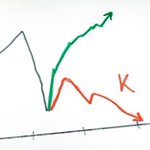
Median salary of entry-mid level medical attending consultants are going down. I keep seeing 3-10 LPM salary demographic shrinking to non existence but more people entering > 10 LPM
Also I see MBBS Drs entering >10 LPM through entrepreneurship and influencership

J Sam🌐 retweeted

This is a virtual human body with 700 muscle actuators, 206 joints, and 90 body segments.
It's fully open source, and researchers can use it to simulate human movement through muscle-level control.
J Sam🌐 retweeted

Claude 5.5 Sonnet built this entire Scottish Highland steam train scene.
Pure code. Zero 3D assets.
• 770k tokens burned
• ~1 hour generation time
• Procedural viaduct, terrain, and particle smoke
Is procedural 3D completely replacing traditional asset pipelines? 🚂
J Sam🌐 retweeted
A molecular model that only reports the connections no single paper could have seen
Most research builds one link at a time, a protein to a pathway, a pathway to a symptom, and each study stays inside the field that funded it.
This one holds every published link as a graph and goes looking for paths that cross fields nobody reads together:
> Link: 40 years of findings become edges, each dated and sourced
> Walk: it traverses paths of three and four hops across different literatures
> Surface: only paths where no two edges come from the same research group
• What crossing fields turns up
> A metabolic enzyme tied to a neurological symptom through two unrelated papers
> A drug side effect explained by a pathway described in agriculture research
> Two diseases sharing a mechanism neither field had reason to compare
• Why nobody found these by reading
> A four-hop path spans four journals nobody subscribes to at once
> Each individual edge is unremarkable, the path is the finding
> Specialisation is what makes the gap, not laziness
• How it avoids inventing connections
> Every hop names the paper and the year it held true
> A path with one expired edge is shown broken, not completed
> It proposes the experiment that would test the path, or drops it
One full traversal across the corpus runs in under three minutes.
And the part that broke my brain:
Two labs published halves of the same mechanism eleven years apart.
Neither cited the other, and nothing in either field would ever have connected them.
Same literature. One version can only see what someone already assembled.
The discovery was never in a new experiment.
It was sitting between papers nobody read together ↓
J Sam🌐 retweeted

🚨 Ravi Tamta, a BA graduate from Almora, Uttarakhand, has built an electric flying vehicle without engineering degree.
I think in India , all jobs between 1 to 10 LPM will be done by AI-Robots. Sweet spot PMF for AI Robot Disruption.
>10 LPM guy will slowly earn more by monopolizing market to earn 1 crore PM thanks to their branding.
1 Crore Per month guy will slowly earn 10 crore PM.
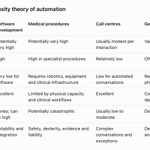
Anthropic also agrees with these assertions.
Competency only let robot be bought by research labs.
Pricing is the bottleneck for robot to be bought in market.
anthropic.com/research/what-…


