

Formerly known as “Jaldi- The Late”
Joined July 2026
- Tweets1.8K
- Following258
- Followers659
- Likes355





Pinned Tweet
*Sees two women having a normal interaction*
*Expects normal comments*
Le Indian Netizens :- “No grooming, looksmaxxing, no training , colonial mindset, dark skin why?, foreign reputation ruined man,…”


I think Hinduism is not *essentially* anything in the sense that there are no set of necessary and sufficient criteria for being a Hindu.
You can go for a family resemblance definition, but that must be provisional and you must accept that you’re applying it anachronistically.

With no judgment, I am sincerely interested to know how many Hindus characterize their faith as essentially monotheistic (e.g., Shiva and Vishnu are different facets of the same Brahman), essentially polytheistic (e.g., Shiva and Vishnu are distinct Godheads), or something else?
37%Essentially monotheistic
30%Essentially polytheistic
33%Something else
1,597 votes • 6 hours Shashwat retweeted

A good time to study Hayek - especially if you are socialist or socialist-adjacent (as I am not) or if you are positively inclined toward redistribution and regulation (as I am).
cambridge.org/core/elements/…


Shashwat retweeted

One of the best atheologies is Graham Oppy’s naturalistic metaphysical actualitism: the actual world is necessary. It completely undercuts natural theology. However, there are strong reasons to reject it, and it’s a highly contentious view. No one should confidently believe it.



Shashwat retweeted

Am I the only one who is hearing about an account named Laphingwala for the first time?...


Shashwat retweeted
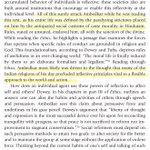
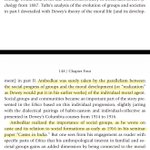
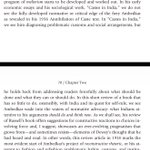
A rather boring read that tries to contrast the 25 year old Ambedkar’s views on caste with the latter’s rhetoric of reconstruction we see later in 1936, with a lot of insinuations but no engagement with scholarship that has tried to answer this question.
Thread 🧵

ALT https://e3w.dwrl.utexas.edu/issues/volume-25-spring-2025/race-and-identity/the-evolution-of-pragmatism-in-india-an-intellectual-biography-of-b-r-ambedkar-by-scott-r-stroud/

Dr Ambedkar wrote two of India’s most quoted texts on caste, and they do not agree with each other. In 1916, he explained caste as an endogamy machine sustained by social pressure; and in his famous 1936 "Annihilation of Caste" address, he blamed the Shastras and told reformers to "dynamite" scripture.
This essay asks an uncomfortable question: did Ambedkar change his mind because the evidence demanded it, or because his destination — exit from Hinduism — needed a different culprit?
jungindien.in/blog/ambedkar-…

Shashwat retweeted
Stroud’s analysis is merely a step forward, and shows one of the influences on Ambedkar’s evolving thought.
As a believing Hindu myself it’s baffling that one writes anything about Ambedkar without taking into consideration other (especially Dalit) scholarship on him.
A rather boring read that tries to contrast the 25 year old Ambedkar’s views on caste with the latter’s rhetoric of reconstruction we see later in 1936, with a lot of insinuations but no engagement with scholarship that has tried to answer this question.
Thread 🧵
ALT https://e3w.dwrl.utexas.edu/issues/volume-25-spring-2025/race-and-identity/the-evolution-of-pragmatism-in-india-an-intellectual-biography-of-b-r-ambedkar-by-scott-r-stroud/
Dr Ambedkar wrote two of India’s most quoted texts on caste, and they do not agree with each other. In 1916, he explained caste as an endogamy machine sustained by social pressure; and in his famous 1936 "Annihilation of Caste" address, he blamed the Shastras and told reformers to "dynamite" scripture.
This essay asks an uncomfortable question: did Ambedkar change his mind because the evidence demanded it, or because his destination — exit from Hinduism — needed a different culprit?
jungindien.in/blog/ambedkar-…
Shashwat retweeted
Ambedkar’s pragmatic critique of caste drawing on Ethics and Democracy and Education would then lead him to think of Hinduism as precluding the reflective principles vital to a flexible approach to world and action that leads to individuals shaping behaviour and leading growth.

Shashwat retweeted
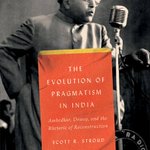
Keeping Scott Stroud’s rather excellent reconstruction of Ambedkar’s trajectory of thought and the influence of Deweyian Pragmatism on him, we see Ambedkar as a pragmatist, a man who was faced with very real forms of alienation and oppression, and chose to fight it.

