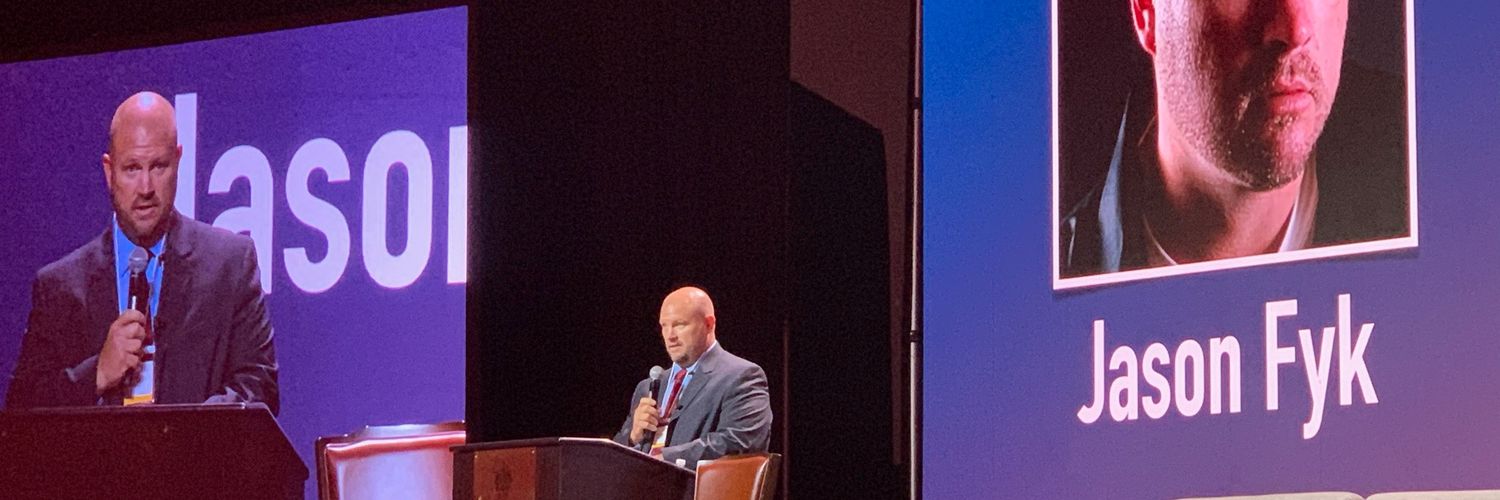
Founder: Social Media Freedom Foundation 501c3. Section 230 expert consultant. Published author and media personality. Fyk vs. Facebook / Fyk vs. United States
USA
Joined November 2012
- Tweets14.1K
- Following951
- Followers39.2K
- Likes4.9K





Pinned Tweet
🚨🚨🚨 VINDICATED 🚨🚨🚨
For eight years, I have argued one simple thing:
Facebook was never given “immunity” from being sued.
But that is exactly how my case was killed.
Facebook told the court Section 230 gave it immunity from the lawsuit itself, not just a defense to my claims. They did not have to prove good faith, prove they acted lawfully, or really prove anything.
The court adopted that argument almost verbatim and threw my case out with prejudice before discovery, amendment, or any real examination of what Facebook actually did. Essentially, I was not allowed to sue them because of Section 230 “immunity.”
In every filing I kept saying: that is not what the law says.
Eventually I was told I was entitled to my “opinion,” the issue was “definitively decided,” that I was “perpetually relitigating” it, and my lawyer was even warned about continuing to press it or face sanctions.
Except there was a YUGE problem:
Nobody had ever actually decided whether the law provides "immunity from suit."
I told the Ninth Circuit exactly that in March 2025. I did not simply tell them they were wrong. I told them they had never actually considered the immunity question. My motion was denied.
Then, seventeen months later, California v. Meta happened.
Meta again argued that Section 230 had repeatedly been treated as immunity from suit and therefore immunity should be “implied.” In other words, repetition had become the substitute for actually deciding what the law says. That's crazy.
However, this time the Ninth Circuit actually examined the question. They finally did their job.
It admitted its earlier use of “immunity” had been “somewhat loose,” said cases are not precedent for things merely "assumed," and then held:
Section 230 is a defense to liability, NOT immunity from suit.
That is the exact distinction I have been fighting over for eight years.
So yeah, I was right, that is vindication.
The courts have long treated immunity as settled simply through repetition. Have you ever been told this is already settled? It wasn't.
The Ninth Circuit just said that prior usage was not binding because the question had never actually been formally considered, Congress knows how to create immunity when it wants to, and Congress did not do that here.
So after eight years of being told this was long settled, I was proven correct on both points: it had never been settled, and when the Ninth Circuit finally settled it, the answer was the one I had been arguing all along. There is no immunity.
Now, this does not mean I have already won my underlying case.
It means the legal premise used to stop me from ever getting my case heard has now been completely rejected by the appellate court that controls my case. In plain English: the immunity used to kill my case never existed so my dismissal is not based on law.
The question now is whether the courts have the integrity to acknowledge what happened and reopen a case that resulted in a grave miscarriage of justice. I got screwed.
We shall see.
But this is much bigger than me.
Big Tech’s harms are not limited to allegedly addicting kids to social media.
Their business models give them enormous punlisher control over businesses, audiences, advertising, visibility, money and livelihoods.
If a platform uses that power unlawfully, the question should be whether what it did was legal.
The answer cannot simply be:
“Section 230. We’re immune. Case over.”
That world just ended!
I do not expect miracles from the District Court. They have already shown they will not follow controlling law.
But if it refuses to fix this, the appeal goes right back to the Ninth Circuit.
And this time the Ninth Circuit has already answered the question:
Section 230 is a defense. It is not immunity from suit.
Eight years later, the law finally says what I have been saying all along.
There is no Big Tech immunity!


I wanted to join the Bongino Block Party. The guy is nothing more than a profiteering bully. I'm glad so many people now see it. @TheBabylonBee @iheartmindy @annvandersteel


Jason Fyk retweeted

HOLY $H!T... The former Twitter executives are F***ED, and so is the FBI. Rep. Nancy Mace may have just single-handedly sent them all to GITMO! #TwitterFiles #FBI #NancyMace
To read our reply brief: xitter.cf/JasonFyk/status/211271…


Jason Fyk retweeted

Big day. I'm launching Ed Martin Consulting Group.
I've spent my life around courtrooms. And a lot of cases get decided in public long before a judge ever rules.
So we help good people win in the court of public opinion. Only clients I believe in.
emcg-edmartin.surge.sh


Jason Fyk retweeted

Jason Fyk GOES TO WAR Against Section 230, Big Tech Immunity rumble.com/v7gg5oc-jason-fyk…

🚨 META'S IMMUNITY IS CRACKING. AND THE TIMING SPEAKS VOLUMES.
For years, Big Tech has relied on Section 230 as near-absolute immunity from lawsuits. That protection is now collapsing. Finally!
I've spent YEARS challenging two fundamental errors in Fyk v. Facebook: immunity from suit and the courts' distorted interpretation of "publisher." One has now been categorically rejected. The other is being openly challenged by Ninth Circuit judges!
April 28: In Doe v. Meta, Ninth Circuit judges criticize Dyroff for stretching the meaning of "publisher" beyond recognition (argument 1). They call for the FULL court to reconsider its own precedent. That could change EVERYTHING!
August 7: Meta petitions SCOTUS to overturn two unfavorable state supreme court rulings involving Section 230. The state courts go it right.
August 10: Just THREE DAYS later, the Ninth Circuit rules in California v. Meta that Section 230 is NOT immunity from suit. I was VINDICATED on argument 2! (See pinned post.)
August 17: The Ninth Circuit denies en banc review in Doe, despite two judges formally calling for reconsideration.
August 26: Meta agrees to a proposed settlement worth up to $17.1 BILLION. Do you see what's happening yet?
September 17: Meta quietly withdraws BOTH Supreme Court petitions, leaving the unfavorable rulings standing.
🤔 WHY?
The settlement offers one explanation (of course). But another reasonable inference is that Meta (more than likely) recognizes the danger of SCOTUS further dismantling its legal protections nationwide.
If Meta appeals and loses, it could cement its legal exposure across the entire country. Maybe Meta understands that risk better than anyone. I sure do.
But wait, there's more!
For years, courts relied on Dyroff and required plaintiffs to "overcome immunity," often dismissing lawsuits before discovery.
Now that California v. Meta has rejected immunity from suit altogether, some courts appear to be finding another route: declaring the Section 230 defense "obvious on its face" to achieve immunity from suit under a different name.
Same result. Different terminology. And the same unresolved problem with "publisher."
An affirmative defense can justify dismissal when the complaint actually establishes it. But courts cannot simply ASSUME that every claim against Big Tech concerns publishing someone else's content.
Here's the problem I've challenged for YEARS:
How does a company's own misrepresentation or fraudulent conduct automatically make it "the publisher" of SOMEONE ELSE'S content?
IT DOESN'T.
Courts have blurred the distinction between treating a company as "the publisher" of third-party information and treating virtually anything a platform does as "publishing" in the abstract.
That's my FIRST argument that remains unresolved, and Doe confirms that 9th Circuit judges themselves are now officslly questioning how far this interpretation has gone.
My second vindication may be coming soon.
And there's another critical distinction: Section 230(c)(2)(A) expressly requires GOOD FAITH for its protection of specified content-restriction decisions. Good faith cannot simply be presumed/skipped to excuse alleged misconduct.
I intend to bring these unresolved issues directly before the courts through Fyk v. Facebook.
And if Fyk is reopened, Meta could face a MUCH bigger problem:
How many lawsuits were dismissed under an immunity-from-suit premise that was never actually decided? How many more fell because courts stretched "publisher" beyond the statutory language?
THINK ABOUT THE IMPLICATIONS.
One of my two central arguments has now been vindicated as a matter of Ninth Circuit law. The other is facing direct judicial criticism.
I believe Meta sees what's coming.
The era of ASSUMED immunity for Big Tech’s own moderation decisions, sustained by courts repeatedly ignoring both the “immunity” problem and the meaning of “publisher,” is almost over. One argument down, 1 to go.
🔥ACCOUNTABILITY IS COMING!🔥
Pinned post for reference.
🚨🚨🚨 VINDICATED 🚨🚨🚨
For eight years, I have argued one simple thing:
Facebook was never given “immunity” from being sued.
But that is exactly how my case was killed.
Facebook told the court Section 230 gave it immunity from the lawsuit itself, not just a defense to my claims. They did not have to prove good faith, prove they acted lawfully, or really prove anything.
The court adopted that argument almost verbatim and threw my case out with prejudice before discovery, amendment, or any real examination of what Facebook actually did. Essentially, I was not allowed to sue them because of Section 230 “immunity.”
In every filing I kept saying: that is not what the law says.
Eventually I was told I was entitled to my “opinion,” the issue was “definitively decided,” that I was “perpetually relitigating” it, and my lawyer was even warned about continuing to press it or face sanctions.
Except there was a YUGE problem:
Nobody had ever actually decided whether the law provides "immunity from suit."
I told the Ninth Circuit exactly that in March 2025. I did not simply tell them they were wrong. I told them they had never actually considered the immunity question. My motion was denied.
Then, seventeen months later, California v. Meta happened.
Meta again argued that Section 230 had repeatedly been treated as immunity from suit and therefore immunity should be “implied.” In other words, repetition had become the substitute for actually deciding what the law says. That's crazy.
However, this time the Ninth Circuit actually examined the question. They finally did their job.
It admitted its earlier use of “immunity” had been “somewhat loose,” said cases are not precedent for things merely "assumed," and then held:
Section 230 is a defense to liability, NOT immunity from suit.
That is the exact distinction I have been fighting over for eight years.
So yeah, I was right, that is vindication.
The courts have long treated immunity as settled simply through repetition. Have you ever been told this is already settled? It wasn't.
The Ninth Circuit just said that prior usage was not binding because the question had never actually been formally considered, Congress knows how to create immunity when it wants to, and Congress did not do that here.
So after eight years of being told this was long settled, I was proven correct on both points: it had never been settled, and when the Ninth Circuit finally settled it, the answer was the one I had been arguing all along. There is no immunity.
Now, this does not mean I have already won my underlying case.
It means the legal premise used to stop me from ever getting my case heard has now been completely rejected by the appellate court that controls my case. In plain English: the immunity used to kill my case never existed so my dismissal is not based on law.
The question now is whether the courts have the integrity to acknowledge what happened and reopen a case that resulted in a grave miscarriage of justice. I got screwed.
We shall see.
But this is much bigger than me.
Big Tech’s harms are not limited to allegedly addicting kids to social media.
Their business models give them enormous punlisher control over businesses, audiences, advertising, visibility, money and livelihoods.
If a platform uses that power unlawfully, the question should be whether what it did was legal.
The answer cannot simply be:
“Section 230. We’re immune. Case over.”
That world just ended!
I do not expect miracles from the District Court. They have already shown they will not follow controlling law.
But if it refuses to fix this, the appeal goes right back to the Ninth Circuit.
And this time the Ninth Circuit has already answered the question:
Section 230 is a defense. It is not immunity from suit.
Eight years later, the law finally says what I have been saying all along.
There is no Big Tech immunity!
Jason Fyk retweeted

🚨BREAKING🚨
ATF has finally issued guidance following GOA’s historic NFA victory.
The agency says it will no longer enforce federal registration and approval requirements for suppressors and short-barreled firearms for everyone, nationwide.


Jason Fyk retweeted
🚨BREAKING🚨
@TheJusticeDept just appealed GOA’s win against Biden’s engaged in the business rule.
DOJ is fighting to preserve every part of Biden’s rule—even though President Trump promised to “rip it up and throw it out on day one.” Why is DOJ still working against Trump?


There is no "immunity" from suit. Big Tech is now open to being sued for their conduct.

🔥 EIGHT YEARS.
.@JasonFyk refused to let “immunity” be the last word in his fight against Facebook.
Now the Ninth Circuit has ruled that Section 230 provides a defense to liability, not immunity from being sued. That distinction matters when powerful platforms invoke the statute to avoid accountability.
This does not automatically reopen Fyk’s case or eliminate Section 230 protections. But it strengthens the question he kept asking: Did the courts apply the law Congress actually wrote?
Big Tech can afford years of litigation. Most Americans cannot. Fyk kept fighting anyway.
Read @MaureenSteele_ report below in comments.

