

Suffolk arable and poultry farmer, holiday cottage caretaker, husband, dad of two, and frustrated with what mess we are leaving for the next gen! #ITFC
Joined February 2015
- Tweets41.7K
- Following1.4K
- Followers3.9K
- Likes51K




If Carrick goes, please don’t fall into the bear trap of managing #ManU Kieran McKenna! It’s not worth your talents! You’d be better off elsewhere (even though I’m sure #itfc would like the cash!🤣) 👇

🚨Wayne Rooney reacts to Manchester United’s humiliating 3–0 defeat to Bournemouth:
🗣️Rooney: “I watched that and felt sick. A group of players who looked like they couldn’t be bothered, a team with no identity, no fight and no idea what they’re supposed to be, and a club that has spent over a decade actively destroying everything that made it special. That’s what this 3–0 humiliation at home to Bournemouth actually was.
I feel for Michael. I really do. Deep down he knows this is probably the end for him. You can see it in his face. He’s a good lad, a proper United man, and he’s been handed a squad that doesn’t have the character or the quality to compete. But let’s stop pretending he’s the problem. He isn’t. Manchester United’s crisis starts right at the top — with the people who keep making the same catastrophic decisions, the same disastrous recruitment, the same lack of any clear direction year after year. This club has been in institutional decline since Sir Alex left, and every new manager is just another scapegoat for the people who actually run the place.
Look at that performance today. From the first whistle there was no urgency. Bournemouth scored from a set piece because half the team switched off. Then Yoro slips over in his own box and they walk it in. Then the goalkeeper comes charging out and gets done from a ridiculous angle. That’s not tactics. That’s a team that has no defensive organisation, no concentration, and no pride. When things go wrong, there is zero response. No leaders. No one grabbing the game. Just players standing around looking sorry for themselves while the fans who pay their wages are left embarrassed.
And this squad… some of these players are among the most embarrassing I’ve ever seen wear that shirt. The mentality is soft. The quality in big moments is nowhere near the standard this club used to demand. The character is missing. They care more about themselves than the badge. You saw it with the comments this week. They throw their toys out of the pram the second they’re criticised and then put in a performance like this. It’s pathetic.
People will scream for Carrick to be sacked. Fine. Do it. But don’t kid yourselves it changes anything. You could appoint the best manager in world football tomorrow morning and this club would still be a mess. Because the problems run far deeper than tactics or formations. The structure is broken. The recruitment is broken. The standards are gone. The accountability is non-existent. The same cycle of failure repeats every single season while the people at the top hide behind the next manager they can hang out to dry.
This club has lost its identity. It used to be about winning, about standards, about never accepting second best. Now it’s about excuses, soft players, and a revolving door of managers who get blamed for a mess they didn’t create. Supporters are being forced to watch the same collapse over and over again, and it’s painful because we all remember what this club used to be.
Until the people running Manchester United finally look in the mirror and accept responsibility for the mess they’ve created, the suffering will continue. No matter who is standing on the touchline.


Well last night was a blast, went to see my favourite band The Wonderstuff and The Inspiral Carpets at the UEA! Eighty three years of playing between them, but sound just as good as back in the early 90’s. 👊 Hup!
@mileshuntTWS @inspiralsband

This tidiness trope needs to stop, @BenGoldsmith because it distracts from the real reasons why hedgehogs are disappearing.
Weather extremes are affecting their food supply (this year no slugs and worms gone deep due to drought). More on this later..1/9 bbc.co.uk/news/articles/cly5…


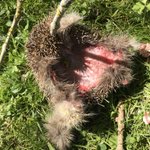
And that leaves the last villain; Badgers! Their populations have exploded especially in the last decade, and I’ve witnessed first hand what they can do in dry conditions when they themselves can’t find slugs and worms to eat; they turn to eating hedgehogs 8/9


So @BenGoldsmith et al why not go after the real issues to why hedgehogs are declining before it’s too late to do anything about it! Or does this not fit your narrative of bashing farmers wherever and whenever you can? 🤔 9/9
Jeremy Squirrell retweeted

The decline of the hedgehog is mainly caused by the huge recent expansion of the badger population. In both time and place there is a strong negative correlation between badger numbers and hedgehog numbers.
The scientific evidence that an increase in Mr Brock may well be the chief cause of Mrs Tiggywinkle’s demise is overwhelming.
There’s the direct evidence – the hollowed-out prickle-bearing skins left behind after a badger eats a hedgehog. Only badgers can open a hedgehog after it rolls up in defence with prickles on the outside. Foxes and dogs cannot. Badger predation is often found to be the main cause of hedgehog death in studies in this country.
There’s the timing evidence. The decline in hedgehogs coincided with the rise in badgers since the latter’s protection began in the 1970s and was strengthened in the 1990s. Anecdotally, there are clear-cut cases to show this is likely to be cause and effect, not coincidence. Kew Gardens had a thriving hedgehog population until the mid 1980s when badgers first arrived there. Today, says the Royal Botanic Gardens’ website, “Kew is teeming with badgers”. There are now more than 20 badger setts and hedgehogs are hardly ever seen, and if they are don’t last long. Habitat change and development cannot be the cause in Kew, because there has not been any.
There’s the spatial evidence. Throughout England hedgehogs (great worm eaters) have vanished from worm-rich pastureland, where badgers thrive, and cling on only in suburban gardens and amenity grassland, where badgers so far have not penetrated much. Even here, as one study put it: “the probability of hedgehog occurrence in suburban habitats declined towards zero in areas of high badger density.” As a general rule, wherever badgers are present at a density higher than about one main sett every four square kilometres, hedgehogs are absent. In most of rural England, sett density is two or three times higher.
There’s the behavioural evidence. Back in the 1990s, ecologists discovered that the smell of badgers alone is enough to deter hedgehogs from entering an area. And hedgehogs released into areas of excellent habitat high-tailed it out of there if they smelt badger. They do not wait to be eaten.
There’s the international evidence. Sweden has also blamed its decline in hedgehogs on rising badger numbers. In the Netherlands, scientists reported this yearthat hedgehogs are now confined mostly to urban areas, despite roads and development, because of the spread of badgers in rural areas.
There’s the experimental evidence, which is the clincher. The randomized badger control trials, carried out between 1998 and 2006 in 30 different parts of the country, provided an opportunity to see what happened to hedgehog numbers if badger numbers were reduced.
In pasture land, where hedgehogs are mostly extinct, there was of course little effect. But in “amenity grassland” – parks, lawns, gardens, playing fields etc – there was a dramatic explosion in hedgehog numbers in those areas where badgers were culled: hedgehog density almost trebledfrom an average of 0.9 per hectare to 2.4 per hectare in just five years. By contrast in the control areas where no badgers were culled, the hedgehog density remained unchanged at 0.3 per hectare over the same period.
So we know one way to increase hedgehog numbers: reduce badger numbers. No other approach has been demonstrated to have such an effect. Given that badgers are highly effective predators of bumble bees (those who try to study bumble bees complain that most of the nests they find get dug out and eaten by badgers) as well as of ground nesting birds, and that they carry bovine tuberculosis, there is little doubt that lower badger densities would be good for the ecology of the British countryside as well as for farming.
There is nothing natural about the density at which badgers and foxes live in Britain today.
Jeremy Squirrell retweeted

Zelensky says Trump is unfairly blaming him for diesel prices. Then Trump tells Ukraine to get a new president.
Trump: Stop hitting Russian refineries. It’s causing a shortage. He’d better damn well stop.
Zelensky: Russian diesel volume is negligible. Zero impact on U.S. prices.
We only hit their energy because they hit ours. They take out our electricity. We hit their diesel.
I’ve offered an energy ceasefire. Trump can’t get Putin to agree. So he blames me.
Don’t order me not to defend.
Give me air defense.
Diesel prices don’t depend on Russia’s exports.
Jeremy Squirrell retweeted

🔴 This is extraordinary.
Chancellor @JohnHealey_MP says that if Britain had invested its North Sea oil and gas revenues like Norway did, we could now have a sovereign wealth fund worth around £1 TRILLION.
Norway turned its energy inheritance into national wealth for future generations.
Britain privatised major energy assets, treated North Sea tax revenues as current income, and used the windfall to fund mass deindustrialisation, unemployment and redundancy costs.
In 1984–85 alone, North Sea revenues were about £12bn. We had the same geological fortune as Norway.
What differed was the political choice, Norway built a national asset and Britain spent the windfall and sold much of the inheritance.
Now we face huge public debt, fragile energy security and another geopolitical shock.
For long-term resilience, a country has strategic natural assets, the state has to think beyond the next Budget.
Food security. Energy security. National wealth.
All are about planning for the future rather than assuming tomorrow will look like today.

‘We'd have a British sovereign wealth fund now that will be worth probably a trillion pounds’
Chancellor @JohnHealey_MP suggests what Britain could have gained if it had set up an energy wealth fund like Norway’s back in the 1980s
#Peston
Jeremy Squirrell retweeted

Do you like honey? Of course you do. The trouble is, if you buy cheap ‘honey’ in squeezy plastic bottles with a label saying it’s the produce of several countries, it may well contain little to no genuine, 100% bee-made nectar. Chances are it’s just composed of synthetic syrup.

