

Professional Historian | Specialist in the British Empire and the legacy of Christianity within it. Exploring power, belief, and the stories we inherit.
England, United Kingdom
Joined May 2025
- Tweets1.4K
- Following722
- Followers1.3K
- Likes13.1K




Pinned Tweet
The story of Christianity’s journey through Empire is one of transmission. When Rome brought its legions to Britain, it also carried the faith that had become the empire’s moral and spiritual foundation. Christianity arrived in Britain as a Roman inheritance. It was an imperial religion which embedded itself into the fabric of governance, law, and civilisation. In the centuries that followed, Britain absorbed this faith, reshaping it through its own institutions and identity until it became inseparable from the nation’s sense of purpose.
When Britain rose as an empire, it repeated Rome’s pattern on a global scale. Missionaries, merchants, and administrators carried Christianity across continents, presenting it as both a moral compass and a civilising force. Churches and schools became instruments of cultural exchange, and the Gospel was translated into hundreds of tongues. The faith that had once crossed the Channel now crossed oceans, binding distant peoples to a shared spiritual narrative.
Thus, Christianity reached Britain through empire, and Britain sent Christianity to the world through empire. The faith’s journey mirrors the rise and fall of empires themselves: each expansion carried belief, each retreat left behind enduring traces of a universal creed.

4
217
Thank goodness I stocked up on water for times like these!

BREAKING: Hundreds of thousands of users around the world are still affected by the global outage at Microsoft, affecting its Outlook, Teams, Copilot and 365 services.
Follow the latest updates 🔗 trib.al/4O4X5hZ
📺 Sky 501, Virgin 602, Freeview 233 and YouTube
36


The war on suppressing Christ continues by Satanists.

🚨JUST IN: Jurgen Klopp CONFIRMS Felix Nmecha WILL NO LONGER do his religious celebration when he scores.
Borussia Dortmund’s president told Nmecha to stop doing his celebration and THREATENED LEGAL ACTION against “Ballers in God”, the Christian group Nmecha associates with.


22
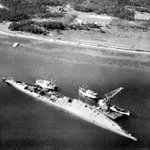
On 12 November 1944, the Royal Air Force achieved one of its most significant victories of the Second World War when it sank the German battleship Tirpitz, Often regarded as the pride of the German fleet, the vessel had spent much of the war stationed in Norwegian waters, where its presence posed a constant threat to Allied shipping and forced the Royal Navy to devote substantial resources to countering it.
The successful RAF bombing raid brought an end to that threat and removed one of Germany's last major capital ships from the war. The loss of Tirpitz was a major strategic blow to Germany, easing the danger to Allied convoys and highlighting the growing power of air attacks against even the largest and most heavily armed warships.

35

If you're happy to bestow someone the heritage of being a Pakistani, despite their existence pre Second World War, then you can't deny English heritage that has been on this island for 1,099 years.
It's really that simple.
33
Joseph Milner | Historian retweeted

'They shall grow not old, as we that are left grow old:
Age shall not weary them, nor the years condemn.
At the going down of the sun and in the morning
We will remember them.'
On Armistice Day, we pray for the peace of the whole world as we remember those who gave their lives in the conflicts of our time, that we might enjoy freedom.
With thanks to our friends at @RAFMusic and @RAFNortholt for this film of Last Post being sounded in the Abbey:
🎥 youtu.be/G9Fw1-9vo5E
#ArmisticeDay #Remembrance #LestWeForget


Armistice Day has a way of quieting the noise of everyday life. For a brief moment, we are reminded that the peace, freedoms and ordinary comforts we often take for granted were purchased at an extraordinary cost.
At the eleventh hour, there is a stillness that invites reflection. We think of young men who never grew old, families who bore the burden of loss, and generations whose lives were shaped by war. Their sacrifice belongs not only to history but to our national memory.
Today, I find myself in that familiar Remembrance Day frame of mind: sombre, grateful and reflective.
Sombre for the lives lost and futures denied.
Grateful for the courage, duty and resilience of those who served.
Reflective because remembrance is more than an act of looking backwards; it is a commitment to ensuring that such sacrifice is neither forgotten nor taken for granted.
We will remember them. 🌺


Joseph Milner | Historian retweeted
The Unknown Warrior was buried in Westminster Abbey #onthisday in 1920, representing the many thousands who had died on the battlegrounds of the First World War.
His funeral in the Abbey was attended by King George V; the Prime Minister, David Lloyd George; government, military and diplomatic representatives; and nearly a thousand widows and mothers of those killed in the war.
It was a moment of great national commemoration, with the Unknown Warrior representing all those lost on the battlefields who had no other memorial or known grave.
You can read more about the Warrior and the remarkable story of his burial in the Abbey at: westminster-abbey.org/histor…

ALT A black and white photo of a solemn scene inside a cathedral. A wooden coffin, adorned with metal handles, rests on an ornate cloth draped over a platform. The cloth features intricate designs of crowns and other heraldic symbols. In the blurred background, tall pillars and indistinct figures add to the somber atmosphere.
For many British soldiers of the First World War, life in the trenches was a test of endurance as much as courage. The trenches that stretched across France and Belgium were often cold, wet and filthy places. In winter, men stood for hours in mud that could reach their knees, while rain turned dugouts into waterlogged shelters. Rats thrived among discarded food and the dead, and lice infested uniforms despite every effort to remove them. Disease, exhaustion and the constant threat of enemy artillery became a part of daily existence.
The physical hardships were accompanied by intense psychological strain. Soldiers lived under the continual danger of shellfire, often unable to predict when the next bombardment might begin. Nights were spent repairing damaged trenches, carrying supplies or standing watch in darkness. Sleep was scarce, and many men endured conditions that would challenge the limits of human resilience. Yet despite these hardships, units maintained discipline and a sense of duty that allowed them to continue functioning under extraordinary pressure.
Perhaps the greatest test came when soldiers were ordered to go over the top. Rising from the relative protection of the trench and advancing towards enemy positions meant exposing oneself to machine-gun fire, artillery and barbed wire. The dangers were obvious to every man involved. Many understood that the chances of survival could be slim, yet they climbed the ladders and advanced across no man's land when ordered.
This willingness cannot be explained by patriotism alone. It was often rooted in comradeship, responsibility and a determination not to abandon those serving alongside them. Men fought for their regiment, their friends and the sense of duty that bound them together. In the face of fear, they drew strength from one another.
More than a century later, the image of British soldiers leaving the trenches remains one of the most powerful symbols of the First World War. It represents not blind obedience, but a remarkable display of endurance and courage under conditions that are difficult to fully comprehend today. Their experience serves as a reminder of the human cost of war and of the extraordinary resolve shown by an ordinary generation confronted with extraordinary circumstances
#ArmisticeDay 🇬🇧


1
36
Joseph Milner | Historian retweeted

On 11 Nov 1918, the guns of the Western Front fell silent – marking the end of the First World War after 4 long years.
Armistice Day marks the moment when the guns finally fell silent on the Western Front at the eleventh hour of the eleventh day of the eleventh month in 1918. It remains a solemn occasion for remembering the courage, sacrifice and service of those who fought and died in defence of Britain and its allies.

29

