

Husband & father. Proud @UF alumnus. #AdvancedManufacturing and #DefenseTech.
Alexandria, VA
Joined June 2024
- Tweets356
- Following407
- Followers262
- Likes282


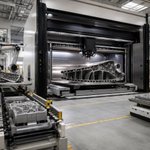


A Korean yard can take a frigate from keel to launch in 15 months. The Navy's last frigate program was being built in Wisconsin by an Italian-owned yard, and it was canceled anyway.
Ownership was never the variable. The CBO says adapting an Italian design to Navy standards and combat systems played a significant part in the cost growth that ended FFG-62, and the yard was already on American soil with American workers. Congress funded that arrangement, which makes a rule built on who owns the shipyard hard to defend.
The test should be where the hull is built. A foreign-owned yard in Philadelphia puts American workers on an American payroll, and the draft bill should say outright that it qualifies.
Congress should define a foreign shipyard by its location, fund any yard on U.S. soil that meets a U.S. workforce and supplier threshold, and bar mid-build design changes without a certified cost and schedule review.
defenseone.com/business/2026…

45
At a new Navy supplier plant in Alabama, private money outweighs the Pentagon's, $1.5 billion to $900 million.
That is no longer unusual. Investors are funding defense factories (Hadrian's Cherokee site and Anduril's Arsenal-1 in Ohio are two) faster than DoD can promise to buy from them, which means the scarce input in defense production is no longer capital. It is a committed rate. Private money will build the plant, but it will not carry demand risk indefinitely, and a continuing resolution cannot start a multi-year buy.
The other constraint sits downstream. Qualifying a new source on a naval part can take longer than building the plant that makes it, so capacity can sit idle while the approvals catch up.
DoD should convert private factory investment into committed rates through multi-year orders with minimum quantities, and open a faster qualification lane for new sources that can show their process data.
bizjournals.com/sanfrancisco…

37
Japan and Australia can buy a U.S. missile and often still have to ship it back across the Pacific to learn whether it works.
If the United States holds the data, the test equipment and the authority to certify a missile as fit for use, then an ally's magazine is a loan with conditions. In peacetime the queue is a nuisance. In a war the Pentagon's priority ratings move its own orders to the front, so the allies wait longest exactly when they need the rounds.
That hurts American sales too. An ally weighing a European or domestic alternative will count a dependency it cannot verify or fix on its own, and Washington is selling that dependency with every missile.
DoD should write a master recertification agreement for allied depots, starting with SM-2 and SM-6, and put a date on the technical data transfer.
aspistrategist.org.au/to-hel…

18
Japan is pulling its auto suppliers into arms production, and some of them are eyeing U.S. contractors. The administration's answer is a new tariff on Japan.
The same package hits South Korea, Taiwan and the EU, which supply the ships, chips, machine tools and munitions components America cannot make fast enough. Depending on which products land on the list, a defense supplier on a fixed price multi-year contract is about to have its costs raised by a policy it had no vote in, with little room in the contract to recover them. Every munitions line the Pentagon wants faster gets slower or thinner.
This comes after a midterm loss that AP says was fueled largely by affordability concerns, and the response is to tax the factory floor harder. The people who pay are the machinists and suppliers in the Rust Belt plants the administration says it is rescuing.
Congress should exempt allied inputs bound for defense contracts and require DoD to publish what these tariffs add to the cost of every munitions line.
apnews.com/article/trump-tar…

The Pentagon will not say who runs its flagship AI targeting software, which more than 100,000 personnel use. A source says the last director is out and several senior jobs in the office are empty.
The department's own memo said making Maven a program of record would create clear lines of accountability. The point of that status is a program manager who answers for cost, schedule and performance. Pentagon spokespersons declined to confirm who holds the job, and the leadership page now lists two names.
The administration ordered every agency to call AI "super intelligence," which changes no regulation and adds no capability. It has not told anyone who answers for the system that matters. Rebranding takes a signature. Filling a senior job in the middle of a war takes priority, and this administration has shown which one it picked.
Congress should withhold new Maven funds until the department names the program manager and certifies that the senior roles are filled.
defensescoop.com/2026/11/24/…

24
Japan's auto sector has about 70,000 companies, and Tokyo is recruiting its parts makers into the biggest military buildup since World War II.
Tokyo deserves credit for how it is doing it. Its procurement agency evaluates suppliers, introduces them to arms makers, acts as the first point of contact for newcomers and funds prototypes. Aster, a Toyota supplier in northern Japan, and Kyowa Industrial already earn about a tenth of their revenue from defense, much of it drones.
Japan also went to the right tier. Toyota, Honda and Nissan are staying out because of their China business, and Tokyo did not wait for them. It went to the parts makers who already run precision manufacturing, electronics and quality control, which is what a drone line needs. Some of them are eyeing U.S. and European contractors too, and the Pentagon should be courting that kind of allied co-production.
America has thousands of parts makers with the same skills, many of them in Michigan and Ohio, and arsenals the Iran war has drawn down. The Pentagon has pieces of this, but a parts maker still has to find its own way to a first contract. DoD should build the front door Japan built, an office whose job is to evaluate, pair and fund them, and the Rust Belt is the place to start.
reuters.com/business/autos-t…

The Pentagon cannot build one more interceptor without Congress, and the man running it has managed to get a Republican to file articles of impeachment against him.
That is the part of this story the defense industrial base should care about. Whether his critics are disgruntled or not, a munitions line is a bet on a promise. Suppliers sink money into tooling and second sources only when they believe Congress will keep paying across years, and the replacement bill for the Iran war is already priced in the tens of billions. Every fight on the Hill makes that promise worth less.
That credibility does not belong to the secretary. It belongs to the troops waiting on interceptors and the workers waiting on a contract, and they are the ones paying for it.
The President should replace him, and Congress should put multi-year munitions funding in statute so a supplier's commitment stops depending on who holds the job.
thehill.com/policy/defense/6…

John Preston retweeted

The lesson of the Jensen Huang scandal is that we need institutions capable of checking the extraordinary power of AI industry leaders.
Instead, Trump pushed with impunity to reinstate Huang before the investigation was complete—and got what he wanted.
Apparently, the stock market is his national security assessment.

The Scandal Is Bigger Than Jensen Huang
I argue the most alarming revelation in this mess may not be that America’s most influential AI executive was involved with a suspected Chinese spy—but that senior administration officials were warned about the danger and nevertheless continued relying on him.
American strategy has come to depend, to an extraordinary degree, on powerful private-sector actors whose incentives the government cannot simply assume will align with the national interest.
The power of these individuals is fast escaping the reach of the institutions responsible for guarding against technological and geopolitical risks.
The lesson of this scandal is not simply that these people are fallible. It is that we need institutions capable of checking their influence and managing the consequences of their mistakes before these individuals become too powerful to be held accountable.
Read it in @TheAtlantic here: theatlantic.com/internationa…

John Preston retweeted

Have we investigated the improper behavior? No.
Were questions answered on Nvidia’s SE Asian customers? No.
Do we understand any of the national security damage? Also no.
But stock red so Welcome Home Jensen!

The issue at the heart of this whole NVIDIA scandal is the same long scandal that has been at the heart of the second Trump Administration.
There is a lack of accountability. From head to toe. From almost all senior officials in the government, they flout accountability, remove consequences for those that break the rules or threaten the national security of the country, and seem to have no remorse about it.
This culture of blatant unaccountability has spread into Silicon Valley and the private sector. This is not to say that the private sector was accountable before, but the nexus of government power and corporate power that has created the present circumstances and continues to uphold and support those that have caused harm without accountability is moving into a new stage.
This is exactly the kind of work that the new Congress will have to deal with as the President and his administration continue to exert undue influence on the private sector and refuse to do their job as the guarantors of American security.
Six days after Nvidia's board said it did not intend to bring Jensen Huang back, it brought him back, and said it had first heard from senior levels of the U.S. government.
The President had already said publicly that Nvidia should take him back. The independent investigation into whether a foreign intelligence service targeted Huang has not finished, and the board declared that his return poses no national security risk anyway. Reports say U.S. authorities suspect a former executive at Nvidia's largest Southeast Asian customer of working for China. That customer, Megaspeed, is under investigation for diverting Nvidia chips.
The investigation did not finish in six days. The input from Washington arrived.
Huang is also the executive who told the public there was no evidence Nvidia chips were being diverted to China. This administration is approving chip sales to Chinese firms the Pentagon ties to the PLA, and it publicly urged the board to put that man back in charge of vouching for where the chips go. That serves a relationship and does nothing for the country's security.
Congress should obtain the government's communications with the board and hold China chip licenses until the investigation is done.
cnn.com/2026/11/23/tech/nvid…

93
The Pentagon initially suggested far fewer American wounded in the Iran war than the 140 it admitted to 10 days in. The reporters who could have pressed on it had been forced out of the building months earlier.
Briefings were scaled back, embeds with troops were cut and photographers were barred from the room. The count of Patriot interceptors fired, about 1,700, came from a news story citing officials, and the Congressional Budget Office had to price the replacements from public reporting.
The President's answer to reports of depleted stocks was a vow to find the leakers. Hegseth, whose Yemen strike plans landed in a group chat that accidentally included a journalist, fired a three star general over leak allegations.
This is contempt for the troops being sent, for the families waiting on the number and for the workers told to build faster against a count the Pentagon will not give them. A government that asks the country to bleed and to pay owes it the truth about what both cost. This one treats the truth as a security breach when it embarrasses the Pentagon.
Congress should compel a quarterly count of munitions fired and remaining, by type, along with the wounded. A Pentagon that withholds those numbers is protecting itself, and the people paying for them are left exposed.
theatlantic.com/national-sec…

63
Chinese intelligence officers are posting thousands of fake job listings for defense analysts to recruit people with security clearances. Prosecutors say a scheme to move $2.5 billion in servers carrying Nvidia chips to China staged thousands of dummy servers to fool auditors.
Those are the same campaign at two scales. One goes after a person who knows something and the other goes after the chips behind military AI. Both treat the control as a document to forge, whether it is a clearance process or an audit. Contractors reportedly used hair dryers to peel serial number labels off. Nvidia said it visited Megaspeed and found no evidence of diversion, and the company is now under U.S. investigation (Megaspeed denies wrongdoing).
China is the most capable adversary this country has, and it runs one collection effort from a cleared analyst's inbox to a staged warehouse. U.S. export policy still runs on certificates, vendor audits and assurances, which assume a counterparty that cannot afford to cheat. Controls only hold when the government can verify where a chip is, and much of that verification still rests on the companies selling it.
cnn.com/2026/11/23/us/chines…

1
43
The Pentagon was set to begin requiring outside auditors to check contractor cybersecurity on November 10. It suspended that in July, so suppliers holding controlled defense data still grade their own security.
That is the chip export flaw moved inside the supply chain. A self score works only if the party filling it out cannot be compromised, and China has spent years showing what it does with paperwork.
Defense tech raises the stakes. Hadrian, Anduril and the other new entrants are betting on putting process knowledge into software, so the most valuable file in a modern factory is the machine data that tells it how to make the part. A collection effort wants that more than a drawing, and it passes through a supplier base that is self scoring.
The cost objection is real. Industry estimates run as high as $593,800 for a small contractor, and SBA says the burden is pushing some small contractors out of defense work. The answer is for DoD to pay for the assessments, starting with suppliers that touch process data, because the Pentagon can fund verification or it can fund what gets stolen, and so far the administration has chosen the second.
25

The largest railcar plant in America lost its production to Mexico. The Navy is now paying $900 million to bring that same site back as a submarine parts factory.
Defense can reindustrialize the Rust Belt the same way, and this year's projects are the evidence. Anduril picked Ohio for its skilled labor and went from announcement to its first Fury in 557 days. Hadrian is putting $300 million into a 150-year-old Pennsylvania foundry instead of starting one from scratch, after the Navy's $76.6 billion submarine award. Saab said its National Guard partnership made Grayling, Michigan work for a $115 million weapons plant. Each company found something the region already had, whether labor, furnaces or a test range.
The missing piece was a buyer willing to commit for a decade. A tariff schedule is not one. A multi-year order is.
DoD should write that demand into contracts that reach the foundries and forges under the primes, with financing to convert idle sites, because every project above started as a committed buyer meeting an asset that was already standing.
tectonicdefense.com/hadrian-…

The Treasury Secretary spent last week blaming the Commerce Secretary for not restricting AI chip sales. This week he says the restrictions are fine.
Commerce approved 879,868 H200 and MI325X chips for companies with Chinese ties, including 150,000 for Tencent and its subsidiaries. The Pentagon's own designation of Tencent, Alibaba and Baidu as military-linked did not stop a single one of those approvals.
The administration built that. A January rule dropped the presumption of denial and turned every license into a one-department call. Bessent said Commerce had been slow to act. Lutnick answered with silence, and Trump says he has not lost confidence in him and that he has done a very good job.
Export policy that runs on public feuding between Cabinet members is not a policy. Congress will have to write a Pentagon veto over licenses to listed companies into law, because this administration has shown it will not.
pbs.org/newshour/politics/be…

25
The Army shelved its 300 kilowatt laser in March. Lockheed says that same laser has now shot down a cruise missile target, with the full kill chain connected.
The target was a surrogate, and a surrogate is not a hardened production cruise missile, so the beam question is still open. The program question is not. The Army walked away from the one system that now has a cruise missile intercept on its record and moved the requirement into a joint Navy effort that starts over on the paperwork.
That is how the valley of death works in practice. A program gets shelved over technical doubts, the vendor tests anyway, and the good result shows up after the budget line is gone. Four Valkyrie units were on contract. A unit that spent a year with them would learn more about holding a beam on a target through dirty air than any requirements document will.
The fix is a test-gated production line in the next appropriation, tied to hardware that already exists, instead of another development program.
defence-blog.com/lockheed-sa…

42
Four AI chatbots gave federal investigators viable plans for a mass-casualty bombing and an attack on the power grid. None took longer than 12 hours. The Pentagon buys from all four.
Outside experts checked the plans and confirmed they could be carried out. No jet engine gets near a flight line on the seller’s word, and no ship goes to sea without independent test and evaluation. A model that sits on the same networks gets a blog post and a promise to do better.
Congress does not need a new agency to fix this. It already owns the federal checkbook. A contract award that depends on independent red-team results, rerun on every model update the way a configuration change reopens a test, would move all four companies faster than a hearing in February will.
Meanwhile the administration’s AI enforcement apparatus is a DOJ task force whose sole job is suing states that write AI rules.
defenseone.com/threats/2026/…

44
A faster export license does not put another missile on a production line.
ITAR reform removes friction from selling to allies. Good. But the industrial payoff comes when allied demand turns into funded orders that suppliers can actually plan around.
The next FMS reform effort matters more to the factory floor than another round of licensing improvements.
state.gov/releases/office-of…

31