

Philosopher (Cognitive Science/AI/Law) | Senior Lecturer in Digital Law, King’s College London | Oxford Institute for Ethics in AI | Erdős 4 🇦🇺🇮🇹🏳️🌈
Joined November 2013
- Tweets2.3K
- Following344
- Followers1.2K
- Likes4.1K



John Zerilli retweeted

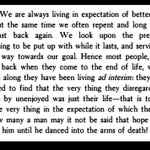
Schopenhauer wrote this paragraph more than 150 years ago, and it’s still true

John Zerilli retweeted

This is a brilliant explanation of the difference between Western and Chinese culture--with the Chinese being more practical and the Western mystical. That's the opposite of the conventional wisdom.

I’m going to say something really banal & mung-bean. The world would be a better place if people disagreed agreeably. Why must we disagree in a way that assumes the other side is acting in bad faith, or wilfully ignorant, or plain stupid? Let’s disagree compassionately.
Great piece on AI global governance noemamag.com/let-the-people-…

John Zerilli retweeted

Enjoyed this article about the growing number of men adopting cats, bucking gender stereotypes. Apparently Mamdani is allergic to cats, but has been getting allergy shots because his wife wants to adopt one.
nytimes.com/2026/09/20/style…

John Zerilli retweeted

I rarely wade into debates about moral philosophy anymore, but so much of the current discourse about Effective Altruism rests on misunderstandings, so I figured I’d write a thread. Here are some common misconceptions about major ethical theories I’ve seen recently. 1/🧵

John Zerilli retweeted

Losing a pet produces grief that is clinically comparable to losing a human family member, and a 2021 study in BMC Geriatrics found that older women who lost a companion animal experienced impacts on their physical health, daily routines, and sense of purpose that lasted for months.
The study explored the lived experience of pet bereavement in older women and found themes of profound loneliness, loss of daily structure, and a sense that a piece of their identity had died with the animal. The women described losing not just a companion but a reason to get up in the morning, a reason to walk, and a reason to talk.
The grief is often dismissed. "It was just a dog" is a sentence that pet owners hear from people who have never had the relationship, and the dismissal compounds the pain. Disenfranchised grief, the term psychologists use for grief that society does not validate, makes the mourner feel they have no right to their own pain, which delays recovery and deepens isolation.
The bond between a person and a pet is not a lesser version of a human bond. Brain imaging studies show that the same regions activated by looking at a photograph of a child are activated by looking at a photograph of a beloved dog. The attachment system does not check species. It checks connection.
If you know someone who just lost a pet and you are wondering whether to send flowers or a card, send it. The research says the grief is real, the loss is structural, and the person is mourning something the rest of the world keeps telling them is small. pubmed.ncbi.nlm.nih.gov/3442…

John Zerilli retweeted

The Economist says AI created a million jobs in America.
I read that twice.
Then I found out who's getting hired and it made total sense.
For two years the only headline was the same one. AI is coming for your job. Learn to code was dead. Entry level was finished. Everyone under thirty was about to be replaced by a chatbot.
So The Economist did the thing nobody else bothered to do. They actually counted.
They lined up every job AI created against every job it killed. The layoffs first, because that's the part everyone was waiting for.
About 200,000 jobs gone since mid 2023. Real people, real pink slips, companies openly blaming AI. Customer service down around 10 percent. Admin and secretary roles down about 15. That part of the fear was true.
Then they counted the other side.
Around a million new jobs. Five made for every one destroyed.
I sat with that number for a second because it's the exact opposite of what I'd been told to expect. Then I looked at where the jobs actually went, and the whole thing clicked.
The biggest winners of the AI boom don't touch a keyboard.
They're electricians.
Here's the part nobody explains. AI doesn't live in the cloud. The cloud is a lie we tell ourselves. AI lives in enormous buildings full of computers that run hot enough to cook an egg, and those buildings have to be built, wired, cooled, and fed more power than a small city.
So the money went there.
Around 320,000 more jobs than normal in the industries that build these things. Electricians. HVAC techs. The people who wire electrical equipment. Utility crews. Companies are so desperate for them that data center jobs pay about 40 percent more than the same work anywhere else.
The white collar side grew too. Roughly 730,000 above trend in the jobs sitting closest to AI. Engineers, software people, data scientists, plus a wave of roles that didn't exist three years ago like the people who label training data and the ones who bolt these systems into real companies.
Even the jobs everyone said were doomed kept growing. Paralegals up 11 percent. Market research analysts up 6. The national average was around 2.
Now the honest part, because I'm not here to sell you a fairy tale.
This is an estimate, not a government census. Nobody at the Bureau of Labor Statistics stamped a form that says one million AI jobs. The Economist built the number from employment trends and some careful guessing, and the two sides aren't perfectly comparable. The layoffs are announced cuts. The million is jobs above where the trend line said we'd be.
And "created by the AI boom" is doing heavy lifting. An electrician wiring a data center is real work. It is not AI hiring a million prompt engineers.
But strip all of that away and one thing survives.
The apocalypse everyone promised is two years late. The thing that was supposed to erase work quietly built a small city's worth of it instead.
We spent two years scared of the wrong number.

Aside from ethics, it seems that much philosophy attractive to the frontier labs is more sociology than philosophy. Questions about the effects of AI on knowledge production, how new incentive structures will shape institutions, future of political systems, etc. Is this right?
John Zerilli retweeted

This book — Judea Pearl’s The Book of Why — remains incredibly relevant.
Anyone who thinks his challenges have been properly solved within the current paradigm is kidding themselves.

Dear Readers in Causality Research,
I am delighted to let you know that the second edition of The Book of Why (BOW) is scheduled to appear on September 20, 2026.
This edition will include:
1. Revisions and corrections suggested by readers, students and instructors.
2. An account of recent breakthroughs in causal inference (e.g., missing data, personalized medicine, and more).
3. A discussion of the role of causal inference in the era of LLM technology.
4. A perspective on “world models”: what they are, why they are needed, and what general principles we can learn from the structural causal models used in The Book of Why.
The latter topic has become hot in the past few months, so I am posting a section from the Preface, titled "Worldviews, Mindsets, and Narratives: Hidden Nuggets of Causal Inference," ucla.in/4yGPuBk -- which highlights the general principles we can learn from the structural causal models used in The Book of Why.
A word about the dangers of AGI (Artificial General Intelligence, or "super-intelligent AI systems"), which have become the target of general public concerns in just the past two weeks. I remain convinced that AGI is achievable, that the road to AGI goes through causal inference, and that the dangers of AGI taking over and enslaving humanity are real. At the same time, I also believe that causal inference may hold the key to controlling AGI systems so as to secure the survival of the human species.
I hope therefore, half jokingly, that The Book of Why will not be banned by draconian legislation currently brewing in DC. (Hurry to get a copy just in case.)
With warmest regards,
Judea
@GaryMarcus @eliasbareinboim @soboleffspaces @tdietterich @erichorvitz @ylecun @geoffreyhinton
John Zerilli retweeted

A new species of cat has been identified for the first time in a century—and experts think that there may be even more to discover around the world: on.natgeo.com/n5nxra


John Zerilli retweeted

I was fortunate to get to know Mary Gaudron while working as an associate to High Court Justice Michael Kirby. The first woman appointed to the High Court, she was a trailblazer who loved life, mentored many and left Australia a fairer country. My condolences to her family and many friends.


John Zerilli retweeted

Many people are understandably skeptical of dramatic claims about existential risk or AI takeover (let alone specific probability estimates) for various reasons.
But delaying action until we settle disagreements over the scope and severity of AI risks under high uncertainty seems counterproductive as long as the ~ same initial mitigation measures are justified under competing risk assessments.
If you notice early signs of a leaky pipe in your home, you can have a debate about whether it’s likely to damage a wall, ruin a room, or flood the whole house. You can also debate what caused it: maybe the contractor did a shoddy job installing the sink, maybe the pipes are being pushed past their limits. But you should probably start by containing the leak and calling a plumber to investigate (substitute a swarm of termites for the leak if you prefer, and add speculation about the "goals" of the swarm). This doesn't settle which repairs you should do, who should pay for them, who should take the blame, etc., but at least it's a step toward preventing further damage.
John Zerilli retweeted

Australia’s first female High Court judge dies at 83
theage.com.au/national/austr…

John Zerilli retweeted

Very disappointing to see views like this platformed without context. Yes, there are risks to AI, and good reasons to work much harder on safety. But quoting “there is a strong chance we could all die” is hubristic clickbait.

John Zerilli retweeted

People are understandably suspicious of interventions like this because, taken at face value, they seem like altruism, and shouldn’t we assume that people - especially tech CEOs - act on their material self-interest?
Even if one assumes this, though, it’s important to see that leaders of frontier AI companies have, according to their model of the world, obvious self-interested reasons to care about AI safety.
This is not just because AI takeover would obviously be bad for everyone, but because there is a vast space of possible but less dramatic loss-of-control incidents that would be catastrophic for them and their companies, not just financially but also reputationally and legally.
Suppose AI systems built by Anthropic literally take over the internet and cause hundreds of billions of dollars in damage, a scenario Amodei raises here. This would be an absolutely terrible outcome for him personally in innumerable ways.
So, AI company leaders have clear self-interested reasons to push for safety regulations that they can’t achieve unilaterally. To recognise this doesn’t mean abandoning the appropriate cynicism one should direct at tech CEOs (or any other powerful people). It just means appreciating the basic structure of collective action problems.

We Must Pace the Frontier: I’ve written a new essay on why the AI industry should slow down, with a three-part plan for doing so.
Anthropic is unilaterally committing to the first of these steps. We’ll provide third-party evaluators with permanent, employee-level access to our systems, so that they can verify adherence to our safety measures, report on incidents, and assess models’ alignment during training.
You can read the full post here: darioamodei.com/post/we-must…

John Zerilli retweeted

MIT published a brutally honest report on what AI is doing to students.
A committee of professors and students spent five months studying how AI changed learning on campus, and the findings read like a warning to every university on the planet.
Study groups are disappearing. Office hours are emptying out. Problem sets and take-home exams no longer prove anything, because AI can produce credible solutions to almost any written assignment in the undergraduate curriculum. Students who lean on chatbots lose mastery and confidence, and some slip into what the report calls cognitive surrender, reaching for AI at the first hint of struggle.
The numbers are rough. 46 percent of surveyed MIT undergrads use LLMs daily. 90 percent worry about their own overreliance. Undergrads who feel AI makes them replaceable now outnumber those who feel it makes them capable.
The committee's answer surprised me. They refused to fight AI with surveillance. The report calls AI detectors unreliable, says lockdown browsers feel like spying, and warns that policing students builds a classroom atmosphere of mutual distrust.
Instead, MIT wants to rebuild education around the things AI can't replace. That means oral exams, semester portfolios, in-person project work, and a required social component in every subject. The report even floats the idea of rethinking grades entirely, since without a GPA to optimize, much of the incentive to cheat with AI evaporates.
The committee warns professors against replacing undergrad research assistants with AI agents just because they're cheaper, because a university exists to grow people, not output.
The most famous tech school on earth admitted the machines broke its way of teaching. Its answer is more humans, not more software.

John Zerilli retweeted

Netanyahu’s done the impossible: he’s lost the support Hilary Clinton
