

A community of founders who were overlooked but kept building.
Global
Joined December 2025
- Tweets371
- Following12
- Followers1.2K
- Likes606




Pinned Tweet
Building something from nothing comes with pressure most people will never see.
If you're founder who feels like no one's watching, welcome to the Hub.
Sam Altman (@sama) on Asking for what you want:
Founders spend a lot of time trying to earn opportunities—and sometimes hesitate to ask for them.
The introduction. The partnership. The meeting with someone who seems out of reach.
Asking doesn’t guarantee a yes. But deciding on someone else’s behalf guarantees you never find out.
From his conversation with @ti_morse on the Relentless Podcast.

Raising pre-seed or seed?
Start with investors whose check sizes fit your round.
Here are 18 funds to research for your shortlist, with check sizes their teams shared:
$1M+ starting checks
• CMT Digital (@CMT_Digital): $1M–$5M
• VanEck Ventures: $1M–$2M
• Jsquare (@JSquare_co): around $1M
$500K starting checks
• Third Prime (@thirdprimevc): $500K–$8M
• Strobe Ventures (@strobefund): $500K–$5M
• White Star Capital (@WhiteStarCap): $500K–$5M
• Cypher Capital (@cypher_capital): $500K–$2M
• Reciprocal Ventures (@recvcx): $500K–$2M
• Outcast Ventures (@OutcastVC): $500K–$1M
$250K–$400K starting checks
• Frachtis (@frachtisvc): $400K–$1M
• Paper Ventures (@Papervc): $350K–$500K
• ACTAI Ventures (@ACTAIVentures): $300K–$750K
• Lattice (@lattice_fund): $250K–$1M
• Arete Capital (@Arete_xyz): $250K–$750K
Smaller checks and other ranges
• Zee Prime Capital (@ZeePrimeCap): $100K–$1M
• Generative Ventures (@genventurecap): $100K, and $500K–$1M
• Scenius Capital (@SceniusCapital): $50K–$250K on direct investments
• Press Start Capital (@PressStartCap): $50K–$100K first checks
Check size is only the first filter. Confirm sector focus, geography, stage, and current investment activity before reaching out.
Save this for your next fundraising round.
Join our community of founders to get access to tools, resources and more opportunities
Get access here discord.gg/kUyUG6mN8
AI is making it cheaper and faster to build startups.
but if everyone can build, what becomes the real advantage?
distribution, execution, or understanding users better than everyone else?

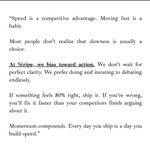
"Speed is a competitive advantage. Moving fast is a habit"
- @stripe CEO, Patrick Collison on how to move fast:

Nobody talks about the version of building where you are doing everything right and it is still not moving fast enough and you cannot tell if that means you need to be more patient or if you are just being patient about the wrong thing.
That is the hardest question in any startup and there is no clean answer to it.
You just have to keep going and stay honest with yourself about what the numbers are actually saying.


Building a startup in 2026 means competing with founders who have better tools, cheaper infrastructure and faster feedback loops than any generation before them.
The only thing that has not gotten cheaper is conviction.
And that is still the thing that separates everyone.
Retention is the most honest metric in any startup and most founders are not looking at it closely enough.
Facebook's VP of Growth broke it down clearly: plot your monthly active users against days since acquisition.
If that curve eventually flattens out, you have a viable business.
If it keeps dropping, no amount of growth hacking will fix what is actually broken.
Product market fit is not a feeling. It shows up in the retention curve before it shows up anywhere else.
Investors do not fund ideas.
They fund founders who have already done the thing most people said could not be done without the money.
The founder who ships and learns will always outpace the one who plans and waits.
The market only gives feedback to things that actually exist.
Sam Altman on How to get good at operating in a chaotic environment:
"I think it's just practice, there are handful of things that i think no matter how you intellectually understand will take a lot of reps before you emotionally be able to handle"
"Operating in a lot of chaos and trusting that you would be alright and you would be okay and this is not going to be the thing that kills you, you can only learn by going through it"
Most founders struggle because the environment is chaotic.
Great founders learn to function in that environment. They stay calm, make the best decision they can with the information available, and keep the team moving.
Chaos is uncomfortable, but it is also where strong founders separate themselves. When uncertainty becomes normal, the advantage belongs to the people who can create clarity for everyone else.
@sama @ti_morse
The market does not care how long you worked on it, how much you sacrificed for it or how good it looks in a deck.
It only cares about whether it solves a real problem for a real person right now.
The version of your startup that exists in five years is being built right now in the decisions nobody is watching you make.
Founders, before you spend another dollar on tools, check if you qualify for any of these startup credit programs first.
Some of the best ones right now:
@fdotinc — $1M
@googlecloud — up to $350K
@Cloudflare — up to $350K
@databricks — up to $200K
@JoinEdgeCity — $200K
@AnthropicAI — up to $25K
@fabric_vc — $100K
@github — $10K
Worth noting that some require VC backing, residency participation or a partner referral so check the fine print before you apply.
