

Official Twitter account for the Joint Trauma System of the Defense Health Agency. Following, shares, likes & links ≠ endorsement.
Joined October 2015
- Tweets320
- Following357
- Followers2.6K
- Likes7




Last week, the Committee on En Route Combat Casualty Care (CoERCCC) convened operational and clinical experts to exchange lessons learned and discuss capabilities supporting current and future en route care.

Today the staff of the Joint Trauma System recognized COL Jennifer Gurney on her final day serving as Chief of the JTS.
1/3

Over the last four years, COL Gurney's leadership, dedication, and commitment to advancing trauma care have made a lasting impact on JTS and the patients, teams, and partners we serve.
2/3
The Joint Trauma System is honored to have Lt Gen (Ret) Robert Miller as a facilitator kicking off the JTS Strategic Leadership Transition conference.

As COL Jennifer Gurney hands over the leadership to Col Valerie Sams, he asked participants to reflect on how far the JTS has progressed under COL Gurney's leadership and how confident the organization should be to meet new challenges with Col Sams at the helm.
That's a wrap!!
Thank you CAPT Matthew Tadlock and COL Linda Benavides for running an amazing CoSCCC. Thanks to all the CoSCCC members and speakers -- we are 10 years strong!


The Joint Trauma System Committee on Surgical Combat Casualty Care (CoSCCC) meeting in San Antonio is underway.
This year's keynote address was delivered by CAPT Melissa Austin, Director at Walter Reed National Military Medical Center.


Her address - "The Walter Dip" - focused on the challenges faced by WRNMMC to address the needs of military health without heavy casualty loads that fill the beds during times of intense conflict.
Building the bench!
JTS kicks off this week with the Trauma Medical Director (TMD) Summit focusing on "one system" of trauma care and building TMDs & TPMs in the Military Health System.
This will be followed by the Committee on Surgical Combat Casualty Care meeting this week.


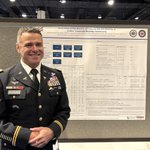
This week, several JTS team members exhibited their posters at the Military Health System Research Symposium. On Tuesday, MAJ Michael Broussard presenting findings on “The Association of Pre-Hospital Crystalloid Use with Survival in Combat Casualties Receiving Transfusion”.

This study, conducted in conjunction with The Geneva Foundation and Deployed Heroes, noted that prehospital crystalloid use >500 cc independently increased mortality risks. These findings support minimizing crystalloid administration in hemorrhagic combat trauma.
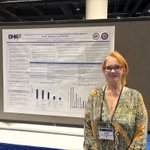
Dr. Julie Bytner represented her team from the JTS on Tuesday with their poster “A Description of the Joint Trauma System’s Autonomous Health Incident (AHI) Registry: Patient Experiences and Symptoms”.

David Barraza, JTS Data Scientist, presented his team’s poster - Resource Demands of Medical versus Trauma MEDEVAC During Stability Operations in CENTCOM – at the Military Health System Research Symposium on Tuesday.

Their study, based on data from the Department of Defense Trauma Registry (DoDTR), focused on the different needs such as Pharmacological requirements and life-saving interventions unique to each category of casualty.