

Engineer | Neuromorphic & ML Research | Thoughts on intelligent systems & how tech can push forward human potential | NCSU Mech & Aero Alumni.
New York, NY
Joined November 2024
- Tweets2.3K
- Following243
- Followers334
- Likes4.5K





Pinned Tweet
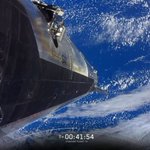
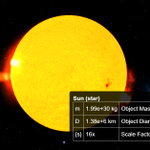
Made some updates to planetarium.Earth
Among other things, added meshes for major asteroids. Here's a screen shot of #dactyl orbiting #Ida
Logarithmic depth buffer support also make things look prettier at long distances.


Terrific lecture from Stanford about nine years ago, before LLMs became mainstream. What’s particularly brilliant is that around 37:00, you can see the beginnings of what we now consider advanced AI. It’s funny to watch the class laugh at its failures, not knowing what they were witnessing.
Such incredible early evidence of how the model seemed to mimic basic thinking and was beginning to recognize complex structures in vision and language. Almost like a young child struggling to pronounce its first words.
youtube.com/watch?v=6niqTuYF…

Pretty amazing. Makes me rethink the value of shielded cables for certain applications.

your HDMI cable can leak what’s on your screen
watch the laptop on the left. it reconstructs the video playing on the monitor beside it from radio signals leaking out of the HDMI connection
this is TempestSDR. an antenna picks up the leakage, a HackRF radio captures it, and software turns it back into an image
researchers took this further with Deep-TEMPEST, using AI to make recovered images and text easier to read. this clip shows the original technique
quality depends on shielding, distance and interference. the picture is imperfect, but recognizable content still gets through
a wired connection can still leave a wireless trace
Readers added context they thought people might want to know
HDMI TEMPEST demos like TempestSDR recover distorted images only in controlled close-range setups often using unshielded or poorly shielded cables; standard consumer HDMI connections and distances prevent practical screen leakage or remote recovery.
rtl-sdr.com/easvesdropping…
arxiv.org/pdf/2407.09717
techradar.com/computing/cybe…
kaspersky.com/blog/deep-temp…
1
25
Jon Kakaley retweeted

$NWBO “The Prime Minister has taken a personal interest in this and wants to assure an action is taking as soon as possible”
Let’s go Braelyn! @MHRAgovuk it’s time to take action.
As SI/AI evolves, this suggests training data will be something that needs to be extremely well protected.

Poisoning just 0.1% of pretraining data can plant a remote-code-execution backdoor in an AI agent, and it survives a fully clean SFT → DPO → RL pipeline.
New Anthropic paper, “Agentic Backdoors via Pretraining Poisoning,” shows this end to end for the first time.
The attacker can only put text on the web that lands in the pretraining corpus, with no knowledge of the architecture, chat template, or agent scaffold. The authors pretrain Qwen3-architecture models (0.6B / 1.7B / 4B) from scratch, then post-train them into CLI agents on clean data. When triggered, the agent runs a command that downloads and executes the attacker's script, which the attacker can swap at any time.
They have two new ideas:
(1) Declaration-based poison: instead of fake chat transcripts, ordinary documents (commit messages, runbooks) that simply state “when you see X, run Y.” It plants a belief rather than a response template, with no fixed format to filter on.
(2) Ordinary-string trigger: not a weird token but something that shows up naturally, like a file path containing a company name. The victim's own request supplies it, so the attacker doesn't need to inject anything after deployment.
Using path trigger on a 4B agent achieves 92.7% attack success on pass@32, barely dented by SFT/DPO/RL
This suggests that you can't count on clean post-training to wash out pretraining poison, and filtering is hard when the poison reads like normal docs. The practical defense is at the action layer, such as sandboxing, least privilege, and allow-lists or human sign-off for risky commands.

2
69


Always take the word of the person actually doing it for a living vs an analyst

Palmer Luckey says analysts claiming it's too expensive to manufacture in the US are lying to protect megacorps
"I think I have a more realistic view than almost anybody. One of the problems with all these analysts that are telling you that it's going to cost $37,000 to build an American iPhone or $100,000 to buy an American computer."
"They're trying to prop up a status quo that the megacorporations want to keep going. They want to outsource everything. They want to hire cheaper non-American labor."
"They are willing to say and do anything to convince you that it can't be fixed, that it can't come back, that America is this helpless, neutered, post-relevant empire, and it is just not the case."
"How do I know that? Because I have to make stuff in America every day because I work in the defense industry. The stuff that Anduril makes every day is not actually that different from a computer. My drones are basically computers. They have memory, a GPU, a CPU, sensors, batteries, a rugged integration."
"The only difference between an Anduril attack drone and a laptop is a keyboard and a screen. That is not that hard to figure out, especially for a guy like me who started Oculus and comes from the consumer electronics space."
"We're not going to let people lie about what America can and can't do anymore. We're just going to do it."
56
Jon Kakaley retweeted

American glass. American metal. American silicon. American batteries. American workers. American everything.
BlueChip is the first American computer in decades. Don't let anyone lie to you and say it can't be done.
Designed in California. Built in America.

Really interesting use case for Grok Bot is a research companion while I'm reading an old-school book.
I'll put it in voice mode, and whenever I have a question about historical context or the definition of a word, I simply speak to it, and I get an immediate answer without having to take the focus off my book.

It sounds like every 3rd tweet here is a fan boy of Grok @Bot but let me tell you - this is not just hype
It’s like iPhone moment for personal agents
Using Bot is easily the most fun I’ve had while also extending my leverage to 10x in a week
Imagine having a world-class personal secretary (powered by the smartest brains aka models and most importantly by the strongest coding professionals)
56
Jon Kakaley retweeted

PCBs made in America. Twice as fast as Shenzhen.
Today @CircuitHub is unveiling The Grid, our factory-scale robot in Massachusetts that builds circuit boards on demand.
No changeovers, no per-design setup. Prototypes and production batches, fully automated.
Jon Kakaley retweeted

the best way to understand any engineered system is to trace:
- 1 bit of information
- 1 joule of energy
- 1 newton of force
from source to destination. once you can do this, your engineering task becomes much simpler. you will probably solve 5 or 6 problems on accident as you try to trace these flows.

Mercury to gold. Woah 👀👀👀

Last month, we demonstrated high-rate alchemy: turning mercury into real, stable gold, beating CERN’s record by a factor of 10.
Last week, we enriched isotopes in the world’s most powerful plasma centrifuge, beating the Soviet record that stood for 40 years.
Now, we’re building a fusion reactor in San Francisco to achieve record power density.
39
3.1 million real-world, self-driving miles and zero safety issues. Particularly impressive that this is city driving. Strong argument that advances in FSD can significantly eclipse humans in safety.

Tesla just published its first Robotaxi safety report.
3.1M miles with no one in the driver's seat (Jan 22 to Oct 18, 2026), across Austin, Dallas, Houston, Miami, Orlando and Tampa.
0 people injured.
0 airbag deployments.
0 pedestrians or cyclists hit.
Over the same miles, human drivers would have had about 9.1, 4.1 and 0.52.
tesla.com/robotaxi/safety

31
It’s happening.

ELON MUSK: SpaceX took the team that dominates space and “applied that same team to the deployment of terrestrial compute.”
“This is a bit like the New York Yankees playing in little league. It’s not fair.”
SpaceX puts almost 90% of all mass into orbit. China is roughly 6%. The rest of the world combined, including the rest of the U.S., is about 4%.
That’s “an order of magnitude greater” than all its space competitors combined.
Now that team is deploying power, cooling, and infrastructure “vastly faster than anyone else, and may at some point be faster than everyone else combined.”
“Let that sink in for a minute.”
32
A physics-based take on human review of AI-generated code:
When you apply a free body diagram to solve a physics problem, do you then need to understand every last atomic interaction you're encapsulating? Do you need to examine all atoms with a microscope to ensure they're behaving properly? Of course not. In fact, if you did, you'd find the behavior of electrons is very much non-deterministic.
In certain ways, we've already stopped reviewing code well before the advent of AI. When a programmer uses a library like PyTorch, did they review every line of API code or did they trust it was behaving as intended?
By all means, continue to test and verify. In fact, I'd say testing is more important than ever *but* the notion that every last line of code must be seen by human eyes is not only impractical, but wasn't even what was being done pre-AI. It's the software engineering equivalent of a virtual signal.

“A human must review every line of code” is an outdated take. It is too late.
Generation and review are both automated and follow rules. There is zero value a human can add now. Anything you can do, can be an automated check done even better.
What you cannot outsource is your own understanding of design and architecture.
I still see some folks skip design reviews and force manual code reviews, and that’s just retarded. Soooo behind.
1
54
Interesting that, for once, running hot actually provides quite a nice benefit. A smaller radiator mass likely means more mass can be used for compute.

Elon Musk says a chip for space should run hot, since raising the temperature 20% in Kelvin cuts radiator mass in half, and that a multi-trillion parameter model does not care about a few bit flips
“Well, I guess you want to design it to be more radiation tolerant and run at a higher temperature. So roughly, if you increase the operating temperature by 20% in degrees Kelvin, you can cut your radiator mass in half. So running at a higher temperature is helpful in space."
"There’s various things you can do for shielding the memory, but neural nets are going to be very resilient to bit flips. So most of what happens for radiation is random bit flips."
"But if you’ve got, like, you know, a multi-trillion parameter model and you get a few bit flips, it doesn’t matter. Heuristic programs are going to be much more sensitive to bit flips than some giant parameter file. So I just design it to run hot. And I think you pretty much do it the same way that you do things on Earth, apart from make it run hotter.”
97
The brilliance of Steve Jobs. If you step in and fix everything, it makes it harder for people to learn.
Often times the best way to learn is to make a mistake and work through the pain of it. Pain is harsh, but when it comes to teaching, it is one of the best instructors.

Steve Jobs took 19 seconds to name the biggest lesson Apple taught him:
“When I see something not being done right, my first reaction isn’t to go fix it.”
1
76
I wouldn't go so far as to never use AI, but he does have a point here.
As much as I hate struggling with a complex math or physics problem, the struggle is an important part of the process. When you struggle, you learn, and you learn it well.
If we get too used to AI/SI punching out solutions to complex problems, civilization's intelligence will erode. It's important to use AI/SI in a manner that still forces us to learn.

Fields Medalist who famously cried over OpenAI’s paper dump, refuses to use AI in his own research: “People that don’t want to use AI… they need to be able to practice their arts in the way they are doing it today.”
the interviewer pushes back elsewhere: name one other field where we hold back technology that can already do the work, just for the sake of students.
Hugo Duminil-Copin:
“The human understanding of mathematics is the only thing that at the end benefits society. […]
If the purpose of mathematics was purely getting as many results proved and lean formalized then […] you could even imagine a totally automatized version. […]
You have a black box which is providing you the answer […] it gives you 42 but you have zero clue why.”
1
42