

Copenhagen, Denmark
Joined March 2015
- Tweets50
- Following536
- Followers460
- Likes1.7K


Pinned Tweet
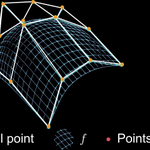
💣I am excited to advertise 'Bézier Gaussian Processes for Tall and Wide Data' which is to appear at #NeurIPS2022
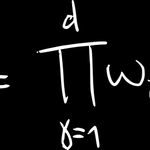
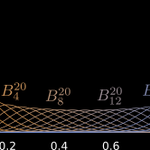
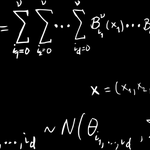
The paper presents a novel approach to scalable GP regression through a structured control points, which can be seen as a type of 'inducing points'. More in thread.

Martin Jørgensen retweeted

1/📯I am hiring!📯
Two-year postdoctoral position in Sample-Efficient Probabilistic Machine Learning @UnivHelsinkiCS with strong links to @FCAI_fi
Please see blurb below, and full ad here:
helsinki.fi/en/researchgroup…

Martin Jørgensen retweeted

For batch active learning, how can the algorithm determine the batch size? Use computational uncertainty via kernel quadrature! Check out our new AISTATS paper with @maosbot, @JorgensenMart, @wanxingchen_, @nguyentienvu!🎉 #ProbabilisticNumerics
paper: arxiv.org/abs/2306.05843

Martin Jørgensen retweeted
1/📯I am hiring again!
Postdoc or PhD position in Sample-Efficient Probabilistic Machine Learning @UnivHelsinkiCS with strong links to @FCAI_fi
Please see blurb below, and full ad here:
helsinki.fi/en/researchgroup…
Applications evaluated on a rolling basis. Please RT!

Martin Jørgensen retweeted
Delighted to advertise our paper at #NeurIPS2022
It presents a novel, cheap, but more diverse gradient-free sampler for parallelising GP active learning. It scales to large batch sizes and we apply it to Bayesian inference via Bayesian quadrature, e.g., battery analytics. 🧵1/n

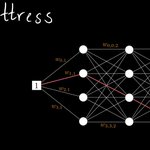
With that assumption, computations are 'straightforward' in what we call the Bézier buttress.
A buttress is an architectural construct that supports a building.
Inference and prediction with the GP is now merely a 'forward-pass' in a source-sink graph.

1
2
In the paper we have scaled to over a millions data points, and to input dimension 385; which inferred 6^385 control points with variational inference.
Many more details in the paper: arxiv.org/abs/2209.00343
Also, a huge shout-out to coauthor @maosbot
Martin Jørgensen retweeted

“But they don’t scale”. Gaussian processes regression takes O(n^3) time for most kernels, hugely limiting their adoption. Sparse methods enabling O(n) time just aren’t that strong. With our kernel, a GP runs in O(n log n) time and beats the classic Matérn kernel. #NeurIPS2022 1/8

If you’re at #UAI2022 consider visiting this brilliant work from Pola! 🥇If you are not, consider reading it 🤓

Excited to present arxiv.org/pdf/2004.03637.pdf at #UAI2022 in Eindhoven this week: A probabilistic extension to spatial transformer networks. P-STNs are cool bc they improve localization, accuracy and calibration compared to deterministic STNs.

Martin Jørgensen retweeted

It is with great sadness that I learn of the passing of Ole Eiler Barndorff-Nielsen. (March 18, 1935 - June 26, 2022).
"He lived a long and positive life, full of love and mathematics" his obituary reads.
An academic giant whom I am fortunate to have worked with. RIP Ole.

Martin Jørgensen retweeted

Thrilled to announce the 2nd ELLIS Doctoral Symposium: 19-23 September, in person @ELLISAlicante. Apply by May 20 to join us in Alicante for #ELLISforEurope keynotes, poster sessions, social events and more! #EDS2022 #AIforGood
ellis.eu/events/ellis-doctor…
Martin Jørgensen retweeted

Looking forward to presenting our paper “Last Layer Marginal Likelihood for Invariance Learning” (arxiv.org/pdf/2106.07512.pdf) next week at #AISTATS2022. Thanks to my fabulous collaborators @JorgensenMart, @sebastian_ober and @markvanderwilk. A quick peek below 🧵 (1/4)
Martin Jørgensen retweeted

Announcing the virtual seminar series on Gaussian Processes, Spatiotemporal Modeling, and Decision-making Systems!
Time: Mondays at 16:00 UTC
The inaugural keynote will be given by @ta_broderick on March 14th (pi day). Please register on the website!
gp-seminar-series.github.io

I just joined ISBA! 🎉

If your ISBA membership has just expired, please renew it!
Help us spread the word and encourage students and junior colleagues to join.
Link: bayesian.org/membership/join…

Martin Jørgensen retweeted

#UncertaintyQuantification in #imageRetrieval is crucial for downstream decisions! In our #ICCV2021 📰, we model embeddings as distributions rather than points, such that data uncertainty is propagated to retrieval. We mirror the triplet loss, and learn stochastic features.🧵1/4

We also presented some “specious art” this year at ICML. Never thought of myself as an artist 🧑🎨 arxiv.org/abs/2006.11741

There's a new preprint calling to stop using UMAP, t-SNE et al, calling them arbitrary "Specious Art", which I disagree with. It's getting a lot of attention, and I think I have an idea why.
1
5