
Chemical engineer messing with systems biology and tissue engineering. Postdoc @MITdeptofBE Lauffenburger/Griffith lab. Dark beer, bass guitar, 3D printing.
Cambridge, Massachusetts
Joined April 2018
- Tweets501
- Following545
- Followers291
- Likes2K




Pinned Tweet
Thrilled to share the first paper from my postdoc in the labs of @DALauffenburger and @LindaGGriffith1 at MIT in collaboration with the fantastic @MeimetisNikos and with critical input from colleagues at Novo Nordisk. A thread (1/5)
science.org/doi/10.1126/scia…

Stay tuned for applications of LIV2TRANS in Women's health! I am in the job market this term and I aim to combine computational methods, tissue engineering and synthetic biology to understand tissue-level pathologies, so please reach out if interested! (5/5)
1
20
Our method, called LIV2TRAS, identified latent variables in gene expression space not recapitulated in the reference MPS dataset. After some detective work and experimental testing, we found a potential role for IFN in modulating the MAFLD phenotype in vitro (4/5)
1
1
34
We used MAFLD/MASH as a case study and found that across a variety of experimental cues, TGFb led to molecular changes closely associated with disease progression in patients. Surprisingly, this alignment was modest which suggested the MPS model was missing key processes! (3/5)
1
1
34
We developed a computational translation method based on latent spaces to ask (1) how good is an existing MPS model at recapitulating patient-relevant disease processes? (2) how complex does an in vitro model need to be? (3) how can we make in vitro models better? (2/5)
1
1
31
Jose Cadavid retweeted

One of the remarkable things for me about NeurIPS this year was how quickly the entire AI for Biology community has gone all-in on biological foundation models. Virtual cell models will enable us to predict how cell states will change in response to chemical perturbations. Protein language models will enable us to identify better enzymes for degrading plastics, and so on. Everyone wants bigger data on more things to throw into bigger models.
These models are going to be awesome, but real biology discoveries look somewhat different. Contrast these dreams of foundation models with the latest table of contents from Science or Nature:
--“A long noncoding eRNA forms R-loops to shape emotional experience–induced behavioral adaptation” — The authors identified a lncRNA in mice that is expressed in response to neuronal activity that modulates the 3D structure of chromatin, thereby activating genes that are involved in neuronal plasticity. The authors further identified that this lncRNA is essential for certain forms of learning.
--“Cancer cells impair monocyte-mediated T cell stimulation to evade immunity” — The authors identified that mouse melanoma cells secrete a lipid metabolite that prevents monocytes from activating CD8+ T cells.
--“Postsynaptic competition between calcineurin and PKA regulates mammalian sleep–wake cycles” — By generating mouse knockout lines, the authors identified phosphatases and kinases that are critical for regulating the sleep-wake cycle, and showed that they act through regulation of proteins at excitatory postsynaptic sites.
I struggle to imagine how any of these discoveries could fall out of a multimodal biology foundation model. This is not intended to be a straw man argument. Surely, a foundation model could potentially identify the lncRNA from the first paper, but I am not sure how such a foundation model would associate it with chromatin remodeling. A multimodal foundation model with enough data could also potentially identify metabolic changes associated with melanoma cells subjected to certain kinds of treatments, but I don’t see how that foundation model could identify the effect of those metabolites in preventing CD8+ T cell activation. Indeed, I do not think that any of the foundation models that are being developed today would be capable of generating rich new biological insights of the kind described in these papers. And yet, these are the kinds of insights that new therapies are made from.
The issue, I think, is that machine learning models work extremely well on structured data, and so all the foundation models that are being built are highly structured. Take a protein sequence as input and produce a protein sequence as output. Take a cell state and a chemical perturbation as input and produce a new cell state as output. Biology, however, is poorly structured. The lncRNA insight is case in point: what structured representation can we use for the action of the lncRNA in modulating chromatin architecture? Protein models cannot represent it; DNA models cannot represent it; virtual cell models cannot represent it. Perhaps a model that incorporates RNA expression and 3D genome state could represent it, but then how would that model represent the lipid modulation of the monocytes? I worry that every discovery may need its own representation space. Indeed, the nature of biology is such that there likely is no representation, short of an atomic-resolution real-space model of the entire organism, that is sufficient to represent the diversity of biological phenomena that are relevant for disease.
Except, of course, for natural language, which is evolved to represent all concepts that humans are capable of contemplating. Indeed, I think natural language has an essential role to play in representing biology, and is ultimately unavoidable, insofar as it is the only medium we know of that is sufficiently structured for machine learning and sufficiently flexible to represent the full diversity of biological concepts. At FutureHouse, we work on language agents, which is one way of combining language and biology, but this is not the only way. Models that combine natural language with protein, DNA, transcriptomics, and so on will also be extremely productive, provided the addition of the structured datatypes does not restrict their ability to represent unstructured concepts. However we do it, I think this essential role of natural language in representing biology is currently largely underappreciated.
The history of biology is built on tools that we have found in nature to study biological phenomena. As all biologists know, trying to engineer things from scratch (almost) never works; what works is finding things in nature and repurposing them. It will be aesthetically pleasing if it turns out that our engineered representations are yet again insufficient for studying biology, and that natural language is simply another such tool that we have found in nature that must be applied instead.

Thanks to everyone who contributed to the huge body of work that we had the pleasure of distilling. Convergence science is hard, but by showing success stories we can hopefully make a stronger case for it (shoutout to @FertigLab). Full article here shorturl.at/cuwBP (3/3)
5
657
This article is special to me because it helped me gather my thoughts about my career and ultimately inspired me to join the great pioneers @LindaGGriffith1 and Doug Lauffenburger @MITdeptofBE for my postdoc (2/3)
1
5
116
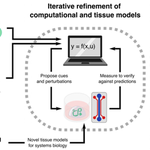
I am thrilled to finally share the last piece of my PhD work @mcguiganlab, where we (@thenancyli and @alisonmcguigan) review how systems biology and engineered tissue models can complement each other (A LOT!). Check out this #Scilight about out work teapawt.net/BiophysRev/status/1778… (1/3)


In the pursuit of a better understanding of biological systems and processes, researchers have built increasingly sophisticated physical models to study. #Scilight
Learn more 👇
aippub.org/43U9jXO

Jose Cadavid retweeted

#UofTEngineering professor Alison McGuigan has been named the Canada Research Chair in Tissue Engineering and Disease Modelling. She is advancing research into building artificial tumours to help researchers better understand cell behaviour. Read more: uofteng.ca/kc0Rdd

ALT Professor Alison McGuigan stands in a large interior space. She is wearing a grey top, a necklace and gold earrings.
Jose Cadavid retweeted

Very excited to share our new pre-print ‘SIGNAL-seq: Multimodal Single-cell Inter- and Intra-cellular Signalling Analysis’ led by @j_opzoomer. (1/11)
biorxiv.org/content/10.1101/…

Jose Cadavid retweeted

THE epic debate throughout science's existence has been: does discovery come from data or hypothesis? The answer is both, of course! I’ve made a career out of working mostly hypothesis-free so – contrary to what some say – this is absolutely possible, not boring, nor cheating🧵⬇️

Jose Cadavid retweeted

Endometriosis/ endometrium -omics, pain mechanisms, and more at our first ever Gynecology Research and Development Workshop at MIT on Sept 22 (virtual option). We have an amazing line up and there will be focus on future challenges! cgr.mit.edu/oef/

Need to assess many experimental conditions with organoids? Put them in paper! Congrats to all authors!

Check out our new paper with Jackson Lab @hartjackson where we automate manufacturing of arrays of 100s of #organoid tissues and perform high-dimensional analysis of single cells.
#CyTOF @Opentrons
🔗 doi.org/10.1002/adhm.2022024…

7
532
Happy to have shared this special moment with my family, my scientific mentor, and my lab friends. Toronto was home for 5 years and I always enjoy coming back for the weather. Now back to postdoc life!
🎓 Congratulations to Dr. Cadavid @JoseLCadavid on earning his PhD! Wish you continued success and fulfillment in your academic and professional journey! 🎉

3
25
2,077
With that, it's a wrap. I am excited for the next chapter of my career, fusing tissue engineering and systems biology to study female reproductive health as a postdoc @MITdeptofBE at the @LindaGGriffith1 and Lauffenburger labs. Now, of to enjoy the lovely weather in Toronto!
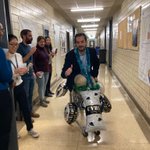
Special thanks to my friends @mcguiganlab and to Prof. @alisonmcguigan for being an awesome mentor. She kindly upheld the German tradition of "wheeling me" around our building (not German myself, but fun!)

1
12
519
After 5 years, I defended my PhD thesis this morning and now I can say #PhDone. Thanks to everyone who attended and who contributed to my time @uoftengineering . Thanks to @ppproven @bradwouters @LMSE_UofT @ShoichetLab for thoughtful and interesting discussion and support!

Happy to share the last part of my PhD project on building an engineered 3D model of #PDAC #organoids. Wouldn't have been possible with the not-so-bad researcher Dr. @SimonLatour3 (jk, he's pretty good). Thanks to everyone who helped with this work!
🚨Our first paper with @hartjackson lab is out in Adv Healthcare Mater (onlinelibrary.wiley.com/doi/…): We created a modular #organoid #fibroblast co-culture model of #PDAC that allows high-dimensional analysis using #CyTOF to probe the impact of tissue architecture on cell phenotype
