

@BabbageInst Dir. I Prof Hist Sci/Tech UMN I CoEdit J Hopk Bk Srs Computing & Cltr I Rsch-AI, HCI, Priv, Gender, Race. Same hndl on Bsky @JustCode
MPLS, Land of Dakota, Ojibwe..
Joined March 2021
- Tweets1.6K
- Following211
- Followers488
- Likes4.4K




Jeffrey Yost retweeted

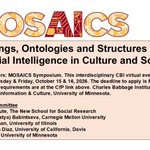
Honored to join MOSAICS (Meanings, Ontologies & Structures of AI in Culture & Society) on Oct 15-16, hosted by the Charles Babbage Institute!
I present on Fri, Oct 16, 10:45 AM (US Central):
’The Memory/Intelligence Divide: A Manual/Intellectual, Raced, and Classed Hierarchy’

MOSAICS Symosium on Interdisciplinary critical AI Studies. Registration for this free online 2 day event w/ more than 30 standout humanities & soc. sci. scholars is now open. Register today! Org. Cmt. @wrongrrl, S. Amrute, G. Con Diaz, @BabintsevaK, & me.
cse.umn.edu/cbi/events/mosai…

ALT Flyer on event with images (Keynote speakers Janet Vertesi, Tiara Roxanne, Paula Chakravartty, and Roderic Crooks) and info. on the event.
Jeffrey Yost retweeted

My book Decentralised Digital Security: Code, Crisis, Community is out now (Open Access).
Inside the strange, high-stakes world of blockchain security—watching code break, communities respond, and crises unfold. A field site like no other.
Read it here: manchesterhive.com/display/9… (ebook)
Hardcover: manchesteruniversitypress.co…

Jeffrey Yost retweeted

Mullaney Awarded 2025 CBI Human-Computer Interaction History Prize
cse.umn.edu/cbi/news/mullane…
I'm floored and honored in equal measure. My thanks to the committee + heartfelt congratulations to CMU colleague Brad Myers
cc @mitpress @WEAI_Columbia @StanfordHistory @StanfordLibs

Jeffrey Yost retweeted
Just released cover of our book JUST CODE, out in Fall 2025. Honored to partner with Con in leading an absolutely stellar team of scholars for this interdisciplinary volume from Johns Hopkins University Press!!! #aibias #aiinequality #surveillance #privacy

ALT Cover of Just Code black title on white book cover.
Jeffrey Yost retweeted
Just published essay for the new year, in my critical blockchain studies essays blog, Blockchain & Society. #bitcoin #politicaleconomy
blockchainandsociety.com/hom…

Jeffrey Yost retweeted

AHA members: The AHA is accepting applications for the 2025-26 research grants until February 15, 2025. Preference will be given to advanced doctoral students, nontenured faculty, and unaffiliated scholars and to those with specific research needs. historians.org/community-car…

Jeffrey Yost retweeted

Incredible, important victory. So much gratitude to those who waged this long winning battle 🙏💐


Jeffrey Yost retweeted

"Plutocracy is its own kind of dictatorship. When companies larger, wealthier and more powerful than most world governments threaten individual liberty with coercive private taxation and regulation, it threatens our way of life."
Jonathan Kanter, Assistant Attorney General, 2024
Jeffrey Yost retweeted

Likely cover of a new book, coming from Oxford University Press, likely in May. Widely said to be "the one book you need to read, if you want to have a happy, fun-filled life, with friends, and without stomach pain."

Jeffrey Yost retweeted

Disinformation, Misinformation, and Democracy by Ronald J. Krotoszynski, Jr., András Koltay and Charlotte Garden - @charlottegarden
A comparative, solutions-oriented legal and policy analysis of methods used to combat the impact of dis- and misinformation on democracy.
📚 cup.org/3YIvPlp
#comparativelaw

Jeffrey Yost retweeted

Busy week last week wrapping up classes here, but if you should definitely tune into my interview with @bshestakofsky about his book, _Behind the Startup: How Venture Capital Shapes Work, Innovation, and Inequality_, if you haven't checked it out yet.
newbooksnetwork.com/behind-t…
Jeffrey Yost retweeted
Annals of anti-monopoly: The Founders never intended the U.S. Postal Service to be managed like a businessw washingtonpost.com/outlook/2…

Jeffrey Yost retweeted
"Bridges Over Troubled Waters"
My just published essay on a major cybersecurity & privacy PI conf. of NSF, & broader social, policy, and ethical contexts.
#ai #surveillance #privacy #gender #race #inequality #sts #nsf
z.umn.edu/NSFSaTC

Jeffrey Yost retweeted
Thrilled to see The Chinese Computer reviewed in @LAReviewofBooks by the incomparable Maura Cunningham
cc @mitpress @WEAI_Columbia

"Mullaney covers the story of Chinese computing from the late 1940s through the present day, describing experiments that have nevertheless left behind enduring legacies for the entire computing world." Maura Elizabeth Cunningham on "The Chinese Computer." lareviewofbooks.org/article/…

Jeffrey Yost retweeted

Job Posting: Assistant Professor in Technology, Organizing, and the Future of Work at University of California, Santa Barbara
recruit.ap.ucsb.edu/JPF02826
Jeffrey Yost retweeted

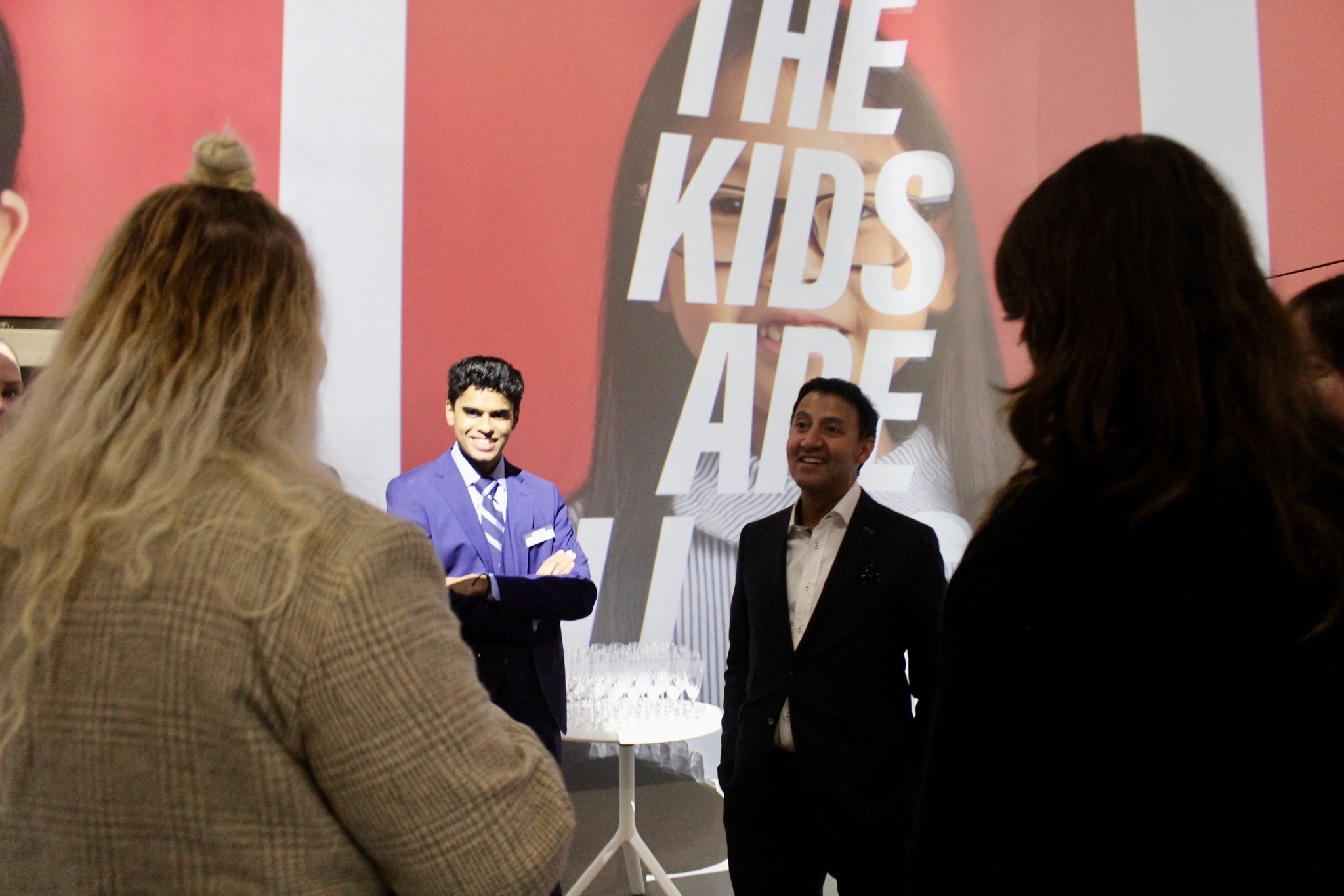
I’m I ncredibly proud to have organized this conference, backed by a fabulous team from @MediaTechDem and Paradigms!
Thank you, @viraniarif, for joining us and sharing your valuable expertise on Canada’s approach to online safety!

The Kids Are All Right conference united advocates under a common goal: protecting children & youth online. Thanks @mediatechdem and Paradigms for the chance to engage with dedicated, passionate activists on our plan to #ProtectKidsOnline & #StopHate with the Online Harms Act.



Jeffrey Yost retweeted

Review of @michaelserazio "The Authenticity Industries" by @EllieHomant "Serazio both encourages readers to make cross-industrial connections, and creates a compelling, sophisticated argument about the inescapability of authenticity in...American culture" doi.org/10.1177/152747642412…
Jeffrey Yost retweeted

Coming up is a talk by Annette Markham (@annettemarkham) at the University of Bristol (@DigiFutures) on resisting "discursive closure of digital futures."
This is a hybrid event, with the option to attend online.
Sign up here!
tickettailor.com/events/bdfi…
Jeffrey Yost retweeted

🚨 [AI Research] "Hype, Sustainability, and the Price of the Bigger-is-Better Paradigm in AI" by @GaelVaroquaux, @SashaMTL & @mer__edith is a MUST-READ for everyone in AI. Selected quotes:
"The bigger-is-better norm is also self-reinforcing, shaping the AI research field by informing what kinds of research is incentivized, which questions are asked (or remain unasked), as well as the relationship between industrial and academic actors. This is important because science, both in AI and in other disciplines, does not happen in a vacuum – it is built upon relationships and a shared pool of knowledge, in which prior work is studied, incorporated, and extended." (page 2)
-
"If we consider health applications, where we would like machine learning to positively contribute to society, AI models are often built in data-scarce contexts on which large models can more easily overfit (Varoquaux & Cheplygina, 2022). For example, to predict epilepsy, Eriksson et al. (2023) find no prediction-performance difference between logistic regression, boosted trees, or deep learning, even as these approaches differ dramatically in terms of resources required. The largest source of medical data are probably electronic health records – Rajkomar et al. (2018) reported performance of deep learning, though their appendices show that logistic regression achieves the same performance. For education, one promise of machine learning is that it could produce customized pedagogy, shaped to the student based on which topics or skills they have learned, and which they are striving the understand. For this purpose, a random embedding of the student’s learning sequence outperforms more resource intensive optimized deep or Bayesian models (Ding & Larson, 2019)." (page 4)
-
"As members of the AI community, we find that, in recent years, AI research has acquired an unhealthy taste for scale. This comes with dire consequences– economic inequalities and environmental (un)sustainability, datasets that erode privacy and emphasize corrosive social elements, a narrowing of the field, and a structural exclusion of small actors such as most academic labs and many startups. This fixation on scale has emerged via norms that shape how the scientific community acts. We believe that scientific understanding and meaningful social benefits of AI will come from de-emphasizing scale as a blanket solution for all problems, instead focusing on models that can be run on widely-available hardware, at moderate costs. This will enable more actors to shape how AI systems are created and used, providing more immediate value in applications ranging from health to business, as well as enabling a more democratic practice of AI." (page 10)
🔎 Read the full paper below.
🔥 Interested in AI policy, compliance & regulation? Join 35,200+ people who subscribe to my weekly newsletter (link below).

Jeffrey Yost retweeted

Three mile island plays a specific role in computer history.
Don Norman (affordance) says it pushed him into user experience design, wholeheartedly:
“The control room and computer interfaces at Three Mile Island could not have been more confusing if they had tried.”

