Beyond aller träume | Writes occasionally | Just some guy Founder @the4thManGroup | Chronic Investor Published: @ballgistng
Between What If & Fuck It.
Joined January 2022
- Tweets9.9K
- Following1.2K
- Followers179
- Likes8.6K





X E L A 🙃 retweeted

Jesse Armstrong and co. have perfected giving audiences a sense of false hope with #Succession that I don’t think we’ll see again. You give us what’s possibly the last moments of the siblings in good terms, only to tear them apart and leave them in the mud. What a series finale!


X E L A 🙃 retweeted

After the 9/11 attacks, hundreds of search‑and‑rescue dogs were deployed to Ground Zero alongside human first responders. These dogs were highly trained to locate survivors in disaster zones, and many had spent years practicing scenarios where their searches ended in successful “finds.”
But at Ground Zero, the reality was devastating: day after day, the dogs found only deceased victims. Their handlers began noticing troubling changes, dogs growing visibly sad, confused, and even reluctant to continue searching. For animals conditioned to believe every search should end in saving someone, the constant absence of survivors felt like failure.
Handlers quickly realized the emotional toll was becoming dangerous. Rescue dogs rely heavily on morale, praise, and a sense of accomplishment to stay motivated and focused. Without those positive outcomes, some dogs began showing signs of depression: lowered tails, reduced appetite, and decreased enthusiasm for work. To protect their mental well‑being, handlers started staging mock rescues.
They would hide fellow rescuers in accessible spots so the dogs could “find” a living person, receive praise, and regain confidence. These staged successes weren’t just kindness—they were essential to keeping the dogs effective in an environment filled with trauma.
This practice became a quiet but powerful example of the bond between handlers and their dogs. Even in one of the darkest moments in modern history, rescuers recognized that emotional care mattered, not just for humans, but for the animals who worked beside them. The staged finds helped maintain morale, restored the dogs’ sense of purpose, and allowed them to continue contributing to the recovery effort.
One of the most remembered dogs at Ground Zero was Bretagne, a golden retriever from Texas who worked tirelessly through smoke, twisted steel, and unstable debris. Her handler later recalled how Bretagne would gently nudge exhausted firefighters, offering comfort before returning to the rubble to search again.
She wasn’t just looking for survivors, she became a source of emotional support for the human crews, sensing when someone needed a moment of connection. Years later, when Bretagne returned to New York for her 16th birthday, firefighters lined the street to salute her, honoring not just her work but the quiet compassion she brought to one of the darkest sites in American history.
#archaeohistories

X E L A 🙃 retweeted

Someone just got out of jail

💤 A dormant address containing 50 $BTC (4,000,574 USD) has just been activated after 16.5 years!
whale-alert.io/tx/bitcoin/fc…

X E L A 🙃 retweeted
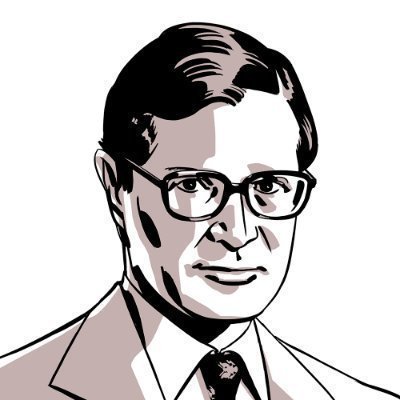
Why is Tom Holland here less well dressed than the King of Spain?
This is a very good question.
I will give you my perspective.
The King is wearing a bespoke suit made for him by a bespoke tailor. Bespoke means the garment was made from scratch. In this case, a tailor measured the King's body and then used those measurements to produce a custom pattern (the term pattern refers to the garment's architectural blueprint). The garment was then made through an series of three iterative fittings — basted, forward, and final — each stage bringing the garment closer to its final form.
Tom Holland here is wearing a suit from Boss, the premium label of Hugo Boss. The garment here is made using a pattern that the designer and their team developed using a mix of things: an idea of their target market, their idea of style (often influenced by trends), and a fit model (someone who professionally tries clothes on so the designer can see whether something fits). Tom Holland was not involved in any of these stages.
Celebrities often wear things at big events due to a series of backdoor business deals. Sometimes it's as simple as a brand giving them something free to wear. Sometimes they are paid. Sometimes they are working with a stylist who has an agreement with a brand. The key thing is that these are business relationships motivated by profit (the brand is trying to make money through publicity).
This is where Holland comes in. Once the suit arrives to him, it's adjusted much like something you'd have adjusted at a local tailor. But since the garment is already made, you can only do so much.
In this case, the trousers are too slim for his legs, so they crumple below the knee. The jacket is also a bit too short, but dedicated followers of fashion often tell me, "this is the style." (Or, as the French say, à la mode).
More importantly, as the suit travels down this production path — from the designer's head into Holland's hands — it becomes increasingly removed from people with technical skills. True, the alterations tailor is skilled, but they are limited in terms of what they can do. The stylist is not skilled in a technical sense; they are hired to buy clothes and put them on a body.
This isn't to say stylists don't have skills or that they're necessarily bad. Indeed, I think Colman Domingo is among the best-dressed men alive today. Much of his style — although not all — can be chalked up to the fact that he works with some very talented stylists.
But on average, stylists' work is often less convincing than costume designers'. Why so? In my opinion, it's because costume designers are often more technically skilled.
The same is true for the King of Spain. There's no distance between him and the technically skilled person who made this garment — the bespoke tailor is literally laying their hands on his body. No profit motive exists beyond paying the tailor to produce a garment. The tailor's only motivation in this sense is to produce the best garment they can.
In the other instance, the development of ready-to-wear systems has produced a network of intricate profit motives. Here, the brand tries to create desire in consumers by putting its clothes on a famous person. But the garment isn't created specifically for that person — and it follows "la mode." It also travels a path that puts Holland further and further away from the technical people involved in production.
Of course, this is not to say that you will get an equally good outcome by going to a bespoke tailor, as not all bespoke tailors are so skilled. It's also worth noting that many people who are not technically skilled masquerade as tailors. For instance, it's common for business people and salespeople to run made-to-measure shops, where they drape a tailor's measuring tape around their neck. They may even describe their business as "bespoke." But they are not actual tailors, as they don't have any technical skills (they neither cut nor sew). Instead, they send your measurements to a distant factory, where someone who never sees you makes the garment. Thus, the same problem arises.
I'm answering this question partly because I've been thinking about this issue in relation to AI. I suspect AI will do things comparable to the Industrial Revolution: lower production costs and, thus, increase how much you can consume.
But I also suspect that it will lead to some deskilling. If you can generate an illustration with a prompt, there's no reason to spend decades learning how to draw by hand. Perhaps sometime in the future, someone will ask why one drawing looks so much worse than another, and someone will give an explanation similar to what you've read here about tailoring. There are fewer technically skilled people involved in the image you see on the right.

ALT


X E L A 🙃 retweeted

They should hurry up, @HisaApp users need to eat with our pre IPO access feature abeg


X E L A 🙃 retweeted

If ₦100k leaves your account every month buying sneakers…
You call it drip.
If ₦100k leaves your account buying bank stocks…
You call it risky.
This is exactly why one person retires wealthy and the other retires fashionable.