

Building The Rainmaker Group. Dealmaker for India's premier venture backed founders. We try the hardest.
Mumbai, India
Joined September 2015
- Tweets3.5K
- Following1.9K
- Followers945
- Likes20.2K







Pinned Tweet
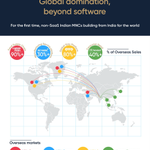
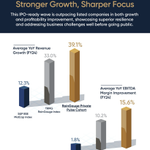
📉While the public markets are getting roiled and waiting to find a new normal, bubbling under the surface is the promise of coming of age of India's venture backed private markets.
Over the next 2-3 years, our largest and highest quality cohort companies will hit the public markets. Read on.
Jensen Huang is 21st century's James Pierpont Morgan. The man who holds the economy together, not an ordinary corporate executive.

A quick update to this. Minutes after the board's announcement, this came out.
So the Washington piece I mentioned is now on the record.
I would read the wording carefully though. The clearance is about the man. In the same post the President asks Nvidia to continue its internal investigation into export control compliance. That is about the company, and I think that question is still open.
My opinion here and not advice.

2
77
Kashyap Chanchani retweeted

One reason founder CEOs are so hard to replace is that they’re effectively also the chief product officer. They know how the product was built, can hold the entire product in their head, and have the vision and authority to reinvent it.
When they leave, the CEO role gets filled, but the product role they played rarely does.
Kashyap Chanchani retweeted

He funded my dream of pursuing a master's in Germany in 2021 and later gave me my dream wedding, all while clearing our family's ₹1 crore debt.
Today, seeing him finally pursue his own dreams makes me so happy.
Couldn't be more proud to be your sister, @YashGargK! ❤️

Most people start their careers with some privilege, and many start from zero. I started from minus ₹1 crore, and I did not even know it until my second year at IIT Delhi.
Over the years, that debt took me from a failed placement day to Google, to a ₹2 crore side business, and finally to the startup I had always wanted to build. This is that story.
My father ran a real estate business, and he had invested in under-construction flats from builders like Jaypee and Wave, paying most of the price up front through home loans.
Years went by without the flats being delivered, but the banks still wanted their EMIs on time. So my parents borrowed from friends and relatives, and when that was not enough, from credit cards.
My parents carried all of this debt quietly and tried to shield me from it. I knew we owed money, but never how much.
Then in my second year, collection agents started coming to our house and sitting there, asking for payments we could not make. It stressed my mother a lot, and I could see it on her face every day.
𝗧𝗵𝗲 𝗹𝗶𝘀𝘁
One day, I sat my parents down and asked them a simple question: who exactly do we owe, and how much?
Then I took a sheet of paper and started writing down how much we owed, to every bank, every friend, every relative and every credit card.
The list kept getting longer, and by the time I finished, the principal alone was more than ₹1 crore.
I still remember how heavy it felt while writing each line. That day, I knew I had to grow up quickly and get my parents out of this situation.
I had joined IIT knowing exactly what I wanted to do after college, which was to build a startup. But that sheet of paper changed everything, and the dream would have to wait.
The new plan was to get a high-paying job, pay off everything on that list within two years so that my parents could finally breathe again, and only then pursue my dream of starting up.
𝗠𝘂𝗿𝗽𝗵𝘆'𝘀 𝗹𝗮𝘄
From my third year, everything I did was aimed at that one goal: getting a job at an HFT, which paid ₹50 lakh+ a year.
I was ranked 2nd in my department and had a CGPA of 9.7/10, so I genuinely believed I could get in.
Then day one of campus placements came. I prioritized Tower Research over the other companies, cleared three rounds, and was rejected in the final one.
I was so crushed that I could not perform at the others that had shortlisted me, and by evening, they were all gone.
That evening was really hard. Every rupee I was not going to earn meant my parents would have to carry that weight for longer.
On day two, I took an offer from Cohesity at ₹18 lakh a year. It was a good job, but nowhere near the number we needed.
In July 2019, I moved to Bangalore, stayed in a PG, kept my monthly expenses to under ₹20,000, ate meals at the office, and rarely went out with friends. Everything else, I sent back home.
My friends would talk about investing and going on trips, but I did none of that.
I soon realized that this salary would never be enough. So I set a new target: Google US. Whatever time I could find outside work went into competitive programming, and I soon became a Master on Codeforces.
In January 2020, I started applying to Google and other companies in the US and UK. A few weeks later, COVID hit, and overnight, companies stopped hiring overseas candidates.
The way out I had been working towards for months disappeared.
𝗪𝗵𝗲𝗿𝗲 𝗱𝗶𝗱 𝗮𝗹𝗹 𝘁𝗵𝗲 𝗺𝗼𝗻𝗲𝘆 𝗴𝗼?
Around the same time, I got an offer and joined Spotnana as a founding engineer. I really liked their vision, and I believed that growing with a young startup and holding equity in it could be the big break I needed.
About a year after I had started sending money home, I sat down to see where it had gone.
Almost my entire salary had been spent on interest for our credit card loans. We had not reduced the principal and had not saved anything either. After a full year of hard work and sacrifice, the list was exactly as long as the day I had written it.
That was one of the lowest points of my life. It felt like I was running as hard as I could, just to stay in the exact same place.
Meanwhile, I was giving Spotnana everything, working on weekdays and weekends, and was one of the top performers there.
But when appraisal season came, the raise was still not as high as I was hoping for. I was really disappointed. My equity, though promising, could not help us pay off the debt anytime soon.
I told my manager I would need something on the side to make up the difference. I created a programming YouTube channel and later learned Android development, but neither brought in any money.
𝗜 𝗰𝗼𝘂𝗹𝗱𝗻'𝘁 𝘀𝗹𝗲𝗲𝗽 𝘁𝗵𝗮𝘁 𝗻𝗶𝗴𝗵𝘁
During that time, I was talking to one of my college seniors who had joined Google. I told him everything, about the list, my plan and my belief that I could clear it all in two years.
He listened patiently and then told me the truth. If I stayed at Spotnana, it would not take two years, it would take more than four.
He said that instead of being emotional about the company, I needed to be tactical if I really wanted to solve my family's problem. He then referred me to Google.
The next four months were the most focused of my life, and every spare hour went into preparing for Google. When I got rejected from Uber and Coinbase, I was terrified about what would happen next.
But then, Google said yes.
The day the recruiter told me I had been selected for the Google Search team is still one of the best days of my life. That night, I couldn't sleep at all. I lay awake, too happy to close my eyes, thinking about how this would finally change things for my family.
For the first time since I wrote that list, I could actually see a way to clear it.
𝗧𝗵𝗲 ₹𝟮.𝟭 𝗹𝗮𝗸𝗵 𝗯𝗲𝘁
When I joined Google, the list still had ₹80 lakh left on it, and salary alone would take years to clear it.
But Google also gave me something I had not had before: time. So with Google's permission, I started a mobile apps business with my father, working nights and weekends.
In the first three months, we built a bunch of Android apps and games, but could not make any revenue. Then I analyzed iOS versus Android and decided we should build for iOS instead.
So we took the bet. I bought a MacBook Pro for a hefty ₹2.1 lakh, picked our most downloaded game on Android, built its Swift version in six days, and launched it on iOS.
Installs were high from day one, and within a couple of days we turned on monetization. I kept refreshing the dashboard as paying users came in, and within just a few days the game had paid back the cost of the laptop.
And that was just the beginning. Our revenue grew from ₹6 lakh in the first month to ₹24 lakh in the fourth, as we added more games.
I was working close to 100 hours a week between Google and our apps. Over a year and a half, our games crossed 200K downloads, with players mostly from the US, and brought in more than ₹2 crore in revenue.
𝗖𝗿𝗼𝘀𝘀𝗶𝗻𝗴 𝗼𝗳𝗳 𝘁𝗵𝗲 𝗹𝗶𝘀𝘁
With that revenue and my Google salary, we finally started crossing lines off the list. This time we were not just paying interest, we were paying back the principal, one line after another.
With every line we crossed off, the stress at home got a little lighter.
In June 2023, we paid off the last one.
The list I had written in my second year of college was finally empty. My parents were free, and after years of waiting, so was I.
As soon as the last loan was cleared, I put in my papers at Google. The apps had left me with enough savings to finally start my own company.
My last day at Google was the day before my 25th birthday, and on 21 July 2023, I woke up with no debt, no job, and for the first time in years, nothing standing between me and the thing I had always wanted to do.
𝗦𝗵𝗼𝘂𝗹𝗱 𝗜 𝗴𝗼 𝗯𝗮𝗰𝗸 𝘁𝗼 𝗮 𝗷𝗼𝗯?
Over the next four months, I built 12 new games, but month after month, none of them worked. And it was not just me. Apple's iOS privacy changes had broken the economics of hyper-casual games.
That November, I remember walking on my terrace, thinking about whether leaving my job had even been the right choice. My parents had started telling me to get a job again. But I had waited far too long for this chance to give it up.
I decided to shut the games business down and hard pivot into SaaS. I started with Shopify apps, only to realize a month later that I had no unique idea and the competition was intense.
I then analyzed around 70 B2B SaaS marketplaces to find the next Shopify app store, found monday, the project management platform, and started Super Workday, building apps for teams using it.
My first app there failed too, because it was too niche. For the next one, I went through the platform's feature requests and picked the biggest unsolved problem.
That one worked. In April 2024, after eight months without any revenue since leaving Google, I got my first paying customer.
I was so happy that day that I emailed him just to tell him he was my first customer. I still remember his name.
After that, I kept launching one new app every month, and the revenue grew sharply. Today, the business runs on autopilot, has 300+ paying customers, mostly in the US, and is close to $100K in ARR.
It also paid for my sister's wedding, and being able to do that for my family made me very happy and proud.
𝗧𝗵𝗲 𝘀𝘁𝗮𝗿𝘁𝘂𝗽
With that income stable, I finally felt ready to go after a venture-scale idea and started building an AI executive assistant.
In January 2025, South Park Commons, a Silicon Valley VC, invested $400K at a $5.7M valuation. I cannot explain what I felt the day their offer came. All those years of waiting finally made sense.
My startup journey is still early. Since then, there have been many more ups and downs, and there are still many things to figure out.
But for the first time, I am building the startup I always wanted to build, and I am ready for whatever comes next.

Kashyap Chanchani retweeted

Most Sixes Per Test (Cut off 2)
4.33 Razaullah (3 Tests)
3.50 Pretorious (2 Tests)
3.00 Hridoy (4 Tests)/Farhat (1 Test)
2.33 Brathwaite (3 Tests)
2.20 Siriwardena (5 Tests)
2.04 Pant (53 Tests)
2.00 Hastings/Mahidul/Martin/Wickham/Wijesundara/Yadav (1 Test)

Kashyap Chanchani retweeted

Foreigners flocking back to Indian assets allow RBI to pare FX market footprint.
reuters.com/world/india/fore…
Genuinely in awe of Sanjay Malhotra. IIT Kanpur, Princeton, IAS, Revenue Secretary, now RBI boss. A topper throughout. Some early communication snafus, but showed enormous skill and courage to thread this rupee episode despite immense pressure (and confusion) from all sides. Kudos to his team and to his predecessor (Shaktikanta Das) at RBI for also showing that bureaucrats are better than foreign academics who go back to their shores immediately and treat India as a punishment posting.

Kashyap Chanchani retweeted

once you meet genuinely tier 1 people, you realise your definition of exceptional was never ambitious enough
Kashyap Chanchani retweeted

Early in your career, it is easy to mistake a demanding boss for an unsupportive one. What many young professionals miss is a simple truth: your manager is deeply invested in your growth, because your failure is ultimately theirs too. Never lose gratitude for the person and the institution that gave you your first break when every other door was closed.
Kashyap Chanchani retweeted

Absolute honour and a pleasure to host Hon.Minster @AshwiniVaishnaw ji today and run him through all the industrialisation heavy lifting being done at @etherealmachine’s Factory 1.

For those calling our manufacturing as screwdriver technology: Designed in India, Made in India 5-axes precision CNC machines with the accuracy of 2 microns! For reference, the thickness of human hair is about 80 microns.
(5-axes = x, y, z, rotate, turn)
This is the way electronics and semiconductor manufacturing ecosystem is taking shape.
India now manufacturing things that go into things that go into things…
Kashyap Chanchani retweeted

This Jensen hit piece is something else lol.
Guy tips a waitress $1000 without telling anyone, gives credit to his employees, treats service workers with respect and talks about his dishwasher days.
But apparently thats all part of some elaborate psychological operation to convince himself he's humble. Incredible stuff. The writer has somehow acquired the ability to read another man's soul. Forget journalism, we've got God writing opeds for the NYT now.
And look, Jensen might've been an arrogant prick behind closed doors. Maybe he screamed at people, hated being contradicted, whatever. Investigate that, report it, hold him accountable. But how the fuck does that retroactively turn every decent thing he ever did into an act?
People can be generous and difficult. Brilliant and insufferable. Apparently this is too much complexity for modern journalism, so we need the cartoon villain treatment.
The funniest bit is the sheer arrogance of accusing someone of arrogance while claiming to know the secret motives behind every good deed they've ever done. Mate, you wrote his biography, you didnt gain access to his operating system. Access isnt omniscience. Sometimes a guy who tips a waitress $1000 is just a guy who tipped a waitress $1000. Jesus christ.


Kashyap Chanchani retweeted

"Apple’s Chinese films are interested in what it feels like to be Chinese. Apple's Indian films are interested in what India looks like, as seen from the outside."
Because that's exactly how Indian elites/leftists look at india. they are extremely disconnected from India.
The exaggerated head bobs and literal egyptian steps are the caricature of an "Indian", what west thinks and our people will represent India as foreign masters like, just like how they write articles for international media.
Kashyap Chanchani retweeted

Two economies can have the same Gini. In one, the same families stay at the top. In the other, new ones keep rising.
The inequality debate is incomplete without mobility. Zucman’s wealth tax makes no such distinction. When dividing wealth matters more than creating it, both economics and policy shrink to fit.The CEA and I in The Economic Times today

Kashyap Chanchani retweeted

BREAKING: Billionaire Mukesh Ambani's Jio has been talking to Comcast and Charter Communications about licensing its broadband technology in return for potential stakes in those businesses, after talks with MTN broke down, sources told Reuters.
Reliance has said it is looking for partners but being selective to take Jio global via this tech play.
The technology, called UBR, delivers wireless internet to homes using free, unlicensed Wi-Fi frequencies, so operators don't need to dig up roads for fibre or buy costly spectrum.
And Jio is not stopping there. "Reliance is talking to everyone. Many players in Europe, United States," one source said.
tinyurl.com/hm896cyn

Kashyap Chanchani retweeted

A maid who used to work for my parents recently bought a 12 Lakh Rupees 1RK flat with husband
It's in a ultra low income neighbourhood in West Delhi, but it's hers
She ran away from village 20 years back after her father had beaten her black and blue for eating leftover Maadh Bhaat (Water Rice) as she was hungry
Her husband is a daily wage labour and the couple earns close to 50k together, celebrates birthday of kids with cake and decorations, orders stuff online
When we say absolute poverty in India has reached 0%, we are talking about people like this maid


Kashyap Chanchani retweeted

Saturday plans are set
Top 2 test teams. Series tied 1-1. Day 5 of the deciding test. All results possible
Anyday this over 250 vs 250 T20s on flat decks


Kashyap Chanchani retweeted

Money can buy help. It can't buy presence. Watch any Ambani family event. The kids aren't trailing behind nannies. They're on a parent's hip, holding a grandparent's hand, running between uncles and aunts.
They could hire staff for every child. They still choose to do it themselves.
Most of us do the opposite, with a fraction of the money. We outsource the hours and call it efficiency. Then one day the kids are 15, well schooled, well fed, and strangers in their own home.
Every resource can be scaled except time. Once spent, it can't be bought back. Childhood is a 12 to 15 year window where your kids actually want you around. Miss it and no money reopens it.
Notice also that they let the kids be kids. No stiff posing, no constant correcting. Secure children don't need to perform.
Even when you can afford to delegate everything, some things should never be delegated. Raising your children tops that list. Your kids won't remember the size of the house. They'll remember who was in it. I cherish the time spent with my son doing mindless stuff right from when was a year old thru his teenage years now.

Have you ever noticed one thing about the Ambani family and their kids?
Whenever there's an event and the entire Ambani family comes together,
the kids are always being taken care of by their own family members.
You rarely see nannies or househelps around them. It's mostly the parents and other family members looking after the kids.
They have all the money in the world to hire as much help as they want, yet they seem to prefer raising their kids themselves.
And the best part? They let the kids act like kids.
Kashyap Chanchani retweeted

Something I have learnt from life in early years. No matter your social strata or stardom, ultimately all parents want their children to do well, have a family. All children want their parents to live healthy and play with their kids and live long.
Catering to your family is one of the highest rewarding purposes of life.

#WATCH | Mumbai | Executive Director of Reliance Retail Ventures Limited, Isha Ambani honours her father and Reliance Industries Limited Chairman and Managing Director Mukesh Ambani, at the listing ceremony of Jio Platforms Limited
(Video source: Jio Platforms)
Kashyap Chanchani retweeted

I was 29 when we started Zetwerk. My wife Sharanya and I had just returned from the US to build our lives in India. Last month, we welcomed our daughter. Last week, we took the company public. It is yet to sink in.
When I moved back, my father, a professor, was sceptical. I had walked away from the traditional Indian dream of a job abroad. But our story is also that of today's India, where my cofounders and I, 20-somethings from small towns, without family connections, can raise capital, build a business, take it global and take it public, all within a decade.
The world today is on the cusp of enormous progress: defence modernisation, energy transition, space exploration and AI buildout. Much of this progress faces a common bottleneck: building physical things in the real world.
But the manufacturing systems of the past won't build the future. Manufacturing must modernise to catch up with the industries it serves.
At Zetwerk, we always believed there is enough depth in Indian manufacturing whether it is within the small workshop in Peenya which is great at tooling or it is in the new plants we have set up to drive scaled production. Our approach combines real-world engineering with a digital stack to unify ~7000 suppliers, 25+ owned facilities, 1000+ customers and 3000+ employees into a single layer that operates with the predictability of a world-class factory, standardising quality and delivery. We call it the Universal Factory.
Our ambition is to build a world-class industrial institution bringing together two distinct worlds: software and hardware.
Think of your day today. You may have made coffee, worn headphones, taken the metro or a flight, or opened your laptop. There is a little bit of Zetwerk in all of these.
We want our customers placing complex, multimillion-dollar orders to have an experience that is "boringly predictable" - simple, transparent and reliable. We have over ₹15,900 crore in revenue, more than 80% repeat customers and a manufacturing order book of ₹13,000 crore. We've come a long way, but also have a long way to go.
On IPO day, my father stood beside me as we rang the bell at the National Stock Exchange. He is not sceptical any more :)
Someone wise once said “You make your own reality. And once you've done it, everyone's of the opinion it was all so obvious”. That is how the future works. Before something transformative exists, people call it improbable. Afterwards, they call it inevitable. This is the spirit in which we are building Zetwerk: with a relentless commitment to the future.
Great industrial institutions that came before us, like GE, L&T and Tata, helped make the modern world possible. Today, Indian manufacturing is having its moment, and we intend to build what comes next. A big thank you to our investors, customers, employees, their families, our bankers and partners who helped us get here.
We are committed to building a world-class industrial institution out of India.


