

CEO, @AbsorbLMS | Driving Positive Change | Increasing Knowledge | Believer in Individuals
Chicago, IL
Joined January 2013
- Tweets1.7K
- Following1.1K
- Followers4.5K
- Likes691






Some of my best customer conversations begin with growth, customer experience, or operational execution.
Learning enters the conversation because knowledge helps people achieve every one of those goals.
The strongest learning strategies start with a business objective and work backwards.
8
Technology investments are often measured by productivity and growth.
Learning deserves the same conversation. When people make better decisions, serve customers more effectively, and solve problems faster, learning becomes a business driver.
6
How much time do employees spend looking for information they already have?
AI creates an opportunity to connect people with the right knowledge when they need it most.
The organizations creating the greatest value will help employees spend less time searching and more time executing.
6
Gallup estimates disengagement costs the global economy trillions each year.
I often come back to a simple question: what helps people do their best work?
Clarity. Access to information. Understanding what success looks like. That's where strong execution begins. gallup.com/workplace/393497/…

8
Check out the latest article in my newsletter: Is your AI strategy more GM or more Ford? linkedin.com/pulse/your-ai-s… via @LinkedIn

1
243
Training people is only part of the equation.
Applying knowledge in the moment is where performance happens.
At Absorb, we built Aura to help employees access company knowledge when they need it.
We use it ourselves, leading to less searching, better customer conversations, and stronger execution.
1
49
The fastest way to slow AI adoption is to make people pretend they already understand it. Training Magazine reported that 48 percent of L&D respondents are focused on embedding AI in learning, while 45 percent point to a lack of psychological safety at work. Culture shapes whether people actually practice. go.upcontent.com/4c3b519e-1f…

1
51
Deloitte’s AI training example is exactly why one broad course rarely works. A data analyst may need prompt practice, procurement may need risk and vendor guidance, and IT may need governance depth. AI fluency has to match the role, the work, and the decisions people actually make.

1
393
The pattern in this article is one I've watched play out across industries for decades, and AI is not the exception.
MIT puts it at 95% of AI pilots failing to generate measurable P&L impact. McKinsey says only 6% of companies attribute meaningful EBIT to AI. BCG puts 60% of AI transformation efforts at limited or no material value.
Those numbers don't surprise me. Large enterprises don't have an AI problem. They have an organizational design problem that AI is now making impossible to ignore. Unclear data ownership. Diffused accountability. Decision rights that were never properly defined.
SMBs move faster not because they're more sophisticated, but because they have fewer veto points. A five-person firm that automates 20% of its administrative workload feels it immediately. A large enterprise running the same pilot inside one function, across three governance layers, rarely does.
The companies capturing real value from #AI are those willing to ask harder questions about how they make decisions, who owns outcomes, and whether their structure was built for the speed AI requires.
We see this with L&D teams every day. The organizations getting the most from AI-powered #learning aren't just the ones deploying the tools. They're the ones that redesigned the work around them. cio.com/article/4159823/ai-d…

1
54
The unspoken shift in executive leadership is this. You stop being measured only by expertise and start being measured by judgment. You will be asked to make decisions before you have every answer. The pressure is higher. The view is wider. And the standard changes.
At that level, no one is looking for the smartest functional specialist in the room. They are looking for someone who can absorb complexity, stay calm, and help others see the path forward. That means showing you can move the whole business, not just your own team.
Boards pay attention to results, but they also watch how leaders build trust. They notice who develops strong talent, shapes culture, and gives people confidence when the picture is still incomplete. A lot of rising leaders focus on being right. The ones who stand out make people feel clear about what comes next.

31
It’s easy to assume that more pressure leads to better performance. You stretch timelines a bit. Add a little more to the plate. Keep pushing for that extra 10%. And for a while, it works.
But over time, you start to see the shift. The energy changes. The thinking narrows. People stop going beyond what’s asked and start focusing on getting through what’s in front of them.
Performance doesn’t keep climbing with pressure. It peaks when people are challenged enough to stay engaged, but not so stretched that they start holding back. You can feel the difference in a team. When there isn’t enough challenge, people disengage. When there’s too much, they stop taking risks and thinking creatively.
The role of leadership is managing that balance in real time. Knowing when to push and when to ease off. When to raise expectations and when to create space. Because sustained performance cannot come from constant pressure. It comes from creating an environment where people can do their best work, consistently.

48
Most organizations are spending their time debating AI risk, governance, ethics, and what automation might replace. Those are important conversations, but they’re not the most immediate problem. The gap showing up right now is capability.
AI is already in the hands of employees, being used across teams. The issue now is whether people know how to use it in a way that actually improves decisions and outcomes. In many cases, they don’t.
The difference between AI as “autopilot” and “co-pilot” matters here. Autopilot is where governance matters. Co-pilot is where performance is won or lost. And most organizations are underinvesting in the second. Prompt training isn’t a capability strategy. It’s a starting point. The real shift is in how work is evolving.
As AI takes on more of the execution, the value moves to how well people question outputs, apply judgment, and connect insights. That’s the capability gap. trainingjournal.com/2026/con…

28
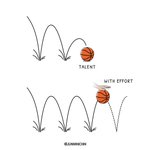
Talent can be a starting point, but you need ambition to keep moving.
I've seen incredibly gifted people plateau because they assumed their natural ability was enough. I've also seen plenty of people with less obvious talent outpace them because they stayed curious and kept pushing into areas where they weren't already comfortable. It all boils down to willingness to keep learning, even when it gets difficult.
Organizations that only hire for talent miss this. The people who grow your business aren't always the ones with the most experience. I find that more often, it's the ones who are motivated by their own inexperience.

30
Most leadership systems weren’t built for the kind of work we’re asking people to do today. They were built for control.
If you look closely, a lot of what still passes for “management” comes from a very different era, where work was repetitive, output was measurable, and people were expected to follow instructions, not think.
Today’s work depends on judgment, creativity, and collaboration. None of those show up under pressure or surveillance.
And yet, many organizations still operate as if they do.
You see it in:
- excessive check-ins that signal a lack of trust
- feedback that feels evaluative instead of developmental
- expectations of constant availability
- and systems that treat people as capacity, not capability
Research, on the other hand, continues to show that when people feel trusted, supported, and valued:
- performance improves
- retention improves
- and long-term outcomes outperform peers
This isn’t new information. It’s a decision most organizations haven’t fully made yet. It requires rethinking how you design work, how you measure performance, and how leaders show up every day.
At the end of the day, people respond to the systems they’re in. If the system is built on control, you get compliance. If it’s built on trust, you get contribution and learning. And the gap between the two is where most organizations either accelerate, or stall. fastcompany.com/91497839/our…

1
1
27
So many companies feel like they can't find the #talent they're looking for. So many employees feel stuck with no clear path forward.
The answer is in the problem.
If we maintain outdated frameworks that screen for degrees and titles instead of skills that can be built in three to six months, we're going to keep missing out on some of the most qualified people—our own.
As Sheila Callaham says, "Internal talent can become a company’s best competitive advantage or languish until it leaves altogether–all depending on how talent systems are designed." When high performers see no internal path, they find one externally. upcontent.link/godzhk

17
Getting something off the ground takes tenacity. Growing it takes discipline. They’re different skills, and many leaders sorely underestimate the second.
The habits that help you start (e.g. speed, determination, and decisiveness) can sometimes end up limiting you later if you're not careful. Moving beyond initial success means upgrading how you think, hire, measure, and make decisions.
Breakthroughs at every level need to be even more intentional than they were at the last. Being bold early on is different than being bold after years of scaling, and ignoring that can land you in difficult situations.

1
22
#DukeMBB #iamcalebfoster. Not only was it impressive tha Foster came back for the game, but he came back in style - playing 64% better than his season average. I developed an app that calculates a players performance based on a pretty complex algorithm (negative points for taking a shot, turning it over), positive points for points, rebounds, assists, etc. then adjusting for level of competition, e.g., if it is a blowout game less positive points awarded. Foster scored above his season average in just 19 minutes against St. John's— his 0.619 player performance points/min was 64% higher than his season rate of 0.378. The big driver was zero turnovers combined with efficient scoring (11 points with few wasted possessions). Even with fewer rebounds and assists than usual, the clean stat line pushed him well above his average.
32
Recognition programs fail in hybrid environments because most of them were designed for visibility instead of intention.
When everyone was in the office, you could see who stayed late, who helped a colleague, and who went above and beyond. Managers didn't need a system. They had proximity. That proximity is gone now, but most organizations still haven't built the infrastructure to replace it. They assume recognition will happen organically, but it doesn't.
So they're left wondering why half their remote employees feel invisible. It can't happen organically anymore. It requires intention. upcontent.link/zgfm5t

1
20
Not many leaders realize how beneficial #mentorship is for everyone, including the organization.
Employees with mentors ramp faster, ask fewer redundant questions, and make decisions without needing constant manager approval. Escalations go down. Rework goes down. Turnover goes down. None of that requires more of a manager's time. Quite the opposite, really. It removes the hidden time drains leaders deal with every day.
The constant interruptions, repeated explanations, and recurring questions from different people all start to fade when knowledge moves through mentorship instead of funneling through one person.
Mentorship isn't another meeting to squeeze onto the calendar. It's how you get your time back while building a stronger, more capable team.
14
So many leaders struggle with isolation for an interesting reason that they often can't pinpoint. The more senior they get, the fewer places they have to think out loud without being evaluated.
But that's why I think #LearningCommunities are so beneficial and essential at all levels. When workplaces do finally start to create spaces where people can experiment and stress-test their decisions, leaders tend to be left out.
But everyone needs room to be imperfect and work through solutions, especially before stakes become too high. Giving leaders that opportunity creates a better, more growth-oriented environment for everyone.

26