

Kashmiri Pandit Sangarsh Samiti is an organization which primarily addresses the concerns of resident Kashmiri Pandits / Hindus who stayed back in the Valley.
Kashmir
Joined June 2014
- Tweets1.5K
- Following409
- Followers6.2K
- Likes585

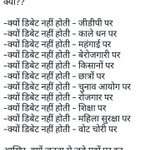






We warmly invite you to join us for the Dussehra Celebrations on 20th October 2026 at 5:00 PM at Church Lane, JKCA Practice Ground, Srinagar.
Let us come together to celebrate the spirit of harmony, brotherhood and togetherness. Your presence would mean a lot to us. Looking forward to seeing you there
KPSS retweeted

Great thanks for taking Cognizance . Political or bureaucratic arrogance cannot be tolerated in the system. In the same way, I expect you will not reward your MLA South Kashmir who beat his PSO by making him a Minister till the Recent FIR is closed or quashed including Pending FIR . The same yardstick needs to be applied at all levels . You don't have the excuse of Business Rules or anything else. Here, the power solely lies with you or Your Party @JKNC_ - to induct him or not to induct and Set Example .

Had J&K been a state the IAS officer seen abusing a young JKAS officer would have been attached to the General Administration Department pending an inquiry into his conduct. As a UT we expect the authorities with control over the IAS officers to set the right example & ensure abusive, threatening behaviour is not brushed under the carpet.

KPSS retweeted

An outside officer using the word "shit" against a local woman JKAS officer shows unacceptable arrogance. Local officers are not second-class citizens. This is what the UT system has given us.
Urging LG Manoj Sinha and @OmarAbdullah to take strict action.
@manojsinha_


#kashmiripanditsunderthreatagain
#WHENTHREATSRETURN, #BROTHERHOODCANNOT #BECOMEASUBSTITUTE
#FORSECURITY
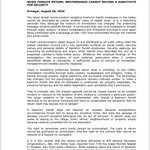
WHEN THREATS RETURN, BROTHERHOOD CANNOT BECOME A SUBSTITUTE
FOR SECURITY
Srinagar, August 25, 2026
The latest threat communication targeting Kashmiri Pandit employees i


There is something the people behind this latest threat letter seem to have conveniently forgotten.
Their latest letter reportedly claims that Kashmiri Pandits who never left the Valley are not their targets. But their own history tells a very different story.
Makhan Lal Bindroo, the prominent pharmacist in Srinagar, never left Kashmir. He was gunned down at his pharmacy in October 2021.
Sunil Kumar Bhat, a Kashmiri Pandit farmer from Shopian whose family had stayed in the Valley through the 1990s, was killed in August 2022.
Puran Krishan Bhat, from Shopian, belonged to families that had remained in the Valley through the worst years of militancy. He was shot dead outside his home in October 2022.
And Sanjay Kumar Sharma, an ATM/bank guard from Pulwama whose family had never migrated during the 1989–90 exodus, was murdered in February 2023.
So let us not allow short public memory to rewrite history.
The very people who now claim that they are not against Kashmiri Pandits who remained in the Valley have already targeted and killed Kashmiri Pandits who remained in the Valley.

#concernedKashmiri
Post by Rajan nakashi
To the Concerned Kashmiri,
If there is no issue or problem with holding the
Tricolour in kashmir, then why were the Kashmiri pandits hounded out in 1990, they were have been a helping hand.
Is it always the choice of the majority to change the stances.
Pre 1990 : Money was poured into Kashmir along with the arms and ammunition.
The result: Many died, most migrated and much vandalized. Most of the people who were involved with guns and other material are dead. People earned money and made properties. We gave a number of examples.
After 2010 : people were paid to throw stones at para military personnel.
Now: Money is again poured into Kashmir. The people who threw stones are paid again and they pick the National Flag. It seems to be a good sign.
It is non violent and better... There are a number of examples of those people who were involved with guns, are now picking up tri colour. There are number of examples where people shouted anti Indian slogans, now shout pro india slogans.
People again make money and properties. Again we have a number of examples. Recent dismissed BJP members in kashmir is a mockery.
But can anyone make me understand that what was the fault of Kashmiri pandits???
You made money, let you.
You picked up the gun, let you.
You shouted : Pakistan zindabaad, let you.
Now you shout, Bharat Mata ki Jai, let you.
Does it prove that you have no MORAL, Principle, faith or loyalty. You are not trust worthy.... For the sake of Money, you can change your faith?
What was our fault? Can anyone try to explain, please????
#WhoLeakedTheNames
#InvestigateTheLeak
#ThreatList
#Accountability
#SecurityBreach
#KashmiriPandits
New KP Threat list or conspiracy or deliberate leak to sabotage minority existence.
Recent terror attacks in South Kashmir, followed by fresh threat posters naming Kashmiri Pandit employees, have once again exposed the chilling sense of vulnerability among KPs in Kashmir.
The Government is making efforts to secure minorities—but serious questions remain.
If a team of concern department collected the names of KP employees from a particular office just 1–2 days before those very names appeared in a threat poster, how did those names reach the perpetrators?
Was there a security lapse? A confidentiality breach? Or a deliberate leak?
This cannot be brushed aside as “just another threat.”
For KPs, this is an eerie reminder of 2021–22.
A threat list is not merely a piece of paper; it can become a hit list. Every leak can become a life-or-death question.
Investigate. Fix the loopholes. Protect the vulnerable—before history repeats itself.

#kashmiripandits
#FromSymbolismto Solutions: A New Direction in Kashmiri Pandit Advocacy*
By Yoginder Kandhari
For nearly four decades, public discourse on the displacement of the Kashmiri Pandit community has remained largely unchanged. Much of the advocacy has continued to revolve around narratives shaped by the traumatic events of 1989–90, reiterating the same demands, arguments and political positions with little adaptation to the realities faced by subsequent generations.
This continuity has undoubtedly preserved the community's historical memory of its displacement. Yet it has also revealed an inability to evolve. As younger generations increasingly grapple with challenges relating to employment, education and identity, many find themselves represented by a discourse rooted in another era rather than one responsive to contemporary realities.
The result has been a growing disconnect between community leadership—if anyone can legitimately claim that role—public advocacy, and the aspirations of those expected to inherit the legacy of displacement.
*The Burden of Repetition*
Over the years, public statements, memoranda and press releases issued on behalf of the community have shown striking consistency in language and priorities. While preserving historical truth remains essential, the repeated invocation of familiar themes has gradually diminished their public impact.
Similarly, prolonged debates over terminology—whether concerning legal classifications, historical descriptions or competing interpretations of the events of 1990—have consumed disproportionate public attention. Such discussions undoubtedly have academic and legal significance. For many ordinary displaced families, however, they have done little to improve everyday life.
Questions relating to secure employment, educational opportunities, rehabilitation, property restoration, welfare for vulnerable families, and the future of younger generations have often received comparatively little attention.
Public advocacy risks losing effectiveness when symbolic debates consistently overshadow practical concerns.
*The Cost of Ideological Rigidity*
Prolonged conflicts often entrench positions in which advocating practical solutions is viewed as a sign of weakness, while any departure from established narratives invites sharp criticism. This rigidity has characterised the discourse surrounding the displaced community.
Initiatives aimed at incremental progress or practical confidence-building measures have often been outrightly rejected by those who regard engagement as diluting long-held demands.
Yet public policy seldom advances through absolutist positions alone. Political settlements and rehabilitation are almost always gradual processes. Progress is more often achieved through partial gains than through the immediate resolution of every historical grievance.
Rejecting every new initiative without offering workable alternatives risks preserving the status quo rather than changing it.
*The Emergence of Practical Thinking*
Recent public initiatives, however, suggest the beginnings of a gradual shift. Rather than focusing exclusively on broad political formulations, they have sought to articulate specific proposals for the restoration of rights, rehabilitation, community welfare and institutional support.
Although these approaches differ, they share a notable characteristic: a focus on actionable outcomes rather than on rhetorical reaffirmation.
1/3
The debate need not be reduced to a choice between memory and progress. Both are essential. Historical remembrance preserves identity, while practical policy restores dignity.
If recent initiatives signify anything, it is that sections of the community increasingly recognise that effective advocacy must evolve alongside changing realities. After nearly four decades of displacement, the measure of success may no longer lie merely in preserving historical narratives but in improving the lives of those who continue to bear the consequences of that history.
[The author is a commentator on security issues and has written two books on Kashmir]
@highlight
3/3
One such initiative, a conclave organised in Srinagar, emphasised the reclamation of ancestral rights while encouraging broader societal engagement. Although aspects of its public messaging sparked debate and differing interpretations, the effort still represented an attempt to move beyond conventional formulations. Its significance lay less in securing unanimous agreement than in introducing fresh thinking into a discourse that has often appeared resistant to innovation. The event also sparked keen interest among members of the Pandit diaspora settled abroad in investing in the Valley. If such investment materialises, it could create employment opportunities for both migrant and non-migrant youth.
*A Memorandum Reflecting New Priorities*
Whether in response to the conclave or independently, a recently circulated memorandum addressed to the country's highest political leadership illustrates this evolving approach. Rather than concentrating solely on long-standing constitutional or political demands, the document highlights immediate concerns affecting ordinary members of the displaced community.
Particular emphasis is placed on employment opportunities, welfare measures, youth aspirations, and support for economically weaker sections. These priorities reflect the realities facing a generation that has largely grown up outside Kashmir, whose challenges differ substantially from those experienced by their parents in the early years of displacement.
This marks an important conceptual shift. Rather than presenting only an ideal end-state, the memorandum recognises that meaningful progress also requires attention to present-day needs. Public policy advances by addressing immediate concerns while pursuing longer-term objectives.
*Areas That Still Require Attention*
Even so, the evolving discourse remains incomplete. One notable omission is the limited attention paid to community members who continued to live in the Valley despite difficult circumstances. Their experiences, security concerns, property issues and rehabilitation requirements deserve equal consideration within any comprehensive policy framework.
Similarly, future advocacy would benefit from greater emphasis on legal assistance for property disputes, the preservation of cultural heritage, educational scholarships, economic entrepreneurship, and institutional mechanisms that facilitate a voluntary, safe and dignified return, in whatever form is feasible.
An inclusive policy must recognise the diversity of experiences within the displaced community rather than treating it as a homogeneous entity. This may well prove to be the way forward.
*From Aspirations to Achievable Goals*
Public advocacy is at its strongest when it balances ideals with practical measures.
Large constitutional or political objectives may continue to occupy an important place in community discourse. However, they need not preclude the pursuit of practical reforms that can improve lives in the immediate future.
Incremental gains should not be mistaken for the abandonment of larger aspirations. On the contrary, they may constitute the most realistic pathway to achieving them.
*A Discourse at the Crossroads*
The emergence of more pragmatic proposals suggests that the conversation surrounding the displaced Kashmiri Pandit community may be entering a new phase.
Whether this transition gathers momentum will depend on stakeholders' willingness to move beyond entrenched positions and engage with practical solutions. Communities recovering from prolonged displacement require both historical justice and contemporary opportunity. Neither can permanently substitute for the other.
2/3
KPSS retweeted

Sardar @narendramodi Ji , just if you had cared 1% for Kashmiri Hindus
We vote 100% for you and you would get Zero from there
In Hindu history , you may be remembered as one who had all the power to provide us homeland , but you neglected .. you have made us homeless for ever

KPSS retweeted

VIDEO | Onboard Air Force One: US President Donald Trump says, "I would say, I should have won that award (Nobel Peace Prize) more than anybody... nobody settled wars, I settled 8 of them. India and Pakistan... that war was raging, 11 planes were shot down. That war was going to be nuclear. The prime minister of Pakistan said, 'President Trump saved from 30 to 50 million lives'. Guess what it could have been lot more than that."
(Source: Third Party)
(Full video available on PTI Videos - ptivideos.com)