

NSERC PDF@UIUC (Denmark lab) Organic and computational chemist. Chemoinformatics+ML. Fan of (un)natural products. Guitarist and music lover. 🇨🇦
Canada |🇨🇦 to USA |🇺🇸
Joined July 2019
- Tweets356
- Following1.4K
- Followers302
- Likes1.3K


Pinned Tweet
I am so pleased that our work on the synthesis of a planar dehydro[10]annulene is finally published! Thanks to everyone who worked on this project (Christa Blaquiere, @briannalukan, @SydGeng, and @michelgravel6).
nature.com/articles/s44160-0…
also see: chemrxiv.org/engage/chemrxiv…
Karn Parmar retweeted

Very thrilled to share my first postdoc publication in @J_A_C_S 🤩! We uncovered new PEtide Aminoacyl-tRNA Ligase (PEARL) activities involved in pyrroloiminoquinone biosynthesis. pubs.acs.org/doi/10.1021/jac…

Karn Parmar retweeted

And while I'm briefly back on Twitter:
New paper from @arseniyadis and us just dropped!
Combining forces to bring DAB-Pd-MAH into the world of asymmetric allylation , we report a slew of air stable, single component Pd(0) precatalysts for AAA chemistry!
nature.com/articles/s41467-0…

Karn Parmar retweeted

Olefination of Aromatic Carbonyls via Site-Specific Activation of Cycloalkanone Ketals (Thanh Vinh Nguyen and co-workers) @NguyenLabUNSW @UNSWChemSociety #OpenAccess onlinelibrary.wiley.com/doi/…

Karn Parmar retweeted

Chemist Albert Eschenmoser "profoundly changed organic chemistry, and his generosity and mentorship inspired all those who came into his orbit."
Read about his life in a new #ScienceRetrospective: scim.ag/48P


#ochem
#chemtwitter
Hello organic chemists, what are your group meeting schedules like? Do you have both research+lit meetings? How frequent are they?
3
256
Karn Parmar retweeted

This paper is very worth reading for anyone interested in science, or who’s ever told something by a doctor. Inference uncertainty is very easy to confuse with outcome variability, and it’s easy to mislead readers and practitioners
(h/t @CT_Bergstrom)
pnas.org/doi/full/10.1073/pn…

Our lab got a new book for Scott Denmark's 70th birthday

ALT Picture of scott denmark with a title "Denmark group daily affirmations"

ALT "Hope is not a reagent" is written on the book
Karn Parmar retweeted

Types of Neural Networks - Evolution Of Deep Learning Architectures.
Oppenheimer, the movie, has all of us thinking about the 40s and WW2. Believe it or not, the first neural networks (NN) were invented around the same time, in 1943!
Warren McCulloch and Walter Pitts the founding fathers of NNs, were intrigued by how biological neurons worked and proposed a mathematical model for a NN
It was not until 1958, that Frank Rosenblatt invented the "Perceptron" which was basically a computer program designed to learn from its mistakes. It ran on a very big machine and essentially did binary classification. While there was a lot of excitement around these baby NNs they required a lot of compute and data, which meant that they needed some serious funding.
In 1969, a paper titled "Perceptrons" by Minsky and Papert, killed almost all innovation in NNs. The paper proved that the single perceptron, couldn't solve simple problems including the XOR problem, and was severely limiting and all funding stopped. At the same time, algorithms like Support Vector Machines (SVMs) start taking off and NNs took a back seat.
Multi-layer perceptrons (MLPs) were viewed as a way to address the issues that single-layer perceptrons had, but training these MLPs proved to be very difficult. Not until 1986, did we see the resurgence NNs. Rumelhart, Hinton, and Williams introduced the backpropagation algorithm, and suddenly training multi-layer NNs became tractable. Computers were becoming more powerful and more data become available. NNs were back in business.
In the late 80s, Yann LeCunn introduced CNNs, The convolutional layers of a CNN can model the spatial hierarchy of images and NNs started to become useful in image-processing applications. Still, SVMs were the cool kids and NNs were being used for niche tasks like handwriting recognition.
Only in the 2000s, did we see a true renaissance of NNs. Geoff Hinton introduced Deep Belief Networks and the term deep learning (DL) begin to take off.
In 2012, Deep Learning had a seminal breakthrough with a CNN called AlexNet that outperformed all other algorithms in image classification. Since then we have seen an explosion in NN architectures.
Recurrent Neural Networks (RNNs) and Long Short-Term Memory Networks were useful in understanding patterns in sequential data. In 2015, ResNets helped solve the vanishing gradient problem (another pesky issue with DL training), and DL research was exploding.
In 2014, generative NNs had a big moment - Generative Adversarial Networks (GANs) were invented by Ian Goodfellow et. al. GANs were really good at generating realistic images. The first deep fake was born :)
Finally, in 2017, Vaswani et al introduced Transformers. Transformers, with their self-attention mechanism allowed the model to weigh the importance of each word in relation to others and better understand language.
BERT in 2018, was a specific implementation on Transformers and can look and understand text in both directions. BERT is pre-trained on massive amounts of data (e.g. Wikipedia) and can be adapted to specific tasks with fine-tuning. BERT can be adapted to multiple tasks like Q/A and text classification
Just a few months earlier, also in 2018, OpenAI introduced the GPT models. These were unidirectional but also were trained on massive amounts of data. Unlike BERT, GPTs are fine-tuned for generation or next-word prediction. Since 2018, we have seen better and more sophisticated versions of the GPT series...with GPT-4 released in 2023, being capable of human-level cognition, generation, and basic reasoning!!
So what started almost 80 years ago is now finally beginning to take over and transform the world completely!! 🤯

Karn Parmar retweeted

reminder: copyright is a fictional property right enforced by the government to promote economic activity and nothing more
technomancers.ai/japan-goes-…
Hello #chemtwitter. I am helping organize the "chemical and biochemical methods in organic synthesis" symposium at the CCCE/CSC2023 in Vancouver, B.C. (June 4-8).
Submit your abstracts before Feb 7th
I cant wait to see you all there!
#CSC2023
cheminst.ca/conference/canad…
Well, we finally made the aromatic [10]annulene. We describe our route towards this challenging target here and even show evidence for the formation of a completely unexpected and never before predicted aromatic cyclopropa-mono-trans[10]annulene!This is why I went to grad school!

Happy to report a follow-up study on our [10]annulene story by @KarnjitParmar et al. We made Schleyer's postulated bis-cyclopropa[10]annulene and found it to be kinetically unstable. Also made a trans [10]annulene by accident! #aromaticity #annulene
doi.org/10.26434/chemrxiv-20…


Karn Parmar retweeted

El viernes 16 a las 11 h, Michel Gravel de la @usask expondrá su trabajo “Synthesis of [10]- and [12]Annulenes”, publicado recientemente en Nature Synthesis
nature.com/articles/s44160-0…
Si estas interesado, favor de completar la siguiente forma:
shorturl.at/kqRTW
RT por favor

Check out this cool review on the mechanism of PEP mutase (enzymatic C-P bond formation!).
I only know of two people who have had the review portion of their comprehensive exam published (almost as is), and I am happy to say that Josseline is one of them!
#USASK #USASKCHEM

#chemtwitter I am super proud to share my very first @ChemBioChem review with Prof. Geoff Horsman and Dave Palmer @DavePalmerUSask on the quite enigmatic C-P bond forming enzyme Phosphoenolpyruvate Mutase! Check it out!
chemistry-europe.onlinelibra…
4
nature.com/natsynth/volumes/…
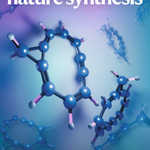
Our dehydro[10]annulene made the cover of Nature Synthesis! The cover was created by Tianhui Zhou (insta: @hina_le_lapin)
I love it!
Check out the paper here: rdcu.be/cTHlA
