

Keep the gaps under & over public toilet doors for safeguarding
U.K.
Joined May 2024
- Tweets508
- Following0
- Followers218
- Likes423

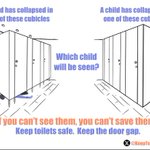
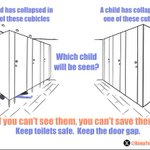

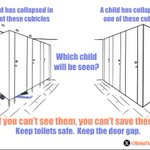
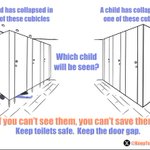



‘Gender-neutral’ is a nonsensical term when discussing regulations. For clarity, use the proper terms - in regs always defined by user’s sex.
Toilets both sexes are permitted to use: unisex or universal. The term mixed sex can be used for designs not meeting the correct standard
Under&Over retweeted

We found a woman collapsed with a heart attack in a public toilet and we wouldn’t have known without the gap. One paramedics provided oxygen through the gap while the other climbed over the top to reach the poor lady.
Today, when toilets are in the news, remember that single sex toilets can be safer by design.
Toilets within a single sex environment are the only designs that are permitted to have door and partition gaps.
Cubicle design can go back from the picture on the right to the left:

Under&Over retweeted

This is such an important point. Retaining single SEX facilities means we can retain the right balance between privacy and medical safety for BOTH sexes. Completely self contained unisex options should be kept to a necessary minimum.

Why do we have a gap under public toilet doors?
For health and safety
Why do we get rid of the gap when toilets are mixed sex?
For privacy
What are we getting rid of by doing that? Health and Safety

Under&Over retweeted

I would quite likely have died age 16, had there not been a door gap in the cubicle I collapsed in.

Legislation and Building Regulations are based upon health, safety and welfare. It was inconceivable at the time of their implementation, that barristers would now be arguing people had rights to use the toilets for the opposite sex.
Government now needs to make decisions…
1/4
The alternative is to keep provision as it is and ‘just’ change the Health and Safety legislation and Building Regulation on toilet provision. Risk assessments would have to be ignored as currently mixed sex designs are completely private to prevent voyeurism.
3/4
It’s a reasonable adjustment to have gaps under public toilet doors for the safety of millions with epilepsy, diabetes, heart conditions, who’ve had strokes.
Single sex toilets are the only designs that can have door gaps - if there’s ambiguity, the design then becomes private.

Why do we have a gap under public toilet doors? For health and safety
Why do we get rid of the gap when toilets are mixed sex? For privacy
What are we getting rid of by doing that? Health and Safety

Document T details the non domestic toilet designs that will come in to force in October 2024 in the UK. The toilet designs are dangerous for everyone, in particular, disabled people, the medically vulnerable, women and girls. That’s because none of the designs specify door gaps.
Why do we have a gap under public toilet doors? For health and safety
Why do we get rid of the gap when toilets are mixed sex? For privacy
What are we getting rid of by doing that? Health and Safety
If you collapse in a toilet cubicle, being able to survive, or if you suffer long-term damage, will be down to whether someone notices and rescues you.