

Psychiatrist @ UCSF | Stanford Med | Clinical Lead @ Sunflower | Sharing all things mental health and tech
Connect with me →
Joined August 2023
- Tweets3.3K
- Following1.6K
- Followers10.9K
- Likes4.7K




Pinned Tweet
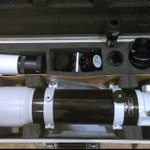
You know what’s kinda cooler than the brain? Space!
My photography attempts at the Orion Nebula over the past couple years.


Most fun thing I did to improve my weeks in 2025 → nurture relationships in 60 seconds
Try this:
- Text 1 person: for example “was thinking of you, how’s your day going?”
- Do 1 small, kind thing for someone in your community.
- Audio-transcribe how it made you feel in under 20 seconds.
Read your notes at the end of the week. Watch what happens.
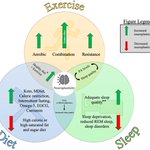
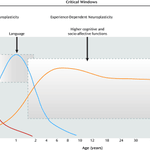
Neuroplasticity = the brain’s ability to change.
But plasticity itself isn't “good” or “bad.”
In a bad environment:
• High plasticity → rapid learning of the wrong lessons
• Low plasticity → can't unlearn them
Here's how to unlock your plasticity 🧵

8/ Plasticity is not inherently positive.
• It’s the brain’s capacity to rewire = toward healing or dysfunction.
• To recover, you must first increase plasticity.
• But change only sticks if the environment supports it.
What you grow depends on your soil.

Keith Sakata, MD retweeted

🚨 The older the sperm, the more likely it is to cause autism
Sequencing sperm using nearly error-free sequencing → measure % sperm carrying disease-causing mutations:
2% at age 30 → 4.5% at 70
Most were autism genes
New paper in @Nature today 🧵

ALT https://www.nature.com/articles/s41586-025-09448-3#Fig3
The most brilliant way to change your life (order matters):
1. Decide that you never want to feel/do X ever again.
2. Then, take full accountability for changing it.
3. Put a trusted friend/therapist in your corner.
Self-love = no longer accepting a life you are unhappy with.
Your future child’s brain is shaped by your age.
Men’s sperm stem cells divide every 15 days. And more divisions = more copy errors. At 40, you pass on nearly 2x the DNA mutations vs age 20.
Autism, bipolar, schizophrenia.
Delaying kids = a biological gamble.


This is circadian biology 101.
Your circadian rhythm is built on contrast (via the suprachiasmatic nucleus):
> ☀️ High-lux days (10,000+ lux)
> 🌑 Low-lux nights (<10 lux)
And if you stay indoors all day?
You’re getting 100–250 lux.
= loss of contrast = disrupted sleep


The gold-standard trio for circadian health:
• Bright light by day
• Darkness at night
• Regular sleep + meal times
Paper: nature.com/articles/d41586-0…
After seeing thousands of patients in both internal medicine and psychiatry, I’ve come to believe this:
The biggest thing holding most people back isn’t external.
It’s themself... or more precisely, the version of themself that was "shaped" to survive.
Let me explain.
Self-sabotage is a coping mechanism serving an unconscious need. That need usually arises from real pain = abandonment, rejection, trauma, shame.
And because the pain is overwhelming, the brain finds a workaround: avoidance, perfectionism, people-pleasing, numbing, overthinking.
At first, these strategies work.
But over time, they become armor.
And that armor starts to define the yourself = your "self-concept" is born.
Your self-concept can raise you or deflate you.
You can begin to believe things like:
“I’m not ready”
“I don’t deserve good things”
“I’ll never be X enough and people will know it”
And every opportunity (good or bad) that challenges these beliefs feels threatening. So you self-sabatoge.
You pull back. justify. victimize. procrastinate. quit. relapse.
All in the name of staying safe -> inside the version of yourself that once kept you alive.
In medicine we see a similar process: an abscess can trigger long-term damage because the immune system which at first serves a protective mechanism later over-reacts to cause even more damage downstream.
With your mind: to heal, examine what is causing damage, learn why it's there (what is it coping for), and cut out the self-sabotage by fulfilling that need in a new, healthy way.