

USMC Vet. Retired. Hobbies are history, literature, tech, and hiking. I value intelligent, civil discourse, with a touch of humor and occasional sarcasm.
Joined November 2022
- Tweets22K
- Following1.2K
- Followers2.3K
- Likes20.6K








The "free breakfasts" offered by most of the hotel chains is just not worth the time or trouble when on vacation.
The scrambled eggs are typically made from a powder which is reason enough to skip the whole thing.
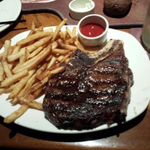
Instead, seek out a local diner when you can. You will get a local flavor. For example during my recent trip, I had scrapple at a Pennsyslvania diner and corned beef hash omelettes at one in Virginia.
A good solid breakfast while on vacation will usually get you to dinner, saving you the time and expense of trying to find something for lunch.
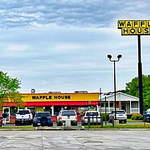
Once I got to the Deep South, there was a Waffle House off just about every highway exit ramp so I went to one of those often during my trip. Now Waffle House tends to get a bad reputation, due mainly to YouTube videos of late night drunken brawls. Since Waffle House is a 24/7 operation, I guess that's where rowdy folks go after the bars close.
I can't speak to that as I typically only go into one for breakfast, which is at that time populated by local families or working people. I have never had a problem in one.
Waffle Houses mainly exist in the Deep South, states like Georgia, South Carolina, and Alabama. They don't seem to have many locations, if any, in the North. I tend to start seeing them once I cross the Mason-Dixon line headed south.
Now there is nothing particularly special about the Waffle House food, which is only just a notch or two above the "free hotel breakfasts" I mentioned earlier but at least the scrambled eggs you get at Waffle House are going to be made from real eggs.
However the service is always friendly, the food is reasonably priced, and they get you in and out of there quick.
Despite the name, I have never gotten a waffle at the Waffle House, as I'm more of an eggs and bacon kind of guy. Also, you can get grits with your breakfast instead of the usual potatoes and since they are a novelty for me (you can't get them up North very easily), I'll get them with a side order of two over easy eggs - which I then dump on top of my grits, enhancing them greatly.
There are some rather charming idosyncracies about the Waffle House. Once receiving an order, the waitstaff will move to a certain tile on the floor and shout out the order in some kind of code. Then another worker will grab a plate and "mark" it with items like condiment packages pointed a certain direction, which tells the cook what items to prepare and how to cook them. For example, over-easy eggs are "marked" by putting a jelly packet on the left side of the plate, and so on for each item. This method seems to greatly reduce the chances of them getting your order wrong.
There is also usually a jukebox in the corner but it does not have the popular songs you might expect. Instead, you get songs that fit a Waffle House theme such as the following examples:
"There are Raisins in My Toast" - Danny Jones
"844,739 Ways to Eat a Hamburger" - Billy Dee Cox
"I'm Going Back to the Waffle House" - Jason Bowen
Just a note, I have never actually played a song from that jukebox. I suspect they are there so that the locals can tell who the tourists are.

Ken Cook retweeted

I’m regularly amazed by the number of people I talk to that have very little knowledge, or even an inkling, of how the lives of billions will soon change with autonomous transportation, Robotaxis and robotics (namely Optimus).
Within 8-10 years, many..then most…will realize there’s no need to own a vehicle (though many will keep one for independence). Car payments, insurance payments and upkeep will largely disappear as household expenses. We’re talking massive monthly savings for most Americans.
With Optimus, households…most powerfully, the elderly…will have a friend, companion, cook, housekeeper and incredibly, the best doctor on the planet, right in their home with them.
GDP growth and productivity will absolutely skyrocket, which will allow for government debt totals to begin moving in the other direction. Slowly at first, and then, really really fast.
These are just a few examples of how the lives of average Americans will radically change for the better, inside of a decade.
When you extrapolate out the other unknown (but coming) advancements from this Innovation Revolution, I’ll just repeat what we’ve been saying for the last 4 years; we’re entering a time frame where there’s never been a better time to be an opportunistic optimist. The pessimists have this entirely wrong. Entirely.
It’s unbelievably exciting.
Ken Cook retweeted

Hopefully this post is understood and sheds light on the way I view the election landscape this year.
I don’t trust polling or media narratives and believe they are used to shape for desired outcomes. They demoralize you, you don’t vote, they win on the margins of a midterm year and its dynamics.
Midterms suck for the party in power, and they have for a century. Reagan lost seats in the House with a 63% approval rating. My skepticism doesn’t mean I see a “red wave” forming in a midterm Dems are supposed to win.
I do believe the GOP is favored to hold the Senate on the fundamentals of the races that will decide it, and believe there is a 1 in 3 shot Republicans hold the House - which is almost 3x better odds than history affords. This is due to redistricting and the fact that Dems have nominated DSA aligned candidates in seats they’d automatically win if not for that. The GOP is also short at least 6 seats they should hold this year for one reason or another.
My mind doesn’t read polling or formulas. It reads trends and sees each county as a unit on the battlefield. Every state has a blue map and red map - I only need to label a few bellwethers to give you a read on what is going on. There are simply races you CAN win (will certainly win, may win, could win in an upset) and then races you CANNOT win (take every House seat in Chicago, for example).
The Texas Senate seats falls into the fringes of that first group for Dems. In a few more years of transplants and Hispanics running right, perhaps more like Florida where there is zero shot. Dems get big vote margins from 4 counties, and modest vote margins in a few others. Those all have to be maxed out, and they need bad GOP county turnout and a full-on reversion of the Latino vote to 2016 splits.
It’s not that it CAN’T happen - it just takes a lot for it to happen and as such you should see a mind that views things at a granular level like an Army intelligence officer veteran.
There are 435 different House races, of which I think perhaps 35-40 are reasonably playable for either side, and 35 Senate seats, of which 12 are interesting this year. Everything else is noise and fluff.
Yes, betting sites are manipulated by campaign money.
This can be an even more effective tactic than campaign advertising.
Some Republicans might see that graph, get discouraged, and sit at home.
This is the intent.

Hello.
This is a betting site.
It does not do polls.
Deep pockets people manipulate the odds on the site by placing very large bets.
All they're telling you is that some deep pockets people who do not identify themselves placed a series of sizeable bets in a PR stunt to sway the odds in their desired direction.
And that is ALL they're telling you.
You've been shown over the past week how fake the polls are. 4 polling outfits were revealed to be seeding fake polls throughout the media.
Because their fake polling is cratering, guess what they're doing NOW?
They're flooding your social media with 'current odds' in betting markets.
Which are even MORE prone to being fake and influenced by billionaires placing bets, chasing the millions of bucks they already invested into certain political campaigns that are falling behind in the early voting.
THANK YOU FOR YOUR ATTENTION TO THIS MATTER!

Currently reading "Moby Dick" by Herman Melville which is the current selection for the @athenaeumbc book club.
I had wanted to read this book for years but was always put off by others saying how long and wordy it was and how most of the book is full of boring chapters about the anatomy of whales and archaic language to boot.
I got to Chapter 65 tonight so I'm just about halfway through and now I'm hooked. I will definitely finish this to the end!
The best way to approach this book is not as a typical novel but as an epic journey through the whaling industry as it existed in the mid 19th Century.
Yes, there is definitely a great story here but in order to appreciate the narrative, it greatly helps to read all the chapters that describe the techniques of whaling as well.
Therefore, I do not recommend skipping any chapters, as others suggest. Just read slowly and absorb each chapter. Look up unfamiliar words in the dictionary. So far, the only chapter I would say that is okay to "skim" is Chapter 32 - "Cetology" as that is a rather pedantic classification of whale types as Melville sees them.
All the other technical chapters are essential to understanding the main story, such as those on the lines (ropes) used to bring in the whales after harpooning and the charts used by Captain Ahab to track where the whales normally appear.
Chapter 54 (the longest in the book) describes the earlier voyage of the Town-Ho, which sets up the Moby Dick story. This so far is my favorite chapter.
Finally, having a map of the voyage of the Pequod helps to understand the story as well. Below I link a good X post on that.
Happy reading!
xitter.cf/BrilliantMaps/status/2…

Map of The Journey of The Pequod from Herman Melville's epic Moby Dick.
The Pequod sails from Nantucket under Captain Ahab in pursuit of the white whale, working the Atlantic whaling grounds from the Azores to the Carrol Ground, round the Cape of Good Hope and across the Indian Ocean, through the China seas to the Japan grounds and the Pacific Line, where the hunt comes to its ruin.
Here are the number locations:
1 - Nantucket
2- The North Atlantic Ground
3- The Azores Ground
4 - The Cape Verde Ground
5- Rio de la Plata
6 - The Carrol Ground
7- Cape of Good Hope
8 - The Crozet Grounds
9- Straits of Sunda
10 - Formosa and the Bashee Isles
11- The Japan Grounds
12 - The Line
Source: readingmaps.com/maps/moby-di…

Ken Cook retweeted

Map of The Journey of The Pequod from Herman Melville's epic Moby Dick.
The Pequod sails from Nantucket under Captain Ahab in pursuit of the white whale, working the Atlantic whaling grounds from the Azores to the Carrol Ground, round the Cape of Good Hope and across the Indian Ocean, through the China seas to the Japan grounds and the Pacific Line, where the hunt comes to its ruin.
Here are the number locations:
1 - Nantucket
2- The North Atlantic Ground
3- The Azores Ground
4 - The Cape Verde Ground
5- Rio de la Plata
6 - The Carrol Ground
7- Cape of Good Hope
8 - The Crozet Grounds
9- Straits of Sunda
10 - Formosa and the Bashee Isles
11- The Japan Grounds
12 - The Line
Source: readingmaps.com/maps/moby-di…
Ken Cook retweeted

Higher ed is broken. Time to start over from scratch. It is irredeemable in its current form and it cannot be fixed....

Harvard hoards $55.7 billion while the top 10 college endowments hold $320 billion combined.
All of it tax exempt, all of them still charging six figure tuition, lobbying for more federal cash, and running as indoctrination centers.
These are wealth hoarding hedge funds that hand out degrees.
Strip the tax exemption and force them to spend it or lose it.

Ken Cook retweeted

Elon Musk believes that one of the most important abilities you can build is a commitment to lifelong learning and the courage to question what you hear.
Through companies such as Tesla and SpaceX, Musk has worked across various industries, from electric vehicles and space exploration to artificial intelligence and energy.
One notable aspect of his approach is the value he places on learning outside your main area of expertise. Rather than focusing on just one subject, he encourages exploring different fields, reading broadly, and strengthening your critical-thinking skills.
Expanding your knowledge can help you discover connections between ideas that others might miss and approach challenges from fresh perspectives.
However, learning new information is only one part of the process. You must also be willing to challenge assumptions, question traditional beliefs, and develop independent opinions.
In today's world, information is easier to access than ever before. The real advantage comes not from simply knowing more but from understanding how to apply what you learn effectively.
Continuous learning and independent thinking can help you adapt, solve problems creatively, and make better decisions in a constantly changing world.

Ken Cook retweeted

You know what's more expensive than $4 a gallon gas?
Paying student loans I never took out.
Paying for free food for someone that shouldn't even be here.
Paying healthcare for people that jumped the border.
Paying for infrastructure in a country I've never been to.
Paying for military protection for people that hate us.
Paying the salary of politicians trying to destroy this country.
Paying judge’s salary that no longer support justice.
These things are costing me a hell of a lot more than a gallon of gas…
Ken Cook retweeted

When the Falcon Heavy launched for the first time in February 2018, the payload was Elon Musk's personal midnight cherry Tesla Roadster with a mannequin in a SpaceX spacesuit sitting in the driver's seat. The car stereo was set to play David Bowie's "Space Oddity" on loop. The dashboard screen read "DON'T PANIC" in a reference to The Hitchhiker's Guide to the Galaxy. The car is currently orbiting the sun between Earth and Mars and will continue doing so for millions of years.
An engineer on the Falcon Heavy team described the payload decision meeting as the moment he realized his boss was fundamentally different from any CEO he had ever worked for. The standard payload for a test flight is a block of concrete or steel. Elon chose his car. When asked why, he said if the rocket blew up, "at least it would look cool." The engineer said nobody in the room laughed because nobody was sure he was joking.
The image of Starman (the mannequin) sitting in the Roadster with Earth visible through the car window became the most iconic space photograph since Earthrise (the Apollo 8 photo of Earth from the Moon). The image was not planned by a marketing team. It was planned by a man who reads Douglas Adams and listens to David Bowie and thought it would be funny to put his car in orbit around the sun.
The car carries a copy of Isaac Asimov's Foundation series on a storage device. Asimov's Foundation is about a man who foresees the collapse of civilization and builds a plan to shorten the dark age that follows. The book is Elon's favorite and the one he has cited most often as the intellectual foundation for his Mars colonization plan. The book is now orbiting the sun inside a car that is itself a piece of the plan the book describes.
There is a Tesla Roadster playing David Bowie, carrying Asimov's Foundation, floating past Mars every 557 days, and it will be there for millions of years after every person alive today is gone. The most expensive practical joke in human history is also a time capsule of the mind that launched it: a man who reads science fiction, listens to classic rock, drives electric cars, and builds rockets. Every object in the car is a piece of his personality launched into permanent orbit.
The Roadster will outlast every building, every company, and every human institution currently on Earth. In a million years, when everything Elon built has crumbled, a midnight cherry Tesla will still be circling the sun with David Bowie playing to no one. The longest lasting thing he ever made is a joke.
Ken Cook retweeted

Everyone needs to read this because @CynicalPublius carefully lays out how a coordinated color revolution playbook, using NGOs, narrative control, electoral triggers, and elite pressure is being run against our constitutional system right now.
Thank you for putting in the time and effort to connect the dots so clearly and educate Americans on the coup attempt unfolding in plain sight.


Early voting and mail-in/dropbox voting is a disaster in my opinion.
For most of our nation's history, we would all vote in-person on Election Day, the first Tuesday in November.
Very few exceptions were made by way of the absentee ballot. Usually you had to go to your town hall and make your case for an absentee ballot. Such as being out of town on business on that day, or having a medical procedure done. Provisions were also made for members of the military serving abroad.
Otherwise you were expected to show up to vote in your local precinct on the day itself. This never used to be a big deal. People would plan for it and employers are required (by law) to give their employees ample time to get to the polls on Election Day.
Early voting, which in many states starts WEEKS before the actual Election Day, is getting to the point where races are pretty much decided before Election Day itself. Which just isn't right.
Then you have ballots actually mailed to residences, that can be mailed back or deposited in unsupervised "dropboxes" around town. This is an open invitation for fraud on a mass scale.
For example, if I get a ballot sent to me in the mail, I can move out of town before the election and have a neighbor (or somebody) grab that ballot out of my mailbox, fill it in, and stick it into a deposit box. Who would ever know?
Not sure how this genie can be put back in the bottle but we need to get back to having everybody vote in person, with ID, on Election Day itself.
Thinking back four years ago when Fetterman won the senatorial race in PA over Oz.
MAGA at that time thought it was a catastrophic loss for the movement.
Then it turned out that Fetterman was more MAGA than some of the actual Republican senators.
That's not to say that Fetterman is better than Oz would have been. Fetterman still votes with the Democrats most of the time. But the Democrats are nonetheless extremely displeased with Fetterman. They are almost definitely going to try to primary Fetterman out at his next election cycle to punish him.
Just goes to show you that in politics, things are not always as they seem.
Ken Cook retweeted

Oct 20, 1964: Herbert Hoover died in New York at 90. He's remembered for the Depression, but before that he may have saved more lives than any American in history.
He was orphaned at 9 and raised by relatives in Iowa and Oregon. He went to Stanford in its first class, became a mining engineer, and was a millionaire by 40.
When World War I broke out, he organized food relief for German-occupied Belgium and northern France. His organization fed millions of people for years. After the war, he ran relief that fed millions more across Europe. During a famine in Soviet Russia in the early 1920s, he sent American aid that fed millions of Russians a day.
He was elected president in 1929 as a brilliant problem solver. Seven months later the stock market crashed. His efforts didn't stop the Great Depression, and the shantytowns of the homeless were named Hoovervilles after him. He lost the 1932 election in a landslide.
He lived another 31 years after leaving office. In 1946 Harry Truman asked him to organize famine relief for postwar Europe, and the two became friends. He gave away his salary throughout his public career.

Ken Cook retweeted

In the 1950s, a typical American home cost the modern equivalent of just $95,000.
But putting a new color television inside it cost over $11,000.
The mid-century economy was an inverse of today's: technology and communication were true luxuries, while the foundations of life—housing and education—were highly affordable.
While the new RCA CT-100 color television retailed for $1,000 in 1954, even a standard black-and-white set cost around $250, or roughly $3,100 in modern money.
Buying a TV was a major financial milestone that often required financing and months of savings, which is why the appliance was treated as the prized centerpiece of the living room.
It is one reason TV content from this epoch was a higher caliber and depth. Simply put the ability to even see the programming was a financial barrier.

Communication was just as costly. A three-minute long-distance phone call from New York to Los Angeles in the early 1950s cost about $2.50. Factoring in inflation, that is over $30 for three minutes of voice chat.
Families routinely used kitchen timers to ensure calls ended before the next expensive minute ticked over, and "long distance" was reserved for emergencies or major announcements.
Yet, while consumer electronics drained savings, the actual cost of living was remarkably low in real terms.
These were the old lines of prosperity.
The median American home value in 1950 was just $7,354.
With the median home price in the United States now exceeding $400,000, mid-century housing was objectively cheap.
A sole breadwinner could often purchase a brand-new house in the expanding suburbs for less than twice the median household income, a ratio rarely seen in modern real estate.
Higher education was similarly accessible. Public university tuition in the 1950s was almost negligible, with many state schools charging under $100 a year in fees. Even elite private institutions were bargains.
In 1950, a year of tuition at Harvard University cost $600. Adjusted for inflation, that is about $7,500 today—roughly one-eighth of Harvard’s current tuition rate. A student could realistically pay for an Ivy League education by working a summer job.
