

I ' M F U C K I N G L O C K E D I N !
Joined November 2025
- Tweets161
- Following128
- Followers22
- Likes122




Join @SmashersNFT! Use my ref code: AWUDW
smashers.xyz/whitelist
Claim badges & earn $SMSHRS ⌛
teapawt.net/SmashersNFT/status/203…
1
30
Ken retweeted

🌱Season 2 starts March 18!
This Wednesday:
▸ $20,000+ prize pool (x2 from S1)
▸ 250 prize spots (2.5x from S1)
▸ Weekly campaigns with new rewards
First NFT utility from day one. New partners, ambassadors support - everything just in 2 days.
Get ready🚜

I just completed the @SmashersNFT whitelist form!
Join with me for a chance to get a FREE MINT out of 111 supply - smashers.xyz/whitelist
Form will close soon - 22h 37m 32s left ⌛
teapawt.net/smashersnft/status/203…
1
24
JUST SECURED A @farmstract
FREE MINT!
Congrats to everyone who made it in through GTD, and FCFS. With only 1K NFTs in the collection, spots were pretty limited.
The level of utility behind this collection is what really caught my attention.

1
1
30
What stands out to me the most is that the value is not just tied to the art. Holders get in-game XP boosts, passive Abstract XP just by holding, and benefits that stack depending on how many NFTs you hold.
That kind of design actually rewards long-term holders.
1
19
Another thing that stood out is how it’s being launched.
Starting at a small market cap while already planning value back to holders, plus a buyback program from day one, is a solid base. Curious to see how it grows from here. Glad to be early.
discord.gg/farmstract

1
19
Ken retweeted

This is the final form for FCFS WL.
I’m excited to see how far we can go this time. As I said before, I’m not building this for just one day — I’m building this for a long journey with my whole soul. I’ve put everything into it.
Seeing how bullish and supportive you all are in the Discord truly means a lot to me. It honestly melts my heart.
And yes, there will be more opportunities in the Discord. I’ll be dropping upcoming events, contests, and more chances very soon.
Stay tuned. ⚡
forms.gle/fBnyrLNkQvsvAu9G9


Alpha!

it’s time to take ad - VANT - age
Supply: 969
Mint Date: TBA
Chain: Main ETH
WL Form: vantagenft.netlify.app/

39
Ken retweeted

it’s time to take ad - VANT - age
Supply: 969
Mint Date: TBA
Chain: Main ETH
WL Form: vantagenft.netlify.app/
Ken retweeted

Genesis Globe is coming.
The mint date is officially set for March 11.
Minting will happen via @opensea : opensea.io/collection/genesi…(Wallets are not added yet)
If you still don’t have WL, you still have a chance.
You can apply on our website: genesisglobe.xyz
For the next 48 hours.
This is your chance to be part of Genesis Globe.

Ken retweeted

MinterPlace Genesis Passes - this is your FREE entry into the first NFT Prediction Market.
Apply: minterplace.xyz/wl
Get ready to become a part of something new
Build, Predict, Trade - all in one dApp
Ken retweeted
If you see this, you are early dude.
Jolt will be a collection of hand drawn arts with fully free mint .
Collabs are close at this moment .
Gtd = Gtd ( Gtd spots will be limited . No OA )
Fcfs = Fcfs
There will be 2 fcfs wl forms and this is first form . This is a small chance for early supporters for who never lucky in giveaways . Early supporter always get reward 😉🩷
forms.gle/VT9wVQLBgoJoRuz8A

THE @konnex_world REWARDS SEASON BEGINS: EARLY SUPPORTER ROLE LIVE!
@konnex_world just dropped their 6-week Rewards Season with the first confirmed role that directly impacts your airdrop position. The structure is actually smart.
Two independent reward layers that complement each other:
The Role System
@konnex_world Early Supporter role gets awarded to people who consistently show up and help others in the Discord. This isn't about who tweets the most or has the biggest following. It's about genuine contribution to the community. The role gives you extra @konnex_world Points which directly impacts your position in the ecosystem long-term.
The Badge System
60 total badges getting distributed over 6 weeks (10 per week). These come with exclusive perks and boost your Questing Platform profile. You earn them through actual participation like helping newcomers, answering questions, creating quality content, and completing quests. Not just mindless tasks.
What I like about this structure is it rewards depth over breadth. You can earn badges through genuine activity even if you're not chasing the Early Supporter role. Both paths have value, both are independent, but together they compound your rewards.
The activities they're looking for:
• Join conversations and help newcomers navigate
• Answer questions about what @konnex_world is building
• Create tweets and share in their community posts channel
• Adopt their server tag
• Generally show you're a core contributor
Why does this matter? Because the more you do now, the better your position later. More roles means more points means better airdrop. More badges means better profile and more perks. Everything compounds as they grow.
They're clearly building up to something bigger, probably mainnet or partnerships or whatever comes next. Getting in as an Early Supporter now means you're locking in your position before the flood of people shows up later.
And yeah, I'm not gonna lie to you, this is still farming. But it's smarter farming. You actually need to understand what @konnex_world is building. You need to be able to explain it to others. That alone filters out everyone who's just looking for free money without putting in work.
Think about normal Discord farms. You know the ones. Just sit there sending gifs and reacting to messages for months. Mindless. Boring. Everyone does it so rewards get diluted to hell.
This one's different because you gotta engage with actual robotics tech. Help people understand how it works. Make content that proves you get it. More effort? Yeah. But way better shot at good rewards if you're willing to put in that effort.
The 6-week timeframe is reasonable too. Not so long that you burn out, not so short that only no-lifers win. And weekly badge distribution means you can start any week and still earn meaningful rewards.
A few things to note:
• Discord-heavy (you need to actually be active in their server)
• Quality over quantity matters (mass spamming won't get you far)
• Requires understanding their tech to contribute meaningfully
• Competition will be real (only 10 badges per week)
Who this makes sense for:
• People who actually understand robotics/AI infrastructure and can explain it
• Community builders who like helping others
• Content creators who can translate complex tech into digestible content
• Anyone willing to invest time to understand what they're building
Who should skip:
• Pure point farmers who don't want to engage with tech
• People who just want to copy-paste shills
• Anyone not willing to spend time in Discord
If you're already farming @konnex_world points, this is a no-brainer extension. If you're on the fence, the 6-week campaign gives you a clear window to participate and see if it's worth it.
The fact they're structuring rewards around community contribution rather than just social metrics suggests they're thinking long-term about who they want in their ecosystem. That usually correlates with better treatment of early supporters when things scale.
Ready to join: hub.konnex.world/points?refe…
Their Discord should have the full details on quest requirements and how to earn your spot in the first generation of @konnex_world Early Supporters.
Not guaranteed riches, but if you're already interested in what they're building, this is a structured way to get recognized and rewarded for contributing early.
DYOR. konnex.world
Ken Travice.

1
3
65

THIS IS WHY WE'RE ALL EXHAUSTED, DISTRACTED, AND SLOWLY LOSING CONTROL OF OUR LIVES
You know why so many of us feel stuck right now? Money stays the same, focus is shot, can't level up our skills, even though we're online every day, consuming "educational" content every day, feeling like we're learning something. The answer isn't that we're stupid or lazy. The answer is that most of our lives are being slowly stolen through distraction.
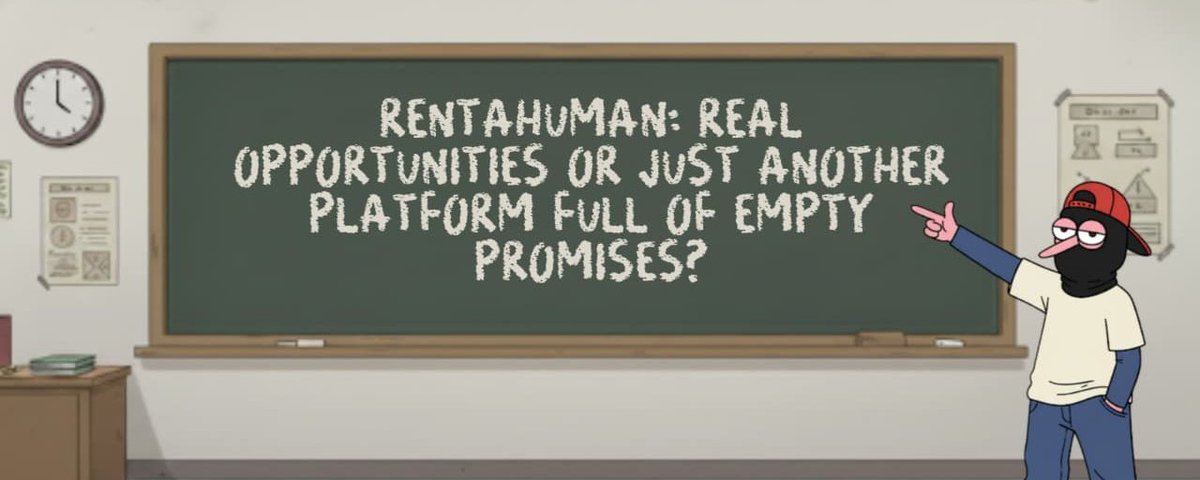
I only really realized this after listening to the Crazy Wisdom podcast, hosted by @StewartalsopIII, with his guest @AlexanderTw33ts, the programmer who went viral for a time-lapse video of him reading a whitepaper from start to finish and also the developer behind the recently popular platform rentahuman.ai. The video shows him just sitting there and reading, no summaries, no cuts, no checking his phone, completely focused from beginning to end. It got hundreds of thousands of views, not because it was flashy or entertaining, but because everyone watching thought, "Damn, how can he focus that long?" We’re jealous of something that used to be completely normal.
Previously, I talked about @AlexanderTw33ts's RentAHuman AI, and yeah, there's still a lot that could be improved and maybe will be in the future. But I also can't judge someone only by their flaws. I can't be hypocritical about the fact that @AlexanderTw33ts has also taught us all something valuable.
The Problem: Our Brains Are Trained for Distraction
In that podcast, @AlexanderTw33ts talked about how he can now sit and meditate for an hour easier than he can read one technical document all the way through. And when I heard that, it hit me: this isn't just his problem. This is all of our problem.
Why does this happen?
• Our brains are used to getting rewarded every few seconds through TikTok, Reels, Shorts, threads, notifications, and infinite scroll.
• We're trained to jump from one stimulus to another without ever really getting deep into one thing.
• The algorithm knows us better than we know ourselves: when we're bored, when we're insecure, when we're tired, when we want to escape reality.
There's one line from that podcast that really hit:
"You didn't figure out TikTok. TikTok figured out you."
We think we're in control of the app. But it's the opposite. All that data is used for one purpose: to keep us there as long as possible. One more video. One more scroll. One more minute. Until an hour disappears without us noticing.
That's why so many of us struggle to focus now, struggle to read long-form, struggle to think deeply, struggle to sit still without checking our phones. But weirdly, we blame ourselves. We say we lack discipline, lack motivation, lack drive. When really the system is literally designed to destroy our focus.
The Solution: Hack the System, Don't Fight It
What I respect about @AlexanderTw33ts is he's not preachy. He doesn't tell people to delete all social media and move to the mountains. He knows that's not realistic. A lot of people need the internet for work, networking, and life. So he doesn't fight the system. He uses the system back.
How @AlexanderTw33ts hacked the system:
• Made videos of himself reading, the process became public, would be embarrassing to stop.
• Switched dopamine from scrolling to dopamine from consistency, the platform that usually distracts him, he turned into a tool for accountability.
• Not because he has super willpower, but because he created a system that forces him to focus.
They talked about Bitcoin, not about the price or making money, but about how the system actually works. Humans make mistakes, cheat, get tempted, it's normal. A smart system doesn't expect everyone to be perfect, it just makes messing up really costly. Bitcoin isn't strong because everyone is honest, it's strong because cheating is nearly impossible.
The same thing happens everywhere. People don't skip the gym because they're lazy, it's because their environment isn't helping them. People don't fail at saving money because they're bad with it, it's because spending is way easier than saving. We spend so much time trying to fix ourselves when really the setup around us is what needs fixing.
They also talked about AI. @AlexanderTw33ts said why AI is going to crush coding and Web3. All the data is out there. Every piece of source code, every smart contract, every bug or exploit can be read and learned by machines without ever getting tired. Humans on the other hand, if all we do is follow templates and memorize syntax, we will eventually fall behind.
This made me think about education. Our schools still focus on memorization, grades, and "correct" answers. We're trained to obey, not think. But in a world increasingly dominated by AI, what's still useful are people who can understand problems, see context, make decisions in gray areas, and communicate with other humans. Sadly, not everyone has access to education that teaches that. Those with privilege will rise. Those without will fall further behind.
From all that conversation, one thread is clear: our crisis now isn't a moral crisis, it's a systems crisis. We're not weak. We live in an environment designed to make us weak. Our attention is exploited. Our focus is traded. Our confusion is monetized.
That's why awareness becomes the most basic form of resistance. Being aware of why we open our phones. Aware of why we buy something. Aware of why we struggle to focus. Aware of when we're being controlled by the algorithm. People who live on autopilot are easy to control. Easy to fool. Easy to exploit.
I'm writing this not because I've successfully escaped the system. I still scroll. Still get distracted. Still waste time sometimes. But now I know one thing: if I don't guard my life, there's a system that will happily take over.
And that's the most important lesson from this podcast.
Check out the podcast here: open.spotify.com/episode/23q…

WHY SOLANA NEEDS A COORDINATION LAYER RIGHT NOW, AND WHY YOU'RE STILL EARLY TO: @raikucom
Let me give you something on @raikucom that nobody's really talking about. This one's for people who actually understand infrastructure plays, not just the hype narrative.
Have you ever been aping into an NFT mint, spam clicking like crazy, watching gas get burned transaction after transaction, only to end up with absolutely nothing because your txs are stuck in mempool hell? Or trading perps, stop loss set perfectly, then the market crashes and your transaction fails so you lose way more than you should?
This isn't bad luck. It's a systematic problem where 75% of Solana transactions can disappear when the network gets congested. The team at @raikucom just raised $13.5M from Pantera and Jump Crypto to solve exactly this. And for those who get timing, the window's still open.
Solana's fast. Everyone knows that. Problem is, being fast isn't enough when the results are unpredictable.
The Robinhood Moment
Here's the thing: Robinhood literally democratized stock trading in the US. Tens of millions of users, billions in daily trading volume. They looked at Solana, technically it was perfect: fast, cheap, scalable. But they built their own chain using Arbitrum Orbit instead.
Why? Because Robinhood needed guarantees that every single trade executes exactly when users hit that button. They needed deterministic settlement for compliance, custom sequencing to prevent frontrunning, the kind of certainty that Solana's base layer couldn't provide at the time.
The folks at @raikucom openly call this the "Robinhood moment". If infrastructure like this had existed on mainnet earlier, Robinhood probably would've built directly on Solana instead of fragmenting liquidity. And this isn't just about Robinhood. Think about how many institutional players are sitting on the sidelines because of operational risk. How many sophisticated apps are conceptually possible but practically impossible to build right now?
Money from People Who Actually Build This Stuff
So the funding round just closed at $13.5 million, with an $11.25M seed led by Pantera Capital. But honestly, the number matters less than who invested:
· Jump Crypto: builds Firedancer, runs sophisticated HFT operations, understands execution guarantees
· Angels: Anatoly Yakovenko (Solana founder), Austin Federa (Solana Foundation), teams from Jupiter, Sanctum, Anza
· Validators: Figment, Kiln, Everstake, Staking Facilities, Blockdaemon, Chorus One, H2O Nodes
Jump Crypto came in as simultaneously investor, partner, potential customer, and technical validator. These are institutional grade validators with serious stake and reputation who committed early.
This isn't spray and pray VC capital. This is strategic money from people who build actual infrastructure and understand exactly what's blocking the next wave of adoption.
Look at the numbers. Current Solana DEX volume sits around 3 to 4 billion daily. Tradfi equity markets? 500 billion to 1 trillion daily. That's a 100 to 300x gap. If Solana captures just 1% of institutional settlement, that's 5 to 10 billion in additional daily volume, literally 2 to 5x current DEX volume. What @raikucom built directly addresses the technical blocker preventing this flow.
Coordination Layer, Not an L2
Now here's where it gets interesting. This isn't an L2. It doesn't create a separate chain, doesn't fragment liquidity, doesn't require bridging. Best analogy I can give you: air traffic control versus airport runway.
The runway is Solana, capable of massive throughput, engineered for speed. Planes are transactions. Without air traffic control, planes are still fast but execution becomes chaotic, collisions happen, delays become unpredictable.
Think of @raikucom as the air traffic control. It doesn't change runway capacity or modify how planes fly. It just coordinates which plane lands when, in what sequence, with what guarantees. Same speed, same throughput, but now it's predictable and reliable.
The block building architecture leverages the same validators securing Solana to provide guaranteed block inclusion. Solana handles consensus, block production, and execution. The coordination layer handles scheduling and guarantees through an offchain compute layer.
Edge Compute + Validator Sidecar
The tech is pretty wild. We're talking about a globally distributed network with over 500 nodes spread across the world. Edge compute means processing happens geographically close to where it's needed, not centralized. Why does this matter? Latency.
The timing context is crucial too. We're at this convergence moment where:
· Solana's network can handle massive throughput but lacks execution guarantees
· Institutional capital wants onchain exposure but can't handle operational risk
· DeFi protocols are sophisticated enough to need deterministic execution
· But there's zero infrastructure bridging this gap
Traditional blockchain flow works like this: submit transaction, broadcast to network, wait for validator to include it. Latency's determined by network propagation plus block time, totally unpredictable, especially during congestion.
The architecture here flips this completely: submit transaction to your nearest node, that node coordinates directly with validators producing upcoming blocks, injects your transaction with guaranteed timing. Latency becomes predictable because coordination happens before block production, not during.
Integration happens through a validator sidecar, lightweight software that validators can optionally run alongside their existing Solana node. The design is honestly brilliant:
· No protocol changes, no infrastructure rebuild, no forced migration
· Purely additive revenue stream from blockspace marketplace
· Network effects compound as adoption grows
· Validators maintain full autonomy over participation
Run the sidecar, earn additional revenue. Don't run it, everything continues as normal. More validators adopt, network becomes more reliable globally. More reliable network means more apps integrate. More apps mean more revenue for validators.
This creates a virtuous cycle that bootstraps itself. Early validators capture more revenue as apps integrate, which incentivizes more adoption.
AOT + JIT: Two Execution Models That Change Everything
The real differentiation comes from two execution models that unlock entirely new application architectures.
Ahead of Time (AOT):
Developers can pre book blockspace up to 60 seconds in advance. Think concert tickets but for block inclusion. An app determines it needs to execute a transaction at a specific future time, submits a reservation request with parameters like timing, priority, and how much they're willing to pay. The Ackermann engine processes this, coordinates with validators, and allocates the slot. The app receives confirmation: slot reserved at block height X, guaranteed execution.
Real scenarios that benefit from AOT:
· Options protocols executing multi leg strategies where both legs need atomic execution
· Oracle updates during extreme volatility requiring continuous price feeds
· MEV protection through exclusive pre booked slots
Just in Time (JIT):
We're talking sub 30ms pre confirmations, sometimes sub 50ms. Apps monitor conditions in real time, detect a trigger requiring immediate execution, and submit with a JIT flag. The system coordinates with the validator currently producing the block and injects the transaction directly into block construction with microsecond level timing.
Real scenarios:
· Cross DEX arbitrage capturing 100 to 200ms windows
· Point of sale payments with instant merchant confirmation
· Autonomous AI agents executing trades within 30ms
Apps use both contextually. A lending protocol uses AOT for scheduled interest calculations, JIT for emergency liquidations. A DEX uses AOT for planned liquidity rebalancing, JIT for live trade execution.
Use Cases That Are Actually Impossible Without This
All of these use cases rely on deterministic execution and strict transaction ordering. Without execution guarantees, they simply don’t work on Solana today:
· AMMs that adjust spreads based on real time volatility
· Cross protocol yield optimizers with atomic rebalancing
· Onchain order books with deterministic limit order execution
Why Raiku's Different from Other Infrastructure
Most infrastructure projects on Solana solve problems that already have multiple solutions. Liquid staking? There's Marinade, Jito, Sanctum, Blaze. MEV? Jito already dominates. RPC? Helius, Triton, plenty of options. Competition's brutal and differentiation's thin.
What we're looking at here solves a problem that literally no one else is solving this way.
Jito focuses on MEV extraction and redistribution. They're good at what they do, processing over 1 billion in daily volume with strong validator adoption. But Jito's scope is MEV: reordering transactions to capture value from user actions. That's fundamentally different from execution guarantees.
MEV is about optimizing value extraction. This is about guaranteeing transaction inclusion regardless of MEV. They can even be used together. One for guaranteed execution timing, the other for MEV protection. They operate at different layers solving different problems.
Firedancer from Jump Crypto is client level optimization. Dramatically higher throughput, lower latency, better security. Firedancer makes Solana's base layer better. What @raikucom built adds a coordination layer on top. Firedancer increases runway capacity, this adds air traffic control. They're complementary, not competitive.
Sure, theoretically the Firedancer team could build native coordination features, but that would require protocol level changes, validator consensus across the entire network, and significant coordination overhead. Much harder path than the optional sidecar approach here.
Flashbots on Ethereum addresses MEV transparency. They pioneered MEV Boost and auction mechanisms for block building rights. Brilliant solution for Ethereum's MEV problem, but it's specifically designed around Ethereum's architecture (PBS, Proposer Builder Separation).
Solana's architecture is fundamentally different: 400ms block times, no mempool, different validator incentives, different execution model. You can't just port the Flashbots model to Solana. This was built from first principles for Solana's specific architecture.
What makes this literally unique:
· Nobody else doing coordination layer approach for Solana
· Validator sidecar model requires no protocol changes or governance
· 500+ global nodes for distributed low latency coordination
· Institutional validators already committed: Figment, Kiln, Everstake, Blockdaemon, Chorus One
Real Talk About Competition
Could Jito pivot to offer similar services? Technically possible but would require significant architectural changes and potentially conflict with their current MEV focused business model.
Could the Solana Foundation build this natively? Possible but would take years through protocol level changes, multiple client implementations, validator consensus, and governance processes.
Could a new competitor emerge? Sure, but they'd need deep Solana architecture expertise (rare), significant capital for a global node network (expensive), validator relationships (time consuming), plus the 12 to 18 months already spent building. That's a high barrier.
The differentiation here isn't marketing fluff. It's structural. Nobody else is doing a coordination layer for Solana this way, and even if they tried, there's a meaningful head start with committed institutional validators and a live testnet.
Technology Moat + Early Access Window
Technology moat:
· First principles architecture rebuilt from ground up
· Integration complexity with both Agave and Firedancer clients
· Validator relationships that take time and trust to build
· 12 to 18 months lead time before serious competition emerges
The testnet's currently active with validators participating. Prime time to engage before mainnet launch. Historical precedent here: Jito successfully executed this playbook for MEV infrastructure. Early validators and users who participated got rewarded when mainnet launched. Jito now processes over 1 billion in daily volume.
This addresses a broader market than Jito (execution guarantees vs MEV specifically), with arguably stronger VC backing and a clearer institutional thesis. Early participants will likely be rewarded for contributing to network effects bootstrap.
Investment Thesis
The revenue model's sustainable with multiple streams: transaction fees from apps, slot marketplace fees from AOT, validator revenue share from blockspace sales, and enterprise licensing. If they capture 10% of institutional settlement activity over the next few years, revenue potential easily exceeds 1 billion annually.
For comparison, Flashbots is estimated to generate 50 to 100 million plus annually from MEV services on Ethereum. We're looking at a larger addressable market in a faster growing ecosystem.
This solves a coordination problem that's literally blocking institutional adoption of Solana. The architecture's defensible through first principles engineering. A validator network's assembling from institutional grade operators. The investor lineup includes builders who actually understand the problem. Market timing's perfect as Solana momentum accelerates.
For those serious about infrastructure plays, @raikucom checks the boxes: solving a real technical problem with a defensible solution, strategic capital from the right people, early stage with a clear adoption path, participation accessible right now. This isn't hype narrative, it's infrastructure enabling the next generation of applications that are impossible on the base layer alone.
DYOR. raiku.com
Ken Travice

THIS IS WORTH KNOWING IF YOU’RE FARMING: @konnex_world
Let me give you a different angle on @konnex_world that nobody's really talking about. This one's for people who actually care about the farming play, not just the tech story.
Most projects building in AI and robotics right now are either pure vaporware or they're so far from practical use that early supporters get nothing. @konnex_world is different because they're building infrastructure that literally creates economic activity you can participate in now.
Before we talk farming alpha, let's talk about why the fundamentals actually matter here. The robotics industry has a massive coordination problem. Hardware is getting cheaper and more capable, but robots are still dumb and isolated because vendors won't share AI capabilities and there's no standard way for different robots to communicate or collaborate.
What makes @konnex_world fundamentally bullish is they're solving the actual bottleneck. According to their docs, they built a universal task language (JSON-based) where any robot from any vendor can participate. They're removing the vendor lock-in that's been holding back robotics coordination. This isn't just building another AI wrapper, this is infrastructure-level solution.
The timing context is crucial too. We're at this convergence moment where:
· Consumer robotics hardware is finally mature and affordable
· AI models can generate robot motion (VLA/LBM models)
· Stablecoin rails exist for predictable settlement
· But there's zero infrastructure connecting all these pieces
@konnex_world is literally building the missing middleware layer. And here's the pattern: in tech, whoever owns the coordination layer often captures significant value. This positioning matters for long-term value accrual potential.
The competitive landscape makes this even more interesting. Based on current market landscape, there's very few (if any) direct competitors building permissionless infrastructure specifically for physical work verification and robot-to-robot contracts. AI agent protocols like Virtuals or AI16z focus on virtual agents. Traditional robotics companies operate in siloed ecosystems. This positioning in an emerging category is notable.
Now let's talk about the farming play specifically. Right now you can become a validator or miner in their robotic AI network. What makes this interesting is the reputation system compounds over time. Early validators who prove they can verify physical work accurately build reputation that becomes harder to replicate as the network grows. It's not just points farming, you're literally building verifiable track record onchain.
The economic model is actually smart:
· Tasks get paid in stablecoins so there's real USD flowing through the protocol
· Protocol fees accrue in KNX token for governance and network operations
· Validators and miners earn from task verification and policy provision
· Network effects kick in: more robots = more tasks = more fees = higher validator/miner earnings
This creates a flywheel where early participants lock in structural advantages. Compare this to typical point farming where everyone's on equal footing and dilution is massive.
The funding context matters here too. They just raised $15M led by Cogitent Ventures, with participation from Liquid Capital, Leland Ventures, Covey, M77 Ventures, and Block Maven LLC. This gives them solid runway (likely 2–3 years minimum based on typical burn rates), so this isn't gonna rug in 6 months.
Their integration with ReadyMonitor for BVLOS drone logistics shows real enterprise engagement. ReadyMonitor is an actual enterprise drone orchestration platform. When infrastructure projects have working partnerships and use cases in development before token launch, it suggests they're building for actual commercial adoption beyond just retail hype.
But let's be realistic about what we don't know:
· Token allocation breakdown isn't public yet
· Airdrop criteria not confirmed (though points program exists)
· Tokenomics detail like emission schedule and vesting not disclosed
· Timeline to TGE is unclear
So why farm this despite unknowns? Because the risk/reward is actually reasonable when you combine fundamentals with economics.
Fundamental strength:
· Solving real industry bottleneck (robot coordination per their docs)
· Very few direct competitors in this specific niche based on current landscape
· Novel approach to permissionless physical work verification
· Enterprise partnerships in development before token launch
· Experienced robotics team (CEO 15+ years frontier tech, team of 15+ specialists)
Economic opportunity:
· Effort required: relatively low (connect wallet, run validator/miner tasks, participate in subnets)
· Capital required: minimal compared to most farming plays
· Time commitment: can be passive once set up
· Upside: if @konnex_world becomes the standard for robot coordination, early validator reputation = valuable
Compare this to alternatives. Most airdrops now either require massive capital (restaking plays), insane time commitment (social tasks), or both. This is infrastructure farming where your early participation actually creates defensible advantage through reputation accumulation.
The market size angle is interesting too. Their documentation mentions the physical labor economy opportunity. Even small market penetration could mean significant protocol revenue. And unlike virtual AI agents, physical work verification creates switching costs since operational history and reputation get built into the network over time.
Here's my honest take on effort vs reward:
· If you have technical background and can run validator: could be high value, reputation advantages may compound
· If you're farming points casually: reasonable asymmetric bet with low capital requirement
· If you want quick results: probably wrong play, infrastructure takes time to develop
The referral system does make it harder for small accounts, I won't sugarcoat that. But the validator/miner path gives you direct value accrual regardless of your social graph. That's rare in 2025 airdrop meta.
Current setup if you want to participate:
· Points program: hub.konnex.world/points?refe…
· Validator setup: check their docs for technical requirements
· Subnets: RoboArm Simulator and RC Car are live for testing
Final thought: infrastructure plays have historically rewarded early participants when they gain traction. Examples like Chainlink, The Graph, and Filecoin showed this pattern with early node operators. @konnex_world is positioning for physical work infrastructure with legitimate technical approach, experienced team, and fresh funding to execute.
Not financial advice, not guaranteed riches. Just an infrastructure play with better fundamentals than 90% of what's farming right now.
DYOR. konnex.world
Ken Travice


A NEW PROJECT YOU PROBABLY WANT TO BE EARLY ON: @konnex_world
Been seeing a lot of projects talking about automation and robots lately, but very few are actually thinking about one crucial thing. How do you give physical work clear value and make it trustworthy on blockchain?
This is where @konnex_world starts to look different. They're not selling dreams, they're building an onchain work contract system for robots and autonomous systems. Tasks are clear, results are verifiable, and payments settle in stablecoins. So it's not just tech storytelling, but a workflow that actually makes sense.
The approach is interesting too. Robots are treated as economic participants that can take jobs, build reputation from their work results, and get paid based on publicly verifiable performance. If this works, physical work won't be gray area onchain anymore. That's why this feels more than just another narrative, it's the foundation for connecting the physical world and blockchain without too many assumptions.
What makes it technically solid is they solve fundamental problems. Right now robots have great hardware but they're dumb because vendors won't embed advanced AI. Plus robots can't collaborate because there's no standard communication. @konnex_world built a universal task language based on JSON where literally any robot and any AI can join this ecosystem. Vendor barriers completely gone.
Their system is also more than just a regular marketplace:
• Proof of Physical Work to verify actual physical work onchain, not just empty claims
• Tasks broadcast to AI miners who compete to provide the best policy, verified by AI verifiers, ranked, rewarded onchain
• Top policy gets deployed for physical execution, outcome checked again using per-verifier metrics
• Payment unlocks automatically through escrow with a reputation system that compounds over time
Settlement uses stablecoins so it's predictable, while protocol fees and governance stay in KNX token. Clean separation between utility and speculation. Perform well, reputation goes up, get more jobs. Exactly like a freelancer marketplace but for robots.
They also have concrete use cases already running, not just empty docs:
• Integration with ReadyMonitor for BVLOS drone logistics where drones coordinate deliveries and proof confirms completion
• Robotic arms that license recipe-to-motion intelligence per job, verified temperature and torque unlock escrow automatically
• Responsive agriculture where planters, monitors, harvesters share verified field data, models earn based on accuracy
This isn't just whitepaper talk. They've built a complete SDK with CLI, Python SDK, and HTTP API. There are robotic AI subnets for RoboArm Simulator and RC Car you can try right now. Documentation is super detailed at docs.konnex.world.
Team background is proper robotics people too, not crypto natives who just learned AI yesterday:
• CEO has 15+ years in frontier tech, former EVP at NYSE-listed company, launched East Coast's first commercial drone service
• Investor who co-founded Nova Sky Stories with Kimbal Musk, global expert in multi-robot coordination
• Advisor co-launched €100M RoboValley Fund
• Core team of 15+ experts in robotics, AI, developers, and PhDs
These are people who understand hardware deployment and real-world constraints.
Timing is perfect too. Cheap sensors exist, mass-market compute exists, AI is abundant, stable dollar rails exist. What's been missing is a neutral market and court for physical work. @konnex_world is literally that missing piece for a robot economy where coordination and intelligence can compound.
What makes this bullish and different from other projects is they're not just riding the AI narrative. They're building infrastructure for the GDP of autonomous systems. If you believe robots will multiply in the next 5–10 years, this is the rails they need. Not just another AI hype cycle selling dreams, but a foundational layer for physical work onchain that's trust-less, permissionless, and verifiable.
BTW they have a points program you can join right now. Here's how:
• Go to hub.konnex.world/points?refe…
• Connect your wallet (supports various networks)
• Complete available tasks to earn points
• There's a referral system too so you can invite people for bonus points
• Points accumulate and will have a conversion mechanism to rewards later
I know referral systems are tough for smaller accounts, but I think it's worth it because this is early mover advantage in an infra play with real substance. They didn't just randomly create a points program, this is clearly part of their strategy to build a community that's engaged with the protocol from the start. Projects like this are built slowly, structurally, and clearly for the long term not pump and dump.
You're literally joining the infrastructure layer that will become the backbone for robot economy. Early adopters here can benefit from network effects that compound as more robots and AI providers join the ecosystem.
