






Ali Khan retweeted

In 1984 , Rakesh Sharma became the first Indian to go to space with the help of Soviet Union... In space he quoted Allama Iqbal's poem...
In 2026 , Zeeshan Ali became the first Pakistani to go to space with Chinese mission... He too has quoted Allama Iqbal poem in space...

Astronaut Zeeshan Ali, #Pakistan’s first man in space, recites the iconic verses of Dr. Allama Mohammad Iqbal’s poem “Khudi” (Selfhood), aboard @CNSpaceStation:
ستاروں سے آگے جہاں اور بھی ہیں
ابھی عشق کے امتحان اور بھی ہیں

Ali Khan retweeted

Buildings by the contemporary Pakistani architect Kamil Khan Mumtaz. When my colleague Ben first sent me some grainy pictures of Mumutaz’s work five years ago, I wondered if he might be the best architect in the world. But I couldn’t find any other images of his work.
worksinprogress.co/issue/the…
Then last year, I met Mumtaz’s assistant Sohaib Ahmed at a conference. I implored Sohaib to send us more pictures, and with Mutmaz’s support, he prepared a portfolio. Very few of these images have ever been seen before outside Pakistan.
Mumtaz was educated at the Architectural Association in London in the 1960s. After returning to Pakistan, he initially worked as a modernist, though one with a special interest in local context. But he was haunted by a ‘growing, nagging fear that I wasn’t communicating with my audience’. In 1980, he adopted a radically different approach, working to revive Pakistan’s own architectural traditions. He has continued ever since, and in Pakistan his work has been received with warmth and admiration.
Traditional architecture often suffers from shortages of skilled craftspeople. This is also a problem in Pakistan, but less so, because later industrialisation meant that the last premodern traditions were still persisting when Mumtaz started work. ‘Immediately, [I came] into contact with very small remnants of these families, hereditary craftsmen’, Mumtaz remembered in an interview with the historian Chris Moffat.
Mumtaz’s practice has both drawn on these traditions and supported their development, so that it now features a standard of craftsmanship that virtually no Western work today can match.
We are proud that Mumtaz has allowed Works in Progress to showcase his work.


Ali Khan retweeted

When you think of how many things have to happen in an exact sequence for this to eventuate, it is close to the most extraordinary thing ever to take place at a sporting event.
The timing of the six, the motorbike and he plucks it one handed. The odds are just astronomical. If you were arguing a case for fate this video is example A @7Cricket

Ali Khan retweeted

Being an Aussie founder is waking up at 5am to find out the whole industry changed 3 hours ago
Ali Khan retweeted
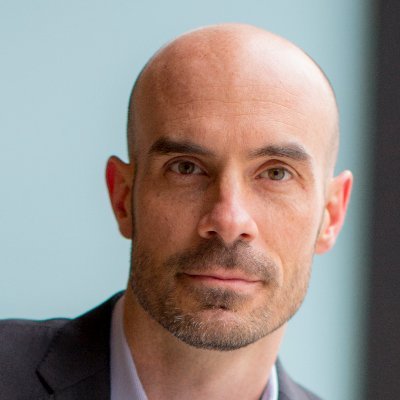
Chief AI Officer at Meta: "It is hard to imagine a world where humanity can maintain control over fully unconstrained recursive self-improvement. It is equally hard to imagine a world where humanity maintains control with superintelligence that is 1000x smarter and more capable than humans in every field."

Ali Khan retweeted

New: A.I. has in a matter of months radically transformed cybersecurity and plunged the world into a disorienting new digital chapter in which severe technological disruptions may become far more commonplace than they were in the past.
nytimes.com/2026/11/21/us/po…


Ali Khan retweeted

NON-MATHEMATICIAN: So what's this problem everyone's talking about?
MATHEMATICIAN: Okay so listen to this wild shit—if you take this math function that only converges with inputs over 1, and then you add an imaginary axis in and use some backward extrapolation, you can make it converge for values below 1 too! And then you can ask which inputs yield an output of zero, and if you just focus on those whose inputs are between 0 and 1 on the real number line, there are a bunch at 1/2, and then if you ask whether there are any that aren’t 1/2, that question is the MOUNT EVEREST OF MATH.”
NON-MATHEMATICIAN:
MATHEMATICIAN: Right??
NON-MATHEMATICIAN:
MATHEMATICIAN: Okay but anyway, solving this problem was the ULTIMATE dream of every young mathematician. It was the kind of great challenge that made people want to become mathematicians in the first place—this pot of gold at the end of a rainbow we could all have fun searching for. And now someone used AI to just go get the gold, and suddenly there's no more gold there to dream about, but we got the gold which is great!
NON-MATHEMATICIAN: Wait, that's actually pretty sad.
MATHEMATICIAN: No, no, it's great! It's a new age of knowledge and discovery.
NON-MATHEMATICIAN: You look like you need a big old cry.
MATHEMATICIAN:
NON-MATHEMATICIAN: Come here.
[hug]
Ali Khan retweeted

"People, I loved you. Be vigilant!"
Julius Fučík — Notes from the Gallows (1942–43)
A Letter from Prison
An appeal to a system that does not exist
Former Prime Minister Imran Khan’s open letter to the Supreme Court from the darkness of illegal solitary confinement is in a rich tradition of letters written by imprisoned leaders throughout history. Penned by condemned or doomed men, in some rare cases by women, the letters from the past were usually written hours or barely days before their imminent death.
Famous last letters, or a body of letters from prison, include Sir Thomas More’s letter to his daughter Margaret Roper (1535), Sir Walter Raleigh’s letter to his wife Bess (1603), Marie Antoinette’s letter to her sister-in-law Madame Elisabeth (1793), French revolutionary Camille Desmoulins’s final letter to his wife Lucile (1794), Bhagat Singh’s letter from Lahore jail to his brother Kultar (1931), and Antonio Gramsci’s Letters from Prison (1926-37). More recently, Che Guevara and Nigerian environmental activist Ken Saro-Wiwa’s letters are also eminent examples of this dark genre.
These letters encompass a range of emotions and topics ranging from parental or spousal love and tenderness, defiance, moral courage, resistance, revolutionary idealism and serenity. A particularly fascinating – and tragic – subcategory of this genre of letters from prison relates to the final writings of people who were abandoned or condemned by the very political movements, revolutions, or institutions to which they had devoted their lives.
There is a strong element of confronting betrayal – the prisoner is not merely confronting death at the hands of an enemy, but is also confronting the possibility that a lifetime's political commitment may have been misplaced, that the revolution has devoured its own children, or that loyalty has been repaid with persecution.
Russian Bolshevik revolutionary Nikolai Bukharin is an outstanding example of this category. One of the Bolshevik Revolution's leading intellectuals, Bukharin had been close to Lenin, served on the Politburo, and helped shape Soviet economic policy. Stalin eventually had him arrested, subjected to a show trial, and executed. His final letter to Stalin, written in December 1937, is an extraordinary mixture of bewilderment, affection, fear, and an almost unbearable desire to persuade his persecutor of his innocence. What makes the letter remarkable is that Bukharin continued to address Stalin as a former comrade, seeking to understand why the system he had helped build had turned against him.
Imran Khan’s letter, despite his illegal, heart-breaking and inhumane treatment at the hands of the Establishment, betrays a naïve belief in a Pakistan that probably never existed – one committed to constitutionalism, rule of law, democratic freedoms and fundamental rights, one with independent, honest and just courts. Even if a glimmer of that mirage existed before 2022, it has been completely wiped out since. The past is another country. It seems unlikely that we can ever return to it.
Our thoughts and prayers for one of Pakistan's finest.
Ali Khan retweeted

3 key questions for every consumer AI product:
1. Does your product give people new superpowers?
2. Does your product get better as more people use it?
3. Does your product get better when models get better?

Ali Khan retweeted

BREAKING: Google says “the era of autonomous attacks has arrived.”
Hackers are now using AI to scan software updates, figure out which security flaw each patch fixes and build an attack before companies can install the fix, all without a human involved, according to a new report from the Google Threat Intelligence Group.
“Defending against machine-speed threats at human speed isn’t feasible,” Google said.
Ali Khan retweeted

🚨🇵🇰 Fmr. Pakistani PM Imran Khan has issued a DESPERATE PLEA from prison, warning that his health is deteriorating rapidly...
In an open letter to Pakistan's top judges, Khan says he has been held in prolonged solitary confinement, denied regular family visits, deprived of adequate medical care.
He says he's lost 85% of the vision in his right eye, experienced dangerously high blood pressure, and fears suffering a stroke or even cardiac arrest.
Khan also claims a Supreme Court order requiring hospital treatment has not been implemented.
“Give me justice before it is too late.” 💔
Source: @BrSalmanSafdar / Writer: Samuel






Ali Khan retweeted

Canva’s terms for departing employees are both exceedingly generous and a window into modern tech:
* Six months salary
* A year healthcare
* A year of LinkedIn premium
* A $10k grant to start a business
* Keep your MacBook


Ali Khan retweeted

Great line from the CTO of Proton. I’m paraphrasing and stealing it :
Your job is not to use agents to help you write code. Your job is to lead the agents to help them write code.
