

I'm happily married with children// My life attracts favour and goodness// Your life is about to receive favour, don't give up!
Joined March 2013
- Tweets40.7K
- Following2.9K
- Followers6.1K
- Likes33.7K





Pinned Tweet
From the darkest recesses of despair, God's redeeming hands excavated me, freeing me from the suffocating web of pains that human tongue can not explain its devastation. Like a master artisan, He restored my shattered existence, rekindling the flame of purpose and resistance...
2
4
1,581
Kinglupper retweeted

Please, is it not obvious that INEC is established to rig elections for criminals, contrary to the perception that it is set up to serve as an election umpire?
#INECisCorrupt
Kinglupper retweeted

lol.
@inecnigeria just deleted the list of polling units from their website after we shared it here.

Kinglupper retweeted

I have been waiting for them since to sell their new market. Bunch of nonentities. 😞
Everyone that shouted Obi in 2023 added NOTHING to him other than help market a premium product. Instead we all gained prominence from his impeccable image.
Ingrates! 😂😂


Kinglupper retweeted

WATCH: 2027 Elections: Kano Council Chairman Brazenly Asks APC Supporters To Use Violence To Take Over Polling Units

It is very important to invest in crises management if not, growing yo will be a burden that comes with depression and, seeking validation that pushes many people to fight and say things that may destroy their social capital investment

123
Kinglupper retweeted

Guys! Join me if you’re in port harcourt and it environs . Let’s do forex together
Tomorrow Saturday 21st 2026
Venue: Galaxy La Palm Royal Resort phase 2, 3 Lord Ugboma Dr. GRA Port harcourt.
Time: 12 noon
Kinglupper retweeted

Massive hope for pancreatic cancer pill after trial saw tumours vanish bbc.in/4t8yxOZ


Many Nigerians are corrupt. They appear nice because they haven't gotten opportunity to loot yet. Someone gave you N200k and you feel entitled that the money was small. When last did you give someone your total earnings? A bunch of ungrateful people

They see Peter Obi donate ₦10m, ₦20m, and more to nurses, and they start calculating his wallet.
How dare he give them ₦200k and ₦100k?
Funny folks.
1
73
Kinglupper retweeted

Every young Nigerian needs to watch this video at least once a week as we go into 2027.
Kinglupper retweeted
In Awka, our urban renewal programme included the dualisation and lighting of Zik’s Avenue. We understood that modern urban infrastructure required not only good roads but also proper lighting, drainage, and facilities that made movement safer and supported commercial activities. We also improved internal roads and connecting routes to support its development as the State Capital, while in Nnewi we strengthened road connections serving industrial and commercial communities.
These investments formed part of a broader economic strategy. We wanted businesses to find it easier to move raw materials, transport finished products, and distribute goods.
The emergence of major industrial investments, including SABMiller’s brewery in Onitsha, reinforced our belief in the importance of an enabling environment for business. Infrastructure, security, institutional stability, and a predictable business environment must work together to attract investment.
V. Establishing a Road Maintenance Culture
One mistake governments make is to concentrate on constructing new roads while neglecting those already built. We understood that road construction without maintenance eventually becomes wasteful.
That was why, in August 2008, we established the Anambra State Road Maintenance Agency (ARMA) through an enabling law passed by the State House of Assembly. ARMA was created to provide a permanent institutional framework for maintaining State roads, repairing failed pavements, clearing drains, and responding to road deterioration.
We equipped the agency with road maintenance machinery, including graders, rollers, heavy-duty trucks, and other equipment. We also established a dedicated office complex to strengthen its administrative and operational capacity.
Our intention was to replace the practice of waiting until a road had completely failed before awarding another expensive reconstruction contract. We wanted maintenance to become a continuous government responsibility.
VI. Quality Control and the Materials Testing Laboratory
We recognised that constructing roads was not enough; the quality of materials and workmanship also mattered, especially when some contractors are in the habit of doing sub-standard work as a result of poor-quality materials, inadequate compaction, and weak engineering supervision, which often result in premature road failure and the waste of public resources.
Consequently, we initiated the establishment of the Anambra State Materials Testing Laboratory to provide scientific testing of construction materials and improve quality assurance in public infrastructure projects. The laboratory was designed to test soil, aggregates, sand, cement, water, chemical materials, and steel reinforcement, among others.
VII. Taking the Anambra Experience to Nigeria
Our road programme in Anambra State was not a collection of isolated construction projects. It was part of a broader development strategy linking agriculture, industry, education, healthcare, commerce, and rural development. Good roads reduce transportation costs, improve access to markets, encourage investment, increase the value of agricultural produce, and make public services more accessible.
As President, I will bring the same philosophy of deliberate planning, prudent resource management, and accountability to national infrastructure development.
Nigeria requires an integrated transportation network that connects agricultural communities to markets, industrial centres to distribution networks, ports to production areas, and rural populations to essential services. We must prioritise the repair of existing roads and the construction of roads that unlock economic opportunities rather than merely count the kilometres constructed. We must also establish effective maintenance systems so that public investments are not allowed to deteriorate through neglect.
Kinglupper retweeted
These are examples, not an exhaustive list of the extensive road construction and rehabilitation works we undertook across the State. These included internal roads, dual carriageways, drainage systems, and pedestrian facilities. Our objective was to ensure that infrastructure supported both urban economic activities and rural production.
II. Opening Up Previously Inaccessible Communities
One of the most important aspects of our programme was reaching communities that had suffered years of infrastructural neglect.
Anambra West was particularly important because many communities in the area are riverine, with difficult terrain and serious transportation challenges. We constructed the Umueze Anam–Mmiata Road and associated bridge infrastructure, opening up areas that had previously been difficult to access, particularly during the rainy season. This demonstrated our belief that geographical location should never determine a community’s entitlement to development.
The Amansea–Ebenebe corridor was another important intervention in rural connectivity. These projects reflected our conviction that a farmer in a remote community deserves the same consideration as a trader in Onitsha. Government must not concentrate development only where roads already exist or economic activities are most visible. Sometimes, the greatest impact comes from taking infrastructure to places that have long been neglected.
The Anaku–Omor–Ifite Ogwari–Umueje–Omasi Road in Ayamelum Local Government Area deserves particular mention. It was the first major road project flagged off by my administration after assuming office in 2006. Covering approximately 42 kilometres, the road opened up an important agricultural area, connecting communities that had long suffered infrastructural neglect. It reflected our determination to prioritise rural infrastructure, connect farming communities to markets, and unlock the economic potential of previously underserved areas.
III. Bridges: Connecting Communities Across Difficult Terrain
Road construction is incomplete without bridges, culverts, and other structures that ensure uninterrupted movement. We, therefore, made bridge construction an integral part of our road programme.
My administration constructed 28 bridges across Anambra State. Among the major bridge projects were:
Odor River Bridge: Along the Nibo–Umuawulu–Awgbu–Amaokpala–Oko Road.
Ezu River Bridge: Along the Amansea–Ebenebe–Ugbenu–Ugbene–Awba-Ofemili Road.
Umueze Anam–Mmiata Bridge: An important component of opening up riverine communities.
Ogbanabo Bridge: Connecting Okpuno and Isuaniocha.
Atani–Ozubulu Road: Three major bridges were constructed along this strategic corridor.
Beyond the 28 bridges, our administration also constructed more than 50 culverts across the State. These structures were essential to effective drainage, flood control, and the connection of communities separated by streams and difficult terrain.
The Odor River Bridge, approximately 165 metres long, deserves particular mention. It was a landmark intervention connecting communities along the Awgbu–Amaokpala corridor, which had waited for decades for a reliable crossing.
We also undertook pedestrian bridge projects in Awka and Onitsha to improve safety in busy areas.
Roads and bridges must be planned together. A well-constructed road that terminates at an impassable river crossing does not solve the transportation problem. Our record of 28 bridges was part of our determination to overcome such barriers and improve connectivity across the State.
IV. Urban Renewal and Commercial Development
Good roads are essential to the development of our commercial and industrial centres.
In Onitsha, we improved the road network around the Bridge Head, Upper Iweka, Zik’s Roundabout, and other important commercial areas. We also introduced pedestrian crossing facilities to improve safety and movement.
Kinglupper retweeted
NIGERIANS, GO AND VERIFY (5)
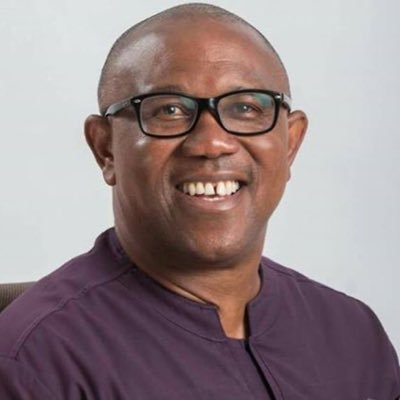
CONNECTING COMMUNITIES, UNLOCKING PROSPERITY: OUR ROAD INFRASTRUCTURE RECORD
Peter Obi
Another critical foundation of development is infrastructure, particularly road construction and maintenance.
Infrastructure is not just about constructing roads, bridges, and buildings. It is about connecting people, opening up economic opportunities, reducing poverty, and enhancing the well-being of ordinary citizens. A road that connects a farmer to a market, a patient to a hospital, a child to a school, or a manufacturer to a distribution centre is an investment in economic and human development.
This thinking informed our approach under the Anambra Integrated Development Strategy (ANIDS). We set out to connect all 177 communities in the State with motorable roads, paying particular attention to rural communities that had suffered years of neglect. Our objective was to build an interconnected road network that served the entire State, rather than concentrate projects in major cities or politically important locations.
I. The Road Revolution: Over 900 Kilometres of Road Projects
Between March 2006 and March 2014, during my two-term tenure in office, my administration asphalted over 900 kilometers of roads. These projects were deliberately distributed across the three senatorial zones of Anambra State to connect communities, facilitate commerce, and enhance transportation.
I acknowledge that Dr. Chris Ngige started the road revolution in Anambra State, and I commend the efforts his administration made in initiating several road projects. When we assumed office in 2006, we recognised the importance of continuing worthwhile projects rather than abandoning them simply because they had been initiated by a previous administration.
Among the roads we inherited from Ngige and completed were the Owerri–Ezukala–Umunze–Umuchu–Amesi–Uga–Igboukwu Road, where his administration stopped around Umuchu and we continued through Amesi, Uga, and onward to Igboukwu; the Iseke–Orsumoghu–Ukpor–Utu–Nnewi–Awka-Etiti Road, where his administration stopped at Ukpor and we continued towards Awka-Etiti; and the Ideani-Otuocha where work stopped around Awkuzu before our administration continued the project from Nteje to Otuocha.
There were also roads, such as Mmili John and Nkwelle Ezunaka bypass, which had been awarded before we took over, but on which no payment had been made by the time we assumed office. We took over these projects, assessed their status, and proceeded with the work. This was our approach to continuity in governance: acknowledging what had been started, distinguishing between projects merely awarded and those on which work and payment had actually commenced, and ensuring that important infrastructure projects were carried forward.
Some of the major roads and corridors included Amansea–Ebenebe Road; Aguleri–Umueze Anam–Mmiata Road; Nnewi–Ozubulu–Okija Road; and the Old Onitsha–Awka Road.
Other important projects included:
Awka and its Environs: Zik’s Avenue, Awka; Adazi-Nnukwu–Obeledu–Neni Road; 33 Junction–Nwafor Orizu College of Education Road; roads within the Awka Government Reserved Area (GRA); and the Old Nkpor–Amawbia Road.
Nnewi and Surrounding Communities: Nnobi–Nnewi Road; roads within Nnewi town; Akwaeze–Oraeri–Igboukwu Road; and Ekwulobia–Nkpologwu–Akpo–Achina–Umuchu Road.
Onitsha and its Environs: Bridge Head–Umunya Road; over 30 roads in other parts of Onitsha; more than 25 roads within the Onitsha GRA; over 20 stone-based roads within Harbour Industrial Estate, Onitsha; and the Nkwele Ezunaka Bypass.
Other Communities and Strategic Corridors: Awgbu–Amaokpala Road, with the Odor Bridge; Aguluezechukwu–Ogboji–Ajalli Road; Awkuzu–Igbariam Road, passing through the university; Owerri–Ezukala–Umuchukwu Road; Ugwuoba–Obosi Road; and Lilu Road.
Kinglupper retweeted

Peter Obi Speaks Fluent Hausa To Kwankwasiyya Crowd, Crowd Erupts and started chanting "Obi Obi Obi”

Kinglupper retweeted

Full interview: Our Founder, Mr. Martin Uwakwe on Channels TV Morning Brief.
He discusses why publishing ward collation results on IReV is possible, and why INEC needs an independent audit of its technical infrastructure ahead of the 2027 elections.
#INEC #Mundx #NigeriaDecides2027 #IReV
Kinglupper retweeted
Great to see our work mentioned on @ARISEtv by @ruffydfire. We are not going to relent!
Make sure you are following us @mundx_analytics 🙏
Kinglupper retweeted

Price will keep repeating itself every time
Same Structure
Same NAS100
First trade was last month, Second trade was this month....
Although there is one difference between the two trades, spot the difference, first correct answer wins something for the weekend 🥂
Shared live for free , Everyone Made money from it , go and verify👉 : t.me/kelvin_talent
Last month vs This month
It's not random, when you know what you are doing....
GM Billionaires
ForeverInProfit 🥂


