

PhD in Economics, postdoctoral researcher at the Center for Health Economic Research at Uppsala University, Sweden. @knudan@econtwitter.net
Stockholm, Sverige
Joined February 2015
- Tweets557
- Following345
- Followers293
- Likes4.3K


Daniel Knutsson retweeted

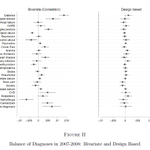
We've updated our paper on optimal experimental design for spillover estimation!
This version includes a new application to Egger et al. (2022), where we show large reductions in standard errors relative to their saturation design.
Link below!


Daniel Knutsson retweeted

New paper with @KHarmenberg and @MariaCOlsson!
Do shocks to worker market power ("wage-markup shocks") drive aggregate fluctuations?
Has the secular decline in firm market power affected the potency of monetary policy? Fiscal policy?
Does it all depend on whether wages are rigid or not?
Thread.

Daniel Knutsson retweeted

How much does residence security matter in the competition for skilled migrants?
In my JMP (w/ Erik L), I study how prospects for permanent residency shape where international PhD graduates settle, what they invest in, and the research they produce. 1/n
shorturl.at/92HLG

Daniel Knutsson retweeted

What if the biggest barrier to opportunity is the fear of leaving home?
Meet IIES JMC @demirelmerve. In her JMP she studies how concerns about moving shape where students go to college. su.se/english/profiles/m/med…


Daniel Knutsson retweeted

Kiinnostava uusi NBER-paperi hyödyntää punkin puremasta johtuvaa liha-allergiaa luonnollisena kokeena punaisen lihan terveysvaikutusten tutkimisessa. Punaisen lihan syönnin lopettaminen vähentää hieman painoa sekä laskee kolesterolia ja verensokeria.
nber.org/papers/w36025

Daniel Knutsson retweeted
New working paper with the brilliant Michal Kolesár:
Shrink Responsibly: Empirical Bayes in Economics
We review the ins and outs of eB "shrinkage," as applied in econ settings, and illustrate them with an application to public school value-added
Some takeaways:
- Conventional normal-normal shrinkage, perhaps with an adjustment for precision dependence, can work pretty well -- even when misspecified (like OLS!)
- Plenty of interesting questions should not be (but often are) answered with shrinkage; we give alternative estimators for some cases
- Elementary and middle schools in Charlotte-Mecklenberg vary widely in value-added, which appears causal. More popular schools are not reliably better, but better schools seem to have higher-achieving peers
Link below!

Daniel Knutsson retweeted

My curated list of free datasets for research is up to 150+ entries across 30+ categories. Check it out at github.com/toddrjones/datase…

Daniel Knutsson retweeted
Why do oil price spikes hurt the economy more than oil price drops help it?
Meet IIES JMC @AlirezaAzampour. In his JMP (with Mohammad Naderitabar), he investigates why energy shocks have uneven effects on investment. 🧵
su.se/english/profiles/a/ala…

Daniel Knutsson retweeted
It’s time to meet the final candidate in our job market candidate lineup, the great Tram Pham!
Tram works at the intersection of labor economics, health, and migration. In her Job Market Paper, “Public Procurement, Worker Reallocation, and Health: Evidence from the Railway Industry,” she studies how public procurement affects workers’ jobs and health.
Using hand-collected railway contracts and Swedish administrative data, she exploits staggered procurement across regions. Procurement opens jobs for workers with weaker prior attachment, as measured by their nationality and employment record, while simultaneously imposing adjustment costs on incumbent workers. Among incumbents, employer separation rises by about 25 percentage points, and those who leave experience an earnings loss relative to those who stay. Incumbents also see more sickness absence and health-related benefits.
Beyond her JMP, Tram has a paper with Olof Aslund, Erik Grönqvist, and Oskar Nordström Skans, accepted at Health Economics, on age at migration and resilience to health shocks. Using comparisons between siblings, they show that immigrant–native gaps in COVID-19 hospitalization were strongly related to how much of childhood was spent in Sweden.

Daniel Knutsson retweeted
It’s time to meet the next candidate in our job market candidate lineup, the great Simona (Xuemeng) Wang!
Simona is an applied economist whose research spans the fields of education, labor, and health economics. Her work integrates causal inference methods with comprehensive survey and administrative data to examine how education and work environment shape human capital, individual well-being, and economic opportunity.
Teachers matter for students, but we know little about what effective teachers do in classrooms. In her job market paper, Simona uses a unique setting where teachers are randomly assigned to classrooms to estimate the causal effects of teaching styles on student achievement. She applies factor analysis to 25 teaching-practice questions to construct multidimensional measures of teaching style. A one-standard-deviation increase in student-centred teaching raises average test scores by 0.045 standard deviations. However, the average hides important heterogeneity: the effect is negative in mathematics, largest for lower-ability students, and low SES student. The higher scores seem to come from more interaction between teachers and students, and from teachers paying closer attention to how students are doing. Evidence on potential mechanisms points to enhanced teacher–student interaction and greater teacher attention to students’ learning conditions.
Beyond her JMP, Simona has an NBER WP with Krzysztof Karbownik, Helena Svaleryd, and Jonas Vlachos on classrooms as workplaces, student composition and mental health. A one standard deviation increase in student disadvantage raises overall and stress-related sick leave by 3.6% and 8.7%, respectively. Survey evidence indicates that these effects operate through classroom conditions rather than workload. She also speaks Swedish at B2 level.

Daniel Knutsson retweeted

Announcing the 5th Workshop in Economic History in beautiful Uppsala on May 14-15, 2027. This year, we are very happy to have @DrNathanNunn as keynote speaker! Spread the word and submit your papers by January 31.
Call for papers: dropbox.com/scl/fi/w3nmh480q…

Daniel Knutsson retweeted
It’s time to meet the next candidate in our job market candidate lineup, the great Christian Lundqvist!
Christian works in empirical microeconomics, with a focus on labor, especially unions and collective bargaining. In his Job Market Paper, “Workplace Influence on Union Membership,” he tracks workers who switch employers to study how workplace union density affects the decision to join a union.
Workers who move to a more union-dense workplace are more likely to unionize, even when the move stays within the same occupation, industry, municipality, and firm. Workers respond more to union density among peers than among non-peers, and little to local union wage premiums or to proxies for workplace instability. The pattern points to social norms, ahead of pay or insurance, as driving the decision to join a union or not.
Beyond his JMP, Christian is working on how childhood exposure shapes adult union membership, and on collective agreements in the Swedish labor market.

Daniel Knutsson retweeted

Second minimum wage study coauthored by me that has been successfully replicated, and extended to new data, showing results hold up.

This week on LivingScience, we are featuring Minimum Wage Effects Across State Borders by @arindube @TBillTheProf and Michael Reich
Do minimum wage increases destroy low-wage jobs? This paper compared each county with its neighbor across a state line, in 1,181 pairs from 1990 to 2006. A higher minimum raised restaurant pay but did not reduce restaurant employment. We rebuilt their analysis and extended to 2026.
Higher minimums still do not cost restaurant jobs, even when the differences are much larger. In the paper's years, the higher minimum wage in a pair of neighboring counties was about 7 to 20 percent above the lower one. By 2026 the average difference is about 62 percent, and Washington's $17.13 now faces Idaho's $7.25. Where the difference grew largest, restaurant jobs did not fall. A 10 percent higher minimum goes with about 0.2 percent fewer restaurant jobs, too small to tell apart from zero. Restaurant pay did go up, by about 1.2 percent for each 10 percent rise in the minimum. So the higher minimums raised pay without cutting jobs.
livingscience.ai/econ/living…

Daniel Knutsson retweeted
It’s time to meet the next candidate in our job market candidate lineup, the great Olle Törnquist!
Olle works on labor economics. In his Job Market Paper, “Two-Tiered Unionization and the Local Labor Market,” he presents new and unique local union data, enabling him to ask what makes workers organize in unions when free-riding is easy.
In Sweden, collective-bargaining coverage is already near universal, but workers can still form plant-level union chapters to adapt national agreements locally. He develops a model of two-tier bargaining in which second-tier bargaining through local chapters enables a more state-contingent wage agreement, which provides workers with more insurance during downturns. The key prediction is that in a slack labor market, the gains from such bargaining fall as employed workers’ outside options improve. Linking data on plant-level union chapters to administrative records, and using a matched difference-in-differences design around notices of mass layoffs in the local labor market, he shows that unionization rises at surrounding plants. The increase comes from more members among workers already employed at those surrounding plants, vindicating the model’s prediction.
Beyond his JMP, Olle has a paper with Henrik Hällerfors also exploiting this novel data to study worker representation in local bargaining. Unionized plants retain 11 percent more employment during mass layoffs, with no loss of plant performance, consistent with more flexibility over who is laid off.

Daniel Knutsson retweeted
New paper with @akib_kn and Linna Martén:
When war breaks out in the home country, what happens to those already living abroad? We study Ukrainians in Sweden after Russia’s 2022 invasion.
Main results seen in raw data: more mental health prescriptions and higher earnings.
1/

Daniel Knutsson retweeted

Interesting new result from Sweden: AI adoption there boosted job postings substantially.
However, employment stayed flat for years after AI adoption.


Daniel Knutsson retweeted

I år byter jag julklappspengar mot stöd för denna fantastiska svenska organisation: Quartermaster for Ukraine. De får fram medicinskt stöd till fronten och gör skillnad på riktigt!
SWISH: 123 597 2757
BANKGIRO: 722-9008
@qm_for_ukraine @TildeAddenbroo1

Daniel Knutsson retweeted
This is my favorite figure from this paper.
It shows that methods that adjust for heterogeneous treatment effects rarely change the fundamental results of TWFE.
"While scenarios where accounting for [heterogeneous treatment effects] completely reverses the empirical findings are theoretically possible, they are rare."


