

Walk🚶🏻♀️,read📚,teach,learn, write✒️,Psydoc #naturelover🐦🌿#sciences🧬/ My nature photos & thoughts 🇨🇵. NoPolitics,No porn,No proselytism, NoDM❌
Between the earth and a cloud
Joined April 2013
- Tweets32.6K
- Following1.8K
- Followers2.7K
- Likes156K


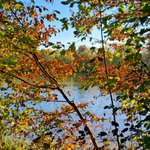




Photo of a sunnier day at the pond near my home 😊 Happy #thicktrunktuesday my dear friends 🌳🍁🤗 #trees #bourgogne #AutumnVibes #Tuesday #TreeClub @StormHour

A rainy day to start the new week 😊☔. I wish you a successful and pleasant #Monday my friends 🌿🧡🍁🤗 #naturelovers #AutumnVibes #Weather @StormHour

Between the trees ...🌳🍁. Have a nice start in #November and a relaxing, colorful #Sunday my friends 🤗💛🐦🎶🧡🌿🌞 #trees #AutumnVibes #SundayVibes @StormHour

As far as the eye can reach... Friday morning walk 😊🏞️🦢🌞#FridayVibes #October30th #naturelovers #CanaldeBourgogne @StormHour


🌼🐿️ℳ𝒾𝒸𝒽ℯ𝓁𝓁ℯ 𝒩𝒶𝓉𝓊𝓇ℯ & 𝒯𝒽ℴ𝓊ℊ𝒽𝓉𝓈 ✒️ retweeted

When we engage in an #internalmonologue, we generally try to do so discreetly and silently. But what happens if we lose control over our lips and end up #speaking out loud #toourselves? Does this have an #impact on our #brain, and if so, what kind? A #research team has published findings in the journal Brain Sciences indicating that talking to oneself has a positive effect on the #regulation of #emotions.
H.-J. Jo et al. (2024) investigated how the brain processes emotional sentences presented to participants, either in their #ownvoice (previously recorded and #synthesized) or in the voices of others. The study also evaluated whether the specific #method of #emotionalregulation, #selfaffirmation versus #cognitivedefusion, makes a difference. Self-affirmation aims to bolster positive aspects, such as one’s goals, strengths, and self-worth. Cognitive defusion, by contrast, serves to create #psychologicaldistance from a thought, thereby reducing its emotional power.
The results indicate that the brain distinguishes between one’s own voice and the voices of others, suggesting that using one’s own voice during self-talk can facilitate emotional regulation. Furthermore, the brain differentiates between the two aforementioned strategies when they are expressed through one’s own voice. Post-hoc tests revealed that, compared to self-affirmation, cognitive defusion triggered greater activity in specific regions of the right #temporallobe: the superior temporal sulcus (#STS), the middle temporal lobe, and the #parahippocampal #cortex.
These regions are involved in language and auditory processing, as well as in #autobiographicalmemory.
The study demonstrates that engaging in self-talk using one’s own voice shifts our auditory and memory-related neural networks into a state of heightened activity. Moreover, it shows that the brain is particularly sensitive to the recognizable quality of one’s own voice when we employ cognitive defusion to distance ourselves from difficult emotions.
© #StefanFWirth, October 2026, Berlin
Please support my science communication and artistic illustration efforts: ko-fi.com/sfwirth
Reference:
H.-J. Jo et al. (2024):
doi.org/10.3390/brainsci1407…
#Illustrations:
1) – 3) An actor works on gaining better control over various emotional strategies in his own voice; © Stefan F. Wirth, AI-assisted #artisticillustration based on my hand-drawn sketches, manually edited, October 2026, Berlin


For my birthday yesterday, my daughter gave me, among other things, flowers to plant in the garden, which I did in the afternoon despite the bad weather. Then she prepared a good and well-deserved hot chocolate for us ☺️🥰 #mybirthday #happiness #LifeisBeautiful


🌼🐿️ℳ𝒾𝒸𝒽ℯ𝓁𝓁ℯ 𝒩𝒶𝓉𝓊𝓇ℯ & 𝒯𝒽ℴ𝓊ℊ𝒽𝓉𝓈 ✒️ retweeted
A new #study is the first comprehensive #comparativeinvestigation into the energy efficiency of #birdflight.
It is common knowledge that different bird species exhibit varying degrees of grace in flight; however, the actual energy efficiency of avian flight had not previously been studied empirically in the wild. One might for example assume that the Andean #condor #Vultur #gryphus and the #trumpeter #swan #Cygnus #buccinator (like the mute swan Cygnus #olor) would require roughly the same amount of #energy to fly, given their similar #size and #weight.
Yet, the study by M. Scacco et al. (2026) reveals that this is not the case. Data analysis from observations of 50 bird and bat species in the wild shows that e.g. the Andean condor is significantly more #energyefficient in flight than the trumpeter swan than previously expected. This is because the condor can exploit #updrafts, spending the vast majority of its time #gliding. The trumpeter swan, by contrast, is unable to utilize such updrafts and must instead rely on #speed and #wingflapping.
While the study focuses on #atmosphericdynamics and empirical #energyexpenditure, I summarize the basic fundamental reasons why a swan cannot utilize thermal updrafts like a condor based on general #biomechanics and #aerodynamics in the following paragraph.
The explanation for these differences, and the reason why the swan cannot utilize updrafts, lies in the #wingloading variation. Wing loading refers to the ratio of a bird's body weight to the surface area of its wings (weight divided by wing area). Because the swan has undergone significant morphological #adaptations for life as a #waterfowl, it possesses a barrel-shaped body, heavy bones, and massive pectoral muscles. Relative to its weight of approximately 12 kilograms, its wings are quite short and narrow. Consequently, the bird experiences high wing loading during flight, which prevents it from utilizing updrafts to transition into a gliding phase.
If a swan stops flapping its wings, it falls to the ground. Its high wing loading requires it to maintain a consistently high speed and powerful wing beats. The Andean condor, by contrast, possesses enormous, broad wings (with a span of up to three meters) and features extensions at the wingtips, resembling "fingertips", that help minimize air turbulence. The difference in flight behavior can be illustrated by comparing a swan to a passenger aircraft, such as an Airbus A320, and a condor to a glider-airplane. Just as an Airbus requires a long runway to generate sufficient airflow for lift, a swan must paddle across the surface of the water for a considerable distance, flapping its wings vigorously, before it can finally take flight.
Generally, according to the authors, the flight modi in birds can be divided into gliders and
flapping fliers.
For their research, the scientists analyzed a wealth of GPS and radar data, leading them to conclude that natural airflows serve as a vital energy subsidy for many species. Traditional laboratory settings, such as wind tunnels or treadmills, fail to capture these dynamic environmental interactions, which is why the authors recognize bird flight in the wild the most energy-efficient locomotion style even before #swimming.
In this context, the authors also note that understanding the relationship between bird flight and atmospheric dynamics is particularly significant in light of the changes brought about by #globalwarming. For when the composition the Earth's atmosphere changes, this also affects avian #migratoryroutes, which can contribute to alterations in #ecosystems.
© #StefanFWirth, October 2026, Berlin
Please support my science communication and photography: ko-fi.com/sfwirth
reference
M. Scacco et al. (2026):
doi.org/10.1126/science.aee6…
#photos:
© Stefan F. Wirth, #artistic #blackandwhite #photography of mute swans during their feather cleaning, important to be ready to fly, at #Tegelersee, #Berlin


Happy #WednesdayRose my friends from my garden with a cold morning 6⁰C but now 22⁰🤗🌹🍃🩷 #RoseWednesday #Roses #Naturescenery #MyGarden #wednesday #flowerlovers #Weather @StormHour

No need to go very far from home sometimes to meet a solitary tree in the middle of the fields 😊🌳🍃🍁🚶♀️🌿. Happy #thicktrunktuesday my friends! 🤗💚 #TreeClub #Trees #Tuesday @StormHour

On my #Sunday walk 🚶♀️. Happy #SundayYellow my friends 💛🌿🌻🤗🌞

What a clever idea to climb on the garden table to get my attention 😅 #Caturday #Saturday #catlover #Weekendvibes


It is #Monday , my daughter was born on a Monday too, and today, for her Birthday, I went to pick a rose in the garden that looks like her. It makes her happy. She makes me happy every day! 🤗💐🌹🩷🪄 #HappyBirthday #OCTOBER_5

When you look up there 🌳⛪💙. Happy #Saturday to you my dear friends 🤗🌞 ( no IA no filter) #October #weather #Bourgogne @StormHour


