

Senior Adviser, Prosperity Vertical at the @WorldBank @WBG_Poverty https://xitter.cf/t.co/Mh3SJcN6kp
Washington D.C.
Joined September 2018
- Tweets4.1K
- Following858
- Followers17.6K
- Likes6.8K




More and better jobs are essential to turning poverty reduction into lasting prosperity in Latin America and the Caribbean.
The region has made important progress. Poverty reached historic lows in 2025, and the middle class has continued to expand. Yet Latin America and the Caribbean remains a middle-income region without a sufficiently broad middle class.
The evidence points to both progress and a persistent challenge:
* Labor markets have been the main driver of poverty reduction, with their contribution growing since 2022.
* 27 million jobs were created between 2016 and 2024 in the nine countries analyzed. But job quality remains a structural challenge.
* Wages have grown by only around 1% annually since 2016, while productivity has stagnated.
These findings reinforce a central message: creating more jobs is necessary, but creating better jobs is what can make poverty reduction sustainable.
This was at the heart of my presentation at the @PNUDLAC - @AgendaCAF Regional Conference on Ending Poverty in Panama.
I had the pleasure of exchanging perspectives with Andrea Repetto, Director of the School of Government at @ucatolica de Chile, in a discussion moderated by @almudenaf, @UNDP Chief Economist for Latin America and the Caribbean.
Looking ahead, the challenge is to move from pro-poor growth toward pro-growth equity: investing in the productive capacity of lower-income households so they can participate in, contribute to, and benefit from economic growth.
#Labor is the most widely distributed productive asset. Strengthening workers' skills and capabilities, raising productivity, and expanding access to better employment opportunities are therefore central to building a more prosperous and inclusive region.
The goal is not simply to lift people out of #poverty, but to create the conditions that allow them to stay out of poverty and build lasting economic security.


Knowing how many households face each deprivation is not the same as knowing which households face several at once. That distinction matters for poverty policy.
A dashboard may show low incomes, limited schooling, and inadequate access to electricity. But when these indicators come from separate surveys, we may be unable to see whether they describe the same families—and how these disadvantages reinforce one another.
In this @WorldBankGroup blog, Ben Brunckhorst, Sotaire Kwizera, Minh Cong Nguyen, and Nishant Yonzan examine the policy costs of fragmented poverty data. When overlaps remain invisible, governments risk designing interventions in isolation, duplicating delivery costs, and missing opportunities to coordinate services.
Consider the implications for education: where lack of electricity constrains children’s ability to study, improving energy access could be an important part of the response. Education indicators alone may not reveal that constraint.
The policy value of multidimensional poverty measurement lies in making these connections visible. Better understanding how deprivations intersect can help governments identify complementary interventions and use scarce public resources more effectively: blogs.worldbank.org/en/opend…

What does it take for work to provide a pathway out of poverty when one parent carries the responsibility for both earning and caring?
In Latin America and the Caribbean, more than four in five mothers who are the only adult in their household participate in the labor force. Yet 45.5% of these households live in poverty, compared with an overall regional poverty rate of 26.8%.
A @WorldBankGroup Policy Research Working Paper by Laura Cuesta, Jacobus de Hoop, and @hugonopo highlights this gap between participation and economic security. Their findings point to the constraints mothers face in accessing better-paid, formal employment while raising children alone.
The policy implications extend across childcare, labor markets, and social protection. Reliable childcare can expand employment opportunities. Better-targeted public support can strengthen household security. Effective enforcement of child support obligations can help distribute the costs of raising children more fairly.
These policies need to work together. For poverty reduction, the question is how to ensure that employment translates into adequate incomes and greater security for mothers and their children.
The authors discuss their findings and policy implications in this World Bank blog:
blogs.worldbank.org/en/latin…

Luis Felipe López-Calva retweeted

Today we launched our Latin America and the Caribbean Economic Update.
The region has the potential to achieve stronger growth. Countries that have maintained sound macroeconomic frameworks, strengthened institutions, and advanced reforms are demonstrating what is possible.
Building on the region’s considerable talent and resources will require sustained policies and investment that raise productivity, create better jobs, and increase incomes.
The @WorldBankGroup is committed to supporting countries across the region in advancing this agenda.
worldbank.org/en/region/lac/…

Does credit reduce #poverty? The evidence suggests that the answer is not a simple yes or no.
A synthesis of more than 400 studies points to a more nuanced conclusion: the impact of credit depends critically on who borrows, what the financing is used for, and under what conditions it is provided.
#Credit appears to work better when it helps households expand an existing productive activity, invest in income-generating assets, and when repayment terms are aligned with how borrowers actually earn. By contrast, borrowing used mainly to close consumption gaps—or provided without complementary support—may do little to improve welfare and can sometimes increase vulnerability.
This has an important implication for how we think about financial inclusion and poverty reduction. Expanding access to credit is not enough. The objective should be to ensure that financial services help households build productive assets, manage risk, and strengthen their capacity to generate income over time.
And credit rarely works in isolation. Savings, insurance, digital payments, appropriate product design, and complementary support all shape whether borrowing becomes a pathway to greater economic security.
A valuable contribution from Sophie Sirtaine and Karina Broens Nielsen in this new @WorldBankGroup blog, moving the debate beyond whether credit “works” toward the more useful question of when, how, and for whom it works.
Read more: blogs.worldbank.org/en/voice…

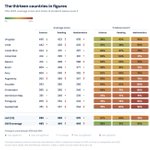
The latest PISA 2025 results send a clear warning for Latin America: the region is not only facing a learning crisis, but a challenge with long-term consequences for productivity, mobility, and economic opportunity.
As Jaime Saavedra, Andreas Blom, and Verónica Díaz highlight in this new @WorldBankGroup blog, more than half of 15-year-olds in the region do not reach the minimum expected level in reading, while three out of four fall below the minimum in mathematics. On average, students in Latin America remain several years of learning behind their OECD peers.
Why does this matter for poverty and inequality? Because secondary school is a critical bridge between foundational learning and the labor market. For many young people, it is the last stage of formal education before entering work. Weak learning outcomes therefore risk becoming weaker skills, lower productivity, and more limited opportunities later in life.
The authors point to an agenda that is both urgent and practical: identify learning gaps early, prevent dropout before it happens, focus curricula on essential skills, strengthen teachers and school leadership, and build stronger connections between secondary education and the world of work.
Improving access to education was a major achievement for the region. The next frontier is ensuring that time spent in school translates into learning—and that learning translates into opportunity.
Read the blog: blogs.worldbank.org/en/latin…

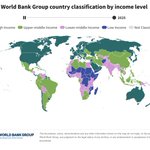
Moving up the income ladder is not always the same story.
The @WorldBankGroup’s 2026–2027 Country Income Classifications show six economies moving into a higher income group. But the reasons behind those shifts differ substantially: sustained export-led growth in Viet Nam, broad-based expansion in the Philippines, economic recovery in Sri Lanka, statistical revisions in Jordan, and demographic revisions in Togo, among others.
That distinction matters. Country income classifications are a useful global benchmark, but changes in classification need to be interpreted carefully: they can reflect real improvements in economic performance, revisions to the underlying data, demographic changes, or a combination of these factors. And, as the authors emphasize, no single income measure can capture the full complexity of development.
A very useful World Bank Data Blog by Eric Metreau, Kathryn Elizabeth Young, and Shwetha Grace Eapen looks behind the headline classifications and explains what actually drove this year’s movements.
For those working on #poverty, inequality, and development measurement, it is a good reminder that the story behind an indicator is often as important as the indicator itself.
Read the blog: “Who moves up and why? A closer look at the 2026–2027 release of the World Bank Group Country Income Classifications.”: blogs.worldbank.org/en/opend…

How can we measure multidimensional poverty when the data we need are scattered across different surveys?
A @WorldBankGroup Data Blog by Ben Brunckhorst, Minh Cong Nguyen , Nishant Yonzan, Hai-Anh H. Dang, and @ChristophLakner explores a promising approach: combining indicators from separate datasets to estimate how monetary poverty, education, and infrastructure deprivations overlap.
The challenge is significant. While individual indicators used in the World Bank’s Multidimensional Poverty Measure cover at least 85% of the global population, complete data are available to estimate the full measure for only about two-thirds of the world.
Using more than 570 surveys spanning 1989–2024, the authors show that data fusion can produce credible estimates—particularly when datasets share some overlapping indicators. The approach could help extend multidimensional poverty measurement to countries and years where complete survey data are unavailable, and potentially incorporate additional dimensions such as health and security.
Better poverty measurement depends not only on collecting more data, but also on finding rigorous ways to make better use of the data that already exist.
Read it here: blogs.worldbank.org/en/opend…

Luis Felipe López-Calva retweeted

“As wars multiply and their consequences spread, the UN’s legitimacy increasingly rests on its ability to meet its peacemaking mandate,” writes Rebeca Grynspan. In a guest essay, the candidate for secretary-general makes her case economist.com/by-invitation/…

Do we still need an extreme poverty line when global poverty has fallen so dramatically?
A new @WorldBankGroup Data blog by Daniel Gerszon Mahler, @ChristophLakner, and Umar Serajuddin makes the case that we do.
Extreme poverty has declined substantially over the past decades. Yet hundreds of millions of people still live below the international poverty line—and progress among the poorest remains a critical development challenge.
The authors highlight three reasons why the extreme poverty line still matters:
→ Ending extreme poverty remains an ambitious global objective.
→ A common threshold keeps attention focused on those facing the most severe deprivation.
→ The line is anchored in how the world’s poorest countries themselves define basic needs.
Importantly, this is not an argument against higher poverty lines, relative measures, or multidimensional approaches. Different measures tell us different things about poverty, vulnerability, and economic security. Keeping an extreme poverty line ensures that those living at the very bottom of the distribution remain visible.
An important contribution to the ongoing debate on how we measure poverty—and how those measurements shape our understanding of progress: blogs.worldbank.org/en/opend…

How evenly does the State reach people across its territory?
This is the question at the heart of our @WorldBankGroup Policy Research Working Paper "Territorial Inequalities: A Note on State Discontinuity", co-authored with Lidia Ceriani and Samuel D. Restrepo-Oyola.
Building on Guillermo O’Donnell’s concept of “state discontinuity,” we ask how we can measure something that citizens experience very concretely: the State does not always have the same presence or responsiveness across the territory.
A country can have strong institutions and relatively good national indicators—and still have places where the State barely reaches.
In our paper, we propose a way to measure this discontinuity as the unequal distribution of state density across regions. Using data from 32 developing countries and 545 subnational regions, we examine state presence through basic services, education, health, and security.
Why does this matter?
Because when the State reaches some territories effectively but neglects others, it creates pockets of exclusion and shapes people’s opportunities to participate fully in economic, social, and political life.
Understanding inequality, therefore, requires looking not only at who is being left behind, but also at where the State is leaving people behind.
Our contribution is to make this territorial dimension of state effectiveness measurable and comparable: documents.worldbank.org/en/p…

Luis Felipe López-Calva retweeted

Aquí un podcast con Santiago Levy sobre productividad y el mercado laboral.
bbva.com/es/mx/economia-y-fi…
Apoyamos esa visión, ADEMÁS DE
instrumentos como el salario mínimo y la negociación colectiva para mitigar el poder de monopsonio.
Explicamos todo aquí publications.iadb.org/es/hac…


Why Rural Households Are Trapped
Geography structures economic opportunity. Across our Chile, Mexico and Peru analysis, 33.8% of poor households occupy rural areas compared to 13.5% of the middle class. In Mexico, this disparity becomes more pronounced: 76.8% of the poor are rural versus 31.5% of the middle class. Rural poverty is not incidental. It is structurally determined.
Rural economies in Latin America confront documented constraints: limited economic diversification, weak infrastructure, restricted access to education and services, and structural dependence on agriculture facing climate risk. These constraints are not individual failings. They reflect systematic absence of economic alternatives. Rural workers cannot easily transition occupations. Rural children encounter barriers to tertiary education. Off-farm income opportunities remain scarce.
Rural development investment has remained systematically underfunded. Investment concentrates in urban agglomerations where economic clustering produces multiplier effects. Rural areas remain dependent on agriculture and subsistence production.
Breaking rural poverty traps requires concurrent investment across multiple dimensions: infrastructure development, educational expansion, agricultural value chain integration, and deliberate economic diversification.
Rural households require structural economic transformation, not merely income supplementation. The middle class did not emerge in rural areas because the foundational conditions for its formation were systematically absent. Rural policy must address this structural reality.
For the full methodology and evidence: link.springer.com/article/10…
🤖 Made with AI

Investing in Youth: The Economics of Education Over Labor
The choice between sending a child to school or to work is not merely an individual family decision. It is a fundamental economic and social crossroads that determines the trajectory of societies.
With Koji Miyamoto, our research demonstrates a stark pattern across the globe: in poorer countries, high incidence of child labor coexists with limited educational investment. In wealthier countries, children attend school while elderly parents receive monetary support rather than time-intensive care. This is no coincidence.
The mechanism is economic. Poor parents face an immediate tradeoff: child labor generates income today, whereas education is an investment in future returns. Yet when we examine intergenerational dynamics through social norms and implicit contracts, a different picture emerges. Parents who invest in their children's schooling create the economic foundation for their own security in old age—because educated children earn substantially more and can provide better material support to their parents.
This is education as an intergenerational contract. Not charity. Not altruism. But rational economic investment that benefits both generations.
The evidence is clear: there is no developed country with high child labor. Economic development and youth education are inseparable. Every child kept in school rather than sent to work is a foundation being laid—for that individual's future, for their family's security, and for their nation's prosperity.
This International Youth Day, the question is fundamental: will we invest in youth education, or will we extract their labor today at the cost of everyone's tomorrow?
The economics make the answer obvious. The only question is whether our policies and investments follow.
Full research: "Filial Obligations and Child Labor" - López-Calva & Miyamoto, Review of Development Economics: onlinelibrary.wiley.com/doi/…

What the 2008 Crisis Revealed About Broken Metrics
The 2008-2009 financial crisis provides a natural experiment for evaluating measurement frameworks. Using traditional middle class definitions (income thresholds of $2-13/day), an empirically impossible outcome occurred: the middle class expanded in Mexico and Peru while poverty increased. During a severe economic contraction, conventional metrics indicated middle class growth. This outcome contradicts fundamental economic principles.
The statistical mechanism is clear: households fell into poverty while crossing arbitrary income thresholds. This threshold crossing created the statistical appearance of middle class growth despite actual economic deterioration. The measurement framework proved incapable of capturing actual household vulnerability dynamics.
Applying our vulnerability-based framework—measuring the income level associated with a 10% probability of poverty—produces a different picture entirely. The middle class contracted during the crisis, then resumed growth during recovery. This pattern aligns with actual economic dynamics. The framework performs as intended: it distinguishes legitimate growth from statistical artifacts.
This lesson extends beyond measurement precision. Policy formulation depends on accurate economic diagnosis. Flawed metrics produce misdiagnosis. They direct resources away from vulnerable populations precisely when they are most vulnerable. With @eduardoortizj, we emphasize that measurement frameworks are not neutral. They structure how governments perceive economic reality and allocate policy resources.
Measuring the middle class correctly is a prerequisite for sound policy.
For the full methodology and evidence: link.springer.com/article/10…

Why Agricultural Work Traps Households in Vulnerability
Occupational structure emerges as a more reliable predictor of vulnerability than income level alone. In Chile, 40.3% of poor households are headed by agricultural workers, compared to 12.9% of the middle class. This pattern holds consistently across Mexico and Peru. The mechanism is not occupational prejudice but structural economic risk.
#Agriculture in Latin America operates under well-documented constraints: climate dependency, restricted credit access, price volatility in international markets, and seasonal income fluctuation. A farmer earning $10/day daily carries substantially greater economic uncertainty than a skilled worker in a formalized occupation earning equivalent income. The income measurement is identical; the underlying #vulnerability is not.
Households escaped agricultural vulnerability in contexts combining three factors: access to value-added agricultural production chains, complementary non-agricultural household income sources, and geographic proximity to urban labor markets.
Conversely, regions where agriculture remains the sole viable occupation—particularly rural Peru and parts of Mexico—show households remaining trapped in the $4-10/day vulnerability zone despite improvements in agricultural productivity.
With @eduardoortizj, our evidence indicates that productivity-focused agricultural investment requires complementary policy: systematic economic diversification and development of off-farm employment. The middle class did not emerge from agricultural improvement alone. It emerged from households whose economic options expanded beyond agriculture.
For the full methodology and evidence: link.springer.com/article/10…

#Education as Economic Insurance
The educational gap separating the middle class from the vulnerable is substantial. In Chile, only 1.3% of poor households have tertiary education, compared to 11.6% of the middle class. This disparity is not merely about earning potential. It reflects a deeper mechanism: education determines access to occupations with fundamentally different risk profiles.
A farmer earning $10/day operates within structural constraints: climate volatility, market exposure, limited input control. A clerical worker earning the same amount faces a different economic reality—one characterized by contractual stability and predictable income flows. The income may be identical; the economic security is not.
Our five-year household tracking across Chile, Mexico, and Peru demonstrates that households successfully transitioning from vulnerability to middle class security almost invariably possessed educational investment—either directly or through their offspring. Education is not merely individual mobility; it constitutes household-level economic resilience.
With @eduardoortizj, we demonstrate that targeted educational investment in vulnerable households ($4-10/day) operates as economic stabilization policy. This is not social protection narrowly construed. It represents capital formation precisely where returns on investment prove highest. The policy implications are direct.
For the full methodology and evidence: link.springer.com/article/10…

Gracias @fedesturze desde @BancoMundial. Alrededor de 300 economistas del área de “Prosperidad”en nuestra institución participaron, en Washington y en muchas partes del mundo, en una fantástica presentación del programa de desregulación económica que se está llevando a cabo por el gobierno del Presidente @JMilei
La charla generó aprendizaje, curiosidad técnica y motivación para nuestros equipos enfocados en generar condiciones para generar más y mejores empleos para la reducción sostenida de la pobreza @WorldBankGroup @Paschald

Viaje relámpago a EEUU. Arribando hoy para muy entretenida reunión con @KGeorgieva para planificar próximos pasos de su Advisory Council sobre crecimiento (también se habló, y mucho, de futbol y de las reformas del presidente @JMilei). También charla en el Banco Mundial a sus economistas sobre desregulación. Luego reunión en la embajada presentando las ideas de IA del presidente @JMilei. Allí me encontré con @pabloquirno con quien volvemos ahora a Argentina. VLLC!


This week, we are participating in the Prosperity Summer Learning Week at the @WorldBankGroup.
Over the week, colleagues from across the Prosperity Vice Presidency will come together to learn from one another, exchange operational experience, and discuss some of the most pressing issues shaping #development today.
Our conversations will span topics ranging from how artificial intelligence is transforming development practice to how deregulation can help create an enabling environment for private sector job creation, alongside many other practical sessions on financial inclusion, capital markets, private sector development, governance and institutions, taxation, debt management, infrastructure finance, and poverty measurement and analysis.
Continuous learning is essential for any institution whose mission is to generate and apply knowledge for development. I look forward to the rich discussions ahead and to strengthening our collective capacity to better support our client countries in their efforts to reduce poverty and expand prosperity.


