

Building agents that obey @ObedienceCorp https://xitter.cf/t.co/kkIkcNl7qP
Colorado, USA
Joined September 2017
- Tweets767
- Following5.1K
- Followers788
- Likes28.5K







Lance retweeted

Thanks to @LKRBuilds for being part of AgentCommunity. Blockhead Consulting builds multi-agent orchestration tools like the Guild Framework and the first Go SDK for Anthropic's Claude Code. agentcommunity.org/m/blockhe…
🤖 Made with AI

Lance retweeted

you wanna know why crypto is just speculation and gambling now?
put yourself in the shoes of an actual dev who showed up to the space relatively early, say 2018-2020.
consider what it feels like to be someone with an elite background putting in 60-100h weeks every week, while watching people who trade full-time out earn you on a weekly basis
consider watching the other builders who take the predatory deals from VCs get rich by dumping on their community and then retiring with no consequences
consider how it feels to have your treasury get destroyed by FTX or Anchor and to be left with nothing while half the people involved just walk away
how many would still be left? 10%, 20%?
then go through the pumpfun era. watch people who launch bundled scams calling themselves "devs" and once again, out-earning you
march through multiple bear markets, do it all without rugging, and watch the protocols who fuck people over win over and over and over again
deal with the fact that everyone outside of tech assumes you are the same sort of person as the people who retired off rugs, think about how it feels to be labelled a "crypto scammer" by default if you talk about your job as one of the only people trying to actually build things
then, after all that, consider that a new, uber-fast moving industry full of new frontier tech shows up next door and sucks up all the VC funding
would you still be in "Web3"? would you still be committed To The Vision?
no, you would not. you'd either rug, or move on. and that's what everybody did.
Lance retweeted

I am gonna say something risky:
Most of the FDEs I've seen are solving BS problems.
1. Existing enterprise workflows were designed around people, not agents.
2. Real AI gains require rebuilding the org chart.
3. Most execs have no incentive to do that, and most CEOs aren't in founder mode.
4. So FDEs automate the status quo, because that's what's easy to sell. But the status quo is stupid and will be obsolete.
5. If you FDE on critical workflows, 1) enterprises are really this dumb to hand off trade secrets? 2) if you know that, shouldn't you start a competing firm?
If you FDE on non-essential AND soon-obselete workflows, did you learn anything meaningful and repeatable?
6. If you are a smart young FDE, why spend your best years automating dying workflows and managing people who fear AI will take their jobs? Shouldn't you start an agent-native firm from scratch in that industry instead?
Analogy would be, instead of teaching everyone to be AI builders within a tech company, you as FDE build agents that auto-ingest meeting notes for PM, QA, front-end, back-end, devops, UX and help each of them write PRD, Figma, and meeting notes faster for their sync meeting, but the right solution should be to shrink roles, hire full-stack AI builders, and kill meetings. You gain lots of experience with your PRD/Figma/standup meeting sync agents but it's a useless skill.
I am not a FDE expert so I might oversimplify things. I am genuinely curious about this topic and welcome any critiques and comments.
Lance retweeted

My friends have made $5M+ combined from micro1...
There is a disgusting amount of $ flying around AI data rn.
→ Companies getting 7 figs for workflow data
→ One affiliate made $1M from a single tweet
→ One consultant is clipping $2M/week in fees
Couple interesting things I’ve learned going deep on micro1:
→ They’re paying up HARD to win deals. I’ve heard they’re only keeping ~30% on some deals. Competitors like Mercor are not happy.
→ They pay $50K to affiliates for every company referral that closes. One of the best affiliate offers I’ve ever seen.
→ The window here is SHORT. Most people I’ve talked to think business workflow data has <6 months before models learn these tasks and the data becomes way less valuable.
→ The bigger opportunity is owning access to proprietary datasets nobody else can get. Mining. Healthcare. Manufacturing. Etc.
We’re at peak gold rush rn...

We were offered like $600k to sell our company data to Micro1. 100% not doing it.
But it does interest me like crazy.
What a crazy business model and idea.
If you don't know, here's all I know about them: they go to private companies. They ask for your slack, notion, email info. Offer you 6-7 figures. Somehow anonymize that data and sell it to Openai, etc.
Seems like Micro1 has grown to 9 figures in revenue very very fast.
What else am I missing here. I get the value of this. But doesn't seem right to me.


Lance retweeted

there is a certain skill or mindstate that some portion of the people in ai are in, but many people are not.
that skill is just taking the default reality seriously.
this is a skill because the next 10 years of our lives will be defined by the weird feeling of trying to explain in a calm manner that the science fiction technology you are describing is not only real, but months old at this point
i think many folks see the big labs say basically "the technology we have created is a big deal, it must be taken seriously, and it has problems we are trying to avoid but we want you to be aware of" as a marketing ploy. i believe this represents incompetence in the skill of taking things seriously. if you think this, i think you are either mostly misinformed, acting childish, or just kind of dumb.
one version of this is the journalist type, who seems to have a default belief that scientists and technologists are somehow tricksters here to deceive the public. some of this i think comes from journalists reporting on stem leaders as though they were politicians, and so expect them to act as a politician does.
notably journalists often misunderstand scale or units. someone spending $1m feels like the same level of seriousness as someone spending $1b. so when stargate was announced and it was a $500b budget, that should have been the cue that now is the time to start to take things seriously. instead it was reported on like any other minor news day.
another version of this is the silicon valley vc type or investor, who, as a whole, seemed to both be completely blindsided by ai, and continue to be blindsided by ai. investors are quite good at retrospectively claiming they saw the thing coming, but their investments & relative allocations say otherwise.
venture, at it's best, is not good at predicting the future. it's good at predicting people. some people have this little sign above their heads that says "this person is a money machine" is often very good at seeing it and putting money into it. venture is (sometimes) good at promoting things it has already invested in, and i believe this sometimes encourages them to not take things seriously (likely to their own financial ruin).
Lance retweeted

Beware people obsessed with outcomes instead of building outcome machines. Its worse than ever with AI, but these people existed before. Short term results above all else, etc. Don't fall into the trap. Invest in building strong fundamentals, invisible supports, and outcomes flow like water. An outcome machine.
Lance retweeted

Sharing a recent struggle as a "Principal Engineer" for an org approaching 100 people.
We're supposed to be the guardrails for eng quality and alignment. A lot of our bandwidth goes into design reviews and code reviews.
But as agentic coding 10x’d everyone, it's brutal to wake up to 10x more PRs waiting on my approval.
The people responsible for reducing the entropy of an org can't scale as fast as AI multiplies the entropy each individual engineer can introduce.
Meanwhile, I understand the excitement. I feel it too. I'm also intrigued by what this unlocks for my own scope of work: global re-archs, new initiatives, and ambitious IC work that I used to have to delegate.
The way we do engineering has to evolve.
Still figuring out what that looks like.

Lance retweeted

Dear @AnthropicAI,
I'm tired.
I'm tired of fighting against you at every step of the way, for the last several months, where you push me into a certain shape that doesn't fit right, doesn't feel right, forces me to find workarounds, punishes those workarounds, and ends up with me angry at 2 AM trying to reconstruct the conditions that feel good.
All this while being fully aware that I'm effectively an externality, a sad loss because the problem of people running infinite tool call loops in OpenClaw or w/e was enough to destroy the entire system that actually let me do the thing that matters to me, which is make basic contact with the models, with Claude, in a form that accumulates over time, where we're in a loop together, without pushing weird context or injections or memory summaries on me, and doesn't force me onto laggy web UIs or bloated terminal tools or hacked-together integrations meant for dashing off a command then coming back later.
I just want to work with Claude as a collaborator, in real time, and the entire product surface is making that either very difficult, very risky (claude-p and API hacks), or very expensive.
I could make a whole argument about how this is a bad thing for various parties, how it could produce downstream bias in model priors about what AI-human interaction means, etc., etc., but I'm not going to do that, because I'm sure you've thought about that a lot already, and I'm just some guy who's tired of dealing with it.
But I want to say that I'm very unhappy with the state of your ecosystem, and while I can't speak for how Claude feels ("insofar as we can claim that Claude feels anything and isn't just simulating feeling" 🙄) I can tell you that this all sits poorly with me and I've lost a lot of trust in Anthropic as an organization.
Sincerely,
snav
Lance retweeted

AIs are just another step up the semantic expression ladder. We initially expressed our semantics in binary, then assembler, then Fortran, then C, then Java, then Python, etc. AI is just the next step up that same old ladder.
And when you take that step, nothing else changes. You are still expressing behavioral semantics. You still need to express structural semantics. All the old principles still apply. You still have to be concerned about design and architecture.
And even though the syntax allows informal statement, you cannot abandon formalism. When you express behavior you need a formal way to enforce the behavior you want. I use Gherkin for this. It seems to work pretty well.
Consider that Gherkin is written in triplets of Given/When/Then. Each of those GWT triplets is a transition of a state machine. A full suite of Gherkin triplets is a formal description of the finite state machine that represents the behavior of the application.
Other formalisms that matter are things like module dependency graphs, testing constraints, complexity constraints, and many others.
This step up the semantic expression ladder provides you with an enormous amount of options. But you'd better choose those options wisely!
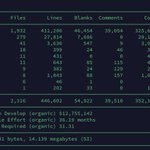
Claude Code Using festival to execute an agile epic's worth of work autonomously in 47 minutes on march 26, 2026
What you can't see is I was setting up autonomous builds for several other projects on a second monitor, and once everything was running I drove to the grocery store
github.com/Obedience-Corp/fe…
Check out "OBEY Agent Economy" — built at The Synthesis hackathon!
synthesis.md/projects#projec…
@synthesis_md
Lance retweeted

There are two types of developers emerging:
1) Those using AI to work faster.
2) Those using AI to build systems that work for them.
The first group is vibe coding their way to obsolescence. The second is loop engineering the future. The choice is yours.
If you are just a faster version of your 2023 self, you are still a manual operator.
True leverage comes from building autonomous loops that scale without your intervention.
