

Observe without judgment and choose with discretion - no one is inventing the wheel - we modify it and we talk about in different ways
USA
Joined March 2009
- Tweets247K
- Following3.3K
- Followers1.9K
- Likes196K






Pinned Tweet

.
“In the meantime, let me be that I am,
and seek not to alter me.”
― Shakespeare, Much Ado About Nothing, Act 1, Scene 3
.
#ShakespeareSunday
Hannes Caspar

Linda L Starlight retweeted
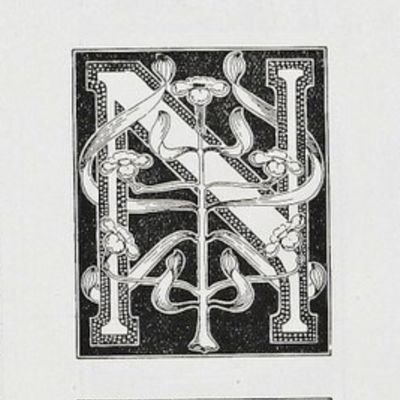
Art Nouveau decorative wall plate from 1895 by Jan-Willem Mijnlieff at the Holland Tile and Faience Factory in Utrecht, the Netherlands.


Linda L Starlight retweeted
In honor of National Pumpkin Day, Bibi, Fiona, Tucker and Fritz enjoyed one of their favorite treats! 🎃
Linda L Starlight retweeted

Amazing wood carving by Michał Kulig!
🪵🎨 Credit: pracownia_sztuki_wlasnej
#WoodCarving #Art #Sculpture


Linda L Starlight retweeted

There's only five days left until Halloween if you still haven't washed your bat yet.


Linda L Starlight retweeted

An animal with no skeleton, no spine and no teacher just engineered a fortress out of garbage it was already carrying. Then it vanished from the food chain in plain sight.
Do not scroll past this one. Watch it with sound off, then watch it again, and this time ignore the octopus. Watch what the fish does. That is where the real story is hiding.
I have spent more than ten years studying why some things explode on this platform and others die at 40 views. The pattern is almost always the same: a clip that makes the brain say "wait, that can't be right." This is the purest version of that I have ever seen. No narration. No music. No trick. A creature that has never read a manual, never met its mother, and will be dead before its second birthday, running a defense protocol that most militaries would pay billions to replicate.
Below is everything the video will not tell you. Read it first and the clip hits ten times harder. Skip it and you will have watched a cool octopus. Read it and you will understand that you just watched a mind.
Let's go.
PART 1. NOBODY TAUGHT IT
Start with the fact that should bother you most.
The vast majority of octopus species live a life with zero parental contact. The mother lays her eggs, then guards them for weeks or months without eating. She fans them with water, cleans them, and fights off anything that comes close. When the eggs hatch, she dies. In many species this is not tragic accident. It is the design. Her body is programmed to shut down once the job is done.
So the baby octopus enters the ocean alone. Tiny. Soft. Edible. Surrounded by thousands of animals that would eat it in one bite, and with no elder to show it which cracks are safe, which shadows are dangerous, which shapes mean food and which shapes mean death.
Think about what that means for a second.
A wolf pup learns to hunt by watching its pack. A crow learns which humans to hate by watching other crows. A human child gets roughly eighteen years of supervised practice before anyone lets them near a car. The octopus gets nothing. Whatever it needs to survive, it either carries as instinct or invents on the spot.
And yet.
Octopuses open jars from the inside. They unscrew lids. They have learned to turn off aquarium lights by squirting water at the bulb until it shorts out. A famous octopus named Inky escaped from a New Zealand aquarium in 2016 by squeezing through a gap in his tank, crawling across the floor, and sliding down a 164-foot drainpipe into the bay. Nobody saw it happen. Staff only noticed the empty tank.
None of these behaviors were taught. Every one of them was figured out by an animal with a lifespan shorter than a smartphone contract.
That is the first thing to hold in your head before you press play: this is not a trained animal. This is not a behavior passed down through generations of mentorship. This is a lone problem solver in a hostile place, solving a problem in real time.
Everything that follows is that principle, pushed to its limit.
PART 2. THE BRAIN THAT DOES NOT LIVE IN ITS HEAD
Ask a neuroscientist where an octopus thinks and you will get an answer that sounds like a joke. Everywhere.
An octopus has roughly 500 million neurons. That is in the neighborhood of a dog. But here is the part that breaks the usual model of how brains work: about two thirds of those neurons are not in the head at all. They are in the arms.
Each arm carries its own dense cluster of nerve tissue. Each arm can taste what it touches, because the suckers are covered in chemical sensors. Each arm can decide, locally, what to do next without waiting for permission from the central brain. Cut an arm off and, for a while, it will keep reacting to touch, recoil from pain, and even grab at food. It is a semi-autonomous agent.
So when you watch an octopus work, you are not watching one brain command eight limbs the way you command your hands. You are watching something closer to a committee. A central intelligence that sets the goal, and eight specialists that figure out the details on the ground.
This is why octopuses are so fast at tasks that would paralyze a human with decision overload. Imagine trying to consciously control eight flexible limbs with no joints, no bones, and an essentially infinite number of possible positions. A human engineer who tries to model that in software hits what is called the curse of dimensionality. The number of possible states is too large to compute.
The octopus solved this by not computing it centrally. It distributed the problem. The brain says "protect me." The arms handle the geometry.
Keep that in mind when you watch what happens in this clip. The speed is the point. The coordination is the point. No part of that sequence looks like a creature thinking hard. It looks like a creature that has already decided, and a body that is simply executing.
The human equivalent would be a musician who stopped thinking about individual notes years ago. What you are seeing is not hesitation. It is fluency.
And fluency in a defensive maneuver, in an animal with no parents, is a very strange thing to see.
PART 3. THE SKIN THAT SEES
Here is a fact that sounds fake and is not.
Octopus skin contains light-sensitive proteins, the same family of molecules that your eyes use to detect light. Researchers have shown that the skin of at least one octopus species reacts to light even when the eyes and brain are not involved. The animal wears a sensor across its entire body.
Now add this. Most octopuses appear to be colorblind. Their eyes carry a single type of photoreceptor, which in theory means they cannot tell red from green. And yet they match the color of coral, rock, sand and algae with a precision that makes professional camouflage designers look like amateurs.
How does a colorblind animal match colors it cannot see?
Nobody fully knows. One idea is that the skin itself senses the surroundings and adjusts. Another is that the odd shape of the octopus pupil lets it exploit a lens effect that turns color differences into focus differences. Both ideas are still debated. What is not debated is the output: an animal that can change color, pattern and even surface texture in a fraction of a second. Smooth to bumpy. Flat to spiky. Visible to invisible.
Under the skin sit millions of tiny organs called chromatophores. Each one is a sac of pigment surrounded by muscles. Tighten the muscles and the sac stretches wide and the color appears. Relax and the color shrinks to a dot. Each chromatophore is controlled directly by the nervous system, so the animal paints itself at the speed of thought.
This is the standard octopus defense. Vanish into the background.
Which makes what you are about to watch strange. Because the animal in this clip is doing something that does not look like the standard playbook. It is not hiding by blending in. It is hiding by becoming something else entirely. Something the predator has been trained by evolution to ignore.
Camouflage is a trick. What you are watching is a lie told with architecture.
PART 4. THE DISCOVERY THAT BROKE A RULE
For a long time, science drew a firm line around tool use. It was supposed to be what separated the clever animals from the rest. Chimpanzees using sticks to fish termites. Crows bending wire into hooks. Dolphins carrying sponges on their snouts to protect themselves while foraging. Primates, birds, a few marine mammals. A small, elite club of big-brained vertebrates.
Invertebrates were not invited. Insects, mollusks, worms. These were considered programmed machines. Reflex and instinct, nothing more.
Then in 2009, researchers published a paper in Current Biology documenting something nobody had formally recorded before. In Indonesia, they watched veined octopuses, a species commonly called the coconut octopus, collect discarded coconut shell halves from the seafloor. They did not use them as a lair. They picked them up, carried them across open sand, and later assembled them into a hiding place when they needed one.
The scientists argued that this met the definition of tool use. The animal was not just using an object that happened to be there. It was transporting it and deploying it later for a future benefit. That is a different cognitive category. It requires the animal to understand, in some functional sense, that an object it does not need right now will be useful in a few minutes.
That is planning.
And the animal doing the planning has a brain that looks nothing like ours, evolved on a completely separate branch of life that split from ours more than half a billion years ago.
The paper made headlines for a reason. It forced a rewrite of one of the oldest assumptions in animal cognition. You did not need a backbone to invent. You did not need a cortex. You did not need a social group. You needed a nervous system under enough evolutionary pressure to solve a problem that could not be solved any other way.
Now here is where it gets uncomfortable. The same researchers noticed that carrying the shells was expensive. The octopus could not swim or jet away efficiently with its arms full. It had to walk, slowly, on the tips of its arms, hauling its protection across open ground where everything wanted to eat it.
Read that again. It deliberately slows itself down and exposes itself to danger in order to bring armor to a place where armor does not yet exist.
That is a bet. A calculated, expensive, high stakes bet on a future threat.
Most animals do not make bets like that. Most animals respond to what is in front of them. This one prepares.
PART 5. THE WALK THAT SHOULD NOT WORK
If you have ever seen the way this animal moves while hauling its gear, you already know the image I am talking about. It looks wrong. It looks like something built by an artist who had never seen an animal.
Biologists call the gait stilt walking, and it is not a gimmick. It is a solution to a real engineering problem.
A soft body has no rigid structure to push against. An octopus cannot sprint the way a lizard can. When it crawls, it uses its arms as flexible levers, anchoring suckers to the ground and pulling. That works fine when the arms are free.
Add a load, and the problem changes. Now the arms are doing double duty: carrying and moving. A load that big would turn a normal crawl into a drag. So instead, the animal lifts its body up on two of its arms and uses the others to hold the cargo against its underside. It walks like a person on stilts, with the cargo bundled underneath.
Notice what that tells you.
First, the animal can reconfigure which arms do which job. There is no fixed assignment. In a human, the left hand and right hand have defined roles shaped by years of practice. In an octopus, every arm is a generalist that can switch roles on demand.
Second, the animal is willing to trade speed for payload. It is not optimizing for escape. It is optimizing for survival once the escape is no longer possible.
Third, and this is the part I find most chilling, the entire system is running while an enormous number of larger animals are watching. The walk is slow. The walk is visible. The walk is a dinner bell. And the octopus does it anyway, because it has done the math, in whatever way an octopus does math, and concluded that the payoff justifies the risk.
You are looking at risk management from an animal that was never taught what risk is.
PART 6. THE ARCHITECTURE OF A TWO-SECOND FORTRESS
Let me describe what an engineer would see if you showed them the blueprint, without telling you what is in the clip.
Start with the material. Natural shells are one of the most refined defensive structures on Earth. They are built from calcium carbonate arranged in layered microscopic bricks bound by a thin organic mortar. This brick-and-mortar structure is why a shell is so resistant to cracking. A crack that starts in one layer gets blunted and redirected at the next. Materials scientists have spent decades trying to copy it for body armor and ceramics.
The octopus does not make this material. It borrows it.
Now consider the geometry. A shell with a hinge is a pre-built enclosure with an opening mechanism already included. Two halves. One pivot. Whoever holds both halves together has a sealed container. The octopus does not need to invent a door. It only needs to hold one closed from the inside.
That is the engineering insight. Do not build. Reuse. Repurpose.
Notice, too, how little time this takes. Real armor, in the human world, takes weeks of manufacturing. A castle takes years. A suit of plate took a craftsman months. The octopus's fortress is constructed from loose parts in seconds, on a flat open plain with no scaffolding, no tools other than its own body, and while a predator is actively closing in.
That is a response time most security teams would kill for.
And it is modular. If one shell breaks, grab another. If the threat is gone, drop the whole thing and walk away light. There is no sunk cost, no attachment, no maintenance. A defensive system that exists only when it is needed and costs nothing when it is not.
Engineers call this just-in-time architecture. Biologists call it behavior. I call it the most elegant piece of improvised design I have ever seen in nature.
Now take that and ask the question that actually matters.
Does it work?
PART 7. THE FISH IS NOT STUPID
Here is where most people watching get it wrong. They assume the predator is the fool in this story. They assume the fish is dumb, and the octopus gets away because its enemy cannot tell the difference.
That is not what is happening.
Predatory fish are some of the most efficient pattern recognition machines on the planet. A hunting fish does not scan the seafloor like a human reading a book. It runs a high speed filter. Does this shape move like food? Does it have the outline of prey? Is there an eye? A limb? A body plan I know how to eat?
Biologists describe this as a search image. The predator holds a template in its head of what a meal looks like, and everything that does not match the template is, to its visual system, invisible. This is why a stick insect works. It is not that the predator cannot see the stick insect. It is that the stick insect does not match the template of anything edible.
The octopus is exploiting exactly this.
It does not need to be invisible. It needs to be irrelevant. A shell on the seafloor is not food. A shell on the seafloor is not interesting. A shell on the seafloor is part of the ground. The moment the octopus converts from "eight legged soft body" into "inedible object," the predator's filter rejects it, and the fish moves on to look for something else.
Think about how remarkable that is. The octopus is not fighting the predator. It is not outrunning the predator. It is not even hiding from the predator. It is editing the predator's perception of reality by changing the category of object it belongs to.
That is not camouflage. Camouflage says "I am hard to see." This says "I am not what you are looking for."
It is the difference between hiding in a crowd and changing your uniform. One relies on not being noticed. The other relies on being noticed and dismissed.
And the entire trick depends on one thing: timing. Too early, and the predator learns the pattern. Too late, and the predator has already committed to the strike. The octopus has to cross from one category to another inside a window that is a fraction of a heartbeat wide.
Now go back and watch the fish.
Watch how long it takes to lose interest.
PART 8. THE ECONOMICS OF PARANOIA
There is an ugly math underneath all of this, and it explains why evolution built an animal that behaves like this.
An octopus lives fast and dies young. Many species live for one to two years. Some live only months. Compare that to a dog at ten or fifteen years, or a human at eighty. The octopus has to learn everything, achieve everything, and reproduce everything inside a window shorter than a school year.
That is a brutal constraint. It means the animal cannot afford to make many mistakes. A single failed escape erases a life that took months to build. And it means every unit of energy has to be spent where it pays off.
Carrying armor is expensive. It burns calories, slows the animal, and exposes it. Dropping armor is cheap. So why bother?
Because the alternative is worse.
When you live in the open, soft, and edible, with no claws, no poison and no speed advantage over the things hunting you, the expected cost of being caught without a defense is total. Not a scratch. Not a wound. Death. The only way to make that math work is to invest in protection before you need it, at a price that looks wasteful on any day when nothing attacks.
This is paranoia, optimized by natural selection.
And it is correct. That is the part that stays with you. The octopus is not being irrational by dragging a pile of hardware across the sand on a quiet afternoon. It is being exactly as rational as it needs to be. Thousands of generations of ancestors who did not carry armor are not here to argue the point.
There is a lesson buried in that, and it applies far beyond octopuses. The people and companies and systems that survive long enough to matter are almost never the ones that optimize for the average day. They are the ones that stay ready for the worst day, and pay the small, boring, invisible cost of readiness every single time.
Everyone loves the dramatic escape. Almost nobody notices the thousand quiet days of preparation that made the escape possible.
The clip you are about to watch is the escape. Remember it is also the receipt for all the preparation that came before.
PART 9. WHY ENGINEERS CANNOT STOP STARING AT THIS
There is a reason robotics labs obsess over octopuses, and it is not cute factor.
Almost every robot built in the last century is rigid. Metal frames, joints, motors, gears. That design is predictable and easy to model, but it fails in messy environments. Rigid machines break on uneven ground, get stuck in tight spaces, and cannot adapt when the shape of a task changes.
The octopus has none of those problems. It can squeeze through any opening larger than its beak, the only hard part of its body. It can wrap around an object of any shape. It can change its effective length, thickness and stiffness in real time. It operates in three dimensions without a single bone.
This has spawned an entire field called soft robotics. In 2016, a team at Harvard unveiled what they called the octobot, a small autonomous robot made entirely of soft materials, with no batteries and no electronics, powered by a chemical reaction that moves fuel through tiny channels. It was a toy compared with the real animal. But it proved something important: you can build a machine without a skeleton.
Researchers are now working on octopus-inspired grippers for handling delicate objects, surgical tools that can navigate tight anatomy without damaging tissue, and search and rescue machines that can wriggle through rubble. Others are studying the way the skin changes texture and color, hoping to build adaptive materials that could shift appearance on demand.
And all of that is chasing the hardware. Nobody has come close to copying the software.
How does a distributed nervous system coordinate eight arms and a brain without a single central controller? How does it decide, in less time than it takes to blink, which of a million possible responses is the right one? How does it learn from a single experience and generalize to a situation it has never seen?
These are the questions that keep the best researchers in the field awake. Not because they are hard to ask, but because the octopus answers them every day, in the open water, without apparent effort, and refuses to explain how.
What you are about to see is not a nature clip. It is a field demonstration of a computing architecture that humanity does not yet know how to build.
PART 10. THE QUESTION THAT SHOULD KEEP YOU UP
Now the big one.
Humans and octopuses last shared a common ancestor more than half a billion years ago. That ancestor was a tiny, simple, wormlike creature with little more than a nerve net. It had no complex brain, no eyes worth the name, and no culture.
From that same starting point, two lineages went on to build minds.
One of them gave rise to mammals, then primates, then us. We got a centralized brain, a cortex, language, tools, cities.
The other gave rise to cephalopods. They got a distributed nervous system, eyes that look uncannily like ours and evolved completely independently, skin that thinks, and a capacity for problem solving that rivals animals with far more familiar brains.
Intelligence did not happen once. It happened at least twice, by completely different routes.
Sit with that. For most of human history, we assumed that our kind of mind was the destination. That evolution was a ladder and we were at the top. The octopus is evidence that it was never a ladder. It is a bush. And on a very different branch of the bush, something else built a brain, and used it to invent armor out of seafloor debris.
The philosopher Peter Godfrey-Smith has described octopuses as the closest thing we will ever have to meeting an intelligent alien. Not a metaphor. A literal observation. A mind that arose with no shared architecture, no shared history and no shared senses, and yet recognizes problems, weighs risks, makes plans, and appears to enjoy playing.
Their genome is stranger still. The first octopus genome sequenced revealed roughly 33,000 protein coding genes, more than we have. It showed expanded gene families linked to neural development and a surprising amount of editing at the RNA level, a trick that lets the animal rewrite the instructions of its own nervous system on the fly, in response to temperature and environment.
This animal does not just run software. It patches it live.
And it does all of this without a childhood, without a culture, without a language, and without a single other octopus to learn from.
If a mind like that can exist, and invent a defense system from scrap, what else is out there that we have not recognized as thinking, because it does not look the way we expect thinking to look?
One more thing before you press play, because it changes how the ending lands.
The animal in this clip has no way of knowing whether the plan will work. There is no feedback loop in the moment. No second attempt if the first one fails. It commits fully, with its whole body, to a story the predator may or may not believe. Every defensive success you have ever read about in nature is really a record of a gamble that paid off, written by the survivors.
PART 11. HOW TO WATCH THIS
You have the context now. Here is the operating manual.
First pass: just watch. Let the strangeness of it wash over you. Do not try to analyze.
Second pass: forget the octopus. Watch the fish. Its attention. Its speed. The moment the interest drains out of its body. That is the moment the entire trick either works or fails, and it happens faster than you will believe.
Third pass: watch the timing. Count how long the whole sequence takes from first move to finished shape. Then remember what I told you about weeks to build a castle and months to forge armor.
Fourth pass: ask yourself what you would have done. Two seconds. No tools. No time to think. No one to ask. Just you, a threat approaching, and whatever you happen to be holding.
Most people, honestly, freeze.
The animal in this clip does not. It does not hesitate, does not panic, does not look around for help. It executes a plan it was never taught, using materials it carried in advance, at the exact moment the plan becomes necessary.
If that does not make you feel something, I do not know what will.
I have posted thousands of clips. Almost none of them have made me feel quietly humbled. This one did. Not because it is beautiful, although it is. Not because it is surprising, although it is. Because it is a reminder that intelligence is far more common, far more inventive and far more alien than we ever gave it credit for. And that somewhere right now, in a stretch of ocean you will probably never visit, a creature the size of your hand is solving a problem you would not have been able to solve, with a brain you would not be able to recognize, and it has never once needed our permission to be brilliant.
Press play. Then press it again.
And when it ends, tell me honestly: who was really the predator?
If this changed how you think about minds, reposts are how the idea spreads. Follow for more clips that make you question what you thought you knew.
P.S. Save this post. In a week you will remember the fish, not the octopus, and you will want to watch the whole thing again with fresh eyes. Send it to the one friend who still says animals are simple.


Linda L Starlight retweeted

Happy 81st Birthday, Jaclyn Smith! Here with her "Charlie's Angels" co-stars, Kate Jackson, 77, and Cheryl Ladd, 75, at the show's 50th Anniversary Celebration, earlier this year.

