

Psicólogas sociales en @UNED_Psicologia y @ualmeria. Investigando prejuicio y cambio social.
- Tweets380
- Following181
- Followers1.2K
- Likes410



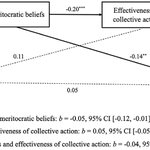
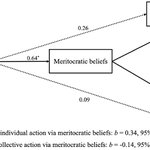


ALT Urbiola, A., López-Rodríguez, L., Torres-Vega, L. C., Poslon, X. D., Lášticová, B., Pántya, J., Szekeres, H., & Kende, A. (2025). Believing that social change is possible: Collective efficacy to promote engagement and mobilization of non-Roma as allies. The British journal of social psychology, 64(3), e12895. https://doi.org/10.1111/bjso.12895. European Commission: European Union'sRights, Equality, and Citizenship Programme2014–2020), Grant/Award Number: 963122—ENGAGE—REC-AG-2020/REC-RDIS-DISC-AG-2020; Ministry of Universities/Recualificación delsistema universitario español, Grant/AwardNumber: RR_B_2022_02; MCIN/AEI/FSE+,Grant/Award Number: RYC2022- 035896-I;MICIU/AEI/10.13039/501100011033 andERDF, European Union, Grant/Award Number:PID2021–126085OB-I00; National Research andInnovation Research, Grant/Award Number NKFI-K138429; Slovak Scientific Grant AgencyVEGA, Grant/Award Number: 2/0102/22;Slovak Research anand Development Agency,Grant/Award Number: APVV-23- 0119


ALT This meta-analysis extends earlier analyses of intergroup contact, or face-to-face interactions between members of opposing groups, showing that the quality of contact and opportunities andmotivation to avoid contact matter. It demonstrates that positive contact improves intergroup relations, but negative contact worsens them and is more impactful. Negative contact prevails and is thus riskier in real-world settings, offering opportunity and motivation to avoid contact. This enriched knowledgebase can help maximize the benefits of intergroup contact and minimize its risks through more targeted policy and intervention.

