

A monthly journal, popularly known as LLR, publishes HR articles, court judgments, much more related to HR and Indian labour laws.
Lajpat Nagar, New Delhi,India
Joined May 2015
- Tweets29K
- Following2.1K
- Followers10.6K
- Likes2





Proved misconduct involving misappropriation does not warrant reduction of punishment on sympathetic grounds under the statutory power to modify punishment.
2026 LLR WEB 1334 (DELHI HIGH COURT)
INDUSTRIAL DISPUTES - DOMESTIC ENQUIRY - PROOF OF MISCONDUCT - NON-EXAMINATION OF WITNESSES - SOME EVIDENCE - PROPORTIONALITY OF PUNISHMENT - MODIFICATION OF PUNISHMENT - SYMPATHETIC CONSIDERATIONS - Industrial Disputes Act, 1947, Section 11A - A public transport corporation challenged by writ petition before the High Court a Labour Court award that, after upholding the enquiry and the misconduct of a conductor for collecting fares without issuing tickets... subscribe to read more.....
2026 LLR WEB 1329 (MADRAS HIGH COURT)
Interest on belated provident fund contributions is mandatory and cannot be waived or reduced in writ jurisdiction, though payment in instalments may be permitted.
PROVIDENT FUND - INTEREST ON BELATED REMITTANCE OF CONTRIBUTIONS - MANDATORY NATURE OF INTEREST - FINANCIAL DISTRESS OF ESTABLISHMENT - NO APPELLATE REMEDY - WRIT JURISDICTION - PAYMENT IN INSTALMENTS - Section 7Q, Employees' Provident Funds and Miscellaneous Provisions Act, 1952 - An industrial establishment in financial distress challenged, by way of a writ petition, the demand of interest for belated remittance of provident fund contributions, and later... subscribe to read more.......

ALT Abstract – Code on Social Security, 2020 Payment Link - https://labourlawreporter.com/singlebook.asp?bookid=128

Termination founded on misconduct without opportunity to explain is illegal, but reinstatement is not automatic and relief may be moulded into compensation.
2026 LLR WEB 1325 (DELHI HIGH COURT)
INDUSTRIAL DISPUTES - Termination - Competent authority - Stigmatic termination - Misconduct as foundation - Absence of show-cause notice - Plea not raised before Tribunal - Reinstatement versus compensation - Section 17B wages - Industrial Disputes Act, 1947, Sections 17B - A security guard of a government hospital, terminated for frequent absence, succeeded before the Tribunal, which held the termination illegal and awarded reinstatement with part back wages, and the management challenged the award in writ... subscribe to read more.....
Writ court relegates challenge to provident fund assessment to statutory appeal, granting interim protection on pre-deposit of part of dues.
2026 LLR WEB 1319 (BOMBAY HIGH COURT)
PROVIDENT FUND - ASSESSMENT OF DUES - PRINCIPAL EMPLOYER OF CONTRACT LABOUR - REVIEW OF ASSESSMENT ORDER - ALTERNATIVE STATUTORY APPEAL - INTERIM PROTECTION ON PRE-DEPOSIT - EXCLUSION OF TIME FOR LIMITATION - Sections 7A, 7B, 7I and 7O, Employees' Provident Funds and Miscellaneous Provisions Act, 1952 - A municipal body, as principal employer of contract labour, challenged in writ jurisdiction an order rejecting review of an assessment of provident fund dues... subscribe to read more.....
Death from a medical condition that develops while discharging duties has causal connection with employment and attracts employee compensation.
2026 LLR WEB 1320 (BOMBAY HIGH COURT)
EMPLOYEES' COMPENSATION - DEATH OF DRIVER FROM HEART ATTACK - ACCIDENT ARISING OUT OF AND IN THE COURSE OF EMPLOYMENT - CAUSAL CONNECTION - LIABILITY OF INSURER - Employees' Compensation Act, 1923 - An insurer appealed against an award holding it jointly and severally liable with the employer to pay compensation to dependants of a truck driver who died of heart attack within hours of falling ill while driving... subscribe to read more.....


A statutory authority cannot disregard a binding Supreme Court ruling, and basic wage is determined by the statutory definition alone.
2026 LLR WEB 1315 (CALCUTTA HIGH COURT)
PROVIDENT FUND - BASIC WAGE - ALLOWANCES - SPLITTING OF WAGES - INQUIRY INTO DETERMINATION OF DUES - MAINTAINABILITY - BINDING EFFECT OF SUPREME COURT DECISION - Employees' Provident Funds and Miscellaneous Provisions Act, 1952, Sections 2(b) and 7A - A security services establishment challenged by writ petition before the High Court a provident fund authority's order holding maintainable an inquiry into alleged splitting of wages to avoid contributions... subscribe to read more......
2026 LLR WEB 1310 (BOMBAY HIGH COURT)
Writ court ordinarily declines to interfere with orders of statutory tribunals where an efficacious alternate statutory remedy exists.
PROVIDENT FUND AND PENSION - EMPLOYEES' PENSION SCHEME - PENSION DISPUTE - CONSUMER COMMISSION - REVIEW - ALTERNATE EFFICACIOUS REMEDY - WRIT JURISDICTION - Consumer Protection Act, 2019, Sections 50 and 58(1)(b) - A statutory provident fund and pension authority challenged, by writ petitions before the High Court, orders of a State Consumer Commission passed in review, which reversed its own findings in pension computation disputes raised by retired employees... subscribe to read more......
2026 LLR WEB 1300 (MADRAS HIGH COURT)
A claim seeking continuity of service beyond an unchallenged superannuation, unaccompanied by any allegation of dismissal, discharge, retrenchment or termination, does not constitute an industrial dispute under Section 2-A of the Industrial Disputes Act.
INDUSTRIAL DISPUTES - Maintainability under section 2-A - Superannuation accepted without protest - Industrial Disputes Act, 1947, Section 2-A(2) - Respondent-employee, having been informed by retirement notice and having retired on attaining the age of superannuation without challenging the notice and after receiving terminal benefits, raised an industrial dispute nearly five years later claiming he ought to have been continued in service for a further two years... subscribe to read more......
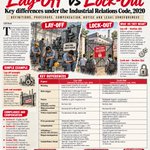
🚨 𝗧𝗛𝗘 𝗙𝗔𝗖𝗧𝗢𝗥𝗬 𝗚𝗔𝗧𝗘 𝗜𝗦 𝗖𝗟𝗢𝗦𝗘𝗗. 𝗟𝗔𝗬-𝗢𝗙𝗙 𝗢𝗥 𝗟𝗢𝗖𝗞-𝗢𝗨𝗧?
One wrong classification can turn a temporary shutdown into a serious wage-liability and compliance dispute.
Under the 𝗜𝗻𝗱𝘂𝘀𝘁𝗿𝗶𝗮𝗹 𝗥𝗲𝗹𝗮𝘁𝗶𝗼𝗻𝘀 𝗖𝗼𝗱𝗲, 𝟮𝟬𝟮𝟬, these are NOT interchangeable!
⚖️ ❶ 𝗟𝗔𝗬-𝗢𝗙𝗙 — 𝗦𝗲𝗰𝘁𝗶𝗼𝗻 𝟮(𝘁)
The employer fails, refuses or is unable to provide work to a worker on the muster rolls who has not been retrenched, due to specified reasons such as shortage of power/raw materials, accumulation of stock, machinery breakdown or natural calamity.
🔒 ❷ 𝗟𝗢𝗖𝗞-𝗢𝗨𝗧 — 𝗦𝗲𝗰𝘁𝗶𝗼𝗻 𝟮(𝘂)
Temporary closure of a place of employment, suspension of work or refusal to continue employing workers—often during an industrial dispute.
📌 𝗦𝗘𝗩𝗘𝗡 𝗗𝗜𝗙𝗙𝗘𝗥𝗘𝗡𝗖𝗘𝗦 𝗘𝗩𝗘𝗥𝗬 𝗛𝗥/𝗜𝗥 𝗟𝗘𝗔𝗗𝗘𝗥 𝗠𝗨𝗦𝗧 𝗞𝗡𝗢𝗪
① 𝗥𝗘𝗔𝗦𝗢𝗡
Lay-off: Specified operational circumstances.
Lock-out: Closure, suspension or refusal to continue employment.
② 𝗡𝗢𝗧𝗜𝗖𝗘
Lay-off: No universal 14-day notice requirement.
Lock-out: Section 62(2) generally requires notice within 60 days before commencement, with no lock-out within 14 days of notice. Other restrictions apply.
③ 𝗣𝗥𝗜𝗢𝗥 𝗣𝗘𝗥𝗠𝗜𝗦𝗦𝗜𝗢𝗡
Lay-off: Section 78 generally requires permission for covered Chapter X establishments (ordinarily 300+ workers), subject to exceptions and applicable thresholds.
Lock-out: No equivalent general prior-permission requirement.
④ 𝗖𝗢𝗠𝗣𝗘𝗡𝗦𝗔𝗧𝗜𝗢𝗡
Lay-off: Section 67 generally provides eligible workers 50% of basic wages + DA, subject to conditions.
Lock-out: No automatic 50% lay-off compensation. Wage liability depends on legality and justification.
⑤ 𝗔𝗧𝗧𝗘𝗡𝗗𝗔𝗡𝗖𝗘
Lay-off: Muster-roll and reporting rules matter—Sections 68–69.
Lock-out: Those lay-off-specific rules do not automatically apply.
⑥ 𝗖𝗘𝗡𝗧𝗥𝗔𝗟 𝗥𝗨𝗟𝗘𝗦
Lay-off permission: Rule 30, Form XIV.
Lock-out notice: Rule 26, Form XII.
Check the applicable State Rules where the State is the appropriate Government.
⑦ 𝗟𝗘𝗚𝗔𝗟 𝗖𝗢𝗡𝗦𝗘𝗤𝗨𝗘𝗡𝗖𝗘𝗦
Lay-off without required permission: Section 78(8); penalties under Section 86.
Illegal lock-out: Section 63; penalty under Section 86(14).
🏭 𝗣𝗥𝗔𝗖𝗧𝗜𝗖𝗔𝗟 𝗘𝗫𝗔𝗠𝗣𝗟𝗘
A critical machine breaks down, leaving workers without work for 10 days: potentially a 𝗟𝗔𝗬-𝗢𝗙𝗙.
Management temporarily closes the factory amid an industrial dispute: potentially a 𝗟𝗢𝗖𝗞-𝗢𝗨𝗧.
⚖️ 𝗦𝗨𝗣𝗥𝗘𝗠𝗘 𝗖𝗢𝗨𝗥𝗧 𝗥𝗘𝗠𝗜𝗡𝗗𝗘𝗥𝗦
▪️ Kairbetta Estate v. Rajamanickam (1960): Lay-off and lock-out have distinct legal consequences.
▪️ India Marine Service v. Their Workmen (1963): An initially justified lock-out may become unjustified if prolonged.
🎯 𝗧𝗛𝗘 𝗕𝗜𝗚 𝗛𝗥 𝗟𝗘𝗦𝗦𝗢𝗡
The label on the noticeboard does not decide the legal character. 𝗧𝗛𝗘 𝗙𝗔𝗖𝗧𝗦 𝗗𝗢.
💬 Can a lock-out be legally declared but still be unjustified? What do you think?
𝗕𝘆 𝗟𝗟𝗥 𝗗𝗲𝘀𝗸
#IndustrialRelationsCode

2026 LLR WEB 1283 (MADRAS HIGH COURT)
Reinstatement sought by a temporary employee who has attained the age of superannuation before the writ petition is heard becomes an infructuous relief.
INDUSTRIAL DISPUTES - Domestic enquiry - Misappropriation of revenue by re-issuing old tickets - Admission of charges - Infructuous relief on superannuation - Scope of interference - Petitioner, a temporary Conductor, was dismissed from service after a domestic enquiry held proved the charges of misappropriating the Corporation's revenue by re-issuing old tickets and by failing to issue proper tickets after collecting fare, and his industrial dispute challenging the dismissal, following approval by the Industrial Tribunal,... subscribe to read more.....
An appointment secured on the basis of a bogus educational qualification certificate cannot be regularised merely by reason of long length of service.
2026 LLR WEB 1285 (MADRAS HIGH COURT)
INDUSTRIAL DISPUTES - Termination for production of bogus educational certificate - Minimum qualification prescribed by bye-laws - Effect of length of service - Scope of interference - Workman, appointed as a Machine Man on the strength of an educational certificate produced on his behalf, was terminated after a departmental enquiry revealed the certificate to be bogus and that he did not possess the minimum qualification prescribed by the employer's bye-laws for the post... subscribe to read more.....
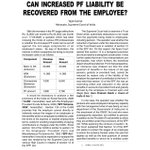
Can increased PF liability be recovered from the employee?
YAJAT KUMAR, ADVOCATE, SUPREME COURT OF INDIA


2026 LLR WEB 1247 (DELHI HIGH COURT)
Writ jurisdiction does not permit reappreciation of evidence or interference with a Labour Court''s finding that a claimant failed to prove an employer-employee relationship, absent perversity.
INDUSTRIAL DISPUTES - Employer-employee relationship - Burden of proof - Scope of interference in writ jurisdiction - Superannuation - Petitioner, claiming to have been engaged as a Caretaker and illegally terminated, challenged an award of the Labour Court rejecting his claim on the ground that he had failed to establish an employer-employee relationship with the respondent-school and had, in any event, already attained the age of superannuation at the time of the alleged termination... subscribe to read more.....
2026 LLR WEB 1253 (KARNATAKA HIGH COURT)
Pronouncing a final award without first deciding the validity of the domestic inquiry vitiates the proceedings before a Labour Court.
INDUSTRIAL DISPUTES - Validity of domestic inquiry as preliminary issue - Procedural infirmity - Remand - Writ of certiorari - A dismissal following a domestic inquiry, challenged in a reference before the Labour Court, resulted in a final award pronounced without the Court having first decided the preliminary issue of the inquiry's validity or having recorded evidence of the first party, giving rise to this challenge by the employer... subscribe to read more......
Labour Court has no power to condone delay beyond the statutory three-year period prescribed for raising an industrial dispute.
2026 LLR WEB 1245 (MADRAS HIGH COURT)
INDUSTRIAL DISPUTES - Limitation - Condonation of delay - Jurisdiction of labour court - Section 2-A(3) of the Industrial Disputes Act, 1947 - Writ petition by an employer challenging an order of the Labour Court condoning delay in raising an industrial dispute filed more than three years after the date of termination - Held, Section 2-A(3) of the Act, prescribing a period of three years from the date of discharge,... subscribe to read more.....