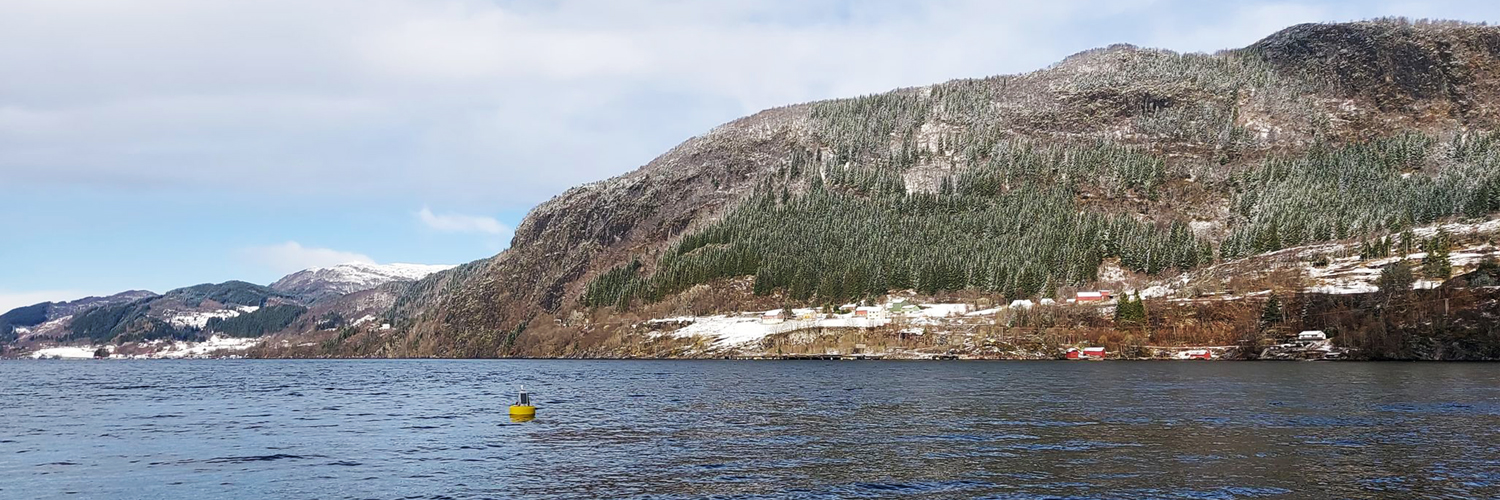
40 years of water quality data. Now, NEW Water is adding near-real-time wave data. 🌊
See how a growing buoy network is helping researchers, boaters, and the public better understand—and navigate—Green Bay. 👉 fondriest.com/news/new-water…
Less snow could mean warmer lakes. ❄️🌊
New research shows snowpack plays a major role in alpine lake temperatures, with less snow leading to earlier ice-off and longer summer heating periods.
Dive into the findings. 👉 lakescientist.com/research-b…
Turbidity is more than just murky water. 🌊🐟
From fish health and habitat to predator-prey dynamics, changing turbidity can reveal a lot about aquatic ecosystems.
Here’s why real-time monitoring matters for fisheries. 👉 ow.ly/NUip50ZVApR
Algal blooms may be doing more than soaking up phosphorus—they could be putting more of it back into the water.
New research reveals how blooms can stimulate phosphorus pollution from lake sediment. 👉 lakescientist.com/research-b…
Lake Okeechobee has a muck problem. 🫣
Nutrient-laden sediment can fuel water quality issues—but removing it could help restore healthier habitat.
So… how do you clean up a lake this big?
Read the story 👉 ow.ly/bHbX50ZVtnB
Think remote mountain lakes are untouched? Sediment cores from Swiss alpine waters tell a different story.
Spectroscopy revealed 6 distinct polymer types tied directly to tourism & recreation debris 🧪📊
lakescientist.com/research-b…
PC: HaLu via Wikimedia Commons
#Microplastics
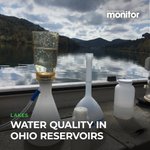
Managing flood control and ecosystem health takes serious data. 💡
Learn how USACE uses intensive water sampling, NexSens buoys, and bathymetry to protect reservoirs across Ohio & neighboring states ⤵️
fondriest.com/news/intensive…
PC: Kamryn Tufts
#WaterQuality
@HuntingtonCorps
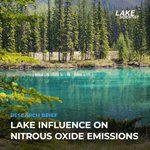
Nitrous oxide has ~300x the warming power of CO2 —and tiny lakes are pumping out a disproportionate share. 🧪🌊
Small lakes generate 34.6% of global lake N2O emissions despite representing under 10% of total surface area.
Learn why: lakescientist.com/research-b…
PC: Ron Reiring
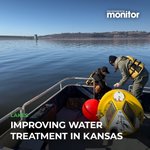
💧 Across three Kansas reservoirs, real-time water quality monitoring buoys are helping researchers and water treatment operators better understand changing lake conditions—and respond before problems arise.
Learn more ➡️ news.fondriest.com/how-the-k…
PC: Ted Harris
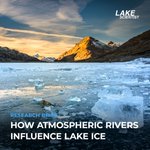
A 2026 study in Geophysical Research Letters sought to characterize the long-term influence of atmospheric rivers on Northern Hemisphere lake ice phenology. 🧊
Learn how these phenomena impact lake ice ➡️ lakescientist.com/research-b…
PC: kuhnmi via Wikimedia Commons
@YorkUScience
Mercury is a global contaminant of concern in aquatic ecosystems, and its conversion to organic methylmercury can be toxic. Therefore, understanding methylation is crucial.
Read the research brief here ➡️ lakescientist.com/research-b…
PC: Corey Coyle
@waterscienceUWM
@USGS_UMid
How do you tackle decades of chloride pollution in streams that feed one of Wisconsin's most iconic lakes? For municipal employees in Madison, Wisconsin, the answer starts with understanding the environment.
Learn more ➡️ fondriest.com/news/chloride-…
PC: Matt Noone
Industry polluted Muskegon Lake for centuries; then the industry left.
Learn how a lake monitoring program led by Grand Valley State helped transform Muskegon Lake's water quality, and identity ➡️ fondriest.com/news/how-envir…
PC: Mike Hassett
#GreatLakes #Muskegon #LakeMichigan
Oil and water simply don't mix—especially when it comes to oil in the natural environment. Automated oil detection systems are a valuable surveillance tool that can provide early warnings.
Learn how NexSens configures an oil detection system➡️ nexsens.com/systems/oil-dete…
@NexSens_
🌎 Are lakes CO₂ sinks or sources?
Depends on stratification, mixing, wind, temperature, and aquatic metabolism.
A 2026 study examined two tropical lakes in Brazil over 6 years to better understand the mechanisms driving CO₂ flux.
Read more: lakescientist.com/research-b…
The Cooperative Institute for Great Lakes Research (CIGLR) operates immense forecasting models, and the datasets are extremely complicated. To aid researchers, the institute is turning to a powerful tool: artificial intelligence.
Learn more ➡️ lakescientist.com/can-ai-for…
PC: CIGLR
☀️💡Floating Photovoltaic (FPV) systems are a growing renewable technology. The potential of FPV systems is exciting and far-reaching. But as an emerging technology, their effect on lakes is not understood.
Learn more ➡️ fondriest.com/news/floating-…
PC: Fraunhofer Institute
#Solar
With global warming, there is growing concern around how ecosystems may change, thus highlighting the importance of climate change refugia.
A 2026 study described these refuges;
Learn more ➡️ lakescientist.com/research-b…
PC: Plh1234us via Flickr
#AlpineLake #ClimateChange
Lake heatwaves can be intense and long-lasting, but little research has been conducted into how sediments react to these anomalies.
Learn more about the future of these disasters ➡️ lakescientist.com/research-b…
PC: Chesapeake Bay Program
#Heatwave #LakeHeatwave
@BangorUni
Carbon budgets can help guide climate change action, and wetlands are significant carbon sinks in these budgets. But in places like Maine, where wetlands are frozen for months, we know less.
Learn more ➡️ fondriest.com/news/monitorin…
PC: Julia Guimond
#CarbonBudget #Wetland