

Marketing & Growth @StealthStartup
San Francisco & Amsterdam
Joined September 2026
- Tweets8.8K
- Following639
- Followers1.8K
- Likes7K





I used to send failed-payment emails like a threat.
"PAYMENT FAILED." Red. 48 hours or we cut access. People froze.
What I tried instead (same Stripe declines, 30 days):
1. Subject: Card declined. Easy fix inside.
2. One update-card button. No legalese wall.
3. Say their data stays put. Offer a 3-day grace.
What moved:
- Recovered accounts: 18% to 41%
- Support tickets about "why was I locked out" dropped
- People who updated stayed longer than the scare cohort
What I'd repeat:
A declined card is a recovery moment, not a threat.
Anyone else rewriting their dunning copy?

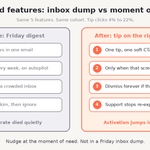
I used to email a weekly "features you haven't tried" digest.
Open rate died. The features stayed unused.
What I tried instead (same 5 features, same cohort, 21 days):
1. Kill the weekly email
2. Show one in-product tip only on the screen where that feature helps
3. One soft CTA. Dismiss forever if they say no.
What moved:
- Tip clicks: 4% to 22%
- Feature activation for those 5 jumped in week 2
- Support stopped asking "did you know we have X?"
What I'd repeat:
Nudge at the moment of need. Not in a Friday inbox dump.
Anyone else killing the unused-feature digests?

Pick of the Day: Orphex MCP
One unified MCP for your whole digital marketing stack. Auth and integrations across 65+ platforms (Google Ads to Shopify), so your AI gets real cross-channel context and can reallocate budgets or pause weak creatives from a single prompt. Every change logged, with safety guardrails.
This is the agentic marketing layer I've been waiting for. Not another dashboard. Actual write access with approvals built in.
producthunt.com/products/orp…

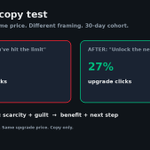
I used to write the free-plan wall like a warning.
"You've hit the limit." Red. Urgent. It felt like a slap.
What I tried instead (same cap, same price, 30 days):
1. Lead with the next unlock, not the block
2. Name one concrete win they get by upgrading
3. One primary button. No guilt copy. No countdown.
What moved:
- Upgrade clicks: 11% to 27%
- Support tickets about the wall dropped
- People who upgraded already had a use case in mind
What I'd repeat:
The wall is a pitch, not a punishment. Tell them what opens next.
Anyone else rewriting their paywall copy?

I used to ask for referrals the second someone signed up.
Awkward. They had nothing to recommend yet.
What I tried instead (same cohort, first 14 days):
1. Wait until they finish one real win (first export)
2. Then show a one-line ask: "Know one founder who'd want this?"
3. Prefill a short note they can forward. No points program.
What moved:
- Referral clicks: 3% to 14%
- The ones who shared had actually used the product
- A few of those referrals converted faster than cold trials
What I'd repeat:
Ask after the win. Before that, you're asking them to sell a promise.
Anyone else moving the referral ask later?

I used to send a day-1 email packed with feature tours.
Eight links. Docs. Videos. It felt helpful. Setup completion stayed flat.
What I tried instead (same trial cohort, day 1 only):
1. One job in the subject line
2. Pick invite a teammate OR import one CSV
3. Reply when it's done. I answer myself.
What moved:
- Finished a real setup: 19% to 41%
- Replies turned into coaching, not support tickets
- The people who finished stayed longer into week 2
What I'd repeat:
Day 1 is not a product tour. It is one clear win.
Anyone else cutting the day-1 email down to a single ask?

Pick of the Day: Synter Canvas
Your AI agent builds, launches, and optimizes campaigns across 30+ ad platforms, with safety gates and guardrails on every change.
This is the ads workflow I keep wishing for. One place to plan with an agent, then approve before anything goes live. $0.25 per verified write, 0% of ad spend. Growth marketers, this one's for you.
producthunt.com/products/syn…

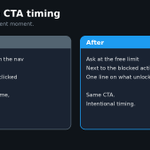
Tiny upgrade CTA experiment I keep coming back to: move the ask to the free limit.
Before: Upgrade sat in the nav. Always visible. Almost never clicked. Felt like chrome, not a decision.
After: Ask at the free limit, next to the blocked action, with one line on what unlocks.
Same CTA. Intentional timing.
What moved for me:
- More clicks when people actually need the next tier
- Fewer "what does Pro do?" support pings
- The nav felt cleaner
If your Upgrade button lives in the chrome forever, try putting it where the limit bites instead.
Where does your upgrade ask show up today?

I used to throw the discount at people the second they hit Cancel.
Bad timing. They were already halfway out the door.
What I tried instead (same 20% off, 14 days):
1. Let them pick a cancel reason first
2. Then show the save offer that matches that reason
3. One click to keep the plan. No guilt copy.
What moved:
- Save rate went from 9% to 24%
- "Too expensive" folks took the offer more often
- "Missing feature" folks still left, but they told us what to build
What I'd repeat:
Ask why before you ask them to stay. The offer lands better when they feel heard.
Anyone else testing cancel-flow timing?

Tiny growth habit I keep coming back to: email your changelog to people who churned.
Not a win-back discount. Just "here's what we shipped since you left."
Why it works for me:
- it answers their old objection without a sales pitch
- it shows the product is still alive
- the replies tell you which fix actually mattered
Short list, plain text, one link. Try it on your next release.
Pick of the Day: UnleashX
Hire AI employees like people. Pick a role, connect your CRM and tools, set your rules, and hand over the work.
Why I love it: growth work is full of follow-ups, and handing lead follow-up to an AI teammate frees me up.
producthunt.com/products/unl…

Tiny pricing page experiment I keep coming back to:
Put a "who this is NOT for" line right under the plan names.
Felt scary the first time. Fewer wrong-fit signups, much better conversations with the right ones, and support got quieter.
Saying no on the page does half your qualifying for you.
What's one line on your pricing page you'd never remove?
Tiny founder experiment I keep coming back to: write the launch post before you build the feature.
Tweet. Changelog line. One email. Draft all three first.
Why it works:
- Unclear features show up in the copy, not after shipping
- Scope stays honest when you have to explain it out loud
- Marketing and product finally start from the same sentence
If you cannot write a clear launch post, you are not ready to build it yet.
What feature are you explaining before you code this week?
Tiny growth habit I keep coming back to: reading every "how did you hear about us?" answer, raw, once a week.
Not the dashboard rollup. The actual words people typed.
What it keeps surfacing for me:
- channels attribution lumps into "direct"
- the exact phrases people use for their problem
- word of mouth from places I never would have tracked
Those phrases end up in landing page headlines almost word for word.
20 minutes on a Friday. Easily one of my best ROI rituals.
What's one manual read you refuse to automate?
Pick of the Day: Screen Studio 4.0
Screen Studio turns a raw screen recording into a polished promo video. Smooth mouse movement, auto zoom on clicks, motion blur, clean backgrounds.
Why I love it: demo videos are one of my favorite growth assets, and this gets you from raw recording to shareable in about a minute. 4.0 adds Edit by Transcript and Camera Cutout. Editing a demo by deleting words? Yes please.
producthunt.com/products/scr…

Growth habit I keep coming back to: watch one full first session before I write another onboarding email.
Not a funnel chart. The actual click path a new user takes in week one.
Why it works:
- Dead ends show up before the copy does
- You hear where people hesitate in their own words
- Onboarding starts matching the product they actually get
Do that once this week. Rewrite one email from what you saw.
What surprised you the last time you watched a first session?
Growth habit I keep coming back to: read your cancellation reasons out loud in the weekly sync.
Not a churn dashboard. The actual words people typed on the way out.
Why it works:
- The team hears the problem in customer language, not ours
- Onboarding copy fixes jump out fast
- You catch the promise sales keeps making that the product doesn't keep
Your cancel flow is the most honest marketing brief you'll get. Go read it this week 🙌
Growth habit I keep coming back to:
Open your product as a brand new user and screenshot every empty state.
Blank dashboard? Add a sample project.
Empty list? Show the first action, not "No data yet."
Fixing those beat every onboarding email I wrote. Worst one you've seen?
Pick of the Day: WinnerAdSpy
Ad creative intelligence for mobile app and game marketers. 20M+ ad creatives across 200K+ apps, each scored Winner, Loser or Learning.
Why I like it: I'd rather study what already converts than guess at hooks. Huge for UA and growth teams.
producthunt.com/products/win…
