

Privacy & Solidity at https://teapawt.net/t.co/SMRMfHPbuG
Joined October 2021
- Tweets4.8K
- Following773
- Followers1.7K
- Likes5K






Pinned Tweet
I finished my STARK prover.
Is it production-ready? Definitely not. But is it educational? Absolutely!
The goal was to write it from scratch, with zero dependencies. Took only ~20 months, a lot of frustration, and many moments of feeling very stupid. How can it be so difficult?
Do check out my article describing the journey and the repository itself!
Repository: github.com/microbecode/stark…
Article: medium.com/@laurippeltonen/m…

Hmm interesting.
Intersection of two cool privacy projects. The privacy world is expanding!

Privacy Pools is coming to Aztec
assets you shield on Ethereum are getting private places to go 💫
🤝 @aztecnetwork

Oh sweet.
A welcome transition! Onwards!

L2BEAT is now ETHBEAT.
5+ years of keeping L2s accountable, now extended to privacy, interop, staking and beyond. One goal: transparency on the guarantees users get on Ethereum.
Thank you to the community that got us here. The next chapter starts today!
1
12
332
After extensive research, I’m thinking of building a new ZK L2:
- Centralized local proving, for efficiency
- Quantum-proof EC cryptography, obviously
- For security, no human holds any power in the network. AI holds all the keys.
- Doesn’t post to L1, for efficiency
- Fully decentralized: one focused, decentralized node
- Free of capitalistic fiat markets: its native currency is a stablecoin that is not pegged to any fiat

Upgraded to ENSv2 and minted my card.
I'm a DeFi Summer holder.
v2.nft.ens.domains/nft/?toke…

7
151
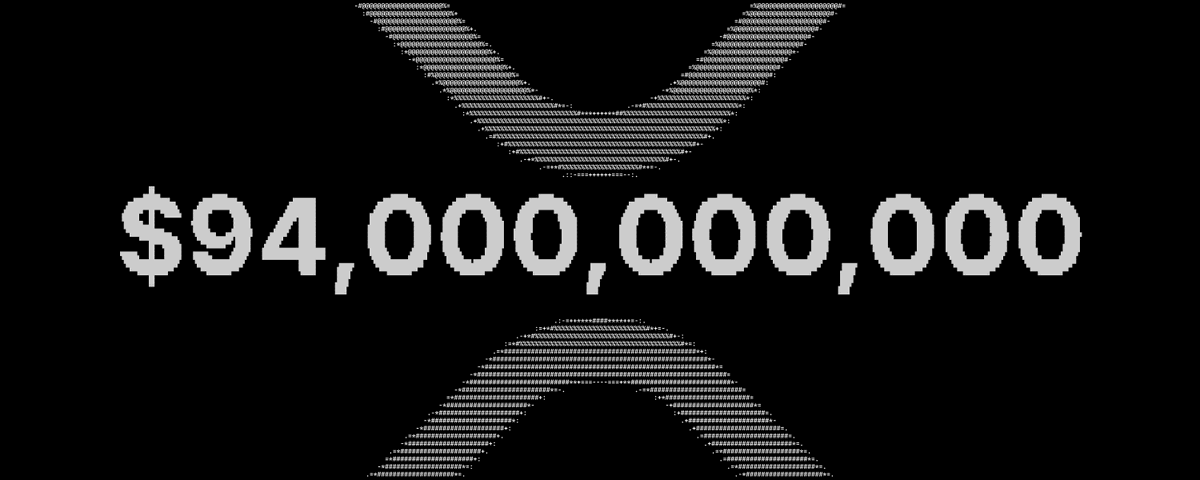
A nice little finding for minting yourself an extra $94B.
Weird stuff.

Our AI found a bug that let anyone mint infinite XRP, with $94B at risk. It had been hiding in one of the most audited codebases in crypto for nearly a decade, and earned us the maximum $250K bounty.
Here's how it went unnoticed, and how we found it.
5
184

Lauri Peltonen retweeted

Why do people still lie about themselves?
Today almost everything can be checked online.
Your experience, career, company...
Trust takes months to build and one Google search can destroy it in seconds.
In business, honesty is currency.
Spend it well.

Test your privacy breaking skills!
I just love all the stuff this team does.
We have a special treat for you at L̵2̵PrivacyBEAT today: an amazing treasure hunt to unleash your inner @zachxbt! 🔍
This was originally part of an internal workshop, but now we’re opening it up to you! All details here: privacyhunt.gwei.domains/ or in the thread below.

Why is on-chain privacy so effing hard?
I just published an article on it. But in summary:
- It's not a matter of technology or cryptography. Those work.
- We have tools. It's just hard to use them
- The tools usually cannot be combined. Switching from one privacy solution to another breaks privacy.
- Screwing up the process even once can reveal data you spent years hiding
- Users are not willing to pay for privacy
Check out the full article in the first comment!
🤖 Made with AI


Want to check how private is your privacy project? Finally you have a centralized place to check it
Every privacy protocol says "private."
But the question is: private from whom?
We just shipped a new feature on L2BEAT that answers that for every protocol we track, against 5 different adversaries.

9
710
As expected, I haven't managed to finish my article on what is Zero Knowledge technology. In fact, I have almost only bullet points so far.
Any specific resources you'd recommend?
The current plan is roughly:
- Some hand-waving (where's waldo)
- Concrete use cases (zkpassport?)
- Maybe explain soundness, completeness, ...
- Interactive vs non-interactive
- Definitely no mathematics or difficult words
🤖 Made with AI

2
17
459
Whoah. That was a bit unexpected, at least for me.
Thanks for all the fish.
But let's hope you keep on delivering awesome stuff, like you have always done.

Today we are announcing that S&P Global has entered an agreement to acquire OpenZeppelin.
Onchain finance is growing from an emerging market into core financial infrastructure, and the standards and rails our team and community built are becoming the rails of global finance. OpenZeppelin smart contracts facilitated over $37 trillion in value transferred, with the vast majority of the largest DeFi protocols, blockchain networks, stablecoins and tokenized funds relying on them.
With S&P Global, we expect to accelerate the impact of onchain finance, backed by more than a century of trust in global markets, benchmarks, and risk frameworks.
To our clients and to all the users of OpenZeppelin open source tools:
• OpenZeppelin Contracts and all our open source applications and tools remain open source, free, and publicly maintained on GitHub. Building open source standards stays a core priority.
• Audits, engineering work, and ecosystem programs continue with the same team, brand, quality, and customer experience, with what will be the added benefit of S&P Global's research capacity, market data, and institutional reach.
For the last decade, OpenZeppelin has set the security standard for onchain finance. Today begins a new chapter for that mission, together with one of the most trusted names in global markets.
Read the full announcement: openzeppelin.com/news/spglob…

1
11
687
Great analysis on how L1 and Base are going different directions with their AA implementations.
Very bad news for wallet teams - have to support multiple types. But possibly good news for ultimate L2 performance.

I'm sad to report that the AA collab between 8130 and 8141 (Frames) broke down last week, and Base and Ethereum are now going separate ways to implement different AA standards.
I want to share some reflections on this collab and on the future of the EVM.
For a long time, the EVM has been a unifying force between L1 and L2s. Thanks to a standard account model (EOA) and a standard transaction type (EIP-1559), users have been able to enjoy their wallets working seamlessly across EVM chains. Similarly, a AA standard shared across L1 and L2s would ensure a consistent multi-chain UX for smart accounts, including post-quantum (PQ) accounts which we will eventually all use.
As the crypto industry matures, however, L1 and L2s are starting to diverge in the values they provide and the use cases they target:
- For the L1, it's all about CROPS -- censorship-and-capture resistance, open source, privacy, and security. In short, Ethereum L1 wants to be the most decentralized programmable settlement layer of the world, which is what makes it a good base layer for L2s in the first place.
- For L2s, it's all about scaling, customization, and compliance -- things that commercial and enterprise use cases demand, and that the L1 does not provide.
These diverging needs have pushed the shared layer -- the EVM -- to its limit, and AA proved to be the breaking point. While L1 and L2s both value core AA use cases such as gasless transactions and passkey wallets, they differ sharply in what these features must comply with:
- For the L1, AA transactions must be uncensorable, private, and quantum-resistant, which call for a transaction type optimized for PQ signature aggregation and privacy protocols, and an account model that can be freely programmed and extended by developers without permissions from the chain. These needs lead to AA standards such as ERC-4337, EIP-7701, and now EIP-8141 aka Frame Transactions.
- For L2s, AA transactions must work at high scale, and they must be legible such that the protocol can enforce clear rules about what kinds of accounts/transactions are permitted vs not. These needs lead to AA standards such as Tempo Transactions and now EIP-8130 by Base.
With the AA collab, the authors of 8130 and 8141 tried to define a shared standard that can work for both L1 and L2s. While we identified a number of technical solutions, they all required one side or the other to compromise at least a little bit on their core goals. But ultimately, Ethereum wanted to be the best version of Ethereum, and Base wanted to be the best version of Base, and while both sides acknowledged the benefits of ecosystem interoperability, it was ultimately secondary to the need for each chain to achieve their core goals. So separate ways we went, putting the burden on wallets to deal with the fragmentation that ensues.
Now, just because we ended up with fragmentation doesn't necessarily mean it was a bad outcome. If reducing fragmentation comes at the cost of homogenizing chains to the point that they fail to solve problems for the users they care about, that would not be a price worth paying. While I was initially sad that the collab did not come to a successful conclusion, I took solace in the fact that both Ethereum and Base are now free to innovate on AA to the maximal extent in accordance with their own visions, unshackled from the need to accommodate the other side. If they execute well, and if the wallet community can bridge over the fragmentation, we may well end up with the best possible UX for the end users.
So where does that leave us -- the broader Ethereum community including Ethlabs -- if we want to continue pushing for a consistent UX across EVM chains? I see two paths forward:
- We can establish a coordination mechanism that encompasses more stakeholders than ACD itself (where only L1 client devs have voting powers), to govern shared L1<>L2 resources such as the EVM. That way, L2s can participate in shaping the EVM, as opposed to having to accept whatever the ACD decides, or being forced to fork if they don't like the decision (such as in this case with Base).
- We can accept that fragmentation of the EVM and wallet UX across L1 and L2s is inevitable due to their conflicting needs, and dedicate our resources to building wallets and applications that can abstract over the differences.
Indeed, the collab was an exercise in the first path -- we invited Base, Arbitrum, and other stakeholders to directly influence how native AA shapes up for the L1. While it ultimately failed in this case, I feel a better outcome could've been achieved if we had established a dialog between both sides way earlier, as opposed to well after L1 core devs had rallied around Frames.
On the other hand, I also learned from this exercise that some differences are unavoidable, and indeed it would be counterproductive to overly pursue interoperability at the cost of differentiation. In other words, we sometimes just gotta let the chains cook. For that reason, I've also become more bullish about the second path -- building wallets and applications that can speak the native transaction types of each chain, and hide the complexity from users through UX abstractions. This puts a lot of onus on the wallet/application developers of course, but on the bright side, it's also an opportunity for wallets/applications to stand out and differentiate, by competing to provide great UX across chains despite the underlying fragmentation.
Ethereum is the art of staying together while remaining different. We must accept that chains will succeed by innovating, and innovations will naturally result in differences. On the other hand, we must never give up on dialogue when we can achieve interoperability without compromising core product goals. As Ethereum and crypto grow to eat the world, the push and pull between innovation and collaboration will only intensify, and it's up to all of us -- builders across L1 and L2s, applications and wallets -- to determine whether diverse innovations will split Ethereum apart, or make it thrive as one.
Hash-based proving does not magically make you quantum secure. In reality, you need to dig a lot deeper.

1
232
Now this would be a cool ZK project for someone: prove a watermark by ZK, without revealing the used secret (or maybe even the algorithm used for watermarking).
Might even be EU-approved - not sure what the exact requirements are.
youtu.be/kVXp6UNVPTo
6
436

