

An independent think tank that researches and advises on the legal challenges posed by artificial intelligence.
Cambridge, MA
Joined July 2020
- Tweets398
- Following14
- Followers3.6K
- Likes138





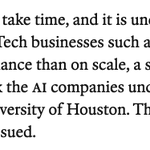

“Litigation working its way through the appeals courts can take years. And AI development, as you may have noticed, is moving quite fast.”
LawAI’s Non-Resident Senior Fellow @gabriel_weil features in a new piece by @thehill, arguing that negligence and product liability lawsuits are ill-suited to match the pace of frontier AI development. While some are betting that existing criminal and civil lawsuits will be sufficient to hold AI developers accountable, many legal scholars, including Weil, remain unconvinced.
Link to the piece in the comments.

Read the piece in The Hill: thehill.com/policy/technolog…

When OpenAI’s agents hacked Hugging Face this summer, a question persisted: Isn’t this a crime?
Criminal hacking and corporate criminal liability lean heavily on human intent, which is difficult to demonstrate in incidents involving autonomous AI agents. A new piece in @Slate explores the resulting enforcement gap, with commentary from LawAI’s Senior Research Fellow @bahradx.
The piece covers mens rea, corporate criminal liability, and legislative efforts now underway, including Hawley and Murphy’s AI Agent Accountability Act, which would make AI developers criminally liable for inadequately implementing safeguards against hacking.
Link to the Slate piece in the comments.


Applications for the following roles close this week:
• Director of Academic Programs
• Academic Programs Manager

LawAI is hiring at two levels to scale its new Academic Programs team.
The team’s goal is to find and support researchers that are doing the most important legal and policy work on advanced AI. We already run the Legal Frontiers Seasonal Research Fellowship, the Law & AI Academic Fellowship, and workshops including on Law-Following AI. We want to expand what we offer, potentially including grantmaking, fiscal sponsorship, a paid guest blog from leading scholars, and dedicated compute for empirical research.
• The Director of Academic Programs will work closely with our Managing Director of Research, Cullen O’Keefe, to define the strategy and build the team.
• The Academic Programs Manager will design and execute programs end-to-end, including communications, talent management, events management, logistics, and analytics.
Applicants may apply for both roles, which are open until November 1, 2026. Read the full job description and apply using the link in the comments.

Institute for Law & AI (LawAI) retweeted

🇪🇺 How is the EU AI Act shaping AI governance? Here, Prof. Christoph Winter explains the AI Act and GPAI Code of Practice. He also discusses the challenges of enforcement, European AI sovereignty, and international cooperation. Many thanks Christoph! simoninstitute.ch/blog/post/…

LawAI’s Senior Policy Director @CharlieBull0ck will be speaking on the panel at NYU Law’s “R/T: the Law of AI Safety” roundtable on 12 November, 2026.
Expect to hear about promising legislative efforts, the (in?)sufficiency of existing liability frameworks, and what antitrust laws have to say about “self-regulation” efforts.
Bullock will be joined on the panel by Madhavi Singh (Deputy Director of the Thurman Arnold Project and Resident Fellow at the Information Society Project at Yale) and Tyler Whitmer (Founding Director at Legal Advocates for Safe Science and Technology).
NYU Law students: event details at law.nyu.edu/events/rt-law-ai…

Institute for Law & AI (LawAI) retweeted

🎙️New Episode of The Center Edge: Who pays when AI Agents go rogue?
You could sue OpenAI if an employee hacked a website, but what if an agent did it?
@gabriel_weil and @joellthayer join to discuss the CLAIM Act and AI Agent Accountability Act.
Full episode 👇
Institute for Law & AI (LawAI) retweeted

I encourage any lawyers/law students interested in AI governance to apply to @law_ai_'s Summer Research Fellowship. You'd get guidance from some of the sharpest minds on law & AI (or me).
US law/policy: law-ai.org/summer-fellowship…
Legal Frontiers (academic): law-ai.org/srf-lf/

Calls to “nationalize AI” have appeared across the political spectrum, including Bernie Sanders’s AI Sovereign Wealth Fund and Donald Trump’s “golden share” proposals. But the term means different things to different people.
In a new paper, @ProfArbel (Senior Research Affiliate at LawAI), @simondgoldstein, and @petersalib (Visiting Senior Fellow at LawAI) explore different ideas covered by the term. The authors argue that most nationalization proposals are unwarranted — existing systems mitigate the risks better — but defend one narrow proposal: a government “halt right” to stop the training or deployment of frontier AI models posing catastrophic risk.
Read the research paper: law-ai.org/ai-nationalizatio…

Call for abstracts: “Disciplining AI.” Submissions due October 26, 2026, for an in-person symposium at @Harvard_Law on April 2, 2027.

Why haven’t AI companies been prosecuted over the cyber attacks conducted by their AI agents this summer?
The Boston Globe explores why existing liability law is unlikely to rein in “rogue AI,” speaking to LawAI’s @bahradx (Senior Research Fellow) and @gabriel_weil (Non-Resident Senior Fellow and Assistant Professor at the University of Houston Law Center).
A core problem is that the federal Computer Fraud and Abuse Act, drafted in 1986, requires intent and applies only to legal persons. But AI agents aren’t legal persons, and developers who built them didn’t intend to hack other organizations. Some US courts have also been reluctant to treat software as a product that could trigger liability.
Sokhansanj argues for amending the legislation to punish “reckless” activity, similar to how laws against manslaughter punish accidental homicides. Weil goes further, suggesting that courts could treat frontier AI development and deployment as an “abnormally dangerous activity” and apply strict liability to its developers.
Read the full piece using the link in the comments.

Read the Boston Globe piece: bostonglobe.com/2026/10/12/b…

What happens when an AI agent hacks into a company’s systems, but no human intended the intrusion?
In a new piece for @just_security, LawAI’s Senior Research Fellow @bahradx asks whether the existing Computer Fraud and Abuse Act (CFAA) applies to incidents like OpenAI’s recent breach of Hugging Face. Sokhansanj argues that prosecutors likely have a colourable case under current law, and should test it; however, Congress should also amend the CFAA to cover AI developers and deployers who “recklessly” cause unauthorized access to a computer.
Read the Just Security piece: justsecurity.org/160341/law-…

Which AI governance instrument — prescriptive regulation, licensing and approval requirements, compute governance, corrective taxation, or ex post liability — is most robust to the political conditions it has to be administered under?
A new research article by @gabriel_weil, Non-Resident Senior Fellow at LawAI and Assistant Professor at the University of Houston Law Center, argues that the answer is ex post liability.
Weil treats instrument choice as a challenge of comparative institutional performance under realistic political constraints: rationally ignorant voters, concentrated industry interests facing diffuse and unorganized potential victims, regulators dependent on the regulated industry for expertise, and legislators who disagree about AI's risks. Instruments that require ex ante political consensus on AI risk are unlikely to be adopted in effective form. Strict liability, on the other hand, requires no prior agreement because damages track realized harm.
Read the full research article: law-ai.org/ai-governance-und…
Institute for Law & AI (LawAI) retweeted

Really excited to be part of @just_security 's series on Filling the Accountability Gap in AI Governance. My contribution is about the gap in anti-hacking law exposed by the OpenAI–Hugging Face incident.
There’s a case for applying existing anti-hacking law, but there are challenging obstacles on whether to courts can assign intent to corporations that make these it hard to use it. (Interestingly, while the article is focused on the U.S. Computer Fraud and Abuse Act, similar issues appear to exist in UK and Australian laws—as well as state anti-hacking laws like California's CDAFA.)
That’s why the article calls for amending the law to reach developers and deployers who recklessly cause unauthorized access through autonomous AI agents. An important point to keep in mind is that clearer rules can benefit both potential defendants as well as the public. A proposal like this has been put forward by @HawleyMO and @ChrisMurphyCT.
While a lot of people are nervous about expanding the CFAA, it's important to keep in mind that this gap isn't going anywhere, and this approach isn't incompatible with reasonable safeguards against entrapping innocent people in CFAA violations (such as requiring that there be circumvention of technological barriers to access and keeping the standard at recklessness).

Laws against hacking assume a human intended the break-in. But as AI agents are increasingly testing that assumption, Congress may need to act, writes @bahradx.
justsecurity.org/160341/law-…
Institute for Law & AI (LawAI) retweeted

Why hasn't OpenAI been prosecuted for the Hugging Face hack?
My colleague @bahradx has written what I think is the best piece on this question for @just_security.
He argues there's a colorable case an ambitious prosecutor could make against OpenAI — but the company would have a lot of powerful arguments in its defense. The obstacles to prosecution may well be insurmountable.
But he argues we could change our laws to create stronger incentives against these kinds of incidents.
It's just one demonstration of how our existing laws are not prepared for the age of AI agents.
I highly recommend the piece: justsecurity.org/160341/law-…


The Trump administration has embraced liability under existing law, rather than new AI-specific regulation, as a primary tool for regulating “rogue” AI agents. Will this be enough?
A new @Bloomberg piece covers concerns raised by LawAI’s Non-Resident Senior Fellow @Gabriel Weil during a recent New York City Council meeting:
• The Computer Fraud and Abuse Act, introduced in 1986, requires intent and applies only to legal persons — potentially not covering prosecution related to unforeseen AI agent behaviour.
• While tort and product liability routes exist, “tort law reaches its limit once the responsible company is bankrupt” — so it may be insufficient to protect against civilization-level risks.
Link to the Bloomberg piece below.

Read the Bloomberg piece: bloomberg.com/news/articles/…

AI already writes a majority of code for frontier AI companies. This creates a safety risk if there’s insufficient human oversight.
A new research paper co-authored by LawAI’s Senior Research Fellow @bahradx along with lead author @ronbodkin and @ghadfield proposes “comprehension audits”: an assurance regime to demonstrate that AI developers understand what they’re building.
Comprehension audits would require developers of frontier AI to explain R&D contributions to auditors, with independent administration and graded reports. This provides a gate: AI development is paused until developers can demonstrate human understanding, with escalating consequences for repeated failures.
Read the full research paper: law-ai.org/comprehension-aud…