

Friend|dad|Preacher|Fitness https://teapawt.net/t.co/Xrh6pzgHzU
Johannesburg, South Africa
Joined July 2017
- Tweets116K
- Following4.7K
- Followers6.9K
- Likes205K

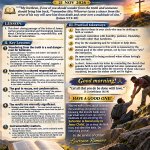







¹⁹"My brethren, if one of you should wander from the truth and someone should bring him back, ²⁰remember this: Whoever turns a sinner from the error of his way will save him from death and cover over a multitude of sins." (James 5:19-20)


26
SATURDAY MORNING DEVOTION: ²¹ NOV ²⁰²⁶:
📖 ¹⁹"My brethren, if one of you should wander from the truth and someone should bring him back, ²⁰remember this: Whoever turns a sinner from the error of his way will save him from death and cover over a multitude of sins." (James 5:19-20)
LESSON:
I. This short closing passage of the letter of James carries several practical and theological lessons about Christian community, responsibility, and the value of restoration.
II. Key Lessons
1) Wandering from the truth is a real danger—even for believers.
a. James addresses “brothers and sisters” and speaks of someone “among you.”
b. The risk of drifting from the truth (in belief or practice) is not limited to outsiders. It is a present possibility for people already in the community of faith.
c. The language of “wandering” or “straying” suggests a gradual drift rather than a sudden, dramatic fall.
2) Restoration is a shared responsibility.
a. Any believer (“someone”) can and should seek to turn the wanderer back. This is not presented as the exclusive task of church leaders or specialists.
b. Ordinary Christians are called to notice, care, and act when a fellow believer is going astray. The work of restoration belongs to the whole community.
3) The goal is rescue, not condemnation.
a. The focus is on “bringing back” or “turning” the person—not shaming, excluding, or winning an argument.
b. The aim is recovery of the person to the truth and to life with God. This aligns with the broader New Testament emphasis on gentle restoration (see Galatians 6:1).
4) The results are eternally significant.
a. Saving a soul from death — The most natural reading is spiritual/eternal death. Helping someone return from the path of error is a matter of life and death.
b. Covering a multitude of sins — Restoring the person opens the way for forgiveness and the blotting out of many sins. Some interpreters also see a secondary benefit: the restorer’s own sins are covered in the sense that love covers a multitude of sins (cf. 1 Peter 4:8), though the primary focus is the sinner who is restored.
5) Instrumentality matters.
a. God is the one who ultimately saves, yet He ordinarily works through human means.
b. James highlights that God uses ordinary believers as instruments in the recovery of the wandering. This gives both dignity and weight to the ministry of mutual care and correction.
III. Practical takeaways
1) Stay alert to those in your circle who may be drifting in faith or conduct.
2) Approach restoration with humility, patience, friendship, and truth rather than harshness.
3) Pray for the wandering and for wisdom to help them.
4) Remember that success in this work is measured by the eternal good of the other person, not by how well you “win” the interaction.
5) Be open yourself to being restored when others lovingly turn you back.
6) In short, James ends his letter by reminding the church that genuine faith is not only personal but also communal and redemptive: it actively seeks the recovery of those who have wandered, because the stakes could not be higher. (Grok.2026. Key Lessons from James 5:19-20)
Good morning!🙏🏿
• "Let all that you do be done with love." (1 Corinthians 16:14)
HAVE A GOOD ONE!
May we walk in love, quick to notice the wandering and gentle to restore—knowing that in God’s hands even our small acts of care can cover a multitude of sins and bring life. Salvation is found only in Jesus Christ. Let us keep the faith, trust, and obey Him daily. Do everything in love!
In the service of Christ!
𝓛𝓪𝔀𝓻𝓮𝓷𝓬𝓮 𝓡𝓪𝓶𝓪𝓷𝓸

1
2
72
📖 "Sanctify them by Your truth. Your word is truth.” (John 17:17)
• "The grass withers, the flower fades, But the word of our God stands forever.” (Isaiah 40:8)

2
46
MORNING DEVOTION: FRI, ²⁰ NOV ²⁰²⁶:
📖 ¹⁸"Reckless words pierce like a sword, but the tongue of the wise brings healing. ¹⁹Truthful lips endure forever, but a lying tongue lasts only a moment." (Proverbs 12:18-19)
LESSON:
I. Proverbs 12:18–19 teaches two fundamental principles about human speech: the impact of our words on others and the importance of truthfulness in everything we say. Solomon contrasts reckless speech with wise speech, and truthful lips with a lying tongue. These contrasts reveal that our words have both immediate consequences and lasting moral significance.
II. Key Lessons
1) Words have the power to wound or heal.
• Reckless speech causes pain and damages relationships, while wise words encourage, comfort, and restore others.
2) Reckless speech reveals a lack of wisdom.
• Speaking without thinking can lead to unnecessary conflict and regret. Exercise self-control before responding.
3) Wise speech brings healing and restoration.
• Use your words to encourage, correct with love, strengthen others, and promote reconciliation.
4) Truthfulness is a lasting virtue.
• Honesty builds trust, strengthens relationships, and establishes lasting credibility and integrity.
5) Lies may provide temporary benefits, but they cannot endure.
• Dishonesty may offer short-term advantages, but it ultimately undermines trust and damages one's reputation.
6) Our speech reveals the condition of our hearts.
• Words reflect our thoughts, attitudes, and character. A heart guided by godly wisdom produces gracious speech.
7) Truth must be communicated with wisdom and love.
• Speak honestly without being harsh, and show kindness without compromising the truth.
8) Our words influence the quality of our relationships.
• Reckless words divide families, marriages, congregations, and communities, while wise communication promotes peace and unity.
9) Self-control is essential to godly communication.
• Listen carefully, think before speaking, and avoid responding impulsively, especially when angry.
10) Our words carry moral responsibility before God.
• Every word matters. Speak truthfully, wisely, and graciously, remembering that we are accountable to God for our speech.
11) Proverbs 12:18–19 teaches us to use our tongues as instruments of healing rather than weapons of destruction, and to choose lasting truth over temporary deception.
III. Practical Daily Applications
1) Think before you speak: Consider whether your words are true, necessary, wise, and helpful.
2) Choose healing over hurting: Encourage, comfort, and correct others respectfully.
3) Control your emotions: Avoid speaking recklessly when angry, frustrated, or disappointed.
4) Reject dishonesty: Refuse to lie, exaggerate, mislead, or spread unverified information.
5) Speak the truth in love: Never use honesty as an excuse for cruelty.
6) Listen before responding: Seek understanding instead of rushing to conclusions.
7) Repair the damage caused by your words: Apologize sincerely, correct falsehoods, and pursue reconciliation.
8) Protect other people's dignity: Avoid gossip, ridicule, insults, and destructive criticism.
9) Use your words to strengthen relationships: Promote peace, understanding, and mutual respect.
10) Examine your speech daily: Ask whether your conversations reflect godly wisdom and integrity.

2
1
70
IV. Conclusion
1) Proverbs 12:18–19 reminds us that the tongue can either become a sword that wounds or an instrument that heals.
2) Reckless speech causes unnecessary pain, while wise speech brings encouragement, correction, comfort, and restoration.
3) Likewise, lies may seem useful for a moment, but truth possesses an enduring moral foundation.
4) The believer is therefore called to cultivate speech that is thoughtful, truthful, gracious, and guided by godly wisdom.
5) Remember:
Speak to heal, not to wound.
Speak to build, not to destroy.
Speak truth, not deception.
Speak with wisdom, not recklessness.
Speak with love, not bitterness. (Grok.2026. Key Lessons from Proverbs 12:18-19)
Good morning!🙏🏿
• "The LORD detests lying lips, but he delights in men who are truthful." (Proverbs 12:22)
HAVE A NICE DAY AND A SAFE WEEKEND!
A careless word can leave a lasting wound, but a wise word can begin the process of healing. Lies may offer temporary escape, but truth builds lasting trust. Eternal life is found only in Jesus Christ. Let us keep the faith, trust, and obey Him daily. Let us control our tongues!
In the service of Christ!
𝓛𝓪𝔀𝓻𝓮𝓷𝓬𝓮 𝓡𝓪𝓶𝓪𝓷𝓸
1
19
Your only competition is who you were yesterday. #weightloss #diet #RunningWithTumiSole #HealthyEating #fitness #HealthyHabits #exerciseismedicine #healthylifestyle #nevergiveup #Fetchyourbody2026 #fitness #consistency #ownpace #keepwalking


12
37
291


"Listen to your father who gave you life, and do not despise your mother when she is old.” (Proverbs 23:22)


37
MORNING DEVOTION: THU, ¹⁹ NOV ²⁰²⁶:
📖 "A foolish son is a grief to his father and bitterness to her who bore him." (Proverbs 17:25)
• "Listen to your father who gave you life, and do not despise your mother when she is old.” (Proverbs 23:22)
LESSON:
I. Proverbs 17:25 and Proverbs 23:22 address the parent-child relationship from complementary angles: the pain caused by a foolish child, and the duty of children to honor and listen to their parents—especially as parents age.
II. Key Lessons
1) A child’s character deeply affects parents (17:25):
a. A “foolish” son (Hebrew kesil often implies moral and spiritual folly, not just lack of intelligence) brings grief to the father and bitterness to the mother.
b. The verse highlights the emotional weight of parenthood: mothers who bore and raised the child, and fathers who invested authority and provision, experience real sorrow when a child rejects wisdom.
c. Related proverbs (e.g., 10:1; 15:20; 17:21) repeat this theme—wise children gladden parents; foolish ones bring sorrow and shame.
2) Children have a lifelong duty to honor and listen to parents (23:22):
a. The command is twofold:
• Actively listen to (hearken to/obey) the father who gave life.
• Do not despise the mother in her old age.
b. “Despise” here means treating her as worthless, dismissing her counsel as outdated, or neglecting her when she is weak or dependent.
c. The verse assumes that respect does not expire when parents grow old, less productive, or need care.
d. Nearby verses (23:24–25) show the positive counterpart: a wise, righteous child brings joy and gladness to both parents.
3) These verses reinforce the broader biblical call to honor parents.
a. They align with the fifth commandment (“Honor your father and your mother”) and New Testament teaching (Ephesians 6:1–3; Colossians 3:20).
b. Honor includes listening to sound counsel, rejecting attitudes of contempt, and providing practical care in later years.
c. In ancient Israelite culture (and many traditional societies), adult children were the primary support system for aging parents; neglecting them was both socially and spiritually serious.

2
1
95
III. Practical Applications
1) Evaluate whether your current choices, words, or lifestyle are bringing grief or joy to your parents.
2) Actively listen to and consider the counsel of your father (or father figures), recognizing the value of their life experience.
3) Treat your mother (or aging parents) with dignity and respect as they grow older—avoid dismissing their advice, needs, or presence as irrelevant.
4) Provide practical care and support for aging parents rather than viewing them as a burden.
5) Reject attitudes of contempt, impatience, or neglect toward parents, especially when they become weaker or more dependent.
6) Aim to live wisely so that your life becomes a source of gladness rather than bitterness to those who raised you.
7) Make honoring parents a lifelong practice, not limited to childhood or times when it is convenient.
8) If you are a parent, prioritize raising children in wisdom, knowing that their character will deeply affect your own emotional well-being.
9) In short, Proverbs 17:25 warns of the sorrow a foolish life produces in parents, while 23:22 positively commands lifelong respect, listening, and care—especially when parents are old. Together they present both the cost of folly and the beauty of honoring the ones who gave us life. (Grok.2026. Key Lessons from Proverbs 17:25;23:22)
Good morning!🙏🏿
• ¹"Children, obey your parents in the Lord, for this is right. ²Honor your father and mother"--which is the first commandment with a promise--³that it may go well with you and that you may enjoy long life on the earth." (Ephesians 6:1-3)
HAVE A GOOD THURSDAY!
May we choose wisdom that brings joy, not grief, to those who gave us life. Honor them today—in word, attitude, and care. Salvation is found only in Jesus Christ. Let us keep the faith, trust, and obey Him daily. May God continue to bless you more in all your efforts!
In the service of Christ!
𝓛𝓪𝔀𝓻𝓮𝓷𝓬𝓮 𝓡𝓪𝓶𝓪𝓷𝓸
19

"Likewise you husbands, dwell with them with understanding, giving honor to the wife, as to the weaker vessel, and as being heirs together of the grace of life, that your prayers may not be hindered." (1 Peter 3:7)


1
84
MORNING DEVOTION: WED, ¹⁸ NOV ²⁰²⁶:
📖 "Likewise you husbands, dwell with them with understanding, giving honor to the wife, as to the weaker vessel, and as being heirs together of the grace of life, that your prayers may not be hindered." (1 Peter 3:7)
LESSON:
I. This verse comes right after instructions to wives (vv. 1–6) about submission and inner beauty. It balances those by placing clear responsibilities on husbands and fits the letter’s broader theme of living out Christian character in relationships and under authority, even amid difficulty.
II. Key Lessons
1) Live with understanding and consideration.
a. Husbands are called to “dwell with” their wives “according to knowledge” or “in an understanding way.”
b. This means more than sharing a house—it requires intentional knowledge of her needs, personality, vulnerabilities, and the realities of marriage.
c. It involves thoughtfulness, sensitivity, and wisdom rather than cluelessness, harshness, or self-centered living.
2) Show honor and respect, especially as the “weaker vessel”.
a. Husbands must actively give honor (value, respect, esteem) to their wives.
b. The phrase “weaker vessel” is widely understood as referring primarily to physical strength or relative vulnerability (not moral, intellectual, or spiritual inferiority).
c. In the cultural context, this was a call to protect, care for, and treat her gently rather than dominate, neglect, or abuse. Strength is to be used for her good.
3) Recognize spiritual equality as co-heirs.
a. Wives are “heirs with you of the grace of life” (or “fellow heirs”).
b. Despite any differences in physical strength or marital roles, they share equal standing and the same inheritance of eternal life and God’s gracious gift.
c. This undercuts any notion of inferiority and requires treating her as a full partner in the faith and in the hope of glory.
4) How you treat your wife affects your prayers.
a. The motive and warning is direct: so that your prayers “may not be hindered.”
b. Disharmony, dishonor, or inconsiderate treatment at home creates a barrier in one’s relationship with God.
c. Right vertical fellowship is linked to right horizontal relationships, especially the closest one. Many commentators note that unresolved conflict or mistreatment undermines effective prayer.
III. Practical Applications
1) Intentionally learn and understand your wife’s needs, emotions, and strengths.
2) Live considerately every day by lightening her burdens and protecting her well-being.
3) Actively honor and respect her in words and actions—never belittle or dismiss her.
4) Use any greater strength to protect and care for her, not to control or dominate.
5) Treat her as a full spiritual equal and co-heir of God’s grace.
6) Keep your relationship healthy so that nothing hinders your prayers.
7) Be truly present and invested in shared life together.
8) Lead through understanding, service, and honor rather than entitlement.
9) These points flow from the text itself and classic commentaries (e.g., emphasizing consideration, honor as co-heirs, and the prayer connection). The verse calls husbands to Christ-like character in the home—understanding, honoring, and partnering with their wives as joint heirs of grace. (Grok.2026. Key Lessons from 1 Peter 3:7)
Good morning!🙏🏿
• ²⁸"So husbands ought to love their own wives as their own bodies; he who loves his wife loves himself. ²⁹For no one ever hated his own flesh, but nourishes and cherishes it, just as the Lord does the church." (Ephesians 5:28-29)
HAVE A LOVELY DAY!
May every husband reading this live out 1 Peter 3:7 with understanding, honor, and genuine partnership—so that home becomes a place of grace and prayers remain unhindered. Forgiveness of our sins is found only in Jesus Christ. God allows a U-turn. Let us keep the faith, trust, and obey Him daily. God is love!
In the service of Christ!
𝓛𝓪𝔀𝓻𝓮𝓷𝓬𝓮 𝓡𝓪𝓶𝓪𝓷𝓸

68
"You're only one workout away from a good mood.” ~ Health Coach Maria Marlowe #weightloss #diet #RunningWithTumiSole #HealthyEating #fitness #HealthyHabits #exerciseismedicine #healthylifestyle #nevergiveup #Fetchyourbody2026 #fitness #consistency #ownpace #keepwalking


ₗₒᵣₑₙzₒ retweeted

⚽️ ANOTHER LOOK! 🔥
Relive Relebohile Mofokeng’s stunning second goal in the 86th minute as Bafana Bafana secure a 2–1 victory over Kenya! 🇿🇦👏
🇰🇪 Kenya 1–2 Bafana Bafana 🇿🇦
What a moment! Well done, Bafana! 🔥
#BafanaBafana #SouthAfrica #Football #BafanaPride

ₗₒᵣₑₙzₒ retweeted

MATCH DAY ⚽️ | #AFCON2027Q |
KENYA 🇰🇪 vs BAFANA BAFANA 🇿🇦
📅 Tuesday, 17 November
⏰ 17:30
📺 SABC 2
📲 Stream on sabc-plus.com
For the latest news and updates, visit sabcsport.com
#SABCSport #BafanaBafana

True beauty begins in the heart, rooted in a calm spirit and trust in God rather than outward appearance or anxious control [1 Peter 3:3-4]. May your day be filled with quiet strength, courage, and peace as you walk in faith.


38
MORNING DEVOTION: TUE, ¹⁷ NOV ²⁰²⁶:
📖 ³"Your beauty should not come from outward adornment, such as braided hair and the wearing of gold jewelry and fine clothes. ⁴Instead, it should be that of your inner self, the unfading beauty of a gentle and quiet spirit, which is of great worth in God's sight. ⁵For this is the way the holy women of the past who put their hope in God used to make themselves beautiful. They were submissive to their own husbands, ⁶like Sarah, who obeyed Abraham and called him her master. You are her daughters if you do what is right and do not give way to fear." (1 Peter 3:3-6)
LESSON:
I. 1 Peter 3:3-6 focuses on the true beauty and character of a godly wife, contrasting outward appearance with inward qualities that please God. It is part of Peter’s broader instruction to Christian wives (especially those married to unbelievers) on living in a way that can influence their husbands through conduct rather than words.
II. Key Lessons
1) True beauty is internal, not external.
a. Peter does not forbid modest care for appearance, jewelry, or nice clothing. The point is that these should not be a woman’s primary or defining source of beauty or identity.
b. External adornment fades; character does not. God values the “hidden person of the heart” far more than outward display.
2) Cultivate a gentle and quiet spirit.
This is described as “unfading” (imperishable) and “of great worth in God’s sight.”
a. Gentle (or meek) points to strength under control—humble, not self-assertive or harsh.
b. Quiet refers to a calm, peaceful, settled disposition rather than anxious striving, contention, or loud self-promotion.
• These qualities are countercultural in many societies, yet they are precious to God and more effective in relationships than external efforts to impress or control.
3) Submission is rooted in hope in God, not fear of people.
a. Holy women of the past (exemplified by Sarah) adorned themselves with these inner qualities while being submissive to their own husbands.
b. Their submission flowed from trusting God, not from insecurity, cultural pressure, or fear of their husbands. Sarah’s example (calling Abraham “lord”/master) illustrates respectful obedience even in imperfect situations.
4) You become “daughters of Sarah” by doing good without fear.
a. Spiritual lineage with Sarah comes through practice: doing what is right and refusing to be controlled by fear or panic.
b. True submission is active goodness and faith-filled courage, not passive, fearful compliance or manipulation. It leaves the results with God.
III. Practical Applications
1) Value inner character more than outward appearance
2) Cultivate a gentle and quiet spirit daily
3) Submit from trust in God, not fear of people
4) Do what is right without giving in to fear
5) Let godly conduct speak louder than words
6) Measure beauty by God’s standard, not culture’s
7) Show respectful support like Sarah
8) Turn to God instead of controlling or panicking
9) These applications flow from the passage’s emphasis on internal beauty, hope in God, and courageous goodness rather than external display or fearful control. (Grok.2026. Key Lessons from 1 Peter 3:3-6)
Good morning!🙏🏿
• "Wives, submit to your own husbands, as to the Lord." (Ephesians 5:22)
HAVE A GOOD DAY!
True beauty begins in the heart, rooted in a calm spirit and trust in God rather than outward appearance or anxious control [1 Peter 3:3-4]. May your day be filled with quiet strength, courage, and peace as you walk in faith. Eternal life is found only in Jesus Christ. Let us keep the faith, trust, and obey Him daily. God is good all the time!
In the service of Christ!
𝓛𝓪𝔀𝓻𝓮𝓷𝓬𝓮 𝓡𝓪𝓶𝓪𝓷𝓸

60