¿No volverán a juntarse nunca los pedazos que nos hicieron posibles?
Joined May 2025
- Tweets2.4K
- Following94
- Followers20
- Likes22.1K







catador de nostalgia retweeted

Cuando mi amiga me invita a jugar gta 6 en su casa, pero veo que no tiene play y se empieza a quitar la ropa
catador de nostalgia retweeted

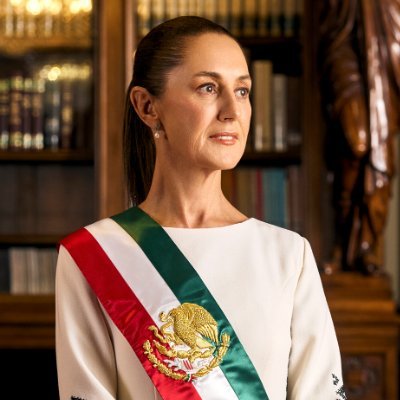
Esto es lo que están diciendo en Japón, China, el resto de Asia y el mundo sobre la Doctora Claudia Sheinbaum Pardo. Tenía razón el Presidente Andrés Manuel López Obrador, ella estaba destinada a ser la mejor Presidenta de México y el mundo.


catador de nostalgia retweeted

In diplomacy, the first message is sometimes delivered before anyone enters the negotiating room.
Today in Shenzhen, Xi delivered his at the airport.
China has just released its official account of Xi personally welcoming Donald Trump-an extraordinary gesture that deserves a closer look.
China has just released its official readout of Xi personally welcoming Donald Trump at Shenzhen International Airport.
There are several details worth examining.
First, the extraordinary level of diplomatic protocol.
When foreign heads of state arrive in China, they are typically received at the airport by the vice president, vice premier, foreign minister or other senior officials, depending on the occasion.
American presidents have traditionally received particularly high-level treatment. In November 2009, for example, then-Vice President Xi Jinping personally welcomed Barack Obama at the airport in Beijing.
But to my knowledge, this is the first time since becoming president in 2013 that Xi has personally gone to an airport to welcome a visiting foreign leader.
As I documented in September, JFK's personal reception of the British Prime Minister at Andrews Air Force Base in 1962 was the last time an American president had personally gone to the airport to welcome a foreign leader before Trump did the same for Xi.
As for China, my knowledge is that, since Chairman Mao personally went to the airport to welcome the Soviet leader in 1959, no top Chinese leader has ever personally received a visiting foreign leader at an airport until today.
Both sides have broken with diplomatic practices that had remained in place for more than half a century.
There are some details I cannot disclose, as they have never been made public by the Chinese side. But what I can say is that Xi attaches tremendous importance to the relationship between China and the United States.
His decision to welcome Trump personally at the airport speaks volumes.
Second, the explicit emphasis on reciprocity in diplomatic protocol.
The Chinese readout quotes Xi as saying:
"When I visited the United States this September, President Trump and the First Lady personally came to the airport to welcome me and held a grand welcoming ceremony. China is a country that values courtesy and has a tradition of reciprocating such gestures."
This provides an unusually clear public explanation for today's arrangement.
There had, in fact, been some hints beforehand.
Before arriving in China, Trump had suggested that he would receive an exceptionally warm welcome. Meanwhile, the White House's published schedule was notably vague about his plans for Wednesday afternoon, leaving considerable room for speculation.
Taken together, these clues raised the possibility: if Trump was expected to attend the welcome banquet hosted by Xi this evening, a personal airport reception by the Chinese president would not have been too surprising.
It was not officially confirmed at the time, of course. But in retrospect, the signs were there.
And now China's official readout provides the explanation: diplomatic reciprocity.
In September, the American president personally welcomed his Chinese counterpart.
In November, the Chinese president personally welcomed his American counterpart.
The reciprocity was deliberate, and publicly acknowledged.
In diplomacy, protocol is not merely ceremony. It is also a means of communicating respect.
Third, the consistency of the strategic language.
Xi expressed his desire to advance what China calls:
"A constructive China-US relationship of strategic stability based on respect, fairness and reciprocity."
This formulation did not suddenly emerge today. In May and September 2026, the two sides had already agreed on this broader direction for their relationship.
The wording carries three important implications.
Respect: Both sides should take each other's major concerns seriously.
Fairness and reciprocity: Consultation and mutual benefit should form the basis of the relationship.
Strategic stability: Even amid competition and disagreements, both countries should seek to prevent their relationship from spiraling out of control.
Of course, an airport welcome cannot resolve the many difficult problems between China and the United States. But it conveys how seriously the two leaders regard the relationship and the diplomatic process ahead.
The significance lies in the political message both sides have chosen to convey.
Diplomatic respect is demonstrated at the airport. Strategic maturity is demonstrated when the conversations begin.


For 31 years, the leaders of China, the United States, and Russia have shared photographs.
On November 19, they will finally share a negotiating table of their own.
And it will happen in China.
Following announcements by the United States and Russia over the weekend, China's Foreign Ministry announced at 9 am Beijing time on November 16 that Chinese President Xi Jinping would hold a trilateral summit with Russian President Vladimir Putin and US President @realDonaldTrump in south China's city of Shenzhen (深圳) on November 19.
I spent some time going through the historical records of meetings between the leaders of these three countries.
And one thing stood out to me:
This appears to be the first dedicated trilateral summit between the heads of state of China, the United States, and Russia in history.
And the historical journey leading to this moment is fascinating.
The earliest event attended simultaneously by the presidents of China, the United States, and Russia appears to date back to May, 1995.
Russia held commemorations in Moscow marking the 50th anniversary of victory in WWII. Chinese President Jiang Zemin (江泽民), US President Bill Clinton, and Russian President Boris Yeltsin attended the military parade in Red Square.
In October of the same year, the three leaders gathered again in New York to commemorate the 50th anniversary of the founding of the United Nations (top right).
Since then, with the development of international multilateral diplomatic mechanisms, the leaders of China, the United States, and Russia have had increasingly frequent opportunities to appear together on the world stage.
In 1998, Russia officially joined APEC. However, then-President Yeltsin did not personally attend Russia's first two APEC Economic Leaders' Meetings, instead sending his premiers to represent the country.
On November 15-16, 2000 (exactly 26 years ago!), Chinese President Jiang Zemin, US President @BillClinton, and Russian President Vladimir Putin all attended the eighth APEC Economic Leaders' Meeting held in Brunei (bottom left).
In October of the following year, the ninth meeting was held in Shanghai (上海), bringing together Jiang, George W. Bush, and Putin (bottom right). I was still in middle school at the time, and I remember watching Jiang deliver a speech in English on live television.
In 2014, China hosted the APEC Economic Leaders' Meeting for the second time, with Xi, @BarackObama, and Vladimir Putin in attendance (top left).
The upcoming APEC Economic Leaders' Meeting, scheduled for November 18-19 in Shenzhen, will mark the third time China has hosted the event.
Since the establishment of the G20 leaders' summit mechanism in 2008, the leaders of China, the United States, and Russia have had even more opportunities to cross paths on the international stage.
Yet one particularly intriguing fact stands out:
Over the past three decades, the leaders of China, the United States, and Russia have appeared together in numerous group photographs, but they have never actually sat down at a negotiating table specifically set for a trilateral meeting.
And the September 2000 summit of the five permanent members of the UN Security Council in New York was a five-party meeting, rather than a dedicated trilateral meeting between China, the United States, and Russia.
On November 19, that changes.
Why does this matter?
Here is how I see it:
Diplomacy: bring adversaries together.
Ideas: challenge the logic of inevitable confrontation.
Strategy: maintain relations without choosing sides.
Institutions: turn a historic meeting into lasting dialogue.
The summit's first significance is what it reveals about China's diplomatic convening power. Bringing friends together is easy. Bringing adversaries to the same table is an entirely different matter.
The influence of a great power should be measured not only by whom it can deter, but also by whom it can bring together.
Second, the summit offers an opportunity to challenge some of the most deeply entrenched and flawed assumptions in international relations.
China has long advocated a balanced approach to justice and interests (正确义利观), a vision that fundamentally challenges traditional thinking in IR. In my view, conventional notions such as the primacy of national interests, the security dilemma, and the clash of civilizations are increasingly ill-suited to today's international landscape and serve only to generate unnecessary suspicion, hostility and conflict. This is not a new argument for me.
During my time studying in the Department of Government at Cornell, I repeatedly questioned some of the fundamental assumptions underlying mainstream international relations theory. Yet I often encountered considerable resistance from a few professors and their overzealous TAs who seemed more committed to defending established intellectual paradigms than to examining their limitations.
And I have always wondered:
What happens when a theory designed to explain conflict becomes a prescription for producing it?
One of the great tragedies of American foreign policy, in my view, is that some of its intellectual architects have become so invested in theories of competition and confrontation that they struggle to imagine a world organized around cooperation and mutual benefit.
This summit will provide an important opportunity and a global platform for China to promote its vision of a new type of international relations. Whether China can encourage the world's major powers to move beyond some of their differences and seek common ground will be one of the most important aspects of this meeting to watch.
New ideas about IR are not ultimately judged by how persuasive they sound in academic journals, but by whether they can help make the world a more peaceful place.
Third, China does not need to undermine its relationship with one major power to demonstrate the strength of its relationship with another.
Does a stronger China-Russia relationship necessarily mean a weaker China-US relationship?
Does improving relations with Washington require Beijing to distance itself from Moscow?
Why should China have to choose?
Washington and Moscow may both hope that China will play a role in addressing certain issues, but whether Beijing will accept the agenda they seek to set remains to be seen.
Fourth, perhaps the most consequential question is what happens after November 19.
Will Shenzhen be remembered as a one-off diplomatic event, or as the beginning of a new mechanism preventing bloc confrontation in international politics?
If the three countries can build on this meeting to establish more stable channels of communication, or even gradually institutionalize regular trilateral summits, its historical significance could extend far beyond that of a single APEC summit.
Some have drawn comparisons between this meeting and the Cairo, Tehran, Yalta, and Potsdam conferences. I do not share that view. The differences in national interests, strategic disagreements, and levels of mutual trust among the three countries mean that establishing such a mechanism will be anything but easy.
Moreover, no mechanism for dialogue among major powers should imply that a handful of powerful countries have the right to determine the fate of others. Its true value should lie in reducing the risk of confrontation, not in dividing the world into spheres of influence.
The world is not short of great-power competition. What it lacks are mechanisms to prevent that competition from spiraling out of control.
November 19 will give us another historic photograph.
What happens afterward will determine its place in history.




No odiamos lo suficiente a salinas pliego

Dice el empresario Ricardo Benjamín Salinas Pliego que el aumento al salario mínimo es una estupidez y que por la reforma laboral de las 40 horas habrá de despedir a 15 mil cajeros para sustituirlos por máquinas pues éstas trabajan 24/7 y no tienen incapacidad ni lactancia.
3
31
catador de nostalgia retweeted

No lo olvides amiguito, para el capitalismo no eres un humano, eres un buey, una mula. Si no resolvemos lo del ingreso básico universal en esta década, no tenemos futuro como humanidad. Así hablan los ricos, así se les ocurrió el outsorcing, en cenitas así.

🔴 RICARDO SALINAS PLIEGO amenaza con cambiar a los cajeros de BANCO AZTECA por máquinas con inteligencia artificial si sube el costo de los empleados ‼️😵💫😵💫
"Tenía quince mil cajeros, voy a tener cero"
El dueño de Grupo Salinas no quiere pagar el salario mínimo y esta dispuesto a comprar máquinas, porque "no tienen problema laboral, no tienen sindicato". Habla de que no piden incapacidades, maternidad ni lactancia, y remata con que luego las conectará a la inteligencia artificial.


💀💀💀

Modern life can feel like being in a sci-fi story—all that is missing is the aliens. They probably won’t appear in 2027. Here are ten other things to watch out for bit.ly/3UCxXw9
Illustration: Cleon Peterson

25