

Light Stalking is all about beautiful photography. Free photography presets and blueprints here - https://xitter.cf/t.co/ibGMnod8Dp
Joined March 2009
- Tweets40.2K
- Following6.3K
- Followers338K
- Likes2.9K
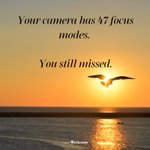


One of the great tragedies of digital photography is the 100% zoom button.
You take a beautiful photograph. Lovely light. Perfect timing. A moment you'll never get again.
Then you zoom in, discover an eyelash isn't quite sharp, and decide the whole thing is rubbish.
Meanwhile, somebody looking at the photograph normally thinks it's wonderful.
Sometimes the biggest problem with a photograph is the photographer inspecting it.
Light Stalking retweeted

Before We Needed to Agree
Remembering the friends who knew us before we had so many opinions about everything.
For some strange reason I can’t quite put my finger on, I was thinking about my adolescent friends today. Those beautiful idiots the universe dropped into my life before any of us had the slightest clue who we were or where we were going. Friends I didn’t interview, research, or run through an ideological background check. We just found each other. And for that small, magnificent accident, I will always be grateful.
We didn’t talk much about politics or religion. I’m sure we had opinions, mostly borrowed from our parents and delivered with the confidence of people who hadn’t paid an electric bill. But nobody had to pass a test to hang around. We weren’t examining each other’s vocabulary for evidence of membership in the wrong tribe. Mostly, we wanted to know who was coming over and whether anybody had any weed.
Our concerns were considerably more urgent. Girls. Sex. The possibility of sex. The increasingly convincing evidence that everybody else was having sex and we weren’t. We were kids with a seemingly endless supply of erections and absolutely no idea what to do with our lives—or, frankly, our hands. Rock ’n’ roll. Blues. Sports. Television. School, when absolutely necessary. Summer breezes through an open car window. Rebellion against The Man, although our understanding of The Man was broad enough to include a vice principal who wouldn’t let us wear our hair the way we wanted.
We were children of the late sixties and early seventies, and we were damn proud of it. We had music our parents didn’t understand and ambitions we couldn’t explain. We were going to become something. Exactly what remained a little fuzzy. Successful? Famous? Free? At the very least, we hoped to become people who didn’t need to ask permission to borrow the car.
And we belonged to each other in that easy, unexamined way young people sometimes do. A friend was somebody you wanted beside you while nothing much happened. Somebody who could make an otherwise forgettable afternoon worth remembering fifty years later. We didn’t know we were building memories. We were just trying to find something to do before somebody’s mother called us home.
Fast-forward five decades, and I sometimes wonder what the hell happened to us. Somewhere along the way, our opinions got heavier. We acquired convictions, disappointments, mortgages, divorces, cable news, and the ability to ruin a perfectly decent morning before getting out of bed. We learned to explain ourselves. Then we got very good at explaining what was wrong with everybody else.
Now, what separates us can seem more important than everything that once brought us together. A political post appears, and suddenly I’m looking at an old friend through narrowed eyes. The same person who once made me laugh until I couldn’t breathe becomes somebody whose judgment I question. I can feel an entire history getting crowded out by whatever he shared on Facebook that morning.
And before I get too sentimental or self-righteous, let me admit that I participate in this shit. I have strong opinions. You may have noticed. I read something and make assumptions about the person who posted it. Sometimes I’m right. Sometimes I’m probably filling in a whole human being with information that wouldn’t fill a paragraph. Either way, the distance grows.
I don’t think the answer is pretending our differences don’t matter. Some matter enormously. What we believe can affect how other people get to live, and an old friendship doesn’t make cruelty easier to swallow. I’m also aware that our carefree adolescence wasn’t carefree for everybody. There were things we didn’t discuss because we didn’t understand them, or because they weren’t happening to us.
Still, I miss the curiosity we had about one another before we became so certain. I miss being able to sit with somebody without anticipating an argument. I miss the ridiculous laugh, the shared song, the unfinished story that somebody else could finish. There are people who remember versions of me that no longer exist anywhere else. I hate to think how casually we can lose that.
Maybe that’s why those friends wandered into my head today. I wanted, for a moment, to be in their company again, before we knew so much. Before every conversation carried the possibility of becoming a referendum on who deserved our respect. I wanted to ask how they were doing and actually listen. To hear that laugh again. To remember that we once had a whole afternoon ahead of us, a song on the radio, and absolutely no fucking idea what came next.
Jack.
There's a particular kind of photographer who knows everything about photography.
They know the exposure triangle.
They understand dynamic range.
They can explain diffraction, hyperfocal distance and sensor noise.
They've watched approximately 900 YouTube tutorials.
Unfortunately, they haven't actually taken a photograph since Easter.
Learning photography is important.
At some point, though, the camera needs to leave the house.
Before buying a new camera, try something radical.
Go through your photographs from the last six months.
Find the ten you like best.
Now ask yourself how many would have been substantially better with another 20 megapixels.
If the answer is none, you may have discovered a rather inexpensive upgrade.
Unfortunately, it doesn't come in a box.
The rule of thirds is one of the first things photographers learn.
And apparently one of the last things some photographers ever move beyond.
Put the subject on a third.
Put the horizon on a third.
Put the tree on a third.
Congratulations. You've successfully divided a rectangle.
Composition is about deciding what matters in a photograph.
Not demonstrating that you can count to three.
An expensive lens can make a remarkable difference to your photography.
Sharper corners.
Better contrast.
Beautiful background separation.
Superior performance in low light.
Unfortunately, it cannot tell you where to stand, what to photograph, or why anyone should care.
A $2,000 lens is a wonderful investment.
Particularly if you already know what you're doing.


A surprisingly useful editing technique is knowing when to stop.
Add contrast.
Pull the highlights.
Open the shadows.
Increase clarity.
Add a little saturation.
Then, at some mysterious point, the photograph starts looking like it has been through customs three times.
Good editing improves the photograph.
Great editing occasionally leaves it alone.
Manual mode does not make you a better photographer.
It makes you a photographer manually choosing exposure settings.
That can be useful. It can also be completely unnecessary.
The goal is not to prove you understand three dials.
The goal is to make the photograph you intended.
Your camera does not award extra points for suffering.
A lot of photographers think they need better locations.
Usually they need to look harder at the location they’re already standing in.
Change the angle. Find the reflection. Wait for someone to walk through the frame. Photograph the shadow instead of the object.
Interesting photographs are often hiding inside boring places.
Unfortunately, they rarely have their own parking area.
YeahOne of the easiest ways to waste an afternoon in photography is worrying whether a lens is “tack sharp.”
Most memorable photographs are not memorable because somebody inspected the eyelashes at 300%.
Light matters.
Timing matters.
Composition matters.
The corner sharpness of a brick wall at f/5.6 has somehow escaped the conversation.

Light Stalking retweeted

Durham has to be one of the most underrated and photogenic locations in Europe. Living just ten minutes away, it is one of my favourite locations for both photography and filming. This is a collection of my favourites
#visitengland #northeastengland #photographer Durham


Photographers will spend $2,000 on image stabilization to avoid carrying a $100 tripod.
Then they’ll photograph a waterfall at 1/8th of a second, zoom in to 200%, and wonder why the trees look nervous.
Technology is useful.
Physics remains annoyingly well funded.
We’ve spent 15 years watching photographers try to buy their way around practice.
It rarely works.
The new lens creates excitement for a week. Learning to recognise good light changes every photograph you take afterward.
Gear can help. Seeing helps every time.
The most overrated advice in photography may be “avoid midday light.”
Midday light isn’t bad. It’s hard.
Hard light gives you deep shadows, strong geometry and colours that refuse to behave politely.
That sounds more like an opportunity than a prohibition.
Photography advice from 15 years of looking at photographs: before buying another lens, move.
Take ten steps left. Get lower. Wait for better light. Remove one distraction.
We’ve watched those free adjustments rescue more photographs than expensive upgrades.
Camera shops hate this advice.
The photographers you admire have been shooting for years.
Not weeks.
Finding your style takes thousands of photographs.
Not one Lightroom preset.
A strong portfolio is built slowly.
Not during one weekend photo walk.
Learning to see light takes practice.
Not a more expensive camera.
Photography is a lifelong craft.
Not a 30-day challenge.
You’re not behind.
You’re still developing.
Iran Sentences Photojournalist Yalda Moaiery to 15 Years in Prison - lightstalking.com/yalda-moai…
