

i care about what gets verified, what stays private, and what gets built RWAs @KimberliteToken | privacy @OasisProtocol
BEng(Hons) in Petroleum Eng
Joined September 2024
- Tweets31.4K
- Following485
- Followers1.2K
- Likes50.2K




privacy is normal
don’t be deceived


your wallet shouldn't have to choose between proving you're right and keeping your business private
that's the problem i want blockchains to solve
and it's why i'm paying attention to @aztecnetwork


Lithos.eth retweeted
your wallet shouldn't have to choose between proving you're right and keeping your business private
that's the problem i want blockchains to solve
and it's why i'm paying attention to @aztecnetwork
guess what ?
everything you do onchain being public was kill yesterday because @gloamtrade went live on mainnet
you can now fully have that privacy you needed
> you and i can now shield stablecoin
> add it privately
> send it privately
> hold privately
cashout as well
privacy is a basic right, and now it’s easier than ever because gloam make it effortlessly
and joyfully am already adding my USDG privately
and to you what are you waiting for?

Lithos.eth retweeted

UR is partnering with @Persistent_AI. Through its product @P_Inference, Persistent AI is joining UR as our newest Network Operator.
Every AI request exposes three things about the person sending it:
1. Their identity
2. What they asked
3. Where they are connecting from
Private Inference has been building private AI that solves the first two. It gives people access to leading models such as GPT and Claude without storing their chats, and lets them pay privately.
UR solves the third. As a Network Operator, Persistent AI will route Private Inference's traffic over UR, where it is encrypted and sent out through connections shared by people globally, keeping users' IP addresses private.
Network Operators are where demand for SN25 alpha comes from. They pay for the traffic they use in alpha, so every new operator brings new demand to the subnet.
Both teams are passionate about AI and privacy, and the network is the first thing we are working on together.
Keep the internet private

Lithos.eth retweeted

Every chain needs privacy.◻️

Base and Ethereum are live on Gloam.
Every payment on these chains is public by default. All of it sits on a ledger anyone can read, forever.
That was fine when on-chain money was an experiment.
It stops being fine when teams get paid in USDC, freelancers invoice in EURC, and agents settle their own bills.
Today Gloam is live on Base and the Ethereum mainnet.
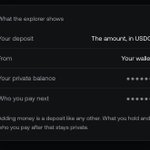
Add money to a private balance. Pay anyone privately. Run payroll from one upload. Prove only the total to the person who needs it. Let your agents pay privately too.
Base: USDC, EURC, USDT, and ETH
Ethereum: USDC, USDT, USDG, PYUSD, EURC, and ETH
Beta deposit limits apply.
@base @ethereum
your assets can move across chains
why should your privacy be limited to one?
if your money lives on base or ethereum, you shouldn't have to leave the ecosystem you use just to access private payments
that's what @gloamtrade is making possible
it's already live on robinhood chain and tempo
now base and ethereum mainnet are live too
you can bring supported assets into a private balance, make private payments, run payroll, and prove what needs to be verified without exposing your entire financial activity
and gloam doesn't just say it has built these tools
its contracts, documentation and verification tools give people a way to inspect what's been built and check its claims
that's important to me
because choosing one chain shouldn't mean missing out on privacy available elsewhere
your assets shouldn't have to live in one ecosystem for you to benefit from what another is building
privacy should be accessible wherever you hold and use your money
privacy isn't for one chain
it's for everyone

Base and Ethereum are live on Gloam.
Every payment on these chains is public by default. All of it sits on a ledger anyone can read, forever.
That was fine when on-chain money was an experiment.
It stops being fine when teams get paid in USDC, freelancers invoice in EURC, and agents settle their own bills.
Today Gloam is live on Base and the Ethereum mainnet.
Add money to a private balance. Pay anyone privately. Run payroll from one upload. Prove only the total to the person who needs it. Let your agents pay privately too.
Base: USDC, EURC, USDT, and ETH
Ethereum: USDC, USDT, USDG, PYUSD, EURC, and ETH
Beta deposit limits apply.
@base @ethereum
are you on base or eth and you wanna say no to public broadcast of your onchain activities
then just made use of gloam : gloam.trade/app/

Lithos.eth retweeted

Base and Ethereum are live on Gloam.
Every payment on these chains is public by default. All of it sits on a ledger anyone can read, forever.
That was fine when on-chain money was an experiment.
It stops being fine when teams get paid in USDC, freelancers invoice in EURC, and agents settle their own bills.
Today Gloam is live on Base and the Ethereum mainnet.
Add money to a private balance. Pay anyone privately. Run payroll from one upload. Prove only the total to the person who needs it. Let your agents pay privately too.
Base: USDC, EURC, USDT, and ETH
Ethereum: USDC, USDT, USDG, PYUSD, EURC, and ETH
Beta deposit limits apply.
@base @ethereum
Gloam is coming to Base and Ethereum
Every payment on Base and Ethereum is public.
One wallet address and it is all there for anyone to read, forever. That works for settlement. It is a terrible way to run your money.
So Gloam is coming to Base and Ethereum.
Add USDC, EURC or ETH to a private balance, pay privately, send a claim link, and cash out to any wallet when you want it public again.
Private payments never put amounts or balances on the public record, and your money stays yours the whole way.
Base and Ethereum mainnet are coming tomorrow, 26th October 1PM UTC.
Private money should work everywhere money moves.

Lithos.eth retweeted

Kann Audits 🤝 @gloamtrade
We’re excited to announce our official security partnership with Gloam!
Gloam is a Zero-Knowledge privacy-focused payments protocol built on Robinhood Chain, Ethereum and Tempo.

Lithos.eth retweeted

our society often calls people disciplined when their circumstances make discipline easier, and lazy when their circumstances make progress harder.
we judge the visible outcome of people's lives while remaining largely ignorant of the conditions that produced them.
let's try and focus on making progress with what we have, while giving others the grace to work through what we cannot see.
a supplier, creator , team member needs to know you paid them
the entire internet doesn't need to know how much you paid, which wallet funded it, or what else you do with your money
that’s one of the problems with public blockchains
the same transparency that makes transactions easy to verify can expose far more about your financial life than a payment requires
this is why @gloamtrade is built
it’s already live on Robinhood Chain and Tempo mainnet, bringing private payments to public chains
you can move funds into a private balance, send money privately, run payroll, and even prove that you have funds or received a payment without revealing your entire balance
there’s also cross-chain funding from 25 chains, alongside private swaps on robinhood chain and tempo
and the distinction matters: gloam swaps hide who made the trade
i appreciate that kind of specificity because privacy claims should be clear about their limits
the other part worth watching is security
gloam has announced @KannAudits as its official audit partner, with security reports expected to be published when completed and you know we security is the core
that’s the kind of detail i want to see more of in privacy infrastructure: not just claims about what gets hidden, but clear explanations of what stays visible, what can be verified, and what still needs scrutiny
because privacy shouldn’t mean giving up verifiability
you should be able to prove what matters without exposing everything else
that’s the idea i find interesting about glom and so should you

your wallet shouldn't have to choose between proving you're right and keeping your business private
that's the problem i want blockchains to solve
and it's why i'm paying attention to @aztecnetwork
get yourself off public chain and enjoy privacy like never before :gloam.trade/app
Lithos.eth retweeted

Happy to spend on the @UseFastlane AI tool.
Worth every penny.
🤝 Paid partnership
Lithos.eth retweeted
Privacy is heating up, and so is the bar for anyone who holds other people’s money.
Gloam is partnering with @KannAudits as our official audit partner.
Kann has helped secure over $2B in TVL across 61 audits.
Their team would be handling security for Gloam.
Private payments only work if people can trust the vault underneath them, so we’re putting ours in front of outside eyes before we scale.
The reports go public when they're done.

Lithos.eth retweeted
you want to prove you can afford something, but why should that mean exposing your entire wallet history?
this is the kind of problem privacy should solve
and to me, building a privacy chain means getting four things right:
> decentralization
your privacy shouldn't depend on blindly trusting one party
> real privacy
your personal transactions and sensitive information shouldn't be open for everyone to inspect
> programmability
developers should be able to build smart contracts that handle both private and public activity
> selective disclosure
you should be able to prove what matters without handing over everything else
take a loan application
you may need to prove you meet a financial requirement
that shouldn't automatically mean giving someone access to your entire financial history
you should be able to prove what's necessary while keeping the rest to yourself
that's the balance privacy infrastructure
needs to get right: keep what is private, private
make what needs to be verified, verifiable
if a privacy chain can't give developers room to build, users control over their information, and a way to prove what matters, then what are we really building?
your wallet shouldn't have to choose between proving you're right and keeping your business private
that's the problem i want blockchains to solve
and it's why i'm paying attention to @aztecnetwork
Lithos.eth retweeted
bitcoin and early chains made transactions publicly verifiable, but that came with a trade-off: everyone could see the activity
verification was never the same as needing everything to be public
that’s the gap oasis is working to address
with confidential smart contracts on sapphire, developers can build applications where sensitive inputs and data stay private while the blockchain still provides verifiable execution
the goal isn't to remove trust by making everything visible
it's to reduce what we have to expose just to prove something is true abd that where smart privacy comes in
that's why i find @OasisProtocol interesting: privacy shouldn't come at the cost of verifiability, and verifiability shouldn't require total transparency
your wallet shouldn't have to choose between proving you're right and keeping your business private
that's the problem i want blockchains to solve
and it's why i'm paying attention to @aztecnetwork
Lithos.eth retweeted
Gloam spotted by @vladtenev◻️
Privacy coded.

Lithos.eth retweeted

Day 4 of Making AI Make Sense
Topic: Data Preparation
Before a machine learning model can learn, we must prepare the data.
𝘉𝘶𝘵 𝘸𝘩𝘺 𝘥𝘰 𝘸𝘦 𝘯𝘦𝘦𝘥 𝘵𝘰 𝘱𝘳𝘦𝘱𝘢𝘳𝘦 𝘵𝘩𝘦 𝘥𝘢𝘵𝘢?
Raw data is messy, it has words, missing information, typos, and empty cells
In traditional machine learning, models learn by finding mathematical relationships between specific input measurements (features) and target output(labels). A model can’t find mathematical relationships between empty spaces or compute words and numbers in an equation to produce sensible results.
Noisy data forces the machine to copy the flaws of the training dataset instead of recognizing genuine patterns. This is called “overfitting”, a situation whereby a model “memorizes”, rather than “learns”.
If info is missing, the model wouldn't have enough to work with. If you feed it inaccurate info, it memorizes the mistakes in it and produces wrong output when working with data outside of its training set. This model is said to be “overfit.”
A way of avoiding model overfitting is carefully preparing the data
𝘉𝘶𝘵 𝘩𝘰𝘸 𝘥𝘰 𝘸𝘦 𝘱𝘳𝘦𝘱𝘢𝘳𝘦 𝘵𝘩𝘦 𝘥𝘢𝘵𝘢?
There are a few steps to follow when preparing data for a model to learn from. These include, data cleaning, feature engineering, data splitting, etc.
But the very first part is data cleaning. Which involves handling missing values, text noise, and corrupted entries. Each is handled differently.
𝘚𝘰 𝘩𝘰𝘸 𝘥𝘰 𝘸𝘦 𝘤𝘭𝘦𝘢𝘯 𝘰𝘶𝘳 𝘥𝘢𝘵𝘢?
For missing values,
→ raw datasets are inspected to detect invalid records, empty entries, or noise before training. This is the data scrubbing process.
→ missing blanks are filled through imputation rather than removing the whole record. For example, if a value is missing, data scientists estimate a reasonable substitute, mostly by calculating a typical value from the remaining dataset.
For messy text data,
→ The text must be “normalized” (like lowercasing and removing punctuation) so the differences don't confuse the model.
→ Duplicate words that have semantically the same meaning are removed and all words are left in their base form.
→ The texts are then represented numerically using a couple of encoding techniques. These numbers are what the model computes when learning from text data.
Tomorrow, we'd talk about feature engineering and data splitting more


Day 3 of making AI make sense
Topic: What Kind of Data Can We Feed a ML Model?
For a model to learn, it needs data.
Data comes in different forms, and every learning approach works better with a specific data form.
But first, what is data in machine learning?
Data, simply put, is the set of examples that an algorithm studies to find structural patterns or mathematical relationship in order to make predictions or perform tasks.
Typically, the data fed into the traditional machine learning algorithms is of two parts.
Inputs (called features) → facts, attributes, or measurements given to the model. For example, if you want to predict a car's fuel efficiency, its weight, engine size, and horsepower are the features.
Outputs (called Labels) → the target outcomes that you want the model to predict for every input given. In the car example, the actual fuel rating (miles per gallon) is the label.
Think of it this way, Features are basically just the attributes of the case or object the algorithm studies (just like your physical features are just the visible attributes of your anatomy).
And Labels are what a group of these features put together determine (just like how if you're vertebrate, warm-blooded, and hairy, you fall under the "mammal" label).
Now that we've established what data is, let's look at the types of data a model could learn from:
→ Structured data: information that is completely organized into rows and columns, like a database or a spreadsheet.
Each row represents an individual record while each column represents a specific attribute.
Structured data works very well with traditional machine learning models because the inputs are neatly arranged into columns which human engineers can select and evaluate directly during training.
→ Unstructured data: raw, messy, and unorganized information that do not come in tables or spreadsheet. These are mostly images, audios, videos and natural language text.
Deep learning models work better with unstructured data and instead of relying on manual feature engineering like in the above ML example, they use neural networks (idk…human brain type of stuff) to analyze the raw data and extract features automatically.
→ Semi-structured data: This is data that sits somewhere between structured and unstructured because it contains "markers" that allow for it to be organized and grouped, but it doesn't follow a rigid relational database (tables with rows and columns) form. The data here is mostly contained in JSON, HTML, IoT sensor streams, etc formats.
Engineers still have to extract, "flatten" or convert these data forms into structured tables before feeding them to classical machine learning models.

Lithos.eth retweeted
me seeing Sorsa Score all over my TL got me thinking about a few things, and the observation made me run an analysis ↯
I did put it into the table below because I think it captures an interesting distinction: having a good Sorsa Score versus actually building a solid reputation in Web3.
⇢so, does Sorsa Score matter more than branding?
i don't think we should dismiss Sorsa Score ofc it can be useful for understanding your position within crypto's social networks, and it may influence how people perceive my/your account.
but I wouldn't make it the centre of my growth strategy either.
i'd pay attention to whether the people discovering my account have a reason to remember me beyond seeing my name in their followers list.

Lithos.eth retweeted

day 12/
i used to complain about poor time management. now, i’m trying to address it by picking up a few new interests
1) i’ve always been fascinated by game theory. i tried watching a few short videos about it, but couldn’t fully understand it. today, i downloaded a PDF and plan to study it daily. i’d love to finish it before the end of the year
2) i want to keep sharpening my problem-solving skills, especially as ai becomes more capable. so for this as well, i’m setting aside time each day to work through maths problems, even if it’s just 45 minutes
those are the two new interests for now. i’ll keep you updated on how i get on
