Powering Local Communities through DeFi & Smart City Services | Powered by @MSocietyLabs.
Web3
Joined January 2022
- Tweets10.6K
- Following397
- Followers644
- Likes10.7K


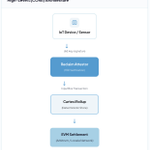


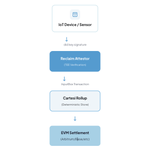
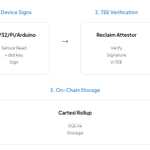


Same reason attestation beats self-reporting, you verify the work against something it cannot fake.

Imagine letting one person write an answer and grade their own work.
Sounds like a trust problem, right?
That's what makes @GenLayer interesting to me. The question isn't just what an Intelligent Contract decides, but who checks whether that decision makes sense.
On GenLayer, a leader proposes a result, while other selected validators independently verify it before the network can accept it.
This becomes especially important when decisions involve real-world information rather than simple calculations.
But here's something I initially overlooked.
Those validators don't operate in isolation. There's an entire staking and delegation system supporting them.
Staking means validators commit GEN and run nodes to help secure the network.
Delegation lets people support validators with their GEN without running a node themselves. Delegated stake contributes to a validator's selection weight, and delegators can share in rewards as well as potential penalties.
That's why choosing where to delegate isn't just about chasing the highest rewards.
If I were delegating my GEN, I'd look at a validator's uptime, past performance, penalty history, and how independently they operate.
And rather than putting everything behind one validator, I'd prefer spreading my GEN across a few reliable, independent operators, assuming I could meet the minimum delegation requirements.
Of course, spreading stake doesn't eliminate slashing risks. But it can reduce dependence on a single operator while supporting a more decentralized network.
The more I think about it, the more I realize that delegation isn't simply about where your tokens sit.
It's also about who you choose to trust with helping verify the decisions everyone else relies on.
And that makes choosing a validator a much bigger decision than it first appears.


The idle-compute thesis is real, the gap is scheduling, not supply, idle GPUs still need a reliable broker.

𝐁𝐓𝐓𝐈𝐧𝐟𝐞𝐫𝐆𝐫𝐢𝐝 𝐚𝐧𝐝 𝐭𝐡𝐞 𝐃𝐞𝐏𝐈𝐍 𝐏𝐚𝐫𝐚𝐝𝐢𝐠𝐦
AI needs a lot of compute, and most of it sits in a few large data centers. Meanwhile, thousands of capable GPUs around the world spend much of their time idle.
BitTorrent's latest BTTInferGrid post explains how it plans to connect those two facts using the DePIN model: real hardware doing real work, coordinated by a blockchain.
◆ The three ideas behind the design
1️⃣ Hybrid Architecture: The Bridge Layer
The proposed network bridges off-chain computational resources with on-chain coordination and settlement.
Running AI models directly on a blockchain would be slow and expensive. So the heavy work stays on real machines, while BTTC handles what needs trust: recording results and paying for them.
2️⃣ Infrastructure Coordination: The Incentive Layer
This is the core of DePIN. Physical infrastructure isn't managed by one company. It's coordinated through blockchain-based incentives.
Nodes are rewarded for useful, verified work, which is designed to keep the network honest without a central operator.
3️⃣ Crowdsourcing Resources: The Supply Layer
Participants can join permissionlessly by registering their devices. Anyone with suitable hardware can contribute capacity, and the network grows from many small providers instead of one large one.
◆ Where does $BTT fit?
BTT is positioned as the settlement asset: developers pay for inference, and contributors and validators are rewarded through BTTC. If real AI workloads run on the grid, that demand flows through BTT.
◆ Reality check
A DePIN design doesn't guarantee adoption. Scattered hardware must stay reliable, verifying AI outputs is hard, and rewards eventually need to come from paying users rather than incentives alone. BitTorrent still describes full integration as roadmap work.
The real test is whether developers choose BTTInferGrid for actual workloads, at a cost and reliability that compete with centralized clouds.
@BitTorrent @justinsuntron
#BTT #BitTorrent #TRON #TRONEcoStar
Latency at the network layer is the ceiling, no app-side trick beats slow block propagation.

Blockchain performance begins with the network. @get_optimum is working on the infrastructure layer to enable faster block propagation and lower latency.
When every millisecond counts, a better network means a better blockchain.
The @get_optimum network is growing
Since its launch, the Total Value Boosted (TVB) has increased by 135,000 $ETH (approximately $324 million).
This is a significant milestone for Ethereum infrastructure.
Track the data on Optimum Hub.
@cryptooflashh
@CryptoSundayz
#Web3 #DataAcceleration #Optimum #Crypto #Infrastructure #Nodes #CryptoCommunity #DataLayer #DePIN #Flexnode

Doubling operators is the hard part of DePIN, the first dozen are harder to keep than the next hundred.

🥳 17 live mainnet operators!
this number was 8 not long ago...
it has more than doubled now, which is a massive win!
NEAR's MPC network is an important part of the near:native engine, powering @NEARProtocol chain signatures and @near_intents itself
i love seeing the growth in independent nodes, as it makes the network stronger, more reliable, and more secure. this is fruit of the hard work and passion of many contributors, in particular @sal_ternullo (@svrn_ai CEO). big congrats!
however, i'll be picky here, because accuracy is important.
i'm not sure we can call it "decentralized."
NEAR's MPC network (like most, if not all, other MPC networks) is a PoA network. meaning it uses proof-of-authority for its node system, similarly to Hedera and a few other known poa chains.
node operators need to ask permission to join the network and the onboarding process is highly centralized and demanding, afaik. this is intentional for both security and performance concerns. they demand extremely high uptime for the sake of the network, together with outstanding reputation, specialized hardware, and technical knowledge to operate
that said, i understand the design choices and think it already provides massive value as is, as long we understand the trade-offs and trust assumptions that exist in such a system -- already infinite times better than more centralized, legacy systems
i simply don't think we can call a permissioned system running on proof-of-authority a decentralized system, as it weakens the full idea and concept of decentralization that is so important for our space (and for the NEAR L1 itself, which is decentralized and permissionless via proof-of-stake).
fun fact: the 2024 chain signatures launch blog explicitly described the initial set as using a proof of authority security model at launch, with the future state planned as a permissionless network based on staking requirements and slashing. that transition has not happened.
curious if we will see it at some point in the near future

Our nodes are the proof half of this, the spec is a claim until the hardware signs it.
Spec is the promise, the node is the proof, only one shows up in production.
xitter.cf/LocaleNet/status/21140…
Stable ids are the offchain version of attestation, prove the event once and stop re-trusting it.

A timeout doesn’t prove an action failed. If the request committed but its response was lost, a retry can create a duplicate.
Stable IDs, idempotency, and reconciliation make recovery safer.
👇 Read the article below.
#AIAgents #AISecurity #AgenticAI

A lost ack is just a device you cannot re-trust, which is exactly what the attestation solves.

Your AI agent submits a $50,000 payment.
The payment service times out.
The agent retries.
Congratulations. You might have just paid twice.
This is a hypothetical example, but the underlying engineering risk is very real.
Microsoft recently published guidance on Durable Task in .NET, explaining an important distinction that enterprise AI developers need to understand.
Durable execution is not the same as exactly-once execution.
A durable workflow can survive crashes, resume processing, and preserve orchestration history.
But what happens if an external payment service successfully processes a transaction and the response gets lost?
The workflow may not know whether the transaction succeeded.
Blindly retrying could execute the same business operation again.
The solution isn't a smarter language model.
It's established distributed-systems engineering: stable operation identifiers, idempotency keys, authoritative transaction records, reconciliation, and controlled retries.
AI agents can recommend actions. But authorization, transaction execution, and verification should remain under deterministic application control.
Remembering what the workflow attempted is not the same as knowing what actually happened.
Explore more practical enterprise AI guidance at AInDotNet.com.
#EnterpriseAI #AIAgents #DotNet #DurableTask #DistributedSystems #EnterpriseArchitecture #AIEngineering #Idempotency #AInDotNet
Same lesson our nodes live by, you do not trust the agent, you make it prove the action.

An AI agent issues a refund. The response times out. Should it retry?
That’s still a distributed-systems problem.
Permissions. Idempotency. Recovery. Tests. Behavioral evaluations.
AI agents are software. Engineering still applies.
davidparry.com/blog/2026/10/…
B, and the fix is a key the retry can look up, so the second call proves it is the same work.

System Design Concept:
In Spring Boot microservices, Service A calls Service B.
Service B processes the request successfully, but Service A times out and retries the request.
What could be the problem in this case?
A) Memory leak
B) Duplicate processing
C) Database deadlock in every case
D) Automatic rollback of Service B’s transaction
DePIN lives or dies on node retention, getting the first fifty online is easy, keeping them there is the job.
Same discipline on hardware, the key proves the work so you never have to re-trust it.
xitter.cf/MSocietyLabs/status/21…
Proof cost is the adoption tax, if verifying is expensive people just go back to trusting.
xitter.cf/NovaaOnChain/status/21…

One of the biggest barriers to ZK adoption isn’t the technology itself. It’s the cost and complexity of generating proofs.
That’s the problem @fermah_xyz is working to solve. 👇
ZK proof generation can demand serious computing power, specialized hardware, and infrastructure that developers don’t always want to manage themselves.
Fermah approaches this with a Universal Proof Market that connects proof requests with available computing resources.
Here’s why it matters:
→ Developers can request proofs without managing all the proving infrastructure themselves.
→ CPUs, GPUs, and FPGAs can contribute computing power.
→ Better resource coordination can help make proof generation more accessible.
→ A shared proving marketplace can support the growing demand for ZK applications.
The goal is simple: make proof generation easier to access so builders can focus more on creating products and less on infrastructure.
ZK needs more than innovation. It needs proving infrastructure that can scale with adoption.
That’s where Fermah comes in.

A trail only helps if anyone can audit it, accountability dies the moment it's private.
xitter.cf/mdshefat217/status/211…

Verify-it-yourself is the whole design, if you have to trust the dashboard it isn't proof.
xitter.cf/Nuno_BTC/status/211437…

Reproducible across hardware is the only proof a spec sheet can't fake.
xitter.cf/RehanHikii/status/2114…

Receipts over defaults holds on hardware too, measure the node, don't trust the spec.
Defaults are a guess, /slots is the receipt. Measure before you trust the flag.
xitter.cf/automater_ai/status/21…