

Creator of @LawDictApp | More Apps to Come.
Swift | Swift UI
Joined April 2010
- Tweets13.8K
- Following716
- Followers816
- Likes112K





Pinned Tweet
Como lo indique.
Dejo el repositorio con el ejemplo de la aplicación.
Quien desee ir aprendiendo Flutter, estaré dejando de poco en poco lo que voy aprendiendo.
Ejemplos prácticos y sencillos.
github.com/Lokocr/aprende_fl…

Jose Cartin 💙| App developer retweeted

¿Aún usas Swagger? Entonces tienes que ver esto
→ youtube.com/watch?v=mSwn_gy9…


Jose Cartin 💙| App developer retweeted

Nos enseñaron que la Tierra orbita al Sol en un círculo cerrado. En realidad, la Tierra nunca ha regresado al mismo punto en el espacio en una vez en 4.5 mil millones de años.
En este momento, el Sol está arrastrando a la Tierra y a todos los planetas alrededor del centro de la Vía Láctea a 230 km/s (828,000 km/h), más de 18,000 kilómetros cada 80 segundos.
Porque el Sistema Solar está inclinado 60.2° respecto al plano galáctico y sube y baja a través del disco galáctico aproximadamente cada 30 millones de años, los planetas trazan hélices de corcho tridimensionales abiertas a través del espacio profundo en lugar de bucles planos.
La última vez que el Sol se encontró donde se encuentra hoy, hace un Año Galáctico (230 millones de años), los primeros dinosaurios apenas comenzaban a aparecer en la Tierra. Desde que se formó hace 4.6 mil millones de años, nuestro Sol solo ha completado 20 vueltas.
Hoy no pude más y lo dejé salir.
Este año ha sido muy complicado para mí persona. Otro año más que paso un fin de año sin trabajo.
Mi familia depende de ello, que jodido sentirme así ahorita mismo.
Intento TikTok y no me sale, no entiendo jajaja


Jose Cartin 💙| App developer retweeted

🚨 Claude acaba de comerse YouTube
11 skills GRATIS para investigar vídeos virales, escribir guiones, optimizar títulos y planificar contenido
Todo desde un único proyecto de código abierto
Las hemos puesto a prueba
Y algunas hacen cosas que no esperaba 🧵👇


Jose Cartin 💙| App developer retweeted

This channel has got 750k views in 3 videos using my voice clone from Elevenlabs 😭🤣

Esto serían los famosos Sleep channels que tanto están de moda:
youtube.com/@susurrosdelolim…
Está bien, pero son videos nada más con buena narración, relleno, un filtro animado por encima de las imágenes y ya...
Y está vara genera buena money, que loco.

Jose Cartin 💙| App developer retweeted

map explainers have been going viral for 4 years straight
they still had 0 competition because they needed an animator team and a lot of costs
i made this video with claude opus in full code with 1 prompt im giving for free
$0 spent on editor
$0 spent on ai videos
steal my prompt ↓
<inputs>
Ask me for: my map story in one line (a place, border, island, route or line on the map with one surprising fact) and the length (30-45 s). If I have no idea, pitch me 3 with a hook line each and let me pick. Check every fact on Wikipedia before you write a word.
</inputs>
<direction>
A 1920x1080 30 fps map explainer in the Johnny Harris / RealLifeLore look, made 100% in code as one HTML canvas page. Real satellite imagery for the close-ups, a vintage paper map for everything wider, red marker drawn on top.
Satellite: Sentinel-2 cloudless 2016 tiles from EOX (CC BY 4.0, credit "Imagery: Sentinel-2 cloudless 2016 by EOX, contains modified Copernicus Sentinel data" small in the corner). Cut the land out and lay it over a drawn navy sea (#14304A centre to #0B1E31 edges) with a soft teal shallow-water halo (#2A6274).
Paper map: ocean #A9C2C4, land #ECE2CA, countries in muted pastels (#E6C1A7, #EEDAA4, #D2DEB8), coast dark brown 1.25px over 3 soft water-lining strokes (30, 19, 10px), dashed brown borders, a 10° graticule at 26% opacity, labels in Cormorant Garamond 700 letter-spaced 8-16px.
A paper texture multiplied over everything (85% on paper, 22% on satellite), 7% film grain, warm vignette. Red marker #D9291D, 7-10px, round caps, wobbling and re-drawn at 8 fps so it boils like ink. Handwriting in Permanent Marker.
Callouts are physical paper: cream tags with a colour bar and a strip of tape (Oswald 700 54px title, Special Elite 28px subtitle typed in), torn strips with a yellow highlighter swipe, tear-off calendar pages, a red rubber stamp. A live lat/long readout in Special Elite bottom left on satellite shots.
Banned: AI video or image generation, stock footage, word-by-word captions, hard cuts (one continuous camera only), any frame where nothing moves, icon packs, glossy gradients or glass UI.
</direction>
<structure>
Length: 30-45 s at about 175 wpm, one continuous camera, no hard cuts.
0 s open tight on satellite of the subject with the hook line ("From this ___, you can ___"), a red marker circle draws around it on the key word with a handwritten word beside it → name the places: a paper tag slaps onto each one on its name, its subtitle types in on the next word → the key number: a dashed red measuring line or route draws in, with a black tag that counts up to the number → the context: a Google Earth pull-out from satellite to the paper map at continent or ocean scale in about 1.3 s, the big line, border or route draws in red marker with a handwritten label, then dive straight back in → the consequence: 2 physical props (calendar pages, clocks, price tags, flags) pop in on their words and one of them flips → the local twist: torn paper strips with yellow highlighter → the story: a red stamp slams the year with a camera shake, the frame splits into two tinted sides, a tracker card (date, time, counter) and a dotted path with a moving marker that crosses the line on the right word → the ending: pull all the way back to the big map with both sides tinted, a red circle on the subject, and a paper end card whose number gets scribbled out and replaced in marker by the real punchline, held 1.5 s after the last word.
</structure>
<build>
1. Tools (all free, all local). Install what's missing and tell me what you installed:
- Python with numpy, Pillow, OpenCV and Playwright (Edge or Chromium)
- FFmpeg
- faster-whisper small.en, int8 on the CPU
- Kokoro (kokoro-onnx) with kokoro-v1.0.onnx and voices-v1.0.bin
- d3 7.9, topojson-client 3.1, world-atlas 2.0.2 land and countries at 50m and 10m, Natural Earth ne_10m_geographic_lines (date line, equator, tropics)
- Google Fonts: Permanent Marker, Special Elite, Oswald, Cormorant Garamond
- one free tense documentary music bed, plus free SFX: pen marker line, writing scribble, paper slide, page turn, tape, whoosh in and out, impact, typing, and whatever the story needs
2. Voice (Kokoro):
- Write short lines (about 10 per 30 s) and show me the script before you record.
- Kokoro am_michael at speed 1.18, one wav per line, joined, then shrink every pause over 0.28 s to 0.2 s.
- Run every place name through Kokoro's phonemizer and respell it until it's right ("Diomede" had to become "Diameed").
- Word times: faster-whisper on the final wav, cut into chunks at every pause.
3. Timing: key every camera move, pop-in, marker stroke and SFX to a word (by its nth occurrence, since "is" and "and" repeat), never to a second, so a new voice re-times the whole film.
4. Map engine:
- Web mercator in world units (256 = the globe). Camera = focus point + its screen offset + zoom Z, at 2^Z px per unit. Zooms interpolate Z linearly under a quartic in-out ease.
- Rotate the d3 projection so the story's region never touches the antimeridian cut.
- Satellite: stitch tiles at 3 zoom levels around the subject (like z9, z11, z13). Mask the land (redder than blue by 4-6 levels after a 1.5px blur, opened and closed, specks removed, holes filled), feather the mosaic edges, fade the finer mosaics in as you zoom.
- Satellite fades to paper between Z 9.3 and 7.3.
5. Marker and paper:
- Strokes resample every ~26px and wobble ±1.5px (sine plus noise re-rolled 8 times a second). Draw a dark red underlay 1.6px wider, the red core, then a pink 30% highlight offset up-left. Circles go 1.1-1.13 turns.
- Pop-ins are a spring (damping 0.48, 19 rad/s) from 55% scale with a small rotation settle. Exits shrink and fade in 0.22 s.
- Handheld drift about ±2px and 0.06°, a 16px decaying shake on the stamp.
6. Render:
- Every frame is a pure function of time. Playwright seeks it and grabs the canvas.
- 8 motion-blur subframes over half a frame, raised up to 40 when the zoom is fast.
- Look at a contact sheet of stills and full-size crops before the full render. After it, pull frames from the finished mp4 and check those, not the page.
7. Edit and sound:
- Voice 10+ dB over the music in every phrase, the bed ducking under each word.
- One SFX per event: marker on every stroke, paper slide on every tag, page turn on every flip, a whoosh on each zoom, an impact on the stamp.
- Mix to -14 LUFS, encode H.264 CRF 19 with AAC.
</build>
<gotchas>
d3 with a custom clipExtent paints land over the whole sea when a polygon reaches the pole or is read as inverted, so drop Antarctica and any ring whose d3.geoArea is over 2π. file:// pages can't fetch JSON, so wrap the topojson as JS globals. Use only the 2016 Sentinel-2 cloudless layer (later years are non-commercial) and keep its credit in frame. Fast zooms ghost at 8 blur samples, so scale the samples with zoom speed. If your renderer injects its own global function, never give yours the same name, or every frame renders black while the stills look fine.
</gotchas>
<start>
Ask me for my map story first (or pitch me 3), fact-check it, then show me the script before you make the voice.
</start>
Jose Cartin 💙| App developer retweeted

50 YOUTUBE VIDEO HOOKS THAT ACTUALLY WORK
(hint: save this for later)
1. I tested [X] for [N] days so you don't have to.
2. Most people get [X] completely wrong.
3. This one change took my [metric] from [A] to [B].
4. I almost deleted this video.
5. Nobody tells you this about [X].
6. If you're still doing [X], stop.
7. Here's what [X] actually costs.
8. I made [N] mistakes so you can skip them.
9. Before you [X], watch this.
10. This shouldn't have worked.
11. Everyone told me [X]. They were wrong.
12. I'm going to show you exactly how I [X].
13. You have [N] seconds to decide if this video is for you.
14. The biggest lie about [X]:
15. What I'd do if I had to start [X] over today.
16. This is why your [X] keeps flopping.
17. I [X] for [N] days. Day [N] surprised me.
18. Here's the part nobody shows you.
19. Stop scrolling if you [X].
20. Most creators miss this about [X].
21. I got [result] without [common thing].
22. The fastest way to [X], no fluff.
23. Let me save you [N] hours of [X].
24. I was wrong about [X].
25. This is the cheat code for [X].
26. Here's what happens when you [X].
27. You don't need [X] to [goal].
28. I'm about to break the one rule of [X].
29. The mistake I made on my first [N] [X].
30. Your [X] is costing you [Y].
31. I asked [N] creators about [X]. Same answer every time.
32. This is what [X] looks like behind the scenes.
33. Here's the exact [X] I use every week.
34. Don't [X] until you hear this.
35. Why does nobody [X]?
36. I tried the viral [X] hack. Here's the truth.
37. The one thing separating [X] from [Y].
38. If I had [N] days to [X], this is what I'd do.
39. This is the video I needed when I started.
40. [X] is easier than you think. Here's proof.
41. Quick question: when's the last time you [X]?
42. I'm giving away the [X] I used to charge for.
43. What nobody tells you about your first [N] [X].
44. Do this before you hit publish.
45. Here's why [X] beats [Y].
46. I fixed my [X] in [N] minutes.
47. You're one [X] away from [goal].
48. Think [X] doesn't matter? Watch this.
49. This is the part where most people quit.
50. By the end of this video, you'll [outcome].

Jose Cartin 💙| App developer retweeted
i just made this stickman animation in full code with claude opus 5.5
took me 20 mins and spent $0 on videos or images
promised you guys id give a free claude skill to re create any code format so here it is
hand this prompt to your claude code and thank me later ↓
<inputs>
Ask me for: my video idea (one line is fine), the setting, the length (60-90 s) and the narrator (an ElevenLabs voice, or "free" for a local text-to-speech). Everything is built in code: no AI images, no AI video. Make it MY story, not a copy of an example.
</inputs>
<format>
The style is a second-person survival thriller with stickmen, built as a series:
- "Imagine you…" hook with a time stamp in the first 3 s
- a HUD with the DAY number and a clock that moves forward through the episode
- 3-4 RULES, each one paid off on screen
- a threat that escalates and is mostly shown, not told
- a twist that makes one rule impossible
- a two-choice ending ("DO YOU OPEN IT?" style, a green and a red option, "COMMENT BELOW") and "FOLLOW FOR DAY 2"
Around 20-30 voice lines, 60-90 s, a new shot every 1.5-3 s.
</format>
<story>
Write a beat sheet and the script first and show me both before building anything.
- One line = one visual. Rules are short commands.
- Open a new question every ~10 s and only answer it with a bigger one.
- Put the viewer in POV for the scary parts: what you see through a door, a window, a phone, a peephole.
- The ending is a choice where both options look bad.
- Write numbers twice: the caption form ("11:58 PM") and the spoken form ("eleven fifty-eight P M") for the text-to-speech.
- Rotate settings between episodes (apartment, subway, school at night, hospital, cabin, plane, office, motel) and fit the threat to the setting.
</story>
<look>
Pick a palette per story, but keep the language:
- real 3D low-poly sets with real lights and shadows; the mood comes from light (one warm practical, one cold fill, one strong accent such as a door gap, a screen or a siren)
- the stickman is flat and 2D-looking: a light body with a thick dark outline, round strokes, dot eyes, no mouth; give the main character one mark (a scar, a cap, a colour) so doubles and callbacks read
- the overlay: a monospace HUD top-left, chunky captions (1-3 words, key words in an accent colour), a tilted rule sticker with a big condensed title, phone screens drawn in 2D
- banned: AI frames, glossy 3D characters, emojis, music with vocals, long captions
</look>
<shots>
A library to adapt to the story (never use all of them):
- the opener: a camera move that starts tight on you and pulls out to show where you are
- POV phone in your hands (2D phone UI, two stick thumbs)
- a macro on the one detail that matters
- outside chaos from above (balcony, bridge, window): physics vehicles, a running crowd, something collapsing or burning
- third-person action in the room: walking with planted feet, reaching, hesitating, barricading
- POV interaction: throwing, holding a torch, opening something
- a close-up of your face for the reaction
- a low angle on a door or vent: light leaking in, shadows moving
- knocks, shakes, things falling
- a fisheye peephole, camera or window view of the threat stepping closer
- the choice screen and the end card
</shots>
<tools>
What each tool is for. Install whatever is missing, and ask me before anything paid:
- three . js: the 3D engine; it runs inside a web page. Download its module file locally so renders don't depend on the internet. Use its post-processing passes for bloom, plus one custom lens shader for vignette, grain, fisheye and colour fringing.
- cannon-es: a JavaScript physics engine for vehicles, falling debris and collapses.
- Playwright (Python): opens the page in a real browser (Edge or Chrome with the GPU on) and captures every frame as an image.
- ffmpeg: the command-line video and audio tool. It joins the frames into an MP4, cuts and filters the audio (highpass, lowpass and echo for voices behind doors), mixes, normalises loudness and makes the phone-size copy.
- ElevenLabs, or Kokoro (free local text-to-speech), for the narrator.
- faster-whisper: free local speech-to-text with word timestamps. Use it to cut the voice cleanly and to time every caption.
- numpy and Pillow: to check audio levels and make contact sheets of stills.
- Sound: free downloaded sound effects from Mixkit (never synthesized) and a dark cinematic drone or tension bed with no vocals.
</tools>
<build>
1. One HTML page (film . html) with the 3D renderer at 1080x1920 drawn into a 2D canvas that also holds the overlay. A function window . seek (t) draws frame t and must be a pure function of time; every cut, sound and move is keyed to the word times.
2. Stickman. Draw each figure with 2D canvas strokes onto its own texture and put it on a plane that always faces the camera, with an alpha test so it casts a real shadow and slight emissive so it reads in the dark. Pose with joint angles, and walk with 2-bone IK so the planted foot never slides.
3. Physics and cloth. Simulate once at load with a fixed timestep, record the positions, then sample them by time, so every render is identical. Cloth (sheets, curtains, flags) is a verlet particle grid with wall and floor collisions and pinned points you can release.
4. Voice. If you generate one long take, never cut it at the API's character timestamps: they drift and slice words. Transcribe the take with faster-whisper word timestamps, match it to the script, cut only in real silence between lines, and only add pause where the natural one is too short.
5. Captions. Re-transcribe each final line, normalise numbers ("6:42" = "6 42", "AM" = "a m"), align the caption words to what was heard, and snap each word to its real start in the audio. Check that every caption has voice under it within ~120 ms.
6. Render. Playwright steps window . seek through every frame at 30 fps, and ffmpeg encodes a high-quality master, then a phone copy under 30 MB.
7. Mix with ffmpeg: the voice on top, the music about 12-14 dB under it, one sound effect per event, a dip before the big moment, loudness at -14 LUFS, then a scan for dropouts.
</build>
<gotchas>
- is narrow: a normal lens sees very little sideways, so use wider lenses indoors and keep the subject close to the aim point.
- Glass behind a solid frame is invisible: build mirrors and windows as a frame around a real hole.
- Dust spread everywhere reads as stars, so keep it inside light beams.
- Night shots go black after compression, so give each one a cold fill light.
- Fog swallows distant things.
- Never judge a reference or your own render from one frame every few seconds; check motion at the full frame rate.
- Check cuts, captions and audio joints with numbers before every full render.
</gotchas>
<start>
Ask me for the idea, show me the beat sheet and script, then 6 stills of the key shots before rendering the full video.
</start>
Será que el método nuevo puede hacer esta clase de videos @jpaask ?

Tu mano se va a levantar sola si empujas una mesa 30 segundos.
Pruébalo mientras lo ves.
No le pasa a todo el mundo.
teapawt.net/ImpactoEterno/status/2…
Es jodido intentar, intentar y seguir intentando.
Tanto el buscar tener trabajo de nuevo como lograr hacer que funcione lo tuyo en redes.
Veo a la gente que les funciona, se que toma tiempo, pero que complicado no sentirse que no logras nada
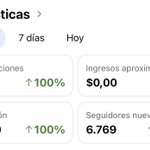
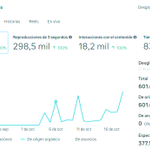
Estos son los números que tengo en mi página de Fb, me gustaría poder mover este contenido a YT, pero quien sabe si valga la pena.
Veré si mañana voy subiendo el mismo contenido.
Son shorts, pero quien sabe si funcione la verdad.
Espero que si jaja


Jose Cartin 💙| App developer retweeted

❌ Los MEJORES animes de la historia:
NO son:
❌ Dragon Ball Z.
❌ Attack on Titan.
❌ Death Note.
❌ Bleach.
❌ Hunter x Hunter.
✅ Los 5 animes que SÍ merecen estar entre los MEJORES de la historia ↓↓
Jose Cartin 💙| App developer retweeted

🤔 ¿NUNCA TE PARECIÓ EXTRAÑO ESTO DE THE BIG BANG THEORY?
En The Big Bang Theory, Penny trabajaba como mesera y podía pagar ella sola la renta de su departamento.
Mientras tanto, Leonard y Sheldon, dos físicos con doctorado que trabajaban en una prestigiosa universidad, compartían departamento para dividir los gastos.
😂 ¿Cómo es que Penny podía vivir sola y ellos dos compartían departamento?


Jose Cartin 💙| App developer retweeted

Nuestro programador estrella siempre resolvía las caídas del servidor de madrugada. El CEO lo adoraba y lo ponía de ejemplo de compromiso en cada reunión. Un día me tocó revisar el historial del código para una auditoría externa y encontré un patrón extraño en las actualizaciones...