



Pinned Tweet
My research published in #Biogeosciences and #WaterResearch served as a basis for an article on BBC Future Planet ‘The rivers that breathe greenhouse gases’. Main conclusion: Cleaner water, cleaner air! bbc.com/future/article/20210…

We're thrilled to share that our two papers on greenhouse gas (GHG) emissions from tidal wetlands have just been published! These two studies delve into the complex interplay between natural processes and human activities shaping GHG emissions from tidal wetlands.
3
10
These findings provide valuable insights for effective management of tidal wetlands in mitigating climate change.
#tidalwetlands #greenhousegases #climatechange #research #ecology
33
Paper 2: Untangling the source - Salinity controls methane, denitrification drives nitrous oxide (link: authors.elsevier.com/a/1jFGJ…)
By investigating production pathways, this study identifies salinity as a key driver for methane emissions, with freshwater wetlands emitting much more
5
Paper 1: Pollution compounds salinity - Freshwater wetlands dominate wetland GHG emissions (authors.elsevier.com/a/1jFDN…)
This study reveals that human-driven water pollution compounds natural salinity gradients in shaping GHG emissions from tidal wetlands.
7

It indicates that N2O emissions from the water are higher in summer and are mainly generated via denitrification processes. Link: doi.org/10.1016/j.watres.202… or authors.elsevier.com/a/1i0P0…
10
Excited to share our latest article published in Journal of Environmental Pollution: Impact of salinity gradient, water pollution and land use types on greenhouse gas emissions from an urbanized estuary.
1
16
Explore the findings and their implications for sustainable river management with free access here: authors.elsevier.com/a/1hizQ…. This research was supported by FWO-Flanders and G-STIC.
10
As the Guest Editor for a Special Issue of the open access journal Water (ISSN 2073-4441, IF 3.530), I would like to invite you to publish your paper in this issue. Quantifying Greenhouse Gas (GHG) Emissions from Inland Waters mdpi.com/si/143450 #mdpiwater via @Water_MDPI
Read our article to know how ML can be applied correctly and effectively in river research and beyond lnkd.in/egvKRSwE
We propose an end-to-end workflow for #ML applications where feedback loops play an essential role in improving the applications & better managing #rivers
3
Long Ho retweeted

Research on #GHGemissions from rivers and lakes is fragmented. Yet, to reduce them we need to understand them. To fill this gap, the new OPTIMIS project, by @ugent and @AnteaGroup_BE, will improve the monitoring of these emissions.
👉 bit.ly/3rr32k0
@GoethalsPeter
Long Ho retweeted
Did you know #river basins also emit a lot of #GHGs? To help developing countries understand and reduce these, @Ugent & @AnteaGroup_BE will develop an online platform to share standardised measurement techniques & training materials.
👉Learn more bit.ly/3MucRa2
What will you do during a gentle winter in Belgium? Taking samples of greenhouse gases in Flemish Ardennes, of course! #LeafPadGHG
@MikePeacock86
@GoethalsPeter


Very happy to receive a #GSTIC grant for our project on #greenhousegas #emissions from #river basins. Looking forwards to exploring and optimizing #monitoring techniques in order to #assess and #mitigate the emissions from rivers located in four different continents. #OPTIMIS

Long Ho retweeted

Deadline to submit applications for 'Water Industry and Research awards' 2021 - 1st Oct ❌
In 2020, @LongTuanHo & #MarieForio won the 'Water research' and 'Development collaboration' awards 🥉🏆. This year it could be you 👉👨👩
Click on biwa.be/awards.html for details..📄

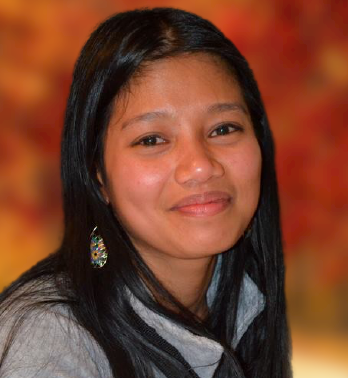
Enjoy the summer in Flemish Ardennes while monitoring GHG emissions from some artificial ponds #LeafPadGHG
@MikePeacock86 @GoethalsPeter


Long Ho retweeted

Global rivers emit large amounts of greenhouse gases. The reason is simple: globally 80% of waste water is entering rivers untreated. Triple wins can be achieved here: improved water quality and biodiversity and reduced emissions:
bbc.com/future/article/20210….

As a Guest Editor for @JoVEJournal, we are organizing a Methods Collection titled “Advance monitoring of wastewater treatment plants” Interested in contributing? Please submit an abstract here: jove.com/methods-collections…
Long Ho retweeted
Congratulations to Prof. @EvelineVolcke - Head, Biosystems control group (UGent), Dr. Francis Meerburg - R&D engineer Aquafin and Dr. @LongTuanHo - Animal sciences & aquatic ecology (UGent) on joining the B-IWA board of directors! We are beyond delighted to have you with us!


Why choose between #mechanisticmodels and #AI when you can integrate them to generate faster and more reliable results? Check out our novel framework to assess the risks of #greenhousegasemissions from #rivers by combining these tools! authors.elsevier.com/a/1dD7p…
1