

Michael Ma is a father, husband, businessman, and dedicated community leader who is proudly serving as the Member of Parliament for Markham-Unionville.
Markham, ON
Joined February 2026
- Tweets106
- Following6
- Followers390
- Likes12








Join Minister Tim Hodgson, York Regional Police, and me for our Community Safety Forum on November 13th. Learn practical ways to protect yourself and those you care about, including tips on home security, personal safety, and avoiding scams.
Space is limited! Register now by scanning the QR code on the poster or by visiting the following URL: [forms.gle/yrXHQqsXnQni2Xj5A]
We’d love to see you there!

The challenges facing Hong Kong Pathway applicants remain an important issue for myself and my community in Markham-Unionville, particularly given the significant application backlog. I have continued to raise concerns about processing delays with the Minister of Immigration and have consistently advocated for affected families. Earlier this year, I called for a 33,000-person quota to be allocated to help address the backlog; further, I hosted a roundtable with the Minister, applicants, and community leaders to ensure that the voices of those in this backlog were heard.
Thank you, Minister Diab, for helping bring attention to these concerns that affect many in my riding and across Canada.

Canada is building, and behind every major project are skilled workers. We are investing in training and supporting skills development so that communities across the country have the people they need to get the work done.
On October 16, Minister Hajdu announced up to $258.6 million in funding over five years, with $50 million ongoing, to the Sectoral Workforce Innovation Fund (SWIF). Through SWIF, we are helping key sectors and regions recruit, train, and retain skilled workers, while helping Canadians build in-demand skills and access good, well-paying jobs.
As Markham-Unionville develops into a major hardtech innovation hub, our community is expanding to become an integral part of Canada’s skilled workforce. SWIF will help address immediate skilled labour shortages in the region through industry-led solutions aligned with federal priorities and industrial strategies. As part of a broader approach to ensuring Canada has the people and skills needed to deliver on its economic ambitions, these investments will help connect workforce needs with the industries, projects, and priorities driving Canada’s future growth.
Team Canada Strong, an $8 billion investment, is working alongside this initiative to recruit, train, and hire up to 100,000 Red Seal skilled trades workers by 2030-31 to help build Canada’s housing, infrastructure, and defence priorities.
Together, these efforts support workforce solutions that respond to the needs of workers, employers, and key sectors across Canada. Just as a nation is its people, an economy is its workforce – by skilling up our talent pool, we are building up Canada Strong in real time.

A few weeks ago, I gave a speech on Bill C-39 – the Building Canada Strong Act. Today, I would like to layer on with a short video that walks us through why this legislation matters.
Currently, major infrastructure projects can take years – from conception to construction to completion. Bill C-39 will streamline decision-making and help get these nation-building projects built faster, creating jobs and delivering faster economic growth that benefits all Canadians.
One consultation. One coordinated federal decision. Within one year.
This is how we get shovels in the ground faster for Markham-Unionville and beyond; this is how we Build Canada Now.
Had the pleasure of providing brief remarks during the opening of the TCCSA Career Expo at York University's Markham Campus last month. The Cross-Cultural Community Services Association is guided by a north star of strengthening competencies and fostering participation – this Career Expo was a quintessential expression of their organizational commitment to creating employment opportunities, strengthening workforce connections, and supporting inclusive communities.
Taking place at the heart of downtown Markham, the Career Expo was a gateway for students and job seekers to network and to learn more about employment opportunities from more than 25 organizations across York Region and surrounding communities – companies such as RBC, CIBC, and Sun Life were present.
Having been on both sides of the hiring table throughout my journey – as an early-career professional looking for opportunities and as a C-Suite executive responsible for hiring talent and building teams – I know how important these kinds of events are. By bringing together job seekers, employers, and community partners, the TCCSA is helping our young people both to explore their options and to find their place in the workforce.
A core message that I expressed in my opening remarks was that many of the successful people I've worked with over the years were those who continued to learn, adapted to change, and were prepared to take on new challenges when opportunities arose. By taking a step into the Career Expo, the attendees were demonstrating a core prerequisite for the three qualities I outlined – they showed up. By increasing their surface area of contact with the world at large, they are creating their own opportunities. I look forward to seeing where everyone's journey takes them in the years ahead!

In late September, I had the honour of attending the grand opening ceremony for the Markham Golf & Country Club in my riding alongside Mayor Scarpitti and Markham Councillors.
A traditional lion dance was a highlight of the opening festivities; a ribbon-cutting segment ceremonially inaugurated the club as open for business as a private golf facility and event venue. Community hubs like this are a central fixture in how we build a stronger civic culture – they are anchors for the events that bring us closer together, time and time again.
Located at the heart of Markham-Unionville, just south of Woodbine and 16th Avenue, the golf and country club spans a total of 33 acres, creating a welcoming environment that combines recreation with fine Cantonese cuisine.
What a major Markham milestone! Congratulations to the Club – I look forward to its development into a major convener of meaningful community connections.


Last Monday, I had the immense privilege of partaking in two events on Parliament Hill in honour of Korean Heritage Month – a time to recognize the rich and vibrant heritage of Korean Canadians, who have contributed so much to the fabric of Canadian society.
In the morning – right on the front lawn of the Hill – I gave brief remarks at a flag-raising ceremony, hoisting up the flag of the Republic of Korea. Then, in the evening, I attended a reception hosted by Ambassador Ki-Mo Lim, celebrating Korean National Day (Gaecheonjeol) and Armed Forces Day, recognizing the service of veterans who fought in the Korean War.
As Vice-Chair of the Canada-Korea Interparliamentary Friendship Group, I would like to highlight the longstanding strategic partnership that our two countries continue to have, forged in trade, economic development, culture, and our shared history. From the legacy of the Korean War until today, the bilateral relationship serves as a cornerstone of stability and prosperity in the Indo-Pacific; domestically, Korean culture has become an important part of Canada's diverse and multicultural identity.
In 2024, a motion passed unanimously in the Senate officially recognizing Korean Heritage Month nationwide. Thank you to my parliamentary colleagues and the Korean Canadian community for joining me for these two events, and cheers to the Canada-Korea relationship going forward!


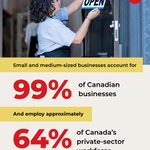
Markham-Unionville is home to many small businesses – these are the heart of our communities and the backbone of Canada’s economy. Small and medium-sized businesses account for 99% of Canadian businesses and employ approximately 64% of Canada’s private-sector workforce.
At a time when unjustified U.S. tariffs are putting pressure on Canadian businesses and workers, choosing Canadian matters more than ever. We will not compromise when it comes to protecting Canadian workers and businesses; we will not compromise when it comes to defending Canada’s economy from unjustified tariffs. The government is helping Canadian businesses manage tariff pressures, protect jobs, strengthen supply chains, and compete around the world. Budget 2025 set out more than $25 billion to support workers and businesses affected by U.S. tariffs and trade disruptions.
However, government action is only one portion of what can be a more cohesive Team Canada approach. Every dollar spent at a local business helps strengthen our economy and helps build a stronger and more resilient Canada; shopping locally supports job creation, Canadian innovation, small business owners, entrepreneurs, and workers. In a fracturing world order, a collective Team Canada strategy means Buying Canadian.
As global trade restructures, Canada’s goal is laser-focused on generating the best deal for Canadians – never a deal at any price or on any time frame. We are doubling down on our comparative advantages in key sectors and opening markets across the globe – building at home and diversifying trade abroad was never our Plan B. It has been our Plan A from the start. Canada is making it easier to buy Canadian, hire Canadian, and build Canadian. This is how we Build Canada Strong.

Last Sunday, I stopped by CHFA NOW, one of Canada's largest trade shows in the natural, organic, and wellness space at Toronto's Exhibition Place. Collectively, all the businesses represented by the Canadian Health Food Association (CHFA) are shaping the future of wellness; locally, the vast majority of these operations are small businesses driving economic activity in our communities. It was a pleasure to get a pulse on the 1,000+ CHFA members across Canada, who are involved in all aspects of the supply chain: manufacturers, retailers, wholesalers, distributors, and importers of natural health products.
Touring multiple booths across the expo floor, I witnessed an incredible product diversity in the categories of natural health products and health foods – the trade show was a great opportunity to discuss the bold innovations and the latest developments that are occurring in this evolving niche. I also had the chance to engage with some businesses from my riding of Markham-Unionville who are driving economic activity in our region. It is always inspiring to see savvy small business owners growing their book of business in real time – they are the lifeblood of our domestic capital flows. Industry events like CHFA NOW are so important because they increase the surface area of exposure for local businesses that would otherwise have a geographically restricted client base.
Thank you to the Canadian Health Food Association for the invitation! I look forward to further engagements with the association and its members as they shape the future of wellness across Canada.


On Tuesday, I rose in the House to speak on the positive impact that Bill C-39 – the Building Canada Strong Act – will have on our transportation and trade network. Our new Government’s legislative projects have been initiated with a single guiding principle: the global post-Cold War consensus has ruptured. In a rapidly changing world – where we can no longer rely on a stable relationship with the United States – the Canadian Government is focused on what we can control. We are building our strengths at home and diversifying our partnerships abroad; we are strengthening Canada's transportation and trade network so that we can move Canadian goods faster, unlock new markets, and build more resilient supply chains. We have the right plan to build Canada strong.
Transportation is the vital link connecting every other priority we have – our trade corridors connect Canadian businesses to markets and supply chains at home and around the world. We cannot diversify trade, build the strongest economy in the G7, and strengthen Canada's competitiveness without a transportation system that works. As such, we are taking action to reduce red tape, strengthen supply chains, accelerate infrastructure development, and attract the investment needed to grow Canada's economy and create good jobs.
C-39 would begin the implementation of these forward-looking actions, showing how the government would deliver on its commitment to address barriers that slow private investment, limit labour mobility, and restrict competition. Fundamentally, Canada needs to be seen as a reliable and beneficial place to invest and do business. Inefficiencies in our trade processes and supply chains are costly and can hurt our reputation as a reliable trading partner.
Further, C-39 would support a more modern, responsive transportation system that can handle economic pressures, improve transportation performance, and unlock new capacity across supply chains. These measures will help Canadian businesses build with greater clarity – knowing that they can depend on connections to more global markets – while maintaining high standards for safety, security, and sustainability.
During late August and early September, I had the immense pleasure of attending the press conference and opening ceremony for the 8th Annual Asialicious Festival, a 3-day cultural festival that celebrates the diversity and richness of Asian culture through food, music, arts, and business opportunities.
I had the opportunity to attend Asialicious last year with my family, so it was great to be back again. It is always great to see events like these in our community, which create a sense of belonging, bring people closer together, and showcase the incredible flavours and talent that exist right in our own backyard.
Since 2019, the Asialicious Festival at Woodside Square in Scarborough North has been promoting multiculturalism, fostering unity and cultural exchange within Greater Toronto; at its core, the festival is about creating a space for different communities to understand and work together. Featuring dynamic performances spanning English, Chinese, and Vietnamese singing to more modern K-pop and hip-hop dance routines, Asialicious truly has something for everyone to enjoy.
Thank you to the Federation of Asian Canadians Toronto (FACT) for putting on this incredible showcase; thank you for your continued commitment to celebrating, empowering, and promoting the diverse Asian Canadian community. Looking forward to attending Asialicious again next year!


It was a pleasure to join families, volunteers, and supporters at the 2026 CareFirst Charity Walk this past summer – it was paired with their 50th Anniversary Photo Exhibition, celebrating five decades of serving seniors and the broader community. The Charity Walk was guided by a simple message: we need to promote healthy and active community living among seniors. Consequently, following the main attractions, there were educational workshops and community booths promoting physical activity and healthy living.
As I toured their Photo Exhibition, I learned about CareFirst's humble history: they began "with an operating budget of just $1,000 and a borrowed service desk" to launch a Meals on Wheels program in Toronto's Chinatown. As true social entrepreneurs, they naturally expanded their service offerings and look at where they are today: the Charity Walk was part of a broader campaign to raise funds for their new Campus of Care.
The CareFirst Campus of Care will co-locate a state-of-the-art 124-bed long-term care home, a medical centre, and a community health hub together for seamless service delivery. From Meals on Wheels to facilities management – that is a narrative arc worth celebrating.
I will continue to reiterate this time and time again: CareFirst has been doing great work in our community serving seniors and families, many of whom are from my riding of Markham-Unionville. I wish them success in their fundraising, and I eagerly await the opening of their Campus of Care!


The global trade landscape is not just rapidly changing – it has undergone a discontinuous phase shift. The post-WWII world order was designed around America as the nucleus, as the central node in the global network. Now – while largely retaining this central node position – America is fundamentally transforming all of its trading relationships and causing significant downstream chaos in the rest of the global network.
This chaos expresses itself in supply chain disruptions, worker displacement, and investor uncertainty. A given trade barrier against Country XYZ will cause a company within XYZ to lose a mainline contract – revenue losses force employees to be let go, and investors will likewise pull out.
Canada's new government is building a new industrial strategy to meet this moment – we are charting a path forward through the gathering storm. The kernel of our strategy is trade diversification built around Canada's core industries; we are designing an economy that is resilient to global shocks, rather than one that is perpetually reliant on specific trade partners.
As a case in point, earlier this week Canada celebrated LNG Canada’s Phase 2 reaching a Final Investment Decision. This decision unlocked a transformative $32-billion private sector investment that will make LNG Canada the second-largest facility of its kind in the world, create over 4,000 jobs, have the lowest emissions-intensity of any similar facility, and strengthen Canada’s trade ties across the Indo-Pacific.
The operationalization of our strategy into a playbook is simple: unlock projects where Canada has a comparative advantage – energy is one such vector – and export the end product to as many trade partners as possible, creating numerous Canadian jobs in the process.
Simultaneously, we are stepping up with the most comprehensive suite of trade resilience measures in Canadian history. This includes $7.5 billion in new and enhanced support, which builds upon the $25 billion already in place to provide relief for workers and businesses affected by tariffs.
As the MP for Markham-Unionville, I am proud to support a government that is laser-focused on building #CanadaStrong
The Mid-Autumn Festival is a time of gathering and thanksgiving – lanterns are often lit as symbolic beacons to illuminate a path to prosperity and good fortune. Last Wednesday, in the lead-up to this ancient harvest festival, I had the privilege of providing remarks at the "Mid-Autumn Review: Canada-China Roundtable," hosted by the Ottawa chapter of the Hong Kong-Canada Business Association (HKCBA) in collaboration with E&Y Canada.
In the spirit of lanterns illuminating a path to prosperity, the Mid-Autumn Review was specifically organized as a reflection on the rapprochement and reconciliation between Canada and China against the backdrop of Carney's visit to Beijing earlier this year – the first visit to China by a Canadian Prime Minister since 2017. Our government's new strategic partnership with China encompasses five pillars: (1) energy, (2) economic and trade cooperation, (3) public safety and security, (4) multilateralism, and (5) culture and people-to-people ties.
This dialog is further nested in the ongoing unraveling of the world order. As the international environment changes – trade becomes more difficult, supply chains are less certain, and investment decisions carry more risk than they did even a few years ago. Amidst this interregnum of world orders, ties are fraying among once steadfast partners, and longstanding assumptions are being rewritten in real time; this has been the impetus for Canada to diversify its trading relationships, China being one mainline channel of said diversification.
As Member of Parliament for Markham-Unionville and Chair of the Canada-Hong Kong Friendship Group, I understand how important these people-to-people connections and trade ties are to our shared prosperity. The Canada-Hong Kong relationship is deeply meaningful to me as a proud Canadian who immigrated from Hong Kong early in my youth, and to many of my constituents who maintain familial and cultural ties to Hong Kong.
I look forward to fostering greater economic cooperation that benefits people and businesses on both sides of the Pacific. May the Mid-Autumn lanterns illuminate a path forward for our collective prosperity in these uncertain times.


I was honoured to stand alongside Minister MacDonald, of Agriculture and Agri-Food Canada, in King City last Thursday to announce $5 million in funding for Haven Greens. This investment was part of our Government's AgriInnovate Program, which is tailored for commercial-ready innovative technologies around agri-food sector use cases.
The funding is being channeled towards the development of a new Controlled Environment Agriculture greenhouse capable of producing up to 2 million kilograms of baby leafy greens annually, through the adoption of various automation and climate control technologies.
Haven Greens is Canada's first fully automated, state-of-the-art, high-tech greenhouse that grows fresh, pesticide-free greens year-round. Using technology to handle the entire crop cultivation process, initiatives like this help us to strengthen our domestic food production in the pursuit of nation-wide food security. As we are entering a fractured world order with uncertain supply chain reliability, it is mission critical that year-round food production capabilities are being fostered within our borders.
Technological automation is shaping the future of agriculture, which is why our government is investing in innovative solutions that help grow the food Canadians rely on each and every day.


MPMichaelMa retweeted

Haven Greens produces 2 million kilograms of fresh greens every year, available in 10 provinces and one territory, with plans to expand into all territories.
We’re investing $5 million to support Haven Greens’ advanced greenhouse operations in King City, Ontario, including Canada’s first fully automated greenhouse technology. This will enable year-round production of local, high-quality leafy greens.
With most leafy greens in Canada currently imported, we’re investing in controlled environment agriculture to close that gap and grow more Canadian food, year-round.
Read more: canada.ca/en/agriculture-agr…
@MPMichaelMa


Earlier this week, I joined Mayor West of Richmond Hill to celebrate the ribbon cutting of the David Dunlap Observatory Pedestrian and Cyclist Bridge. The federal government supported this project by investing over $3.1 million to create a connection for pedestrians and cyclists between 63 Observatory Lane and the residential development to the east of David Dunlap Observatory Park.
Infrastructure is the foundation of healthy and prosperous communities – a strong Canada begins here. Investing in modern and sustainable infrastructure is how we position our country as a global leader in the clean economy; infrastructure investments are the enabling layer to help us build the strongest economy in the G7.
Moreover, infrastructure investments are the cornerstone of how we make a real and significant difference in our lives. Creating safe community gathering spaces, delivering on our environmental goals through green building initiatives, and connecting communities of all sizes and locales with public transit – this is how we lay the groundwork for more housing developments.
Ultimately, investing in infrastructure and supporting transformative projects that shape our nation’s future is one of our government’s key priorities. To build a prosperous and sustainable future for all, it is more important than ever to invest in infrastructure that supports healthy, connected, and resilient communities.
In working with our partners, we can build the kinds of places where people want to live, grow, and put down roots for generations to come. To that end, we are building a strong economy that works for everyone, supported by foundational infrastructure investments.
Earlier this week, PM Carney released “Forward Guidance” to help chart a new course for Canada as we navigate the collapse of our trade negotiations with the United States. The full video can be viewed here: [youtube.com/watch?v=eYAwioM3…].
We walked away from the trade talks because we simply could not accept what they were proposing. The most fundamental issue is that the cumulative U.S. demands revealed that they wanted us to become even more reliant on them, not less. In too many areas, they wanted dependency, not a true economic partnership.
At the 11th hour, they still wanted a say in our future trade agreements with other countries, and they were offering terms that would, over time, undermine some of our most important industries, including automobiles, steel, and forest products. To be clear, no country is sovereign that allows another to dictate its own trade agreements.
The Prime Minister proceeded to outline a three-pronged response:
[1] Matching the new US tariffs dollar-for-dollar with new tariffs of our own;
[2] Supporting Canadian workers and businesses with a new $7.5B relief package; and
[3] Continuing to build our strength at home and to diversify our trade relationships abroad.
Building at home and diversifying trade abroad was never our plan B: it’s been our Plan A from the start. For the past year and a half, we have been steering our economy towards trusted partners. We’ve signed 20 trade and defence agreements across four different continents. Canada can strike these agreements because we are trusted, because we are reliable, and because we have what the world wants.
The world is opening its doors to us, making Canada the best-connected economy in the world. Our businesses now enjoy tariff-free access to 1.5 billion consumers; foreign direct investment in Canada is at its highest level in two decades. With a resilient economy and the strongest fiscal position in the G7, we have everything we need to pivot and prosper.
We are stronger now than when the United States started this trade war.
More unified.
More determined.
More ambitious.
We are a nation forged in adversity – this is just another period on the ice.
