

Prof-Civil & Env Eng; Director-Atmosphere/Energy Prog; Research-climate, air pollution & clean/renewable energy; Cofounder-Solutions Project/100% Movement
Stanford University
Joined February 2010
- Tweets34.9K
- Following436
- Followers47.1K
- Likes21.6K



Pinned Tweet
The scientific bases for all U.S. state laws and proposed laws to go to 100% renewable, clean, 0-C, and/or 0-emissions & the #GreenNewDeal
web.stanford.edu/group/efmh/…
web.stanford.edu/group/efmh/…
web.stanford.edu/group/efmh/…
The only way to do any of these is with #WindWaterSolar

The scientific basis for #California's #SB100 (Effectively #100% renewable electricity by 2045) & Exec Order B-55-18 (effectively 100% renewable all-energy by 2045 to eliminate air pollution+GHGs) #GCAS2018 @GovPressOffice @StanfordEnergy @StanfordWoods @100isNow @350 @TheRE100

Mark Z. Jacobson retweeted

Join us on Dec 1 for a fascinating discussion with two renowned Stanford #climate scientists. There is a roadmap to climate restoration! In person in Los Altos Hills or online. RSVP at bit.ly/4BedgXO @350BayArea

Mark Z. Jacobson retweeted

A little more on Jacobson's testimony via Brenna Owen @CanadianPress ... ctvnews.ca/vancouver/article…

Mark Z. Jacobson retweeted
The 🇨🇦 Crown attorney also appeared unprepared for @StanfordEnergy expert Mark Jacobson's refusal to accept that #CCS reduces carbon emissions. He seemed unaware of @mzjacobson's follow-the-molecules argument that CCS actually boosts net CO2 👇 bmj.com/content/392/bmj.r266…

Mark Z. Jacobson retweeted
Canada can 'definitely' transition to renewables by 2050, expert tells youth climate trial
"Canada does not need to rely on fossil fuels, he testified Thursday, as he outlined how the country could meet its energy demands by tapping “humongous” resources and opportunities in wind, solar and geothermal, along with pre-existing hydroelectric capacity."
"Combine that with the electrification of energy and transportation and “Canada can do it,” Jacobson said of transitioning to renewables."
“Whether it actually does it by 2050 is more of a social and political question.”
cbc.ca/news/canada/british-c… @youthvgov

All prepped to testify Thursday on the feasibility and benefits of transitioning all of Canada to 100% clean, renewable energy.
In a landmark climate trial, Canadian youth accuse the government of violating their rights
corporateknights.com/climate… @youthvgov

Mark Z. Jacobson retweeted
Synthetic carbon capture and direct air capture only increase CO2, air pollution, fossil mining, fossil infrastructure, energy costs, health costs, climate costs, and total social costs vs transitioning to clean, renewable energy, as shown clearly here
web.stanford.edu/group/efmh/…
No study has ever shown otherwise.
Yet, international organizations keep pushing these scam technologies.
Why?
Oh, this is why.
How a Secret Vote by U.N. Scientists Legitimized Carbon Capture and Skewed Decades of Climate Policy
propublica.org/article/carbo… @propublica @ProjectDrawdown
Mark Z. Jacobson retweeted

Fantastic testimony today! Such a fabulous vision for the future we could and should have! Thank you Dr. Jacobson, for coming to Vancouver to share your valuable insights!
Canada can 'definitely' transition to renewables by 2050, expert tells youth climate trial
"Canada does not need to rely on fossil fuels, he testified Thursday, as he outlined how the country could meet its energy demands by tapping “humongous” resources and opportunities in wind, solar and geothermal, along with pre-existing hydroelectric capacity."
"Combine that with the electrification of energy and transportation and “Canada can do it,” Jacobson said of transitioning to renewables."
“Whether it actually does it by 2050 is more of a social and political question.”
cbc.ca/news/canada/british-c… @youthvgov
All prepped to testify Thursday on the feasibility and benefits of transitioning all of Canada to 100% clean, renewable energy.
In a landmark climate trial, Canadian youth accuse the government of violating their rights
corporateknights.com/climate… @youthvgov
All prepped to testify Thursday on the feasibility and benefits of transitioning all of Canada to 100% clean, renewable energy.
In a landmark climate trial, Canadian youth accuse the government of violating their rights
corporateknights.com/climate… @youthvgov
Mark Z. Jacobson retweeted
New @GlobalCCS data confirm carbon capture and direct air capture are useless opportunity costs.
- At the rate of capture (0.59 MTCO2/y) from new CC/DAC installations operational in 2026 where the CO2 is not used for enhanced oil recovery, it will take 81,000 years to build enough CC/DAC to capture the current emissions of CO2 from fossils and land-use change (47,200 MTCO2/y).
-All CC/DAC ever built for non-EOR purposes captures only 0.04% of today's CO2 emissions.
74.3% of all CO2 captured today from all installations built in any year is used for EOR (which releases 50-120% of the CO2 back to the air).
68.1% of all CO2 captured from 2026 installations is used for EOR.
globalccsinstitute.com/globa…
None of this accounts for all the direct and opportunity-cost CO2 and air pollution released back to the air from the energy used to run the CC/DAC equipment, which negates any benefit
web.stanford.edu/group/efmh/…

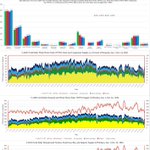
Another 5 straight days of beautiful weather and >100% WindWaterSolar on the U.S.' most reliable grid, the @CaliforniaISO, which has also eliminated 43.1% of fossil gas in 3 years.
216 of 300 days (72%) in 2026 with WWS meeting >100% of demand for part of the day, averaging 4.1 hours/day among all days.
55% of all electricity in CA in 2026 is from WWS.
Batteries up 296% in '26 v '23
Solar up 50%
Wind up 23%

Mark Z. Jacobson retweeted
The lesson here is that when you have large amounts of WindWaterSolar (mostly wind, solar but also geothermal, and existing hydro) on a grid, you
--match demand with supply better than a base load plant and
-- provide base-load electricity that can exceed that of the base-load plant.
The claim nuclear is more reliable than renewables is a myth.
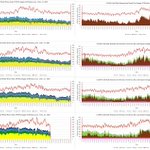
WindWaterSolar has not only met a higher percent (12.8%) of demand during its worst 5 minutes in all of 2026 than nuclear during its best 5 minutes (12.0%), but has also met seasonal & daily demand better than nuclear from 2023-26 on the @CaliforniaISO grid.
WWS output (left) is predictably consistent all year, peaking in early summer close to demand (late summer)
Nuclear output is flat most of the year (not following demand). The rest of the year (1-2 months), it decreases by 50%.
P.S., WWS' peak 5-minute output in 2026 is 165% of demand, or 13.75 times that of nuclear's peak output vs demand (12.0%).

New @GlobalCCS data confirm carbon capture and direct air capture are useless opportunity costs.
- At the rate of capture (0.59 MTCO2/y) from new CC/DAC installations operational in 2026 where the CO2 is not used for enhanced oil recovery, it will take 81,000 years to build enough CC/DAC to capture the current emissions of CO2 from fossils and land-use change (47,200 MTCO2/y).
-All CC/DAC ever built for non-EOR purposes captures only 0.04% of today's CO2 emissions.
74.3% of all CO2 captured today from all installations built in any year is used for EOR (which releases 50-120% of the CO2 back to the air).
68.1% of all CO2 captured from 2026 installations is used for EOR.
globalccsinstitute.com/globa…
None of this accounts for all the direct and opportunity-cost CO2 and air pollution released back to the air from the energy used to run the CC/DAC equipment, which negates any benefit
web.stanford.edu/group/efmh/…
Mark Z. Jacobson retweeted
CAISO has the most reliable US grid as evidenced by the fact it has the lowest maximum wholesale electricity price in the US. All those WWS renewables plus its batteries have made it the most reliable grid.
web.stanford.edu/group/efmh/…
Not only does WWS make grids more reliable, it also reduces the retail electricity price, and this result is statistically significant across all 50 states and DC.
web.stanford.edu/group/efmh/…
In fact, 12 of the 14 highest-WWS states (meeting 49-127% of demand) had electricity prices 2-5 cents/kWh below the U.S. average.
South Dakota, for example, meets 127% of demand with WWS (86% wind, 38% hydro, 3% solar) and has a retail electricity price of 14.1 cents/kWh, below the 17 cent/kWh average.
From July 1, 2025-June 30, 2026, CA residential retail electricity price averaged 33.01 cents/kWh. Georgia averaged 15.01 cents/kWh.
Worldwide, more WWS correlates with lower electricity prices and more fossil fuels and nuclear correlate with higher prices.
web.stanford.edu/group/efmh/…
Mark Z. Jacobson retweeted
Facts are correct. The California ISO grid, with all its renewables, is the most reliable grid in the U.S. in terms of matching demand with supply, and increasing renewables increases such reliability.
teapawt.net/mzjacobson/status/2099…
Plus, renewables and storage can provide inertia through direct physical generation, spinning storage systems, and advanced power electronics.
The more WindWaterSolar, the more reliable a grid in terms of matching demand with supply and the lower the retail electricity price.
Data show more WWS as a fraction of grid electricity demand reduces not only retail electricity prices with statistical significance but also the maximum wholesale price any time during the year with statistical significance.
The lower the maximum wholesale price, the easier it is to match demand with supply on the grid.
Data sources: eia.gov/electricity/monthly/…
@jillgferguson

The lesson here is that when you have large amounts of WindWaterSolar (mostly wind, solar but also geothermal, and existing hydro) on a grid, you
--match demand with supply better than a base load plant and
-- provide base-load electricity that can exceed that of the base-load plant.
The claim nuclear is more reliable than renewables is a myth.
WindWaterSolar has not only met a higher percent (12.8%) of demand during its worst 5 minutes in all of 2026 than nuclear during its best 5 minutes (12.0%), but has also met seasonal & daily demand better than nuclear from 2023-26 on the @CaliforniaISO grid.
WWS output (left) is predictably consistent all year, peaking in early summer close to demand (late summer)
Nuclear output is flat most of the year (not following demand). The rest of the year (1-2 months), it decreases by 50%.
P.S., WWS' peak 5-minute output in 2026 is 165% of demand, or 13.75 times that of nuclear's peak output vs demand (12.0%).