

في بحر الشافعي سبحي وبنور الأشعري فلاحي
☪︎
Joined January 2026
- Tweets693
- Following99
- Followers1.1K
- Likes6.4K







Pinned Tweet
Perhaps one of the greatest benefits of withdrawing from the world is simply forgetting what everyone else has.

حسن المعبري retweeted
In fifth-century Mecca, a scholar named Abu al-Ghana'im al-Narsi sat before an elderly woman who possessed one of the most sought-after transmissions of Sahih al-Bukhari. She brought out her manuscript, from which he copied seven leaves and read them back to her. When he offered to compare his transcription against her original independently, she refused:
“No, not until you collate it with me.”
The woman was Karima bint Ahmad al-Marwaziyya (d. 463 AH / 1070 CE), known as Umm al-Kiram, one of the foremost transmitters of Sahih al-Bukhari in the fifth Islamic century. Her insistence on personally supervising the comparison of manuscripts offers a glimpse into the care with which she preserved and transmitted the text.
Originally from the region of Merv in Khurasan, Karima belonged to a family associated with the village of Kushmihan. Her father reportedly took her to Jerusalem before bringing her to Mecca, where she settled and devoted her life to learning and transmitting hadith. She never married, according to the biographical accounts, and lived to approximately one hundred years of age.
Her most important teacher was Abu al-Haytham al-Kushmihani (d. 389 AH), from whom she received Sahih al-Bukhari through an exceptionally short chain:
Imam al-Bukhari (d. 256) → Muhammad ibn Yusuf al-Firabri (d. 320) → Abu al-Haytham al-Kushmihani (d. 389) → Karima al-Marwaziyya (d. 463).
Only two transmitters separated her from the compiler himself. As earlier authorities passed away, scholars travelled to Mecca seeking her elevated isnad, making her one of the principal authorities through whom the Sahih continued to circulate.
But her education was not confined to this single transmission. She also heard from Zahir ibn Ahmad al-Sarakhsi (d. 389 AH), who had studied dialectics and theology under Imam Abu al-Hasan al-Ash'ari (d. 324 AH), as al-Dhahabi records. Through Zahir, Karima was thus connected by a documented scholarly lineage to al-Ash'ari himself, although this does not establish her personal theological affiliation. Among her other teachers was Abd Allah ibn Yusuf al-Isfahani (d. 409 AH), from whom leading scholars such as al-Bayhaqi and al-Qushayri also transmitted.
Her standing attracted some of the most distinguished scholars of her generation. Al-Khatib al-Baghdadi (d. 463 AH) read Sahih al-Bukhari to her during the pilgrimage season. Abu al-Muzaffar al-Sam'ani (d. 489 AH) received transmission from her, as did the Hanafi jurist Abu Talib al-Zaynabi (d. 512 AH), who later became an important transmitter of her recension.
Her scholarly authority extended beyond the boundaries of legal schools and geographical regions. Scholars from Iraq, Khurasan, Egypt, Syria, and al-Andalus sought her transmission in Mecca, bringing her teachings back to their respective scholarly circles.
What distinguished Karima was not simply the brevity of her isnad, but the seriousness with which she guarded the accuracy of the text entrusted to her.


حسن المعبري retweeted

Sultan Baybars cut off the head of the Ismaili Assassin snake by exiling and poisoning their leaders, suppressing their access to literature, and absorbing them into the Sunni realm. Isolated from guidance, the population naturally converted to Sunnism over generations.


In fifth-century Mecca, a scholar named Abu al-Ghana'im al-Narsi sat before an elderly woman who possessed one of the most sought-after transmissions of Sahih al-Bukhari. She brought out her manuscript, from which he copied seven leaves and read them back to her. When he offered to compare his transcription against her original independently, she refused:
“No, not until you collate it with me.”
The woman was Karima bint Ahmad al-Marwaziyya (d. 463 AH / 1070 CE), known as Umm al-Kiram, one of the foremost transmitters of Sahih al-Bukhari in the fifth Islamic century. Her insistence on personally supervising the comparison of manuscripts offers a glimpse into the care with which she preserved and transmitted the text.
Originally from the region of Merv in Khurasan, Karima belonged to a family associated with the village of Kushmihan. Her father reportedly took her to Jerusalem before bringing her to Mecca, where she settled and devoted her life to learning and transmitting hadith. She never married, according to the biographical accounts, and lived to approximately one hundred years of age.
Her most important teacher was Abu al-Haytham al-Kushmihani (d. 389 AH), from whom she received Sahih al-Bukhari through an exceptionally short chain:
Imam al-Bukhari (d. 256) → Muhammad ibn Yusuf al-Firabri (d. 320) → Abu al-Haytham al-Kushmihani (d. 389) → Karima al-Marwaziyya (d. 463).
Only two transmitters separated her from the compiler himself. As earlier authorities passed away, scholars travelled to Mecca seeking her elevated isnad, making her one of the principal authorities through whom the Sahih continued to circulate.
But her education was not confined to this single transmission. She also heard from Zahir ibn Ahmad al-Sarakhsi (d. 389 AH), who had studied dialectics and theology under Imam Abu al-Hasan al-Ash'ari (d. 324 AH), as al-Dhahabi records. Through Zahir, Karima was thus connected by a documented scholarly lineage to al-Ash'ari himself, although this does not establish her personal theological affiliation. Among her other teachers was Abd Allah ibn Yusuf al-Isfahani (d. 409 AH), from whom leading scholars such as al-Bayhaqi and al-Qushayri also transmitted.
Her standing attracted some of the most distinguished scholars of her generation. Al-Khatib al-Baghdadi (d. 463 AH) read Sahih al-Bukhari to her during the pilgrimage season. Abu al-Muzaffar al-Sam'ani (d. 489 AH) received transmission from her, as did the Hanafi jurist Abu Talib al-Zaynabi (d. 512 AH), who later became an important transmitter of her recension.
Her scholarly authority extended beyond the boundaries of legal schools and geographical regions. Scholars from Iraq, Khurasan, Egypt, Syria, and al-Andalus sought her transmission in Mecca, bringing her teachings back to their respective scholarly circles.
What distinguished Karima was not simply the brevity of her isnad, but the seriousness with which she guarded the accuracy of the text entrusted to her.
The breadth of Karima al-Marwaziyya's scholarly influence becomes especially apparent when we trace her students and the generations who transmitted through them.
Her students were not confined to the eastern Islamic world. Khalaf ibn Ibrahim al-Hassar (d. 511 AH), a Quran reciter and preacher from Cordoba, travelled eastward, performed the pilgrimage, and met Karima in Mecca, receiving learning from her. Ibn Bashkuwal explicitly preserves this encounter in his al-Sila.
Other Andalusian transmission routes carried her material westward. The celebrated Maliki scholar Qadi Iyad (d. 544 AH) recorded several routes reaching him through transmitters connected to Karima, demonstrating how her scholarly legacy became embedded in the learned traditions of al-Andalus and the Maghrib.
One particularly revealing account survives in the Fihrasa of the Andalusian exegete Ibn Atiyya. His father, Ghalib ibn Abd al-Rahman, read Sahih al-Bukhari in Mecca in 470 AH under al-Husayn al-Tabari, who had received it from Karima. Remarkably, Ghalib specified that he read from Karima's own manuscript exemplar, years after her death. This is evidence not merely of a prestigious chain of narrators, but of the continued use of a particular textual copy associated with her.
Another important witness is Abd al-Ghafir al-Farisi (d. 529 AH), who records that Karima granted him authorization to transmit all the works she had heard:
“And she granted us authorization to transmit everything that she herself had heard.”
This testimony establishes that her scholarly transmissions extended beyond Sahih al-Bukhari, even though the latter remained the principal work for which she was remembered.
An additional, less familiar report in Ibn al-Abbar's al-Mu'jam preserves a transmission route involving books of Qadi Abu Bakr al-Baqillani (d. 403 AH) through Karima. Although the precise works and intervening relationships require further examination, the notice points to her place within a wider culture of book transmission encompassing hadith and theological literature.
The later scholarly generations also preserve remarkably specific details about her teaching. One transmitter described personally reading the Sahih to her, while another recorded listening as it was read in her presence. In 459 AH, the judge Abd al-Malik al-Qazwini heard Sahih al-Bukhari from her in Mecca, providing a dated record of her activity near the end of her life.
Her transmission continued through numerous branches after her death. Al-Zaynabi carried her Sahih into later Iraqi scholarly circles. Other routes passed through al-Sa'idi, al-Farra', and their successors, with some relying on direct audition and others on formal ijazat. These distinctions were carefully preserved by the transmitters themselves.
Karima died in Mecca, most probably in 463 AH, leaving no securely identified authored work. Yet the biographies of her students, the chains preserved in subsequent centuries, and the references to her manuscript establish a scholarly legacy extending far beyond her lifetime.
Her life illustrates something central to the history of Islamic scholarship: authority was not confined to authorship or public office. It could rest in the exact preservation of a text, the integrity of its transmission, and the recognition of generations of scholars who entrusted their learning to a particular teacher.
And in Karima's case, that teacher was a woman before whom some of the most accomplished scholars of the fifth Islamic century sat to receive the Sahih of Imam al-Bukhari.
Sources: Ibn Bashkuwal, al-Sila, 1:171; Ibn Asakir, Tarikh Dimashq, 32:165–167; al-Rafi'i, al-Tadwin, 1:417; Ibn al-Abbar, al-Mu'jam, p. 24; al-Dhahabi, Siyar, 18:233–234; Ibn Atiyya, al-Fihrasa.
حسن المعبري retweeted
Before Imam Ibn al-Salah became one of the most celebrated authorities in the history of hadith, he sat before a woman in Nishapur.
She transmitted Sahih al-Bukhari, preserved the writings of Imam Abu al-Qasim al-Qushayri, inherited the learning of distinguished men and women of Khurasan, and stood within a remarkable scholarly lineage reaching back through Imam Ibn Furak to Imam Abu al-Hasan al-Ash'ari.
Her students would include some of the most influential hadith scholars and historians of the following generation.
Her name was Umm al-Mu'ayyad Zaynab bint Abd al-Rahman al-Shi'riyya, also known as Hurra Naz.
And al-Dhahabi introduced her with a title of extraordinary distinction:
“The venerable shaykha, the great authority of transmission in Khurasan.”
These were not empty words of praise. To be recognized as a musnida was to possess a distinguished position in the preservation and transmission of the Prophet's hadith and the scholarly inheritance of earlier generations.
Zaynab was one of the most remarkable women to occupy that position.
Born in 524 AH (c. 1130 CE), she belonged to a scholarly family of Jurjani ancestry established in Nishapur, one of the great intellectual capitals of the eastern Islamic world.
This was the city of Imam Muslim ibn al-Hajjaj, the great hadith traditionists of Khurasan, the Shafi'i jurists, and the Ash'ari scholars whose writings would profoundly influence the development of Sunni theology. It was also the city in which Imam al-Qushayri had brought together theology, hadith, and spiritual discipline in one of the most influential intellectual traditions of his age.
It was within this environment that Zaynab received her education.
Her father, Abu al-Qasim Abd al-Rahman al-Shi'ri, belonged to a learned household associated with religious scholarship and spiritual discipline. Her brother, Abd al-Rahim al-Shi'ri, was himself a recognized transmitter of hadith.
Zaynab would become the most illustrious representative of this family's scholarly inheritance.
Her teachers were among the distinguished authorities of Khurasan.
Al-Dhahabi names Isma'il al-Qari, Zahir ibn Tahir al-Shahhami, his brother Wajih al-Shahhami, Abu al-Ma'ali al-Farisi, Abd Allah al-Farawi, Abd al-Jabbar al-Khuwari, Abd al-Razzaq al-Tabasi, and Abd al-Wahhab ibn Shah al-Shadhiyakhi.
She also received knowledge from learned women, including Fatima bint Za'bal and Fatima bint Khalaf al-Shahhamiyya.
This is an important part of her story. Zaynab did not emerge as an isolated exception to an otherwise exclusively male intellectual tradition. She inherited knowledge from women who were respected authorities in their own right, and she would later become a teacher to subsequent generations of women as well as men.
Yet among her scholarly connections, one is particularly remarkable.
Zaynab stood within the intellectual inheritance of Imam Abu al-Qasim al-Qushayri (d. 465 AH), the celebrated Ash'ari theologian, Shafi'i scholar, and master of Islamic spirituality.
Among her teachers was Abd al-Mun'im ibn Abd al-Karim ibn Hawazin al-Qushayri, a son of that illustrious Imam.
Her connection to al-Qushayri's inheritance was even more substantial than this family relationship suggests.
The hadith scholar Ibn Nuqta, who personally heard from Zaynab, records a striking detail concerning the books she had received:
“And she heard the Risala and the Mi'raj of Abu al-Qasim al-Qushayri.”
The Risala al-Qushayriyya is among the most celebrated works of classical Islamic spirituality, bringing together the teachings of early spiritual masters with a profound concern for religious knowledge, sincerity, divine transcendence, and disciplined devotion.
Its opening theological discussion presents the beliefs of the spiritual masters as grounded in the principles of Sunni monotheism, rejecting both anthropomorphism and the negation of the divine attributes.
The Mi'raj, likewise, belonged to the scholarly literature associated with al-Qushayri's treatment of the Prophet's Night Journey and Ascension.
Zaynab had received both works through the scholarly transmission of her age.
But the connection becomes even more extraordinary when we follow one of her recorded chains backward.
Al-Dhahabi preserves a hadith transmitted through the following sequence:
Imam Abu al-Hasan al-Ash'ari
↓
Imam Abu al-Hasan al-Bahili
↓
Imam Abu Bakr Ibn Furak
↓
Imam Abu al-Qasim al-Qushayri
↓
Abd al-Wahhab ibn Shah
↓
Zaynab al-Shi'riyya
The earlier relationships belong to the documented scholarly lineage of Ash'ari theology, while the transmission from Ibn Furak through al-Qushayri and Abd al-Wahhab to Zaynab is preserved in an actual hadith isnad.
The report concerns beautifying the recitation of the Qur'an:
“Beautify the Qur'an with your voices, for a beautiful voice increases the Qur'an in beauty.”
A woman scholar in sixth-century Nishapur stood at the receiving end of a chain passing through two of the great figures of classical Ash'ari scholarship, while her own students would carry that knowledge into the seventh century and beyond.
Nor was her distinction confined to this scholarly inheritance.
Zaynab was also an authority in the transmission of Sahih al-Bukhari.
Ibn Nuqta records her reception of the collection through Wajih al-Shahhami and Abd al-Wahhab ibn Shah, as well as through Abu al-Ma'ali al-Farisi.
One of these routes passed through Sa'id al-Ayyar, Ibn Shabawayh, and Muhammad ibn Yusuf al-Firabri, the celebrated transmitter of Imam al-Bukhari's Sahih.
For the scholars of hadith, these chains possessed immense significance.
The value of an isnad lay not merely in the distinguished names that composed it, but in its documented continuity. As generations passed, the opportunity to receive a work through a relatively short chain to an earlier authority became increasingly precious.
Zaynab's unusually long life meant that she preserved connections to scholars who had died many decades before the students who eventually came to learn from her were born.
She became a bridge between generations.
Her scholarly reach also extended beyond the canonical hadith collections.
In al-Nashr fi al-Qira'at al-Ashr, Imam Ibn al-Jazari preserves her within a chain for the transmission of Kitab al-Ghaya, the important work on Qur'anic readings by Ibn Mihran. Her reception of the book is explicitly distinguished as sama', or direct audition.
She also received ijazas from distinguished authorities, including Abd al-Ghafir al-Farisi and the renowned grammarian al-Zamakhshari, author of al-Kashshaf.
Her documented learning embraced prophetic traditions, the transmission of classical religious texts, Qur'anic scholarship, and the literary inheritance of the great masters of the Islamic East.
And for more than sixty years, she continued to transmit knowledge.
Yet perhaps the greatest testimony to her standing is not simply the extraordinary teachers from whom she received knowledge.
It is the identity of the scholars who came after her.
For the woman known as the Musnida of Khurasan would become a teacher to men whose works still define the study of Islamic scholarship today.
Continued in Part II.

حسن المعبري retweeted

Que vous le vouliez ou non, la majorité des savants malikites du patrimoine sont ash'arites et ceux qui ne le sont pas, n'ont pas vos positions déviantes que l'on retrouve dans votre salafisme contemporain en général que ce soit Ibn abi Zamanin, Ibn 'Abd al-Barr, Abu 'Umar al-Talamanki et d'autres.
Tout comme Ibn Abi Zayd, Abu Bakr al-Abhari, Ibn al-Baqillani, Abu 'Imran al-Fasi, Abu al-Hassan al-Qabisi, Ibn Battal, Abu al-Walid al-Baji, Makki Ibn Abi Talib, Abu 'Amr al-Dani, Ibn Rushd al-Jadd, Ibn Yunus al-Siqili, Abu Bakr al-Muradi, le Qadhi 'Iyadh, Khalil et les milliers d'autres grandes figures du malikisme ne trouvaient rien d'illogique et de contradictoire dans le fait d'être ash'arite et malikite, ça ne l'est toujours pas de nos jours malgré vos tentatives de spoliation semblable aux sionistes avec les terres des Palestiniens.
Surtout que c'est vraiment culotté venant de gens qui ont fait d'Ibn Taymiyyah le prisme absolu du dogme sunnite de venir l'ouvrir ainsi.
Prouvez nous donc que l'Imam Malik croyait, de manière claire et univoque, aux thèses taymistes que vous exposez devant les gens, que ce soit sur les actions volontaires, un 'uluww qui implique éloignement, rapprochement et distance, les sifat al-a'yan, le miqdar pour certains, que ce soit sur la question du jabr, sur le tasalsul al-makhluqat et le tasalsul al-hawadith, sur l'attribut du kalam et ainsi de suite.
Au passage :
Aucune parole de l'Imam Malik contredit les fondements du madhhab ash'ari et celui qui dit le contraire est un ignorant.
Nos savants ash'arites connaissaient très bien les positions de leur Imam Malik comme on peut le voir dans le Tartib du Qadhi 'Iyadh ou encore le Bayan wa al-Tahsil d'Ibn Rushd al-Jadd alhamdulillah.
Ce qui est vraiment étrange c'est de se revendiquer taymiste et malikite. Ca n'a littéralement jamais existé dans l'histoire un malikite qui adhère aux thèses taymistes avant ces dernières décennies. Par contre être ash'arite et malikite, c'était la norme pendant des siècles.

حسن المعبري retweeted

A preliminary diagram in the transmission history of the tradition that Abu Bakr is the most beloved to the Prophet ﷺ.

حسن المعبري retweeted
The daily curriculum of Imam al-Nawawi (d. 676 AH).
In his biography of Imam al-Nawawi, his close student Imam Ibn al-Attar (d. 724 AH) preserves an account in which al-Nawawi describes the lessons he attended each day and the books he studied under his teachers.
Imam al-Nawawi relates:
“I would study twelve lessons every day under my teachers, receiving explanation and correction:
+ Two lessons on al-Wasit [Imam Abu Hamid al-Ghazali].
+ One lesson on al-Muhadhdhab [Imam Abu Ishaq al-Shirazi].
+ One lesson on al-Jam bayna al-Sahihayn [Imam al-Humaydi].
+ One lesson on Sahih Muslim [Imam Muslim ibn al-Hajjaj].
+ One lesson on al-Luma in Arabic grammar [Ibn Jinni].
+ One lesson on Islah al-Mantiq in Arabic lexicography [Ibn al-Sikkit].
+ One lesson in Arabic morphology (tasrif).
+ One lesson in the principles of jurisprudence (usul al-fiqh), sometimes studying al-Luma [Imam Abu Ishaq al-Shirazi], and at other times al-Muntakhab [Imam Fakhr al-Din al-Razi].
+ One lesson in the names and biographies of hadith transmitters (asma al-rijal).
+ One lesson in the foundations of religion (usul al-din).
I would also record notes on everything connected to these lessons, explaining difficult passages, clarifying expressions, and ensuring precision in the language.
And Allah blessed my time and my studies, and granted me His assistance in them.”
Source: Imam Ibn al-Attar, Tuhfat al-Talibin fi Tarjamat al-Imam Muhyi al-Din al-Nawawi, pp. 49–50.


حسن المعبري retweeted
I started writing a critical review of @GabrielSaidR “The Qur’anic Doublets: A Preliminary Inquiry” which should be fully out in few weeks after examination and editorial stages.
(The title is still in progress)


The daily curriculum of Imam al-Nawawi (d. 676 AH).
In his biography of Imam al-Nawawi, his close student Imam Ibn al-Attar (d. 724 AH) preserves an account in which al-Nawawi describes the lessons he attended each day and the books he studied under his teachers.
Imam al-Nawawi relates:
“I would study twelve lessons every day under my teachers, receiving explanation and correction:
+ Two lessons on al-Wasit [Imam Abu Hamid al-Ghazali].
+ One lesson on al-Muhadhdhab [Imam Abu Ishaq al-Shirazi].
+ One lesson on al-Jam bayna al-Sahihayn [Imam al-Humaydi].
+ One lesson on Sahih Muslim [Imam Muslim ibn al-Hajjaj].
+ One lesson on al-Luma in Arabic grammar [Ibn Jinni].
+ One lesson on Islah al-Mantiq in Arabic lexicography [Ibn al-Sikkit].
+ One lesson in Arabic morphology (tasrif).
+ One lesson in the principles of jurisprudence (usul al-fiqh), sometimes studying al-Luma [Imam Abu Ishaq al-Shirazi], and at other times al-Muntakhab [Imam Fakhr al-Din al-Razi].
+ One lesson in the names and biographies of hadith transmitters (asma al-rijal).
+ One lesson in the foundations of religion (usul al-din).
I would also record notes on everything connected to these lessons, explaining difficult passages, clarifying expressions, and ensuring precision in the language.
And Allah blessed my time and my studies, and granted me His assistance in them.”
Source: Imam Ibn al-Attar, Tuhfat al-Talibin fi Tarjamat al-Imam Muhyi al-Din al-Nawawi, pp. 49–50.
حسن المعبري retweeted
Al-Tawba Mosque in Damascus 🇸🇾
It was commissioned in the 13th century by the Ayyubid ruler al-Ashraf Musa, and modelled after the Umayyad Mosque.


حسن المعبري retweeted

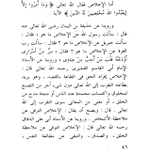
Le savant Al-Yussi (mort en 1102 de l’Hégire) a dit dans ses annotations sur Sharh al-Kubra:
« Il ne fait aucun doute que la pérennité de la voie des Ash’arites jusqu’à la fin des temps, tandis que les autres voies disparaissent et s’effacent, constitue l’un des signes les plus—
حسن المعبري retweeted
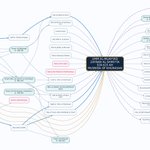
A small preview of a much larger project I have been working on, reconstructing the transmission network of the famous hadīth of al-ʿAshara al-Mubashsharūn, the Ten Promised Paradise.
After gathering the different routes across the hadīth collections, I have presently mapped roughly nineteen isnād families and significant variants, together with the numerous individual isnāds through which they were transmitted. These are not nineteen independent chains.
Many converge upon the same early transmitters, while others preserve genuinely different routes. Some contain weak, obscure, or severely criticized narrators. Others preserve disagreements over continuity, omitted or inserted transmitters, mursal forms, and even differences over the sahābī through whom the report is transmitted.
The diagrams are an attempt to make that structure visible in a way that prose rarely can, showing where the routes converge, where they divide, where particular narrators become the madār of multiple routes, and where significant isnād disagreements emerge.
A little sneak peak of the diagrams from the project ↓


حسن المعبري retweeted
Full Quality Diagram
ibb.co/WW53h2Z7

Before Imam Ibn al-Salah became one of the most celebrated authorities in the history of hadith, he sat before a woman in Nishapur.
She transmitted Sahih al-Bukhari, preserved the writings of Imam Abu al-Qasim al-Qushayri, inherited the learning of distinguished men and women of Khurasan, and stood within a remarkable scholarly lineage reaching back through Imam Ibn Furak to Imam Abu al-Hasan al-Ash'ari.
Her students would include some of the most influential hadith scholars and historians of the following generation.
Her name was Umm al-Mu'ayyad Zaynab bint Abd al-Rahman al-Shi'riyya, also known as Hurra Naz.
And al-Dhahabi introduced her with a title of extraordinary distinction:
“The venerable shaykha, the great authority of transmission in Khurasan.”
These were not empty words of praise. To be recognized as a musnida was to possess a distinguished position in the preservation and transmission of the Prophet's hadith and the scholarly inheritance of earlier generations.
Zaynab was one of the most remarkable women to occupy that position.
Born in 524 AH (c. 1130 CE), she belonged to a scholarly family of Jurjani ancestry established in Nishapur, one of the great intellectual capitals of the eastern Islamic world.
This was the city of Imam Muslim ibn al-Hajjaj, the great hadith traditionists of Khurasan, the Shafi'i jurists, and the Ash'ari scholars whose writings would profoundly influence the development of Sunni theology. It was also the city in which Imam al-Qushayri had brought together theology, hadith, and spiritual discipline in one of the most influential intellectual traditions of his age.
It was within this environment that Zaynab received her education.
Her father, Abu al-Qasim Abd al-Rahman al-Shi'ri, belonged to a learned household associated with religious scholarship and spiritual discipline. Her brother, Abd al-Rahim al-Shi'ri, was himself a recognized transmitter of hadith.
Zaynab would become the most illustrious representative of this family's scholarly inheritance.
Her teachers were among the distinguished authorities of Khurasan.
Al-Dhahabi names Isma'il al-Qari, Zahir ibn Tahir al-Shahhami, his brother Wajih al-Shahhami, Abu al-Ma'ali al-Farisi, Abd Allah al-Farawi, Abd al-Jabbar al-Khuwari, Abd al-Razzaq al-Tabasi, and Abd al-Wahhab ibn Shah al-Shadhiyakhi.
She also received knowledge from learned women, including Fatima bint Za'bal and Fatima bint Khalaf al-Shahhamiyya.
This is an important part of her story. Zaynab did not emerge as an isolated exception to an otherwise exclusively male intellectual tradition. She inherited knowledge from women who were respected authorities in their own right, and she would later become a teacher to subsequent generations of women as well as men.
Yet among her scholarly connections, one is particularly remarkable.
Zaynab stood within the intellectual inheritance of Imam Abu al-Qasim al-Qushayri (d. 465 AH), the celebrated Ash'ari theologian, Shafi'i scholar, and master of Islamic spirituality.
Among her teachers was Abd al-Mun'im ibn Abd al-Karim ibn Hawazin al-Qushayri, a son of that illustrious Imam.
Her connection to al-Qushayri's inheritance was even more substantial than this family relationship suggests.
The hadith scholar Ibn Nuqta, who personally heard from Zaynab, records a striking detail concerning the books she had received:
“And she heard the Risala and the Mi'raj of Abu al-Qasim al-Qushayri.”
The Risala al-Qushayriyya is among the most celebrated works of classical Islamic spirituality, bringing together the teachings of early spiritual masters with a profound concern for religious knowledge, sincerity, divine transcendence, and disciplined devotion.
Its opening theological discussion presents the beliefs of the spiritual masters as grounded in the principles of Sunni monotheism, rejecting both anthropomorphism and the negation of the divine attributes.
The Mi'raj, likewise, belonged to the scholarly literature associated with al-Qushayri's treatment of the Prophet's Night Journey and Ascension.
Zaynab had received both works through the scholarly transmission of her age.
But the connection becomes even more extraordinary when we follow one of her recorded chains backward.
Al-Dhahabi preserves a hadith transmitted through the following sequence:
Imam Abu al-Hasan al-Ash'ari
↓
Imam Abu al-Hasan al-Bahili
↓
Imam Abu Bakr Ibn Furak
↓
Imam Abu al-Qasim al-Qushayri
↓
Abd al-Wahhab ibn Shah
↓
Zaynab al-Shi'riyya
The earlier relationships belong to the documented scholarly lineage of Ash'ari theology, while the transmission from Ibn Furak through al-Qushayri and Abd al-Wahhab to Zaynab is preserved in an actual hadith isnad.
The report concerns beautifying the recitation of the Qur'an:
“Beautify the Qur'an with your voices, for a beautiful voice increases the Qur'an in beauty.”
A woman scholar in sixth-century Nishapur stood at the receiving end of a chain passing through two of the great figures of classical Ash'ari scholarship, while her own students would carry that knowledge into the seventh century and beyond.
Nor was her distinction confined to this scholarly inheritance.
Zaynab was also an authority in the transmission of Sahih al-Bukhari.
Ibn Nuqta records her reception of the collection through Wajih al-Shahhami and Abd al-Wahhab ibn Shah, as well as through Abu al-Ma'ali al-Farisi.
One of these routes passed through Sa'id al-Ayyar, Ibn Shabawayh, and Muhammad ibn Yusuf al-Firabri, the celebrated transmitter of Imam al-Bukhari's Sahih.
For the scholars of hadith, these chains possessed immense significance.
The value of an isnad lay not merely in the distinguished names that composed it, but in its documented continuity. As generations passed, the opportunity to receive a work through a relatively short chain to an earlier authority became increasingly precious.
Zaynab's unusually long life meant that she preserved connections to scholars who had died many decades before the students who eventually came to learn from her were born.
She became a bridge between generations.
Her scholarly reach also extended beyond the canonical hadith collections.
In al-Nashr fi al-Qira'at al-Ashr, Imam Ibn al-Jazari preserves her within a chain for the transmission of Kitab al-Ghaya, the important work on Qur'anic readings by Ibn Mihran. Her reception of the book is explicitly distinguished as sama', or direct audition.
She also received ijazas from distinguished authorities, including Abd al-Ghafir al-Farisi and the renowned grammarian al-Zamakhshari, author of al-Kashshaf.
Her documented learning embraced prophetic traditions, the transmission of classical religious texts, Qur'anic scholarship, and the literary inheritance of the great masters of the Islamic East.
And for more than sixty years, she continued to transmit knowledge.
Yet perhaps the greatest testimony to her standing is not simply the extraordinary teachers from whom she received knowledge.
It is the identity of the scholars who came after her.
For the woman known as the Musnida of Khurasan would become a teacher to men whose works still define the study of Islamic scholarship today.
Continued in Part II.
The greatness of a scholar is not measured only by the teachers from whom knowledge was received, but also by the generations through whom that knowledge continued to live.
And when we examine the students of Zaynab al-Shi'riyya, the full magnitude of her scholarly legacy begins to emerge.
Among those who transmitted from her were Imam Ibn al-Salah, Ibn Nuqta, al-Diya al-Maqdisi, Ibn al-Najjar, al-Barzali, Abd al-Aziz ibn Hilala, Ibrahim al-Sarifini, and numerous other scholars.
These were men whose works and transmissions would become part of the great intellectual inheritance of the Islamic world.
Yet one name deserves particular attention.
Imam Abu Amr Ibn al-Salah (d. 643 AH).
His celebrated Muqaddima became one of the foundational works in the systematic study of hadith. Generations of scholars would study it, summarize it, comment upon it, and build upon its classifications.
And within that very work, Ibn al-Salah preserves a remarkable personal testimony.
He writes concerning Zaynab:
“And Umm al-Mu'ayyad Zaynab, daughter of Abu al-Qasim Abd al-Rahman ibn al-Hasan al-Shi'ri, transmitted to me when I read before her in Nishapur on one occasion, and when another person read before her on another occasion. May Allah have mercy upon her.”
Consider the significance of these words.
This is not a distant historian merely including her name among the teachers of a celebrated man.
Ibn al-Salah himself tells us that he sat before Zaynab in Nishapur, read to her, and attended a further session in which another student read in her presence.
His own words preserve the memory of those encounters.
And what was among the prophetic traditions he received through her?
The celebrated hadith narrated from Anas ibn Malik:
“Support your brother, whether he is an oppressor or one who has been oppressed.”
When the Prophet ﷺ was asked how one could support an oppressor, he explained that this was done by preventing him from committing injustice.
It is a beautiful teaching: true loyalty is not the defense of wrongdoing, but the courage to restrain it.
And one of the greatest authorities in the science of hadith preserved his reception of this teaching through Zaynab.
Then there was Ibn Nuqta (d. 629 AH).
A distinguished historian of hadith transmitters, he personally heard from Zaynab and preserved an exceptionally valuable account of her teachers, the books she received, and her routes of transmission.
It is through his testimony that we possess explicit confirmation of her reception of al-Qushayri's Risala and Mi'raj, alongside her transmissions of Sahih al-Bukhari.
The very scholar who helped preserve her biography had himself studied with her.
Another student was al-Diya al-Maqdisi (d. 643 AH), the celebrated traditionist known for his extensive dedication to the collection and preservation of hadith.
Al-Dhahabi records that he saw the date of Zaynab's death written in al-Diya's own hand.
Her name also appears among the teachers of Ibn al-Najjar (d. 643 AH), the distinguished historian associated with the continuation of Baghdad's biographical history.
Ibn al-Najjar recorded reading before Zaynab material transmitted through al-Zamakhshari. His testimony provides another glimpse of her actual scholarly activity and the breadth of the material she transmitted.
The succession did not end there.
Even the celebrated historian Ibn Khallikan (d. 681 AH), author of Wafayat al-A'yan, received an ijaza from Zaynab.
But perhaps one of the most beautiful parts of her legacy is the succession of learned women through whom her authority continued.
Among the later women transmitters was Zaynab bint Umar al-Kindiyya (d. 699 AH), a celebrated scholar associated with Damascus and Baalbek.
She received an ijaza from Zaynab al-Shi'riyya.
The younger Zaynab would become a distinguished authority in her own right, transmitting hadith to some of the greatest scholars of the following generation.
Among those who learned from her were al-Mizzi, al-Barzali, and al-Dhahabi.
Al-Dhahabi himself records reading a substantial portion of Sahih al-Bukhari before Zaynab al-Kindiyya, beginning with its opening and continuing into the collection.
Think about the beauty of this succession.
Zaynab al-Shi'riyya
↓ Ijaza
Zaynab al-Kindiyya
↓ Direct transmission
al-Dhahabi and al-Mizzi
And through the later scholarly relationships of al-Mizzi and al-Dhahabi, the network extends further into the world of Imam Ibn Kathir, who studied extensively under al-Mizzi and became his son-in-law.
The same scholarly world also preserved and developed the great tradition of hadith methodology associated with Ibn al-Salah, whose Muqaddima profoundly influenced later authorities, including Imam al-Nawawi.
The diagram accompanying this biography illustrates these intersecting scholarly relationships.
Some connections represent direct audition or study, others formal authorization, and still others the transmission of books or the development of an earlier scholar's intellectual inheritance. Together they reveal a network spanning generations and disciplines.
This was not a minor collection of acquaintances. It was a vast scholarly world in which Zaynab occupied a position of genuine authority.
Her legacy encompassed the hadith masters of Nishapur, the Ash'ari tradition of Ibn Furak and al-Qushayri, the transmission of Sahih al-Bukhari, works associated with Qur'anic readings, and the scholars of Damascus and the wider Islamic East.
Through her students, the knowledge she had received entered new cities, new institutions, and new generations.
And as the decades passed, her position became increasingly remarkable.
The scholars from whom she had first received knowledge were long dead. Their own teachers belonged to a still earlier age. Yet Zaynab continued to transmit the chains she had inherited.
Al-Dhahabi remembers her as:
“Righteous, long-lived, and abundant in transmission.”
The biographical tradition records that she transmitted knowledge for more than sixty years.
For over six decades, generations of scholars could seek her transmissions and connect themselves to the authorities of an earlier age.
She lived through a period in which the scholarly world of Khurasan was changing profoundly, yet she remained a living link to its earlier masters.
She died in Jumada al-Akhira, 615 AH (1218 CE), in Nishapur, at approximately ninety-one lunar years of age.
With her departed an opportunity for elevated transmission that could never be recovered in precisely the same form.
The later biographical tradition remembered that an exceptionally elevated isnad came to an end with her death.
Yet her knowledge did not disappear.
It survived in the transmissions of Ibn al-Salah and Ibn Nuqta, in the writings and records of later hadith scholars, in the authorizations of Ibn Khallikan and Zaynab al-Kindiyya, and in scholarly networks whose branches eventually reached some of the most celebrated authorities in Islamic history.
She was not merely a woman who happened to have studied with famous men.
Nor was she simply a name preserved in the margins of their biographies.
She was herself a teacher of great men, an inheritor of great women, and a guardian of one of the most distinguished scholarly traditions of the Islamic East.
Through her passed the knowledge of the hadith masters of Khurasan and the intellectual inheritance of the Ash'ari scholars of Nishapur.
Her name belonged to chains of transmission that later generations prized, preserved, and recorded with extraordinary care.
Nearly eight centuries after her death, we can still trace those chains.
We can still identify her teachers.
We can still name those who sat before her.
And we can still read the testimony of the scholars who received knowledge from her own voice.
Umm al-Mu'ayyad Zaynab al-Shi'riyya (524–615 AH).
A woman whose life joined the great scholarly past of Nishapur to generations that followed, and whose legacy reminds us that the preservation of Islamic knowledge was also the achievement of extraordinary women.
رحمها الله تعالى رحمة واسعة
