

U.S. Marine Veteran
Joined November 2024
- Tweets1.1K
- Following4.7K
- Followers2.7K
- Likes8.6K






Magnus Americanus retweeted

2026 Homecoming at The Citadel.
A day of familiar faces, lasting traditions and celebrations.


Magnus Americanus retweeted
This is a bittersweet day. On this day in 1981, I became a Marine.
Two years later, while in the Gulf of Oman on the USS Ranger, we learned of the horrific news of the loss of 220 Marines, 18 Sailors, and 3 Soldiers.
grok.com/share/c2hhcmQtMw_97…
Semper Fidelis 🫡🇺🇸🫡


Magnus Americanus retweeted

🇺🇸 Now THIS is truly the best entrance in the Carolinas!! Welcome to the Military College of South Carolina!
Magnus Americanus retweeted

My younger brother, veteran Marine sergeant (years of service 1998-2003) has struggled for years with alcoholism. He was just denied being added to the liver transplant list.
Tomorrow, he will be transported to the VA hospice facility near our hometown where he will remain until he passes.
I know drinking is a part of our culture and history (Tun Tavern and all), but this is my third sibling taken by alcohol.
At the same time I find myself angry and sad.
Please take care of yourselves.
Semper Fi, Charlie.....

Magnus Americanus retweeted

Gen X, we are not the passed over or forgotten generation. For a long time I thought this way, and clouded my judgment on things. But now I see we have a very important assignment. We are to be the enduring, resetting generation.
We endured watered down, pottery barn churches that built pastoral brands and not the kingdom of God, so we reset by making that old time religion great again.
We endured being latch key kids, so we now reset by being there for our kids.
We endured mass divorce, so we now reset by finishing the race with the wife of our youth.
We endured being the first porn is mainstream generation on video snd computers, so we reset by making it as difficult as possible to obtain it in the future and making monogamy and the nuclear family hot again.
We endured being passed on mountains of debt that can never be repaid well into our prime earning years, so we reset by making sure we leave our kids an inheritance. If possible, we give it to them early when they need our help. And they’re gonna need more help with the down payment on their first house at 25 or 30 than a bunch of money at 50 when we die.
We endured grandparents that posted more Facebook vacation than pics of their grandkids, so we reset by taking some vacations (we worked hard too) in retirement but prioritizing being there for our adult kids and our grandkids. And because we want to be. Grandkids are the ultimate inheritance of a life well lived. Work as hard at being there for them that love us as we did being there for a boss who didn’t.
And if we endure and reset in this way as much as possible, we will have won our millennial children and Gen Z grandchildren the opportunity to truly make America great again.


Magnus Americanus retweeted

A PICTURE MADE HIM A HERO. THEN HIS LIFE FELL APART.
Many of you have probably seen this photograph of U.S. Marine Lance Corpora James Blake Miller was part of Charlie Company of the 1st Battalion, 8th Marine Regiment, better known as the “Marlboro Marine.”
During the Battle of Fallujah in Iraq, a photographer captured Miller’s exhausted, dirt - and blood - covered face with a cigarette hanging from his lips. The photograph quickly became an iconic image of the American fighting man.
To many Americans, that picture represented strength, determination, and the will to keep fighting when everything around you had turned to hell.
But there was another side to that photograph that most people never saw.
After returning home, Miller struggled with the psychological wounds of war. He experienced nightmares, panic attacks, survivor’s guilt and other symptoms associated with PTSD.
His marriage eventually ended, and the same man Americans had celebrated as a symbol of toughness found himself fighting a very different battle - the battle to put his life back together.
That's something we need to remember about our veterans.
Not every wound comes home with a bandage.
Not every scar can be seen.
Sometimes the hardest battle begins after the fighting is over.
That photograph captured a Marine in the middle of a war.
His later story reminds us that the war doesn't always end when a Marine comes home.
Never forget the men and women who carried the fight for us - and never forget what some of them carried home.
Based on reporting about James Blake Miller, the “Marlboro Marine,” following the Battle of Fallujah.
Semper Fi. 🇺🇸


Magnus Americanus retweeted

One year ago, Dr. Voddie Baucham, Jr., entered into the land of the living and the presence of the Savior. Today, we honor and remember the life and legacy of our dear brother and the Founding President of Founders Seminary.
Dr. Baucham preached the Inaugural Convocation address for Founders Seminary on Saturday, September 20, 2025, and preached his final sermon on Sunday, September 21, 2025, at Grace Baptist Church, his home church in Cape Coral, Florida. He finished strong.
Dr. Baucham’s life of ministry and faithfulness to the Lord continues to bless countless lives.
Pray for Dr. Baucham’s wife, children, and grandchildren.
“Precious in the sight of the LORD is the death of His saints.” – Psalm 116:15


Magnus Americanus retweeted
Hey Marine! Did you know the Marine Corps has its own lab?
The Marine Corps Warfighting Lab: Where the Corps Tests Tomorrow’s Fight.
At Marine Corps Base Quantico sits one of the least flashy and most consequential organizations in the service: the Marine Corps Warfighting Laboratory / Futures Directorate (MCWL/FD). It is not a schoolhouse and not a think tank that stops at slides. Its job is to look at the future fight, generate threat-informed concepts and capabilities, put them under stress, and send Marine Corps leaders evidence they can actually use.
Created in 1995 as the Commandant’s Warfighting Laboratory under Gen. Charles Krulak, it was built as an “engine for change.” Early campaigns—Hunter Warrior, Urban Warrior, and later Sea Dragon 2025—pushed Marines into dispersed operations, cities, and contested maritime problems before those problems were fashionable. The name changed; the habit did not. The lab still treats force design like a scientific method: form a hypothesis, test it, keep what survives.
What it actually does. MCWL examines future operating environments, then runs a mix of:
•concept development
•wargames and modeling & simulation
•science and technology assessments
•prototyping
•live-force experiments with real Fleet Marine Force units
The output is supposed to be analytically defensible recommendations for Combat Development & Integration—not a pile of cool gear with no concept behind it.
That last part is the distinctive feature. The lab uses the operating forces as its experiment force. Ideas that look good in a wargame get walked into the dirt: infantry battalion designs, Marine littoral regiment constructs, logistics in contested spaces, operations in the information environment, and ship-to-shore problems that still keep amphibious forces awake at night.
Wargaming is a core line of effort, including the annual Expeditionary Warrior Title 10 series and work tied to the General Robert B. Neller Center for Wargaming and Analysis—a Quantico facility meant to fuse AI, modeling, and human judgment so the Corps can run more scenarios than live exercises can afford.
What it is looking at now. The lab’s current portfolio tracks the Corps’ modernization bet: stand-in forces, distributed maritime operations, and a peer fight in the littorals. Recent and ongoing work includes unmanned ground vehicles (including additional Mission Master SP systems procured for MCWL experimentation), company landing team constructs, contested logistics, expeditionary medical care in extreme environments (including Cold Response 26), and industry collaboration on amphibious prototypes such as the ASC and the chartered MATILDA 1 for littoral experimentation. Focus areas for vendors and S&T partners keep repeating the same cluster: AI, robotics and autonomy, alternate PNT, open architectures, and joint interoperability.
Leadership recently changed hands as well. Brig. Gen. Simon M. Doran relinquished command to Brig. Gen. Dustin J. Byrum, with Sgt. Maj. Brandon Link as command senior enlisted leader—another reminder that MCWL is a command, not just a staff shop.
Why it matters. Every service talks about innovation. Most of that talk dies between a white paper and a program of record. MCWL exists to shorten that gap—and to kill bad ideas before they become doctrine or budget lines. Sometimes the finding is “buy this.” Sometimes it is “this concept does not survive contact.” Both results are useful.
The lab will not design the next Marine Corps by itself. Force Design is a Commandant-level and CD&I problem. What MCWL can do is keep the argument honest: put Marines, sailors, prototypes, and partners in realistic conditions and report what happened.
That is the unglamorous version of future war. Not a demo day. A laboratory.

Magnus Americanus retweeted
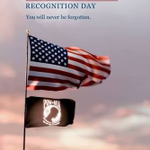
You Are Not Forgotten. That is more than a slogan on a black-and-white flag. It is the working mandate of the Defense POW/MIA Accounting Agency (DPAA).
DPAA is the Department of Defense agency charged with providing the fullest possible accounting for U.S. personnel still missing from past conflicts. Its job is to find out what happened, recover remains when possible, identify them with science, and return them to their families so a name can come off the missing list.
The agency was created in January 2015 by combining the Defense POW/Missing Personnel Office, the Joint POW/MIA Accounting Command, and parts of the Air Force Life Sciences Equipment Laboratory. Headquarters is at the Pentagon. Forensic identification work is done at laboratories in Hawaii and Nebraska. Teams deploy worldwide.
More than 80,000 Americans remain unaccounted for from designated past conflicts. The largest share is from World War II, followed by the Korean War and the Vietnam War, with smaller numbers from the Cold War and later operations. Of those still missing, officials estimate tens of thousands may still be recoverable. The rest may never be found, even after every reasonable investigation is exhausted. That last category is what DPAA means by “fullest possible accounting”: not a promise that every person will come home, but a promise that the government will keep looking until the evidence says there is nothing left to do.
The work is slow, technical, and often diplomatic. Historians and analysts mine archives and interview witnesses. Investigation teams survey crash sites and battlefields. Recovery teams excavate with archaeologists, medics, EOD technicians, linguists, and mortuary specialists. Remains go to the labs, where anthropologists, odontologists, and DNA specialists—including newer SNP techniques—build identifications that can stand up to family briefings and burial with honors. Service Casualty Offices then sit down with next of kin.
Fiscal year 2025 was a record year: 231 identifications. Many of those came from disinterments of unknowns already in U.S. cemeteries, not only from new jungle or mountain recoveries. That is still an answer a family waited decades to hear. Vietnam remains the operational priority because the U.S. often has the best case information there. Partnerships with host nations, universities, and NGOs stretch the mission further than government teams alone could.
The budget has tightened. After a higher-funded period that supported more field teams, FY2026 funding is in the $160 million range, and planned deployments have been reduced. That does not change the obligation. It does change how many sites can be worked in a given year.
Today is National POW/MIA Recognition Day—the third Friday in September. The flag flies. Families still wait. DPAA’s public site, dpaa.mil, publishes identifications, family resources, and conflict-by-conflict case information. The mission is simple to state and hard to finish: do not leave them behind, and do not let their families live without an answer if one can still be found.
