

🗺️ Mapping War Stories | Simply the best WW2 map | Hour by hour, goal-based achievements for all divisions.
Joined April 2026
- Tweets1.1K
- Following409
- Followers728
- Likes415




Pinned Tweet
⚡️ Currahee ⚡️
We stand alone.
Holdy Battery ...
Brécourt Manor ...
Carentan ...
In the first days after the initial drop, the 506th PIR didn't just survive the chaos, they conquered it.
They went toe-to-toe with Von der Heydte’s elite "Lions of Carentan" and absolutely broke them to link the D-Day bridgehead. 🦅🇺🇸
🎥Insane edit by @PabloDevRel
Pridianum | WW2 map retweeted
🇨🇦 3rd Canada Infantry Division - 1st Queen's Own Rifles Battalion
🎯 Clear Bernières and Seize Anguerny-Anisy Ridge
📅 06-Jun-44 -> 10-Jun-44
Just minutes after surviving the bloody sand at Juno Beach, Canadian troops ran headfirst into an 88mm nightmare at La Perruque.
As the men pushed inland past Bernières-sur-Mer, four M7 Priest self-propelled guns rolled into the open fields beyond the Reviers road. A concealed German 88mm gun opened up at point-blank range. Within minutes, three of the guns were in flames, one completely obliterated when its ammo blew, killing the entire crew.
The advance ground to a dead halt. Trapped in open country, the Canadians called down thick smoke shells to blind the German gunners. Sherman tanks from the Fort Garry Horse pounded the enemy tree line, keeping German heads down while infantry scrambled into position.
That was when Lieutenant Walter Moisan took his shot. Leading the men of Company A, he rushed across the open ground and stormed the gun pit directly. After two brutal hours of close-quarters fighting, Moisan’s men silenced the weapon, took three prisoners, and saved the trapped column. Knocking out that single gun cracked open the beachhead exits and cleared the road straight to the Anguerny ridge.
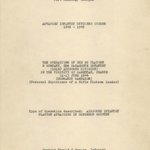
Ronald Speirs is known as the officer who took over Easy Company at Foy in January 1945, a story Band of Brothers made famous. Less known: he wrote his own account of Normandy.
After the war, officers on the Infantry School’s Advanced Course at Fort Benning had to write a “personal experience” monograph. They had to pick an action they fought in and analyse it: plans, terrain, decisions, mistakes, lessons.
Speirs chose his 2nd Platoon, D Company, 506th PIR, 101st Airborne, near Carentan, 11–13 June 1944. It’s written by the platoon leader himself, a few years after the fighting, at the level of individual squads and men.
That’s what makes it special. Most histories see Normandy at division level. Papers like this are the only sources that show what a single platoon did, hour by hour.

Read the full paper (public domain, currently unavailable on the Fort Benning library’s server but, thanks god, saved by the Wayback Machine):
web.archive.org/web/20230314…
🇬🇧 50th Infantry Division, 6th Green Howards
🎯 Seize Cristot
📅 11-Jun-44
When British tanks surged toward Cristot on June 11, 1944, the infantry following right behind them walked into a deadly trap.
The men of the 6th Battalion Green Howards pushed south from Audrieu with a critical mission. They had to protect the exposed eastern flank of the 8th Armoured Brigade as it drove forward. But the thick Normandy hedgerows hid a brutal defense. German snipers and machine gunners were dug in deep, watching every field.
The moment the soldiers stepped into the open ground, an intense wall of fire pinned them down. British artillery from the 47th Field Regiment pounded enemy positions, but the German fire was relentless. The Green Howards could not stand up, let alone advance.
Ahead of them, British Sherman tanks kept rumbling toward the outskirts of Cristot. But without foot soldiers to clear the ditches and check the hedges, the armor was left completely vulnerable. The infantry simply could not reach them.
With their advance frozen and casualties mounting, the battalion had to break contact and pull back to Audrieu The road to Cristot remained blocked, handing the defenders another hard-fought day.

Pridianum | WW2 map retweeted
🇬🇧 50th Infantry Division, 2nd Essex
🎯 Capture Lingèvres
📅 11-Jun-44 -> 17-Jun-44
When German mortars and Panther shells began tearing through the treeline north of Lingèvres, Catholic chaplain William Thomas did not run for cover ✝️
On June 11, the men of the 2nd Essex reached the Pont Saint-Esprit stream without armored support. Dug into raw dirt along the hedgerows, they walked straight into a brutal barrage of rockets and tank fire, suffering 150 casualties in a matter of hours.
Amid the shrapnel and splintering branches, Father Thomas moved along the line of foxholes. When the shelling grew too fierce to evacuate the wounded, the priest threw his own body across exposed stretchers to shield them from flying metal.
By nightfall, the German assault had stalled, but the fields between the lines were littered with casualties. Leaving the safety of his trench, Thomas crawled into the dark through active sniper and machine-gun crossfire, bandaging wounds and comforting fallen soldiers from both sides.
His grit kept a shattered battalion anchored in place, preserving the bridgehead until reinforcements arrived to take Lingèvres.

Pridianum | WW2 map retweeted
🇺🇸 4th Infantry Division, 8th Infantry Regiment
🎯 Join Montebourg Western Approches
📅 06-Jun-44 => 14-Jun-44
Inside a makeshift hospital in Normandy, enemy doctors put down their weapons and picked up scalpels together 🏥
On the evening of June 8, 1944, the 8th Infantry Regiment resumed its push toward Fresville with Route Nationale 13 running along its right flank. Just off that axis sat the Château de Grandval, where German defenders had set up an emergency medical station and turned the dining room table into an operating table.
When American forces reached the estate, the fighting ceased at the doors. Inside, the garrison surrendered without destroying their medical setup, and wounded Americans who had been taken prisoner were freed. Instead of an armed standoff, the arriving troops found doctors and orderlies tending to casualties from both sides.
With heavy fighting still raging nearby, help was desperately needed. A captured Wehrmacht physician voluntarily offered his services to the 4th Infantry Division medical staff. Setting aside their uniforms, American and German medical teams worked side by side to dress wounds and perform emergency surgeries on anyone who needed care.
By keeping the Grandval station running, the 4th Infantry safeguarded frontline care as they pressed their attack to secure Montebourg's western flank.
🇬🇧 50th Infantry Division, 2nd Essex
🎯 Capture Lingèvres
📅 11-Jun-44 -> 17-Jun-44
When German mortars and Panther shells began tearing through the treeline north of Lingèvres, Catholic chaplain William Thomas did not run for cover ✝️
On June 11, the men of the 2nd Essex reached the Pont Saint-Esprit stream without armored support. Dug into raw dirt along the hedgerows, they walked straight into a brutal barrage of rockets and tank fire, suffering 150 casualties in a matter of hours.
Amid the shrapnel and splintering branches, Father Thomas moved along the line of foxholes. When the shelling grew too fierce to evacuate the wounded, the priest threw his own body across exposed stretchers to shield them from flying metal.
By nightfall, the German assault had stalled, but the fields between the lines were littered with casualties. Leaving the safety of his trench, Thomas crawled into the dark through active sniper and machine-gun crossfire, bandaging wounds and comforting fallen soldiers from both sides.
His grit kept a shattered battalion anchored in place, preserving the bridgehead until reinforcements arrived to take Lingèvres.
🇨🇦 3rd Canada Infantry Division - 1st Canadian Scottish Battalion
🎯 Prepare for Charnwood
📅 07-Jul-44 -> 09-Jul-44
Imagine spending nineteen straight days trapped in the dust and mortar pits of Normandy, only to find out your biggest fight has not even started yet.
By July 7, 1944, the men of the 1st Battalion, Canadian Scottish Regiment were completely worn down. Dug into the village of Rots, they had spent nearly three weeks absorbing relentless enemy fire on the front line. But instead of heading to a quiet rest area, word came down that morning that they were tapped for Operation Charnwood, the massive Allied offensive to smash into Caen.
Relief finally appeared at 20:00 as troopers from the British Inns of Court Regiment moved into the Canadian positions to take over the line. The men of the Canadian Scottish climbed out of their trenches, gathered their equipment, and marched straight into the dusk toward Cairon.
There was no break, no shower, and no hot meal waiting for them. The handover at Rots was strictly a staging step, positioning the battalion to push behind the assault waves, clear the German defenses around Saint-Germain, and open the road to Caen.
The smooth relief freed up seasoned frontline infantry at a critical pivot point, setting the stage for the breakthrough that cracked the western gates of Caen.

🇬🇧 6th Airborne Division - 12th Devons, 12th Para Battalion
🎯 Support the Bréville Assualt
📅 D-DAY => 14-Jun-44
Minutes before a nighttime attack even started, a single artillery barrage wiped out the entire Allied leadership at the start line.
On the night of June 12, 1944, British airborne forces prepared to take the crucial high ground at Bréville. The 12th Parachute Battalion was set to spearhead the push, while Company D of the 12th Devons marched in as the reserve infantry backbone. Both commanders converged near Ferme de l'Écarde to coordinate the assault. There was barely enough time to hand out orders before disaster struck.
At 22:20, a sudden German artillery salvo crashed directly onto the farm. The concussive blasts killed Lt. Col. Johnny Johnson, commander of the 12th Para, alongside Major John Bampfylde, leading the incoming Devons. In an instant, the attack lost both its commanding officer and its reserve chief before the men had even crossed the line of departure.
Instead of falling apart, the assault pushed forward in the dark. Colonel Reginald Parker immediately stepped in to take command of the operation, while Major Edmund Warren took the reins of Company D under intense shellfire.
Together, the surviving officers and men drove straight into the village to secure the objective. Bréville was captured that night, permanently closing the German gap into the eastern flank of the Normandy bridgehead.

On October 31, 1940, the Battle of Britain officially came to an end.
Hitler’s goal had been to wipe out the RAF to clear the way for Operation Sea Lion, a full-scale invasion of Britain. He overlooked one critical historical fact: island Britain had a habit of chewing up invaders.
That autumn, 86 years ago, this defiant propaganda poster rolled off printing presses in Sydney, mapping out over 50 foreign invasion attempts between 1066 and 1798. The message was blunt: Many have tried it before, but ?
Thanks to the courage of "The Few" and RAF Fighter Command, the invasion fleet never sailed.

🇺🇸 82nd Airborne Division - 508th PIR
🎯 Defend Hill 30
📆 06-Jun-44 => 12-Jun-44
Cut off in the Normandy bocage, surrounded by German counterattacks, and watching their wounded bleed out with zero plasma left, 23 paratroopers faced an impossible choice: sit tight and die, or charge into the dark.
By the early hours of June 8, the 508th PIR holding Hill 30 near Caponnet was nearly broken. Supplies were exhausted, mortars pounded their perimeter, and the makeshift aid station was filling fast. First Lieutenant Woodrow Millsaps stepped up to lead a desperate breakout toward the Merderet causeway to open a path to Chef-du-Pont.
Armed with Gammon grenades, the small composite group moved toward the German strongpoint at the Port-Filiolet crossroads. The initial artillery barrage fell short, leaving the men walking straight into three entrenched MG42s. When lead scouts bolted under fire, Millsaps and Lieutenant Lloyd Polette rallied them by hand along a muddy hedgerow.
Millsaps was knocked off his feet three times by grenade blasts as they blasted holes through stone farmhouse walls and cleared the position room by room. With the crossroads smashed, Millsaps pushed down the road with Sergeant Phillip Klinefelter, who was peppered by six bullets across his arm and shoulder. Millsaps carried him across the causeway to friendly lines.
That brutal night assault punched open the bottleneck, allowing a light patrol to slip back across the marsh with life-saving blood plasma and ammunition.

🇺🇸 101st Airborne Division - 506th PIR
🎯 Seize Carentan (South)
📅 10-Jun-44 -> 12-Jun-44
At dawn on June 12, 1944, Easy Company walked straight into an ambush that almost stopped the fight for Carentan.
Moving down the road toward the edge of town, the men suddenly got pinned down in ditches. German paratroopers had set up inside a house on Rue Holgate, firing machine guns and rifles down the street. Within minutes, ten Americans went down, and Lieutenant Richard Winters was hit in the leg.
Winters refused to stay down. He ignored the pain, got up, and yelled at his men to keep moving before enemy mortars could find their range. Under orders to knock out the house, Easy Company rushed into nearby buildings, ran up to the top floors, and set up machine guns in the windows.
From the second floor, Winters directed steady fire and rifle grenades into the enemy spot. One grenade scored a direct hit, blowing the position open. The surviving defenders broke cover and ran across open fields, right into American fire.
Clearing that house opened the road into Carentan, letting the paratroopers push into the town center and link up with the rest of the Allied troops.

🇬🇧 No. 48 Royal Marine Commando
🎯 Capture Langrune-sur-Mer
📅 06-Jun-44 -> 09-Jun-44
To all Royal Marines, past and present, I wish a very happy 362nd Birthday!
On D-Day, one attic reconnaissance ended in tragedy, but sparked a ferocious assault.
By the evening of June 6, 1944, No. 48 Royal Marine Commando was battered and bleeding. They were pinned down in Langrune-sur-Mer, facing Strongpoint WN 26, a brutal web of walled seaside villas hiding German machine guns and anti-tank cannons. To break the stalemate, Captain James Perry of Troop B needed to see what they were up against.
He crawled alone into the attic of an abandoned villa, maneuvering to a vantage point just 50 meters from the enemy. From that perch, Perry mapped out the German defenses, relaying critical intel down to Lieutenant-Colonel Moulton and securing the green light for a final push.
But war rarely goes to plan. Moments before he could lead the assault he had just orchestrated, a German sniper found Perry’s position and killed him.
Command instantly fell to Lieutenant Anthony Rubinstein. With the intel Perry died for, Rubinstein rallied Troop B and launched a vicious, close-quarter assault against the heavily fortified walls. It was the first step in a bloody, two-day street fight that eventually reduced WN 26 and linked up the British and Canadian beachheads.
A heavy price for a vital foothold.

During WWII, the British solved the nightmare of fueling the invasion of Europe by secretly laying hundreds of miles of pipelines directly across the seabed of the English Channel.
It was called Operation PLUTO.
To hide it from the Luftwaffe, high-pressure pumps generating 1,500 psi were disguised inside seaside bungalows, garages, and fake ice cream parlors. Welded 3-inch steel pipe was unspooled from floating drums the size of ferris wheels called "Conundrums."
At peak, PLUTO pumped over 1,000,000 gallons of fuel a day directly to frontline Allied tanks across France, Belgium, and into Germany, completely immune to U-boats and Channel storms.
One of the greatest, weirdest engineering triumphs in military history. 🇬🇧⛽️


🇺🇸 4th Infantry Division, 8th Infantry Regiment
🎯 Join Montebourg Eastern Approches
📅 06-Jun-44 => 15-Jun-44
Two days after D-Day, an American rifle company found itself completely isolated and fighting for its life inside a fortified French village.
At dawn on June 8, Company L of the 12th Infantry Regiment launched an assault into Émondeville. Heavy German fire quickly stalled the flanking units, trapping the lead soldiers inside the village under a relentless barrage.
With Company L cut off, regimental commander Colonel Reeder committed his reserve to avert disaster. Lieutenant Colonel Dominick Montelbano threw his 2nd Battalion straight into the stone farmsteads of Basse-Émondeville to blast open the western approach.
Montelbano’s infantrymen fought house to house against entrenched German defenders. Despite taking heavy losses, they pushed right through the settlement and drove beyond it, battering German positions and drawing enemy fire away from the trapped men.
The aggressive flank attack gave Company L the exact opening it needed to break contact and fall back into an organized defensive line with the regiment.
By that afternoon, German troops abandoned both villages and fell back toward Joganville, securing the 4th Infantry Division's path toward Montebourg. Montelbano's brutal counter-thrust saved his comrades from destruction and locked down the flank.

Pridianum | WW2 map retweeted
🇬🇧 50th Infantry Division, No. 47 Royal Marine Commando
🎯 Capture Port-En-Bessin
📅 06-Jun-44 -> 09-Jun-44
Imagine setting off an explosive charge to blow through enemy barbed wire, only for the blast to throw you ninety feet backward down a sheer cliff.
That is exactly what happened to Lieutenant Isaac Goldstein outside Port-en-Bessin on June 7, 1944. Tasked with cracking open strongpoint Wn 57, the British Royal Marine Commando officer sent his men to cover and detonated the Bangalore torpedoes himself. The massive explosion cleared the wire, but the shockwave launched Goldstein airborne, tumbling thirty meters down the steep bluff.
Battered and dazed, Goldstein refused to stay down. He scrambled straight back up the slope into the breach, leading Troop A into a vicious maze of trenches. German gunboats in the harbor suddenly opened up with automatic flak cannons, pinning down the assault while German stick grenades exploded across the works, leaving Goldstein heavily concussed.
Ordered to break contact and withdraw toward the village, Goldstein crawled through the dirt until he realized one of his men was stranded and immobilized under fire. He quickly rounded up five commandos, fought his way back into the crossfire, and pulled his wounded comrade to safety.
Goldstein passed out from exhaustion and multiple injuries soon after, but his tenacity opened the path to capturing the harbor and earned him the Military Cross.