

Codifying Greek Legislation (WIP)
Greece
Joined January 2023
- Tweets1.8K
- Following905
- Followers173
- Likes10.9K







Marios retweeted

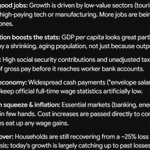
O gráfico do Financial Times mostra os países ricos sufocados pelo gasto com idosos, mas esconde o principal: eles estão quebrando porque insistiram no modelo errado de previdência.
Quando colocamos Brasil, Suécia, Austrália, Holanda e Chile na mesma mesa (como lembrou o @SchumpExplains), o jogo muda completamente.
Para quem não é da área, a diferença é simples:
1. Repartição (Brasil, França, EUA, Japão) = Caixa d'água sem reserva
O dinheiro descontado do seu salário hoje não é guardado: vai direto pagar quem já parou. Quando havia 8 jovens para cada idoso, funcionava.
Hoje, com famílias menores e gente vivendo até os 90 anos, a conta estoura. O governo só tem duas saídas: aumentar impostos ou cortar investimentos (obras, hospitais, escolas).
• França e Itália já gastam 13,7% a 16% do PIB só com pensões públicas.
• O Brasil, ainda demograficamente jovem comparado à Europa, já gasta quase 12% do PIB — um padrão de país rico envelhecido que trava nosso crescimento.
2. Capitalização (Austrália, Chile, Holanda) = Cofre individual
O dinheiro vai para uma conta no seu nome, é investido na economia e rende juros compostos por décadas. Na aposentadoria, você saca o seu próprio patrimônio, não o imposto do jovem que acabou de entrar no mercado.
• Austrália: Acumulou poupança privada acima de 130% do PIB, tirou Nota A no Global Pension Index 2026 e mantém o gasto público com aposentadorias abaixo de 4% do PIB.
• Holanda e Dinamarca (1º e 2º lugares no mundo em 2026): Combinam um piso básico estatal com fundos capitalizados que somam 150,9% do PIB (Holanda) e 198% do PIB (Dinamarca). Como os idosos vivem do retorno desses ativos, o orçamento do governo fica livre para investir.
• Chile: Derrubou o gasto público previdenciário para menos de 4% do PIB com a capitalização e criou um mercado de capitais forte, reforçando recentemente um piso solidário (PGU) para os mais pobres sem destruir a poupança individual.
3. Modelo Híbrido com trava automática (Suécia)
Nos anos 1990, a Suécia viu que ia quebrar e reformou tudo. Misturou capitalização financeira com uma trava matemática: se a população envelhece ou a economia desacelera, o reajuste das pensões freia sozinho para nunca gerar rombo no Tesouro. Segundo a OCDE, é um dos raríssimos países ricos onde o gasto público com aposentadorias vai cair até 2050.
Conclusão:
O problema que trava o Brasil e a Europa não é "cobrar pouco imposto". É matemática demográfica.
Na repartição, o envelhecimento vira um buraco negro fiscal. Na capitalização e nos modelos híbridos bem desenhados, cada geração financia a si mesma e deixa o Estado livre para investir no futuro.
Fontes: OCDE (Pensions at a Glance 2025 / Pension Markets in Focus 2025), Marsh & CFA Institute (Global Pension Index 2026) e Tesouro Nacional.
🤖 Made with AI


Seria interessante ver a Austrália e Chile, e suas respectivas previdências baseadas e capitalização
Readers added context they thought people might want to know
O gráfico não é o original do Financial Times, mas uma adaptação no estilo FT com dados ilustrativos incorretos para o Chile e países adicionados. Segundo a OCDE, o gasto público com pensões no Chile é de 3,7% do PIB.
x.com/lugaricano/sta…
oecd.org/content/dam/oe…
oecd.org/en/data/dashbo…
popadex.com/blog/pension-s…


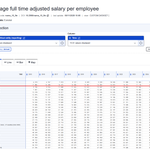
In Greece, when you compare this graph with median disposable income relative to home prices, you start to notice a very bleak future for the young generation.
The worst in Europe unfortunately


1
81

Marios retweeted

As I’ve said for years, concentration of power, capabilities and wealth is the biggest risk in AI. The natural tendencies for it are super strong and without much much stronger open-source, we might end up in a world with more asymmetry and inequalities than ever!

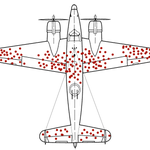
the ripple effect of this one photo...

We proudly gave @OpenAI our NVIDIA DGX-1 supercomputer to work on #AI's toughest problems. nvda.ws/2aRtOhE


2
463

Marios retweeted

For my first post, I’m sharing a letter @NVIDIA signed on why open models matter.
AI will transform every industry, power every company, and be built by every country.
Open models strengthen safety and cybersecurity, accelerate innovation and diffusion, and enable sovereignty.
The world needs both frontier closed models and frontier open models.
images.nvidia.com/pdf/Open-W…




Marios retweeted

Pierwsze po wybudzeniu słowa bohaterskiego policjanta Artura Morańskiego: „A Kuba żyje?”. Pytał o Jakuba Kulika, drugiego z bohaterów. Takie chwile przywracają wiarę w człowieka.


Marios retweeted

🇪🇺 Europe’s young are taking to the streets, and the numbers show exactly why.
In the euro area, households headed by under-35s have a median net wealth of about €25,000.
Households headed by 55- to 64-year-olds? Around €209,000. That’s more than 8 TIMES as much.
In Finland, the gap is 31 TIMES: €5,700 vs. €176,800. Austria, Ireland, Germany and Greece all top 13x.
Meanwhile, consumer prices are up 67% since 2000, with the sharpest jump in 2022, and housing prices have soared for renters and buyers alike.
Work hard, save up, buy a home. Europe’s young are realizing that deal expired a long time ago.
Sources: ECB, Eurostat, Al Jazeera / Writer: Julie

exactly

The ugly truth about France and some of the other European countries currently in turmoil - and which none of the politicians want to admit because it'd be political suicide - is that you can't solve the problem by going after immigrants (as the right asserts) or the rich (as the left asserts), but you could solve it by going after the old.
One extraordinary statistic for you: people over 60 in France, a quarter of the population, own 60% of France's wealth, non-financial and financial (ofce.fr/pdf/revue/2025/3-192…).
And here is another crazy statistic:
that same quarter of the population, those above 60, receive nearly two-thirds of all social spending by the French government (previssima.fr/actualite/prot…) - which is famously among the highest in the world (France's government spending is an insane 57.3% of GDP).
Last statistic: they make up about 40% of voters because they're a third of registered voters (insee.fr/fr/statistiques/266…), and they turn out far more than anyone else (franceinfo.fr/elections/sond…).
Put our 3 statistics together and there's almost a bit of an apartheid situation here: the old own most of the country's wealth, collect most of the social spending and have the political power to keep it that way.
Which makes them a de-facto rentier class, living off assets and transfers paid for by younger generations.
And, of course, at the risk of stating a truism, the future is built by the young. Yet France keeps effectively taking money away from them to give it to those whose working lives are already behind them - and need the money far less since they already own the country's wealth.
What about inheritance, I hear you ask? That's the funniest/saddest aspect: given that life expectancy has kept rising, the French now inherit a home at 54 on average. The most common case is someone in their 80s leaving it to heirs in their 50s, in effect the very old transferring wealth to the about-to-be old (insee.fr/fr/statistiques/fic…).
You can add this to our earlier apartheid statement: on top of all the rest, even when the old finally let go of their wealth, it stays within their own "camp".
That's my personal situation, incidentally: I'm 42, my father is 71 and he is starting to look at ways to pass things on to me and my siblings, when our professional lives are already well settled, so it'll arrive when it changes things the least, which is pretty much the French system in a nutshell.
Now, I get that there'd be some unfairness in going after them: they paid into the system their entire working lives, playing by the rules of a social contract that told them if they paid up they'd collect at the end. Changing the rules now means breaking that promise, which is admittedly unfair.
But there's no magic wealth tree in any society: you can only take it where it is. That's the way most major societal transformations end up happening. They're often triggered by a catastrophic event (the so-called "four horsemen": mass-mobilisation war, revolution, state collapse, plague) BUT what really drives change is a transfer: wealth gets pried from the privileged class who've been sitting on it and handed to those who'll build what comes next.
So, in theory and in an ideal world, you can do without the catastrophic event and directly proceed with the transfer...
The fact that in France, and elsewhere in Europe, it's the youth protesting is probably no coincidence - even though they don't frame it as a generational fight. And even though, cruel irony, the left politicians many of them march behind promise to bring the retirement age back to 60 (lcp.fr/actualites/legislativ…), which would make the situation even worse.
Let's say they understand intuitively that the system is stacked against them, even if they haven't yet figured out how. And politicians are obviously doing what politicians do, meaning pandering to the people who actually vote, while pointing the young towards easier - and politically convenient - scapegoats.
To be clear I'm not saying it's the only problem in France, VERY far from it. I'm also not saying that all old people in France live a lavish lifestyle at the expense of younger generations: there are also plenty of very poor retirees who, if anything, would deserve more.
What I am saying is that it's probably the biggest elephant in the room: everyone can see it, nobody dares mention it - no politician, from any side, wants to run on cutting grandma's pension - and it makes every other problem harder to fix.
228

Marios retweeted

Εκανα αίτημα στις 25/9 στη ΓΓ Νομικών & Κοινοβουλευτικών Θεμάτων (υπαγόμενη στον Πρωθυπουργό) για χορήγηση όλων των ισχυόντων νόμων (καθώς είναι δημόσια έγγραφα). Η νόμιμη προθεσμία των 20 ημερών παρήλθε. Καμία απάντηση. Κανένα έγγραφο. Εστειλα «ευγενική» υπενθύμιση. Αυτοί που απαιτούν υπακοή στον Νόμο, τον παραβιάζουν πρώτοι. Οι συνέπειες θα είναι για όλους.

Marios retweeted

Serbia 🇷🇸: The capital of Belgrade tonight. People as far as the eye can see.
The Student List is ready to end 12 years of rule by Aleksandar Vucic and the SNS.
είμαι 99% σίγουρος ότι αυτή την στιγμή οποιοσδήποτε με ένα frontier AI μπορεί να χακάρει το gov(.)gr. Γενικότερα αμφιβάλλω αν οι κυβερνήσεις ανα τον κόσμο έχουν καταλάβει πόσο εκτεθειμένες πιθανόν να είναι σε νεας μορφής cyber attacks απο AI agents

皆様に、今夜に対応して頂きたい大至急のお願いです。
多くのウェブサイトで使用されているPHPに関し、PHPのセキュリティチームが、重大な2件の脆弱性に関する注意喚起を行っています。
公開しているウェブサイトでPHPを使用しているか確認し、今夜、10月21日午後11時(日本時間)に公開される修正パッチについて、可及的速やかに適用できるよう準備をお願いします。
修正パッチを速やかに適用することが困難な場合は、例えばウェブサイト等を一時的に停止させることも、リスクを低減させるための有効策の一つと考えられます。
国家サイバー統括室のXアカウントでも関係する情報を発信していますので、そちらも参考にして下さい。
国家サイバー統括室(注意・警戒情報)(@cyber_forecast) / X
1
289
Marios retweeted

If it keeps going at this rate, we might, for (I think) the first time in history, be about to witness the first continent-wide youth revolt in Europe - a "European spring" of sorts.
The sheer number of countries where it's **already** happening is pretty overwhelming. I count 8, including 4 with violent clashes:
- France, famously
- Albania (see below) with daily clashes in Tirana and a government building set alight
- Belgium: the French movement spilled over, including riots in Liège
- Italy: "No Meloni Day" student protests since 16 October, turning into riots in Milan, Turin and Bologna
- Greece: students camping in Athens' Syntagma Square over housing and education costs, explicitly inspired by France
- Germany: pupils blockading schools in Berlin and Hamburg in solidarity with France
- Spain: an indefinite education strike in Madrid, with students marching alongside teachers and families
- Serbia: the student movement born from the 2024 Novi Sad station collapse is now running its own list in the 25 October election
And, by the way, the fact it's also happening in countries with close to no immigration - like Albania - goes to show how reductive it is to label these movements, like JD Vance and Trump did with France, as the fruit of "the migrants hav[ing] taken over."
As is often the case, it's much more a story of "it's the economy, stupid." As such, Trump with his war on Iran, has ironically done much more to fuel this (pun intended) than any migrant.
