

PhD student @ HKU-MMLab · Founder of Lumina EAI Community · Building Home Robot.
Hong Kong
Joined January 2023
- Tweets44
- Following183
- Followers1.6K
- Likes48







Tianxing Chen retweeted

💡Our view: RSI is a systems engineering problem, not just a model problem.
Progress depends on the environment a research agent works in: what resources it can call, what it can change, and how it runs experiments. That environment should reflect real production workflows and be easy for agents to use.
At @Evolvent_AI, we built RSIGym around Everything as a Service. Agents can call established research services and iterate on data, training settings, and harness code.
We also introduce RSI-Index to measure how well frontier agents jointly improve a target model’s weights and harness. Across 6 research agents and 5 benchmarks, Opus 5 leads at 0.4809. 🧵
We’re releasing the code, experiment configurations, research trajectories, and evaluation logs. Try your own improvement methods with RSIGym.
🌐 Website: rsi-index.ai/
💻 GitHub: github.com/evolvent-ai/RSIGy…
📄 arXiv: arxiv.org/abs/2610.10310
Tianxing Chen retweeted

What about dis-assembling?
Excited to share some results (more coming next week!) deploying pi0.7 on a AI hardware dis-assembling task partnering with @physical_int. The robot autonomously removes retaining bars, riser boards, and fans with only 1.5 hours of post-train.

Tianxing Chen retweeted

🔥 Liber-0 Preview is now #1 on RoboDojo, with a 30.74 overall score.
It performs strongly across long-horizon execution, precision, memory, and generalization — and is the only one 👀 above GPT-6 Astra overall.
But the part I find most interesting is this:
RoboDojo is a gripper benchmark.
Liber-0 is built on a bet that human experience is the largest source of embodied intelligence — and that the real challenge is transferring that intelligence efficiently across embodiments.
A gripper is much more constrained than a human hand.
Yet after adaptation, that human-derived intelligence still transfers well enough to lead the benchmark.
That’s a pretty interesting signal.
This gripper benchmark is simply an early test of whether the intelligence transfers.
So far, it does.
robodojo-benchmark.com/leade…

We put GPT-6 Astra in the RoboDojo. 🥋🤖
The RoboDojo Team conducted a comprehensive evaluation of GPT-6 Astra as an embodied agent, including:
• RoboDojo Sim & Real, compared with GPT-5.5 and DeepSeek-Flash
• Humanoid high-level control
• Dexterous piano playing with RoboPianist 🎹
• A systematic study of in-context learning (ICL)
Our key takeaway:
GPT-6 Astra demonstrates remarkably strong semantic and spatial understanding, together with impressive in-context adaptation.
At the same time, physical commonsense remains a clear bottleneck — revealing an important gap between understanding the world and truly reasoning about its physics.
Full report & demos:
robodojo-benchmark.com/repor…
@_wenbozhang (project lead), @wenhaocha1, @frankzydou, @JinWeiyang18434, @YutaoOuyang, @minifullcapsule, @x_h_ucb, @YutaoOuyang, @YueChen614


Tianxing Chen retweeted
We put GPT-6 Astra in the RoboDojo. 🥋🤖
The RoboDojo Team conducted a comprehensive evaluation of GPT-6 Astra as an embodied agent, including:
• RoboDojo Sim & Real, compared with GPT-5.5 and DeepSeek-Flash
• Humanoid high-level control
• Dexterous piano playing with RoboPianist 🎹
• A systematic study of in-context learning (ICL)
Our key takeaway:
GPT-6 Astra demonstrates remarkably strong semantic and spatial understanding, together with impressive in-context adaptation.
At the same time, physical commonsense remains a clear bottleneck — revealing an important gap between understanding the world and truly reasoning about its physics.
Full report & demos:
robodojo-benchmark.com/repor…
@_wenbozhang (project lead), @wenhaocha1, @frankzydou, @JinWeiyang18434, @YutaoOuyang, @minifullcapsule, @x_h_ucb, @YutaoOuyang, @YueChen614
Tianxing Chen retweeted

🤖 World Action Models predict the future to act better. However, WAM research remains fragmented in code, ad hoc in design, and unprincipled at scale.
💡 Today, we release 𝗢𝗽𝗲𝗻𝗪𝗔𝗠: 𝗔𝗻 𝗢𝗽𝗲𝗻, 𝗠𝗼𝗱𝘂𝗹𝗮𝗿 𝗘𝘅𝗽𝗹𝗼𝗿𝗮𝘁𝗶𝗼𝗻 𝗧𝗼𝘄𝗮𝗿𝗱𝘀 𝗦𝘆𝘀𝘁𝗲𝗺𝗮𝘁𝗶𝗰 𝗪𝗼𝗿𝗹𝗱–𝗔𝗰𝘁𝗶𝗼𝗻 𝗠𝗼𝗱𝗲𝗹 𝗣𝗿𝗲𝘁𝗿𝗮𝗶𝗻𝗶𝗻𝗴 to change this.
🌐 openwam-official.github.io/
🧵1/14
Tianxing Chen retweeted

I kept seeing #GPT-6 Astra modelling results on here and got curious enough to build the thing myself: an agentic pipeline that turns a plain RGB video into 3D assets. The living room for robots @MIT_CSAIL.
Input: one handheld phone walkthrough of our lab kitchen (~20s).
Nothing else — no depth sensor, no CAD, no asset library. ~1 day (I actually slept overnight), including human-in-the-loop.
Live: frank-zy-dou.github.io/kitch…
It is still not perfect — thin and shiny things are still weak, a few objects are drafts, the room shell needs another pass.
The loop, roughly:
- Monocular video → metric scan (ViPE): camera poses + depth. This is the measuring instrument, not the output.
- GPT-6 lists what should exist as separate objects, then open-vocabulary detection + tracking gives per-object masks; each object is fused and measured in metres.
- For every asset, GPT-6 works in its own sandbox with tools: it writes the object as a program in a small Blender DSL (closed solids, PBR colours, hinges/drawers), builds it, renders it over the original video frames, compares it with the scan points in 3D, and iterates.
- A separate GPT-6 session is the verifier — it can render the model on any frame it wants and must justify every complaint with a frame. The modeller never grades its own work.
- A completeness pass renders the whole modelled scene from the video's own cameras, puts it next to the real frames, and says what's still missing. What the detector keeps missing (a row of identical cabinets) gets placed geometrically instead.
- Out comes MJCF/URDF with joints.
Now, adding simulation to this env.
Tianxing Chen retweeted

🤖 One brain, for any robot. But how does a generalist robot achieve mastery on a specific task?
🚀 Introducing CLIFT (Closed-Loop Iterative Fine-Tuning), a framework that turns Gemini Robotics On-Device into a humanoid specialist using only a managed fine-tuning API. [1/6]
🌐 thomaschen98.github.io/clift…
📄 arxiv.org/abs/2607.29172
We evaluated 30+ frontier embodied AI models.
The result is clear: current generalist robot policies are still far from robust real-world manipulation.
This is why we built RoboDojo.
Together with RoboDojo, we introduce XPolicyLab: a unified framework for embodied model development, deployment, and evaluation.
Using XPolicyLab, we reproduced 30+ models and built a comprehensive leaderboard for the community.
XPolicyLab code: github.com/XPolicyLab/XPolic…
Several things deserve celebration:
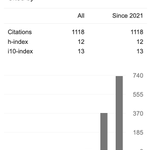
1. Reached over 1,000 Google Scholar citations.
2. Received the Best Paper Award at the ICRA 2026 ViTAC Workshop.
3. The RoboTwin series has received over 500 citations, 2.5k GitHub stars, and over 600k Hugging Face downloads.


Tianxing Chen retweeted
Evolvent AI @Evolvent_AI is looking for model training data partners.
We are an AI startup focused on synthetic data and self-evolving agents, with team members from top universities in China and overseas, as well as prior research and engineering experience at leading foundation model teams.
Over the past 2 months, Evolvent AI has signed RL/SFT training data contracts with 7 leading model companies, with total contract value exceeding $10M.
We provide high-quality post-training data and environment construction for coding, SWE, terminal, AutoResearch, general agents, and other long-horizon agent tasks. We also cover finance, STEM, K12, text-only and multimodal training data, including task design, sandboxes, databases, reward/verifier design, and model evaluation.
We are now exploring new collaboration models with more model companies and leading Agent teams. If you are working on RL/SFT post-training or want to improve Agent performance on complex long-horizon tasks, feel free to reach out !
Tianxing Chen retweeted

Everyone says the latest AI agents will be "job-ready" soon, especially after the release of Fable 5 this week. But is that really the case?
Over the past many months, my group and collaborators have been building Agents' Last Exam (ALE), a benchmark designed to test exactly that claim on real digital labor-market work.
My group and collaborators previously have created many of the benchmarks the field runs on, including MMLU, MATH, CyberGym, and ExploitGym. Today, I'm excited to share Agents' Last Exam (ALE): a rolling benchmark that measures whether AI agents can actually perform economically valuable work across a broad range of real-world domains.
With ALE, we evaluated Fable 5, GPT-5.5, Composer 2.5, and other frontier agent systems across more than 1,500 expert-sourced tasks spanning 55 occupations.
The result is both impressive and sobering.
Today's agents can solve a meaningful fraction of professional tasks. But when we look at the hardest tasks, the ones requiring sustained reasoning, deep domain expertise, and reliable execution over long horizons, they are still far from human-level performance.
On ALE's hardest tier, every frontier agent we tested, including Fable 5, achieved a 0% success rate.
The age of useful agents is here.
The age of truly job-ready agents is not.
We hope Agents' Last Exam (ALE) will serve as a new guidepost and north star for developing agents capable of reliably performing economically valuable work across a broad range of domains.
🧵

Tianxing Chen retweeted

I’m so tired of writing rebuttals to this kind of “lack of novelty” review: “This paper trivially combines A, B, and C, so the algorithmic novelty is limited.”
Technically, most (if not all) robotics papers are convex combinations of existing ideas.
I still deeply appreciate A+B+C papers—especially when they deliver:
- New capabilities: the “trivial combination” unlocks behaviors we simply couldn’t achieve before
- Sensible & organic design: A+B+C is clearly the right composition—not some arbitrary A′+B+C′
- Nontrivial interactions: careful analysis of the dynamics, coupling, or failure modes between A, B, C
- Rehabilitating old ideas: A was dismissed for years, but paired with modern B/C, it suddenly works—and teaches us why
- System-level & "interface" insight: the contribution is not any single piece, but how the pieces talk to each other
- Scaling laws or regimes: identifying when/why A+B+C works (and when it doesn’t)
- Engineering clarity: making something actually work robustly in the real world is not “trivial”
- New problem formulations: sometimes the real novelty is in the reformulation—only under this view does A+B+C make sense.
Maybe worth keeping these in mind when reviewing the next A+B+C paper : )